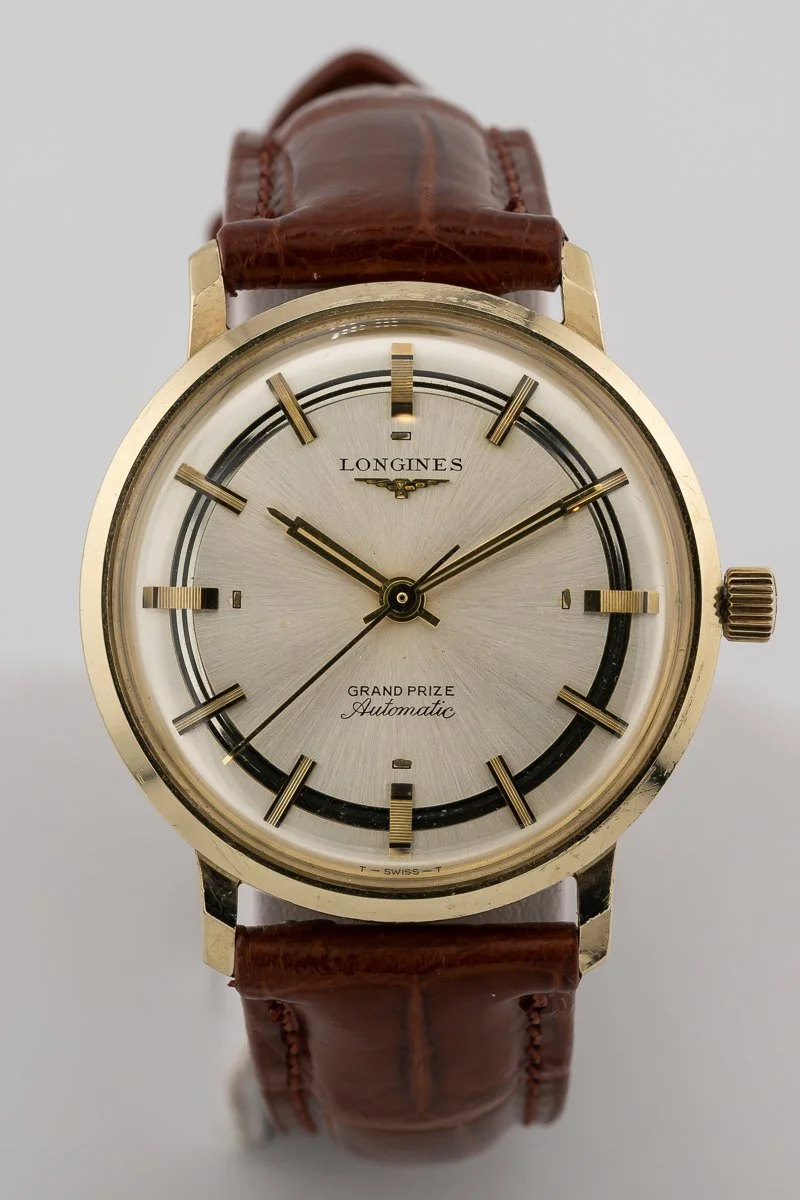
Collection Find: Longines 1965 2773-342 Automatic
This 1965 Longines Grand Prize Automatic combines one of my favorite dial designs with an equally interesting movement. Its silver radial-finished dial uses applied faceted markers, fine concentric tracks and restrained gold accents, while the caliber 342 beneath it employs Longines’ distinctive toothed-rim automatic rotor. Integrating the winding system into a movement only about 4.6 mm thick helped keep the complete 34 mm watch under 10 mm, including its crystal. I especially enjoy that contrast: an elegant, quietly detailed dress watch whose unusual engineering only becomes apparent when the case is opened.
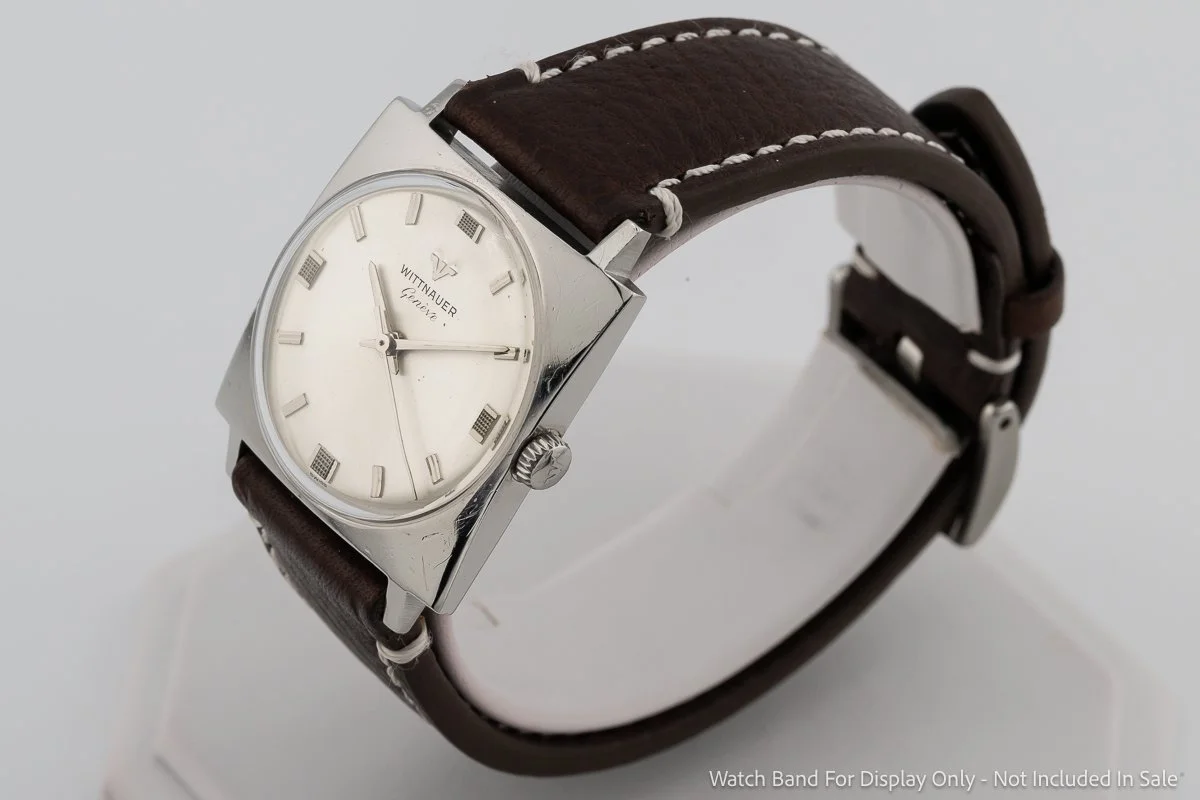
New Arrivals: circa 1960 Wittnauer Geneve Stainless Square Case
A wonderfully offbeat Wittnauer Geneve with a full stainless steel square case, silver sunburst dial, and the kind of mid-century geometry that makes a small watch feel far more interesting on the wrist. At 30mm across and 37mm lug to lug, this is compact, elegant, and unapologetically different—a true conversation piece rather than a standard round dress watch.
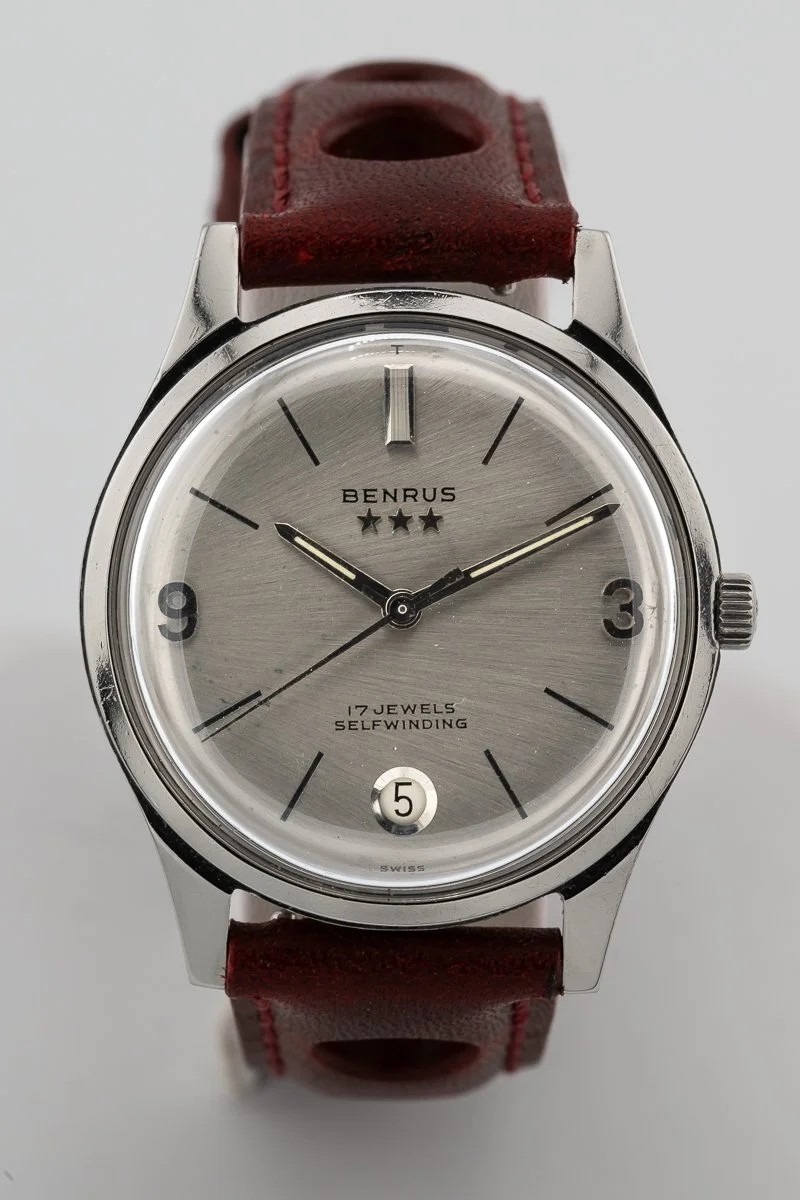
Collection Find: Benrus Early 1960s Three Star Stainless Automatic
There is something incredibly satisfying about finding a vintage piece that punches far above its weight class. Benrus is a brand often remembered for its utilitarian military field watches or standard gold-plated dress pieces, but this Reference 7026 "Three Star" is an entirely different animal.
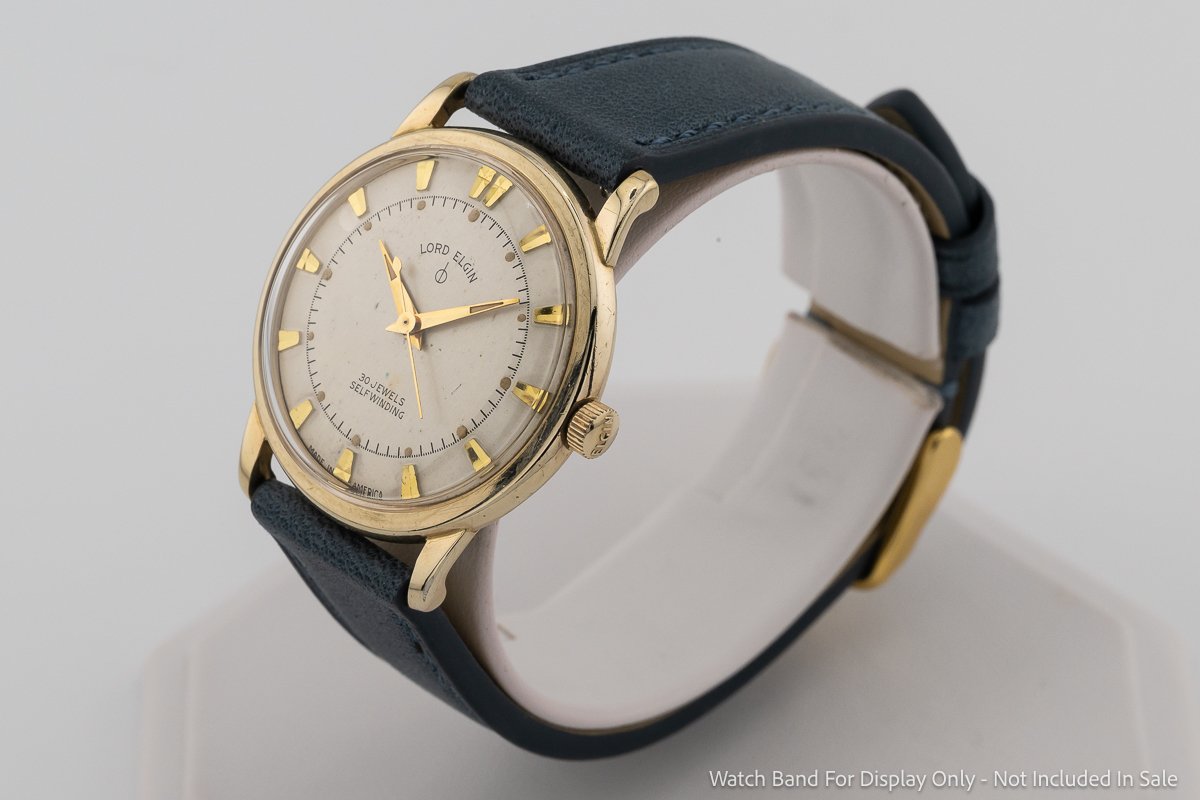
New Arrivals: Circa 1960 Lord Elgin 760 Automatic
This 1960 Lord Elgin represents a pinnacle of mid-century American horological engineering. While most automatic movements of this era were imported from Switzerland, the Elgin 760 was designed and manufactured entirely in the USA. It is a sophisticated "technological marvel" that showcased Elgin’s determination to out-engineer the world, featuring a high jewel count and a chronometer-grade layout in an incredibly slim profile.
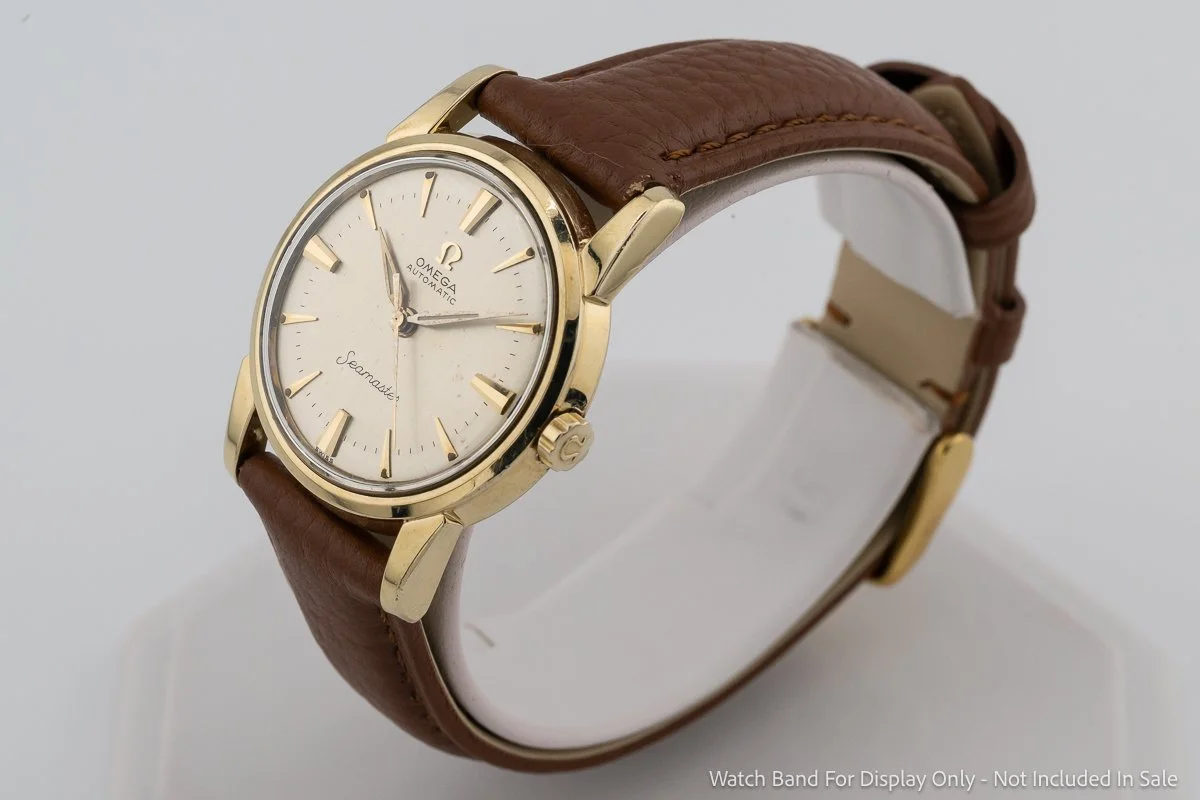
New Arrivals: 1960 Omega Seamaster Ref. L6288 Automatic
This 1960 Omega Seamaster L6288 represents a masterclass in mid-century horological refinement, blending sophisticated early 1960s Swiss watchmaking with a distinctively elegant aesthetic. It serves as a premier example of Omega's ability to combine robust engineering with the grace of a high-end dress watch.
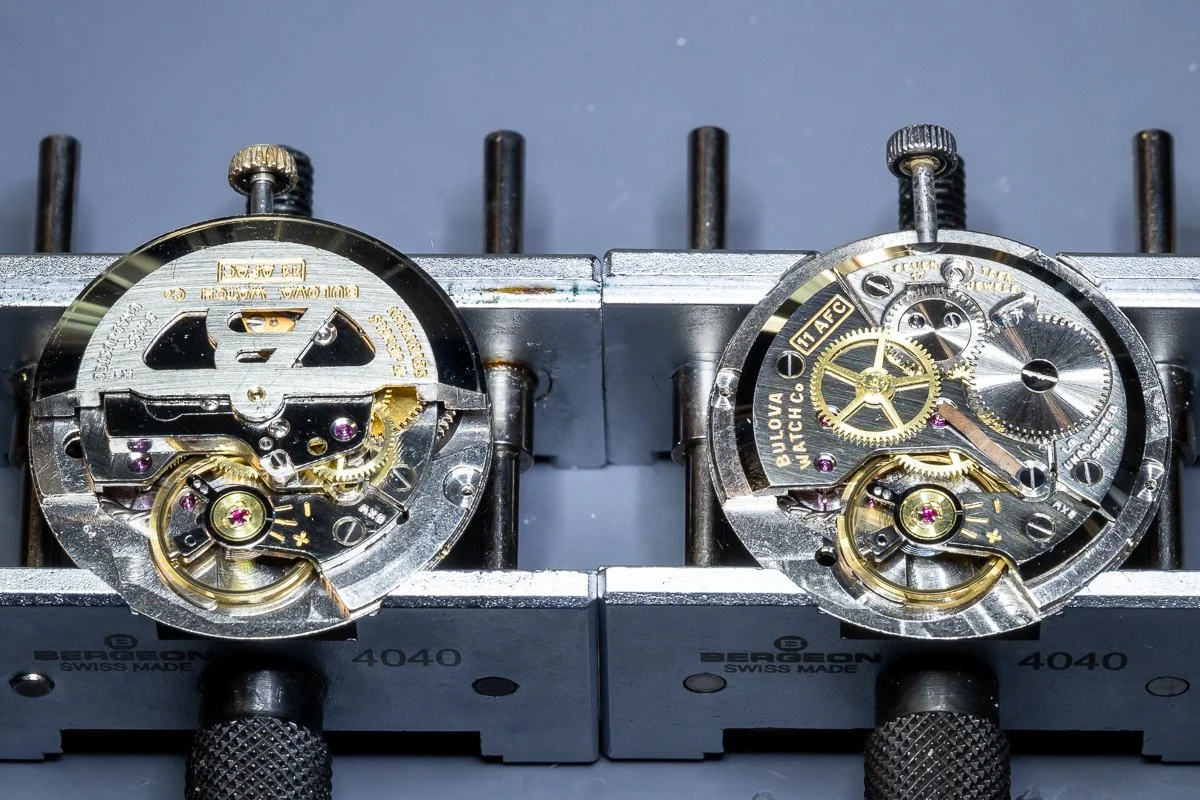
Movement Stories: One Platform, Two Watches — Bulova’s 11AF in Manual and Automatic Form
Recently I happened to have two different versions of Bulova’s mid-century 11AF at once: the 11AFC, a manual-wind variant with indirect center seconds, and the 11AFAC, which builds on the same foundation by adding a full-rotor automatic winding system. Putting these two back together side by side seemed like an especially interesting way to explore how Bulova modified a common base movement to create two quite different expressions of the same design.
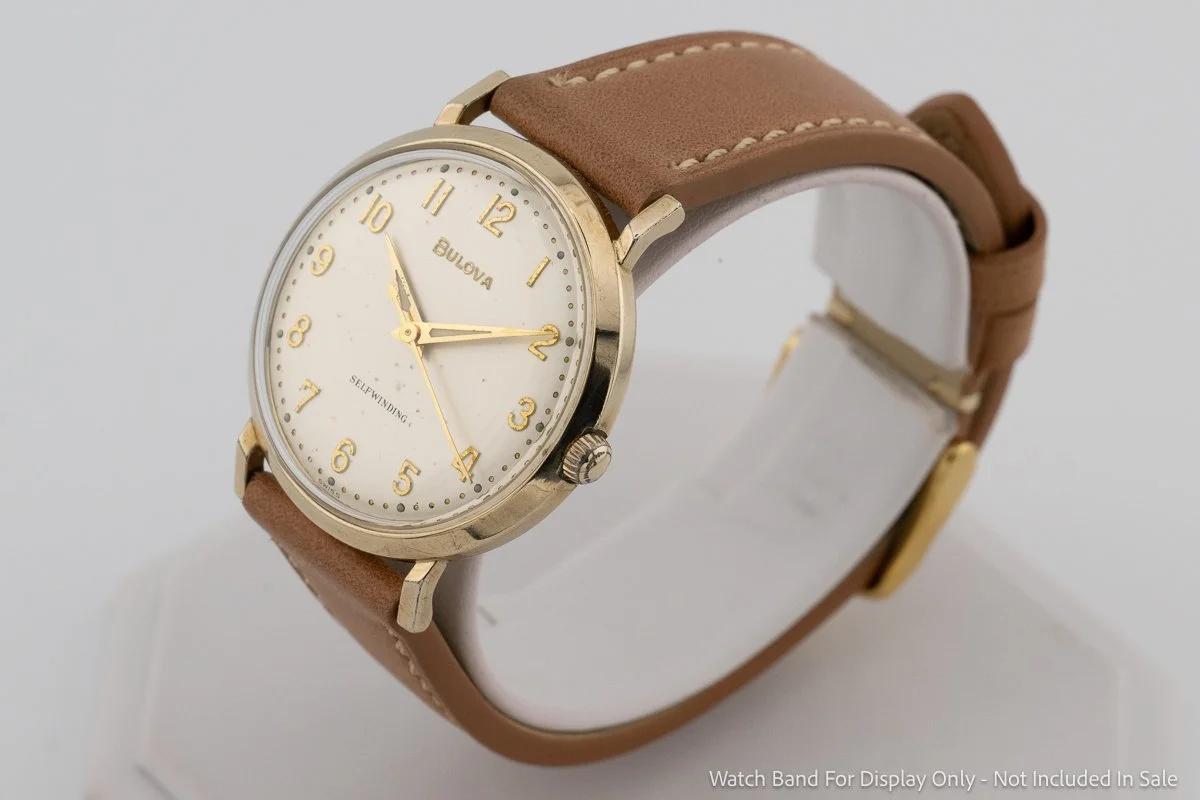
New Arrivals: 1962 Bulova 2451 11AFAC Automatic
This is a handsome 1962 Bulova Selfwinding dress watch powered by Bulova's Caliber 11AFAC automatic movement, freshly serviced, regulated and running well. It delivers that clean early-1960s look—warm gold tone, crisp applied numerals, and a balanced, easy-to-read dial—in a very wearable 33mm size.
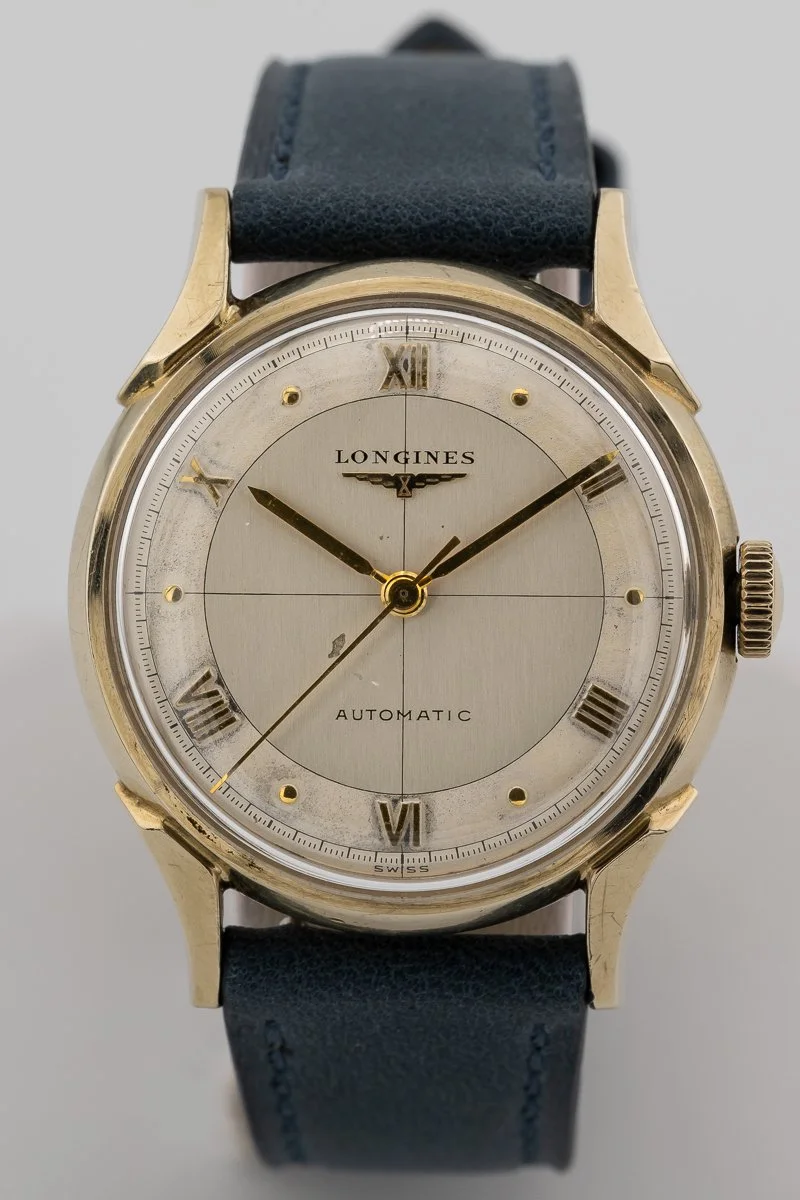
Collection Find: Longines 1952 19AS “Cam-Drive” Automatic
This US-market Longines sits right on an interesting fault line in automatic watch movement history. On the wrist it reads like a classic early-1950s dress watch—gold-fill, sharp lugs, and an interesting 2-tone dial with roman numeral indices. However, the real reason I’m attached to it is the movement. The Longines 19AS is one of those interesting, transitional full-rotor automatics that still feels distinctly like it was “engineered,” with a unique winding system that doesn’t simply follow the later, cookie-cutter ETA-style playbook. It’s from a period when Longines was at the top of its engineering game and actively iterating on how best to translate rotor motion into consistent winding—right as the industry was leaving bumpers behind and converging on modern layouts. The resulting design, while not as efficient as later systems, was clearly built to be a lifelong companion, not a disposable fashion piece.
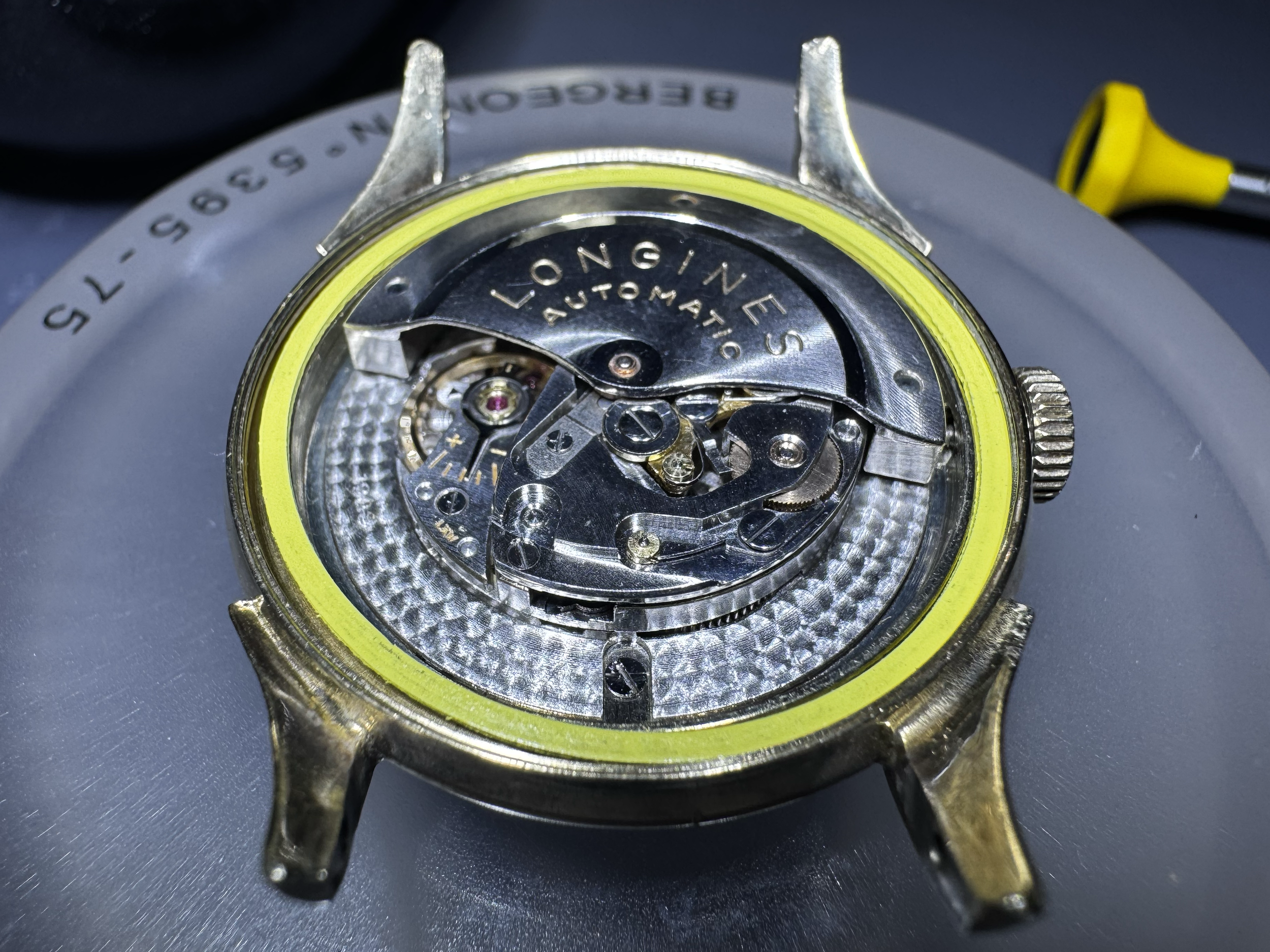
Movement Stories: Longines 19AS Automatic
As we continue our exporation of weird and wonderful automatic movements, let’s take a look at the 1950s-era Longines 19AS. The 19AS sits in a wonderfully in-between moment in automatic watchmaking—when the industry was leaving bumper automatics behind, but hadn’t yet settled on the now-familiar reversing wheel architecture that would dominate later full-rotor designs. In this article, we’ll walk through assembly of the 19AS automatic mechanism step by step, using the process not just as a repair guide but as a tour of the movement’s thinking: how Longines packaged a modern, 360° oscillating weight into a layout that still carries transitional DNA. Along the way we’ll highlight the design choices that make the 19AS such an interesting—and frankly underappreciated—milestone: a practical, serviceable full-rotor automatic that hints at the future while still wearing the fingerprints of the bumper age.
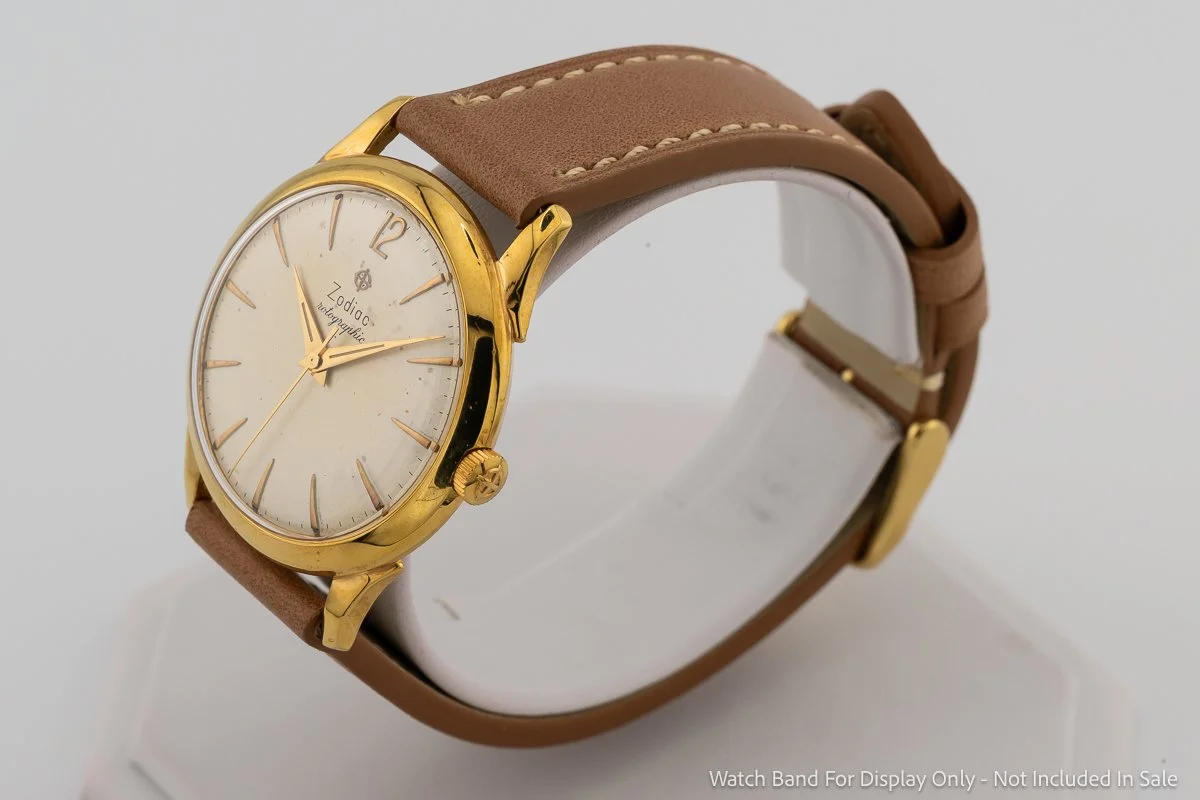
New Arrivals: c. 1960 Zodiac Rotographic Automatic
This is a beautifully restored vintage Zodiac Rotographic automatic, freshly serviced and regulated and running well, with a warm gold presence and classic mid-century proportions. The Rotographic line captures Zodiac at its most elegant: slim, clean, and intentionally understated, with just enough dial detail to feel special without tipping into busy. With the heavy lifting already done mechanically, this is the kind of vintage automatic you can actually wear and enjoy.
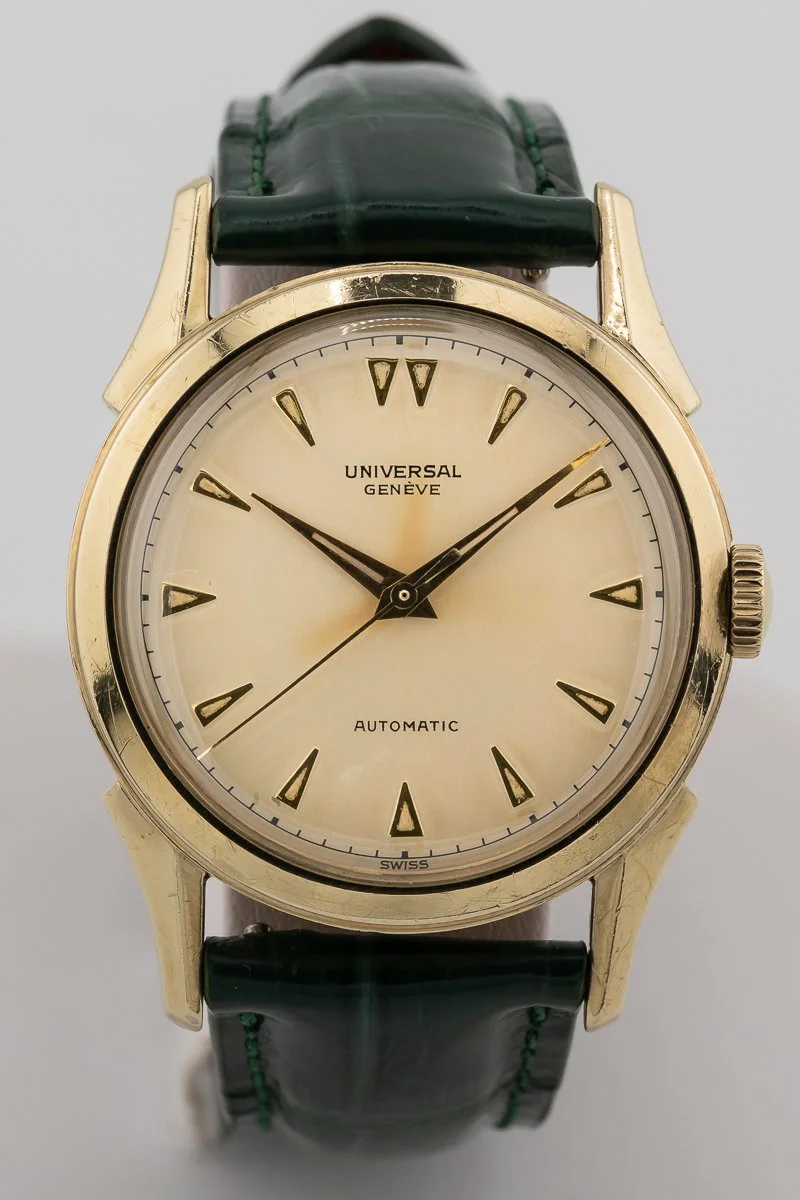
Collecton Find: Universal Genève c. 1956 138SS Bumper Automatic
I added this Universal Genève to my collection because it checks the boxes I’m always hunting for: a great looking vintage watch that’s genuinely elegant and mechanically significant. The dial is what hooks me—clean, balanced, and just a little sharper than the average 1950s dress watch thanks to those applied arrowhead markers with integrated lume, as opposed to the more typical “lume dots as an afterthought” setup.
The movement is the real reason it stays in my collection. Universal’s cal. 138SS is one of the brand’s important early automatics—a classic bumper design introduced around 1948, right at the moment when automatic winding was still evolving fast. This is a watch from the “in-between” years—when automatics still had personality you can feel every time the bumper twitches on the wrist.
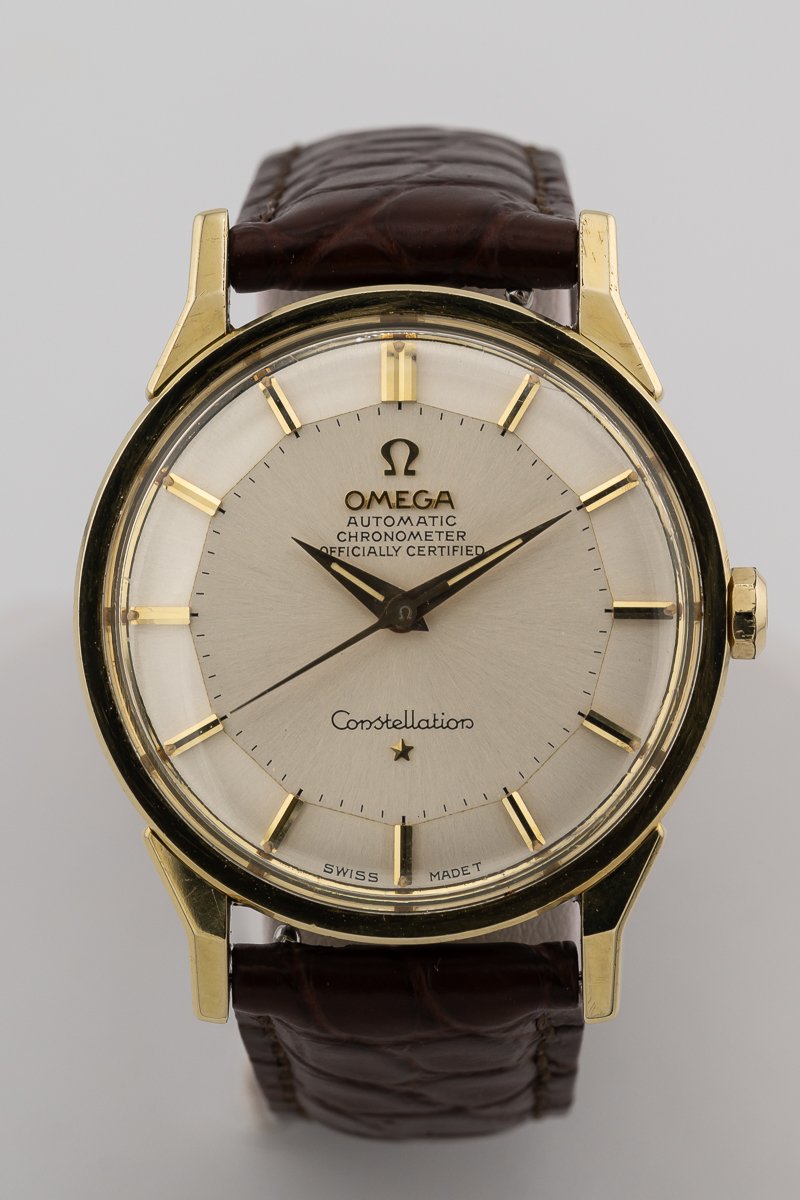
Collection Find: Omega 1963 167.005 Constellation Chronometer Automatic
I had been looking to add a Constellation to my collection for some time before I finally scored this example in an auction. The pie pan dial is gorgeous, and the proportions are exactly what I love in a mid-century Omega: a clean 34mm case that wears bigger thanks to those crisp, faceted “dog-leg” lugs, and a dial that’s quietly dramatic once you notice what you’re looking at. The pie-pan facets catch the light in a way photos never fully capture, and the little applied star above six feels like Omega couldn’t resist a victory lap.
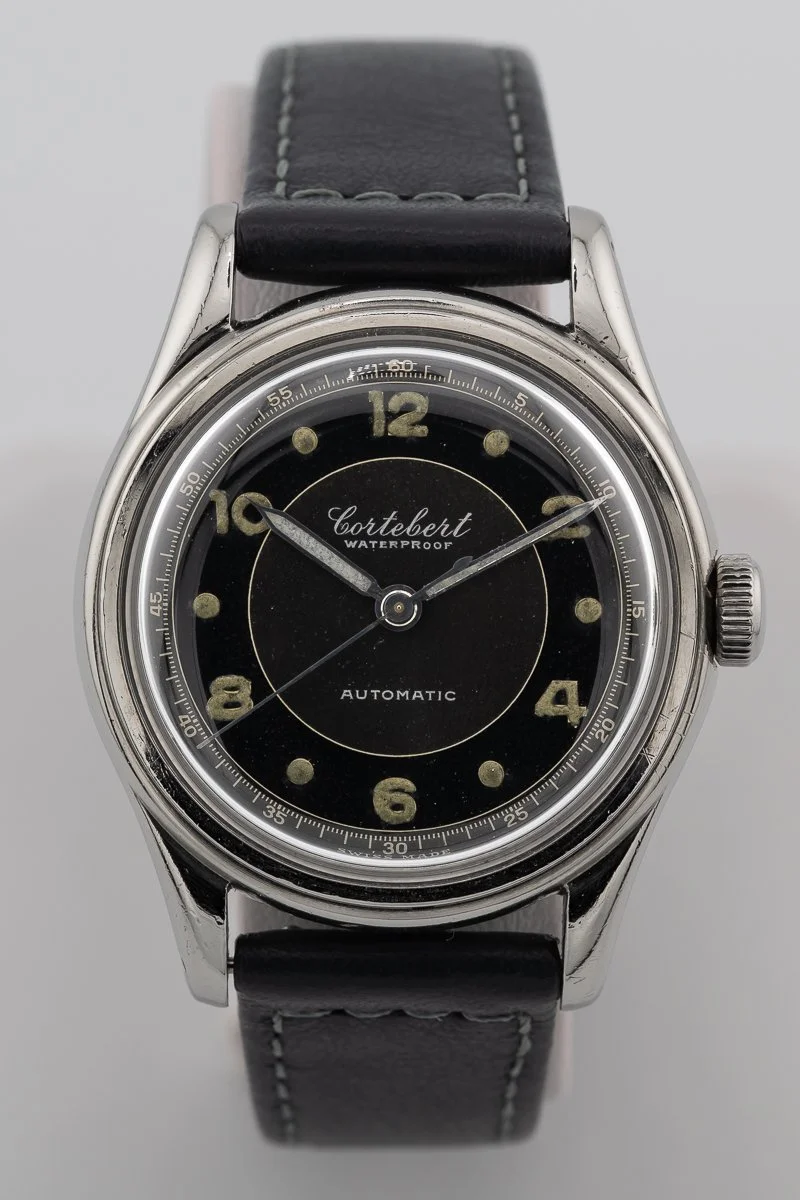
Collection Find: Cortébert Early 1940s Black Dial Bumper Automatic
I had been looking for the right vintage Cortébert to add to my collection for a while, and I was thrilled to find this early bumper automatic example. The black and charcoal dial with, crisp minute track, and restored stainless steel hands give it real presence, and the whole thing pops even more against the bright, polished stainless case. It’s one of those watches that looks like it was built to be read instantly, in bad light, in the real world—not just to be admired in a box.
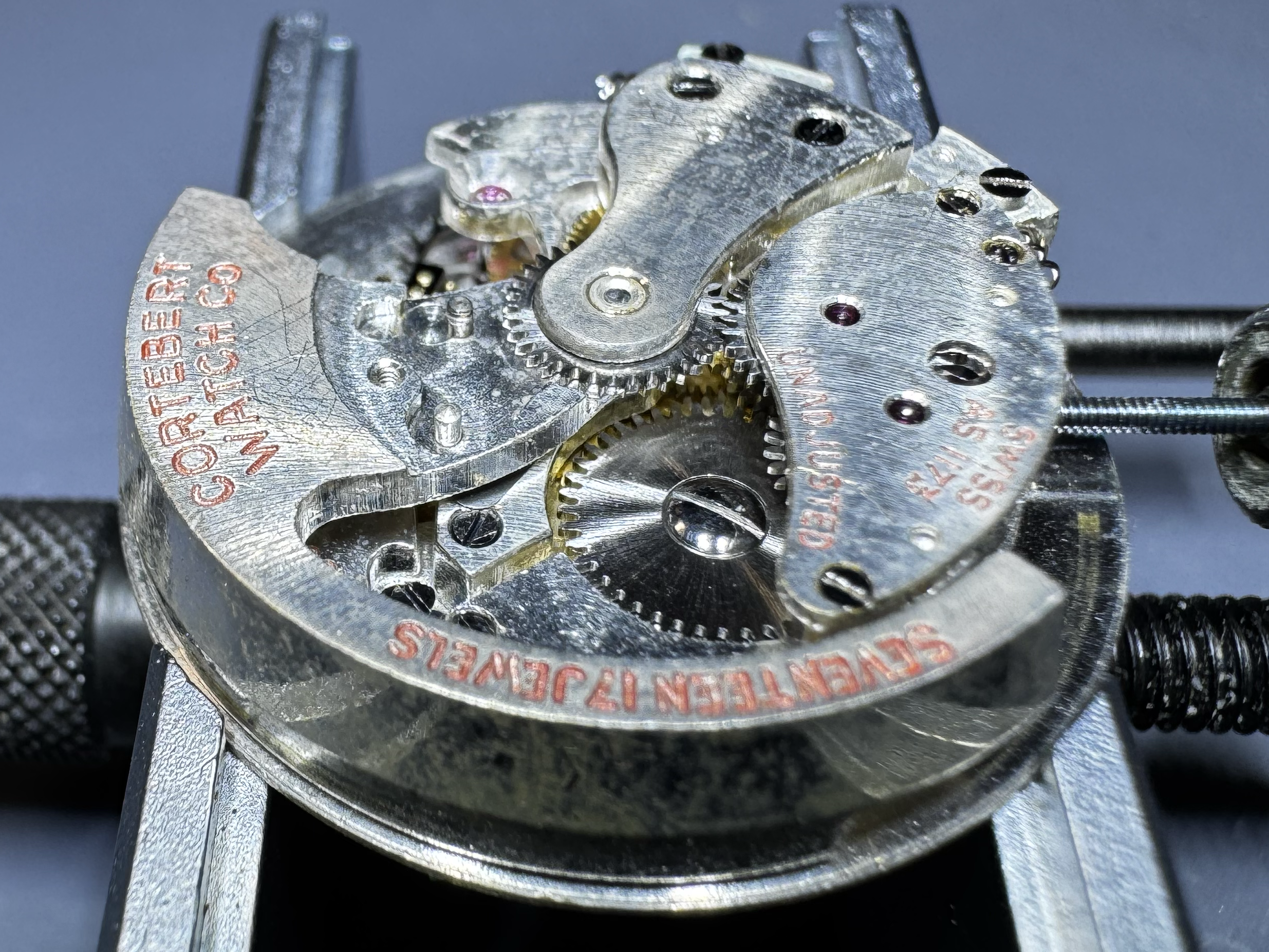
Movement Stories: A. Schild 1173 Bumper Automatic
Continuing my series on weird and wonderful automatics, this article explores the A. Schild 1173 — a very early, mass-produced automatic first introduced in the mid-1930s. Its bumper-style architecture traces a direct lineage back to the original John Harwood automatic concept. We take a close look as this design as it comes back together on my restoration bench following a cleaning.
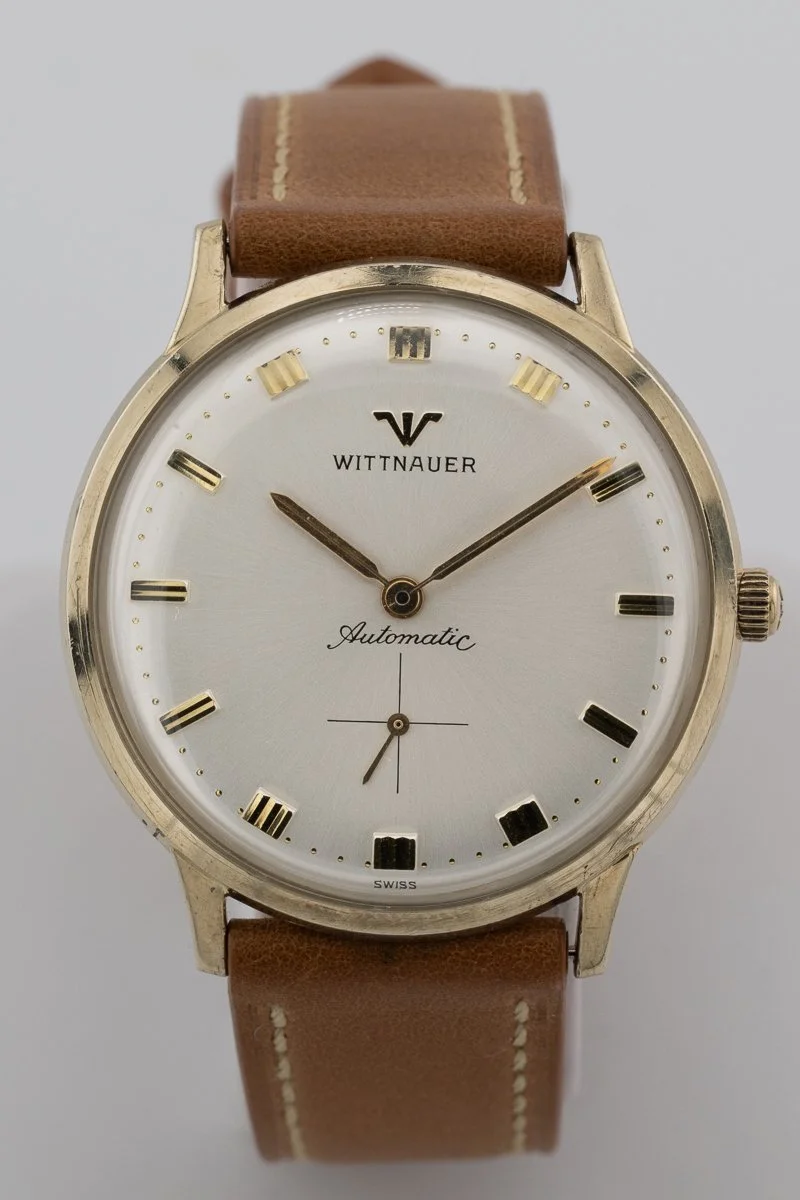
Collection Find: Wittnauer Early 1960s 2555 Sub-Second Automatic
I originally planned to list this Wittnauer for sale, but it completely won me over once I had it in hand, so I’m keeping it (sorry, everyone). It’s the kind of watch that looks almost too simple—until you realize how hard it is to get “simple” this right. The big, clean dial and thin bezel give it a surprisingly modern presence for a vintage dress watch, and the applied markers add just enough texture to keep the whole thing from feeling sterile.
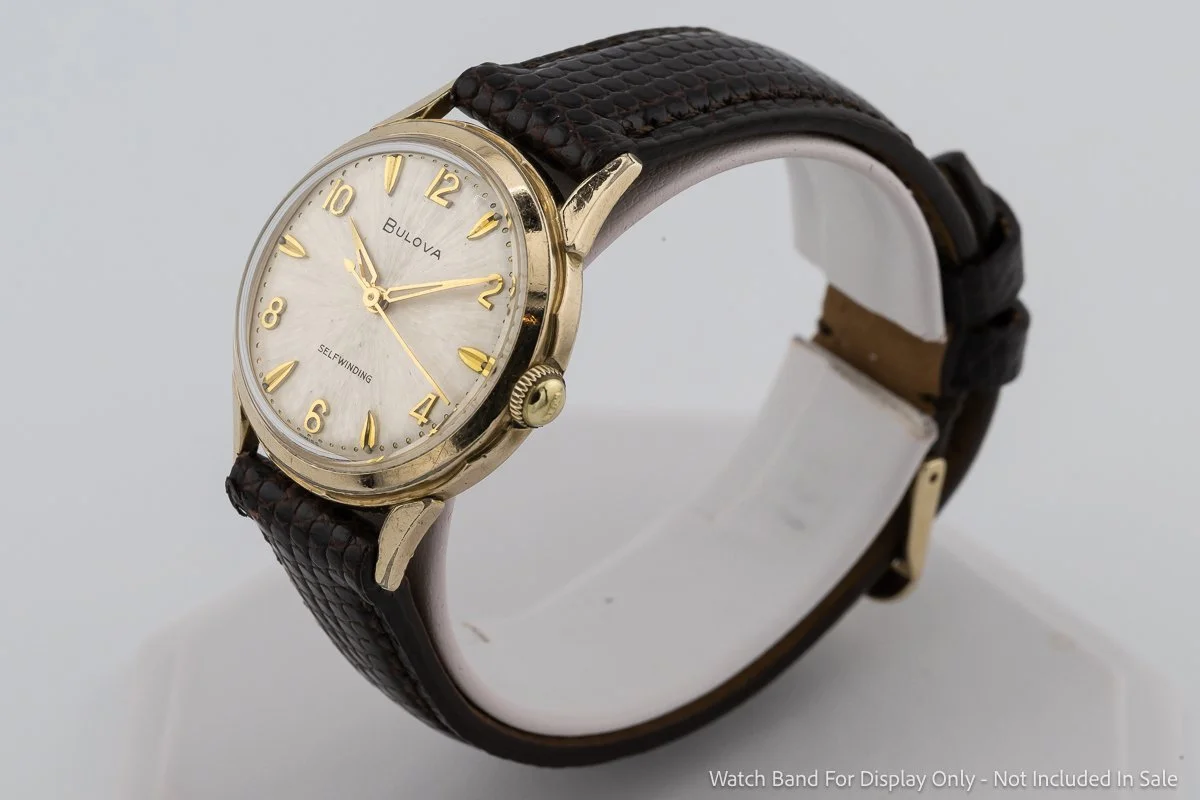
New Arrivals: 1961 Bulova Sunburst Dial Automatic
This is a beautifully preserved 1961 Bulova Selfwinding dress watch powered by Bulova's Caliber 11AFAC automatic movement, freshly serviced and regulated for reliable everyday wear. The star of the show is the dial: a clean silver sunburst finish in excellent condition that catches the light beautifully, paired with warm gilt markers and classic mid-century typography. At 31mm, this is a particularly good fit for smaller wrists or anyone who prefers a more traditional vintage profile.
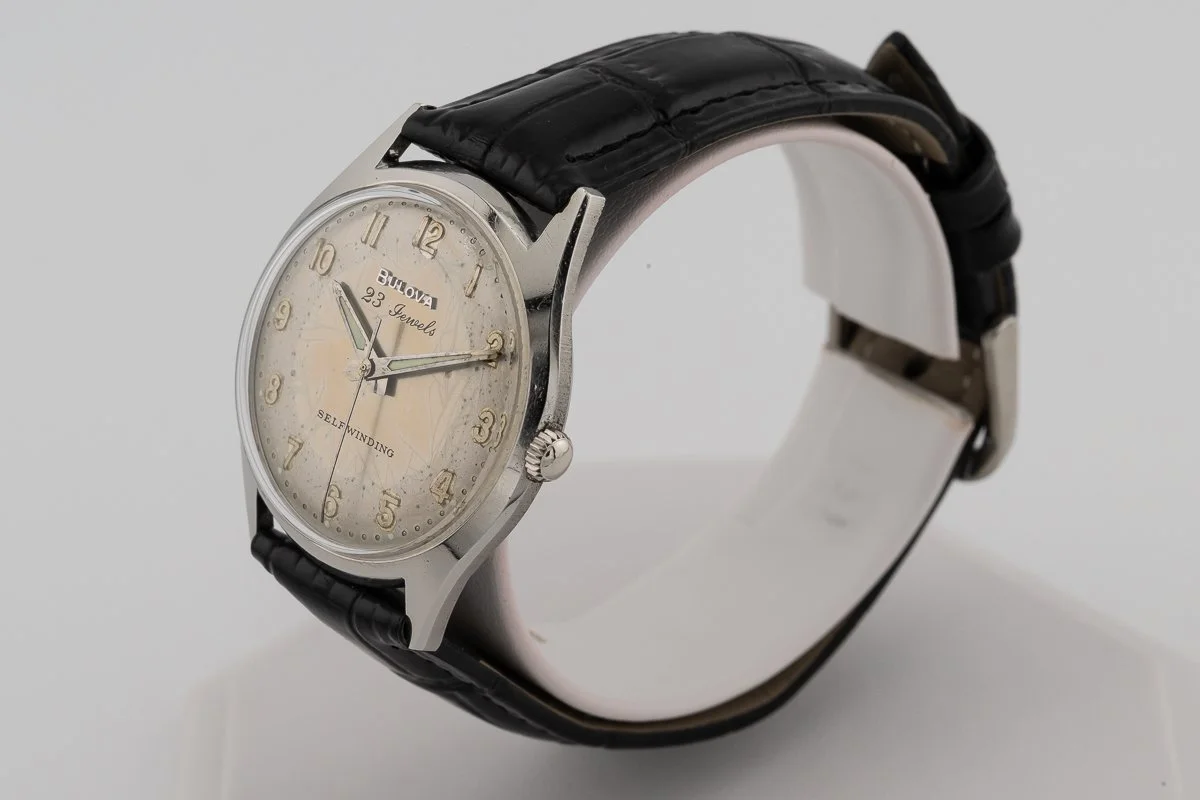
New Arrivals: 1963 Bulova Stainless Steel Automatic
This vintage Bulova is highlighted by a full stainless steel case - a relative rarity for the brand - with a matching dial and gold numerals. Inside, the 23 jewel Bulova 10BZAC automatic movement is in fantastic condition.

New Arrivals: 1950s Tissot 37501 Ladies Seastar Automatic
This tiny powerhouse Tissot from the 1950s has classic looks coupled with great timekeeping. The Tissot 717 21-jewel movement is unquestionably the smallest fully automatic movement that I have worked on, but it doesn’t skimp on functionality, sporting a sophisticated automatic mechanism with jeweled reversing wheels.

New Arrivals: 1970s Tissot 39500 Ladies Calendar Automatic
Highlighted by a lovely fluted bezel, this vintage Tissot is a great looking and functional ladies timepiece. The Tissot 2341 automatic movement packs a lot of watch functionality into a very small space, including day and date functions with quickset via a 3-position crown, a ball bearing automatic rotor, and a high 28,800 bph rate for excellent timekeeping.

New Arrivals: 1971 Bulova 2930 Calendar Automatic
Even in the heart of the quartz crisis Bulova was still making really nice, handsome mechanical watches like this 2930 calendar automatic. This example has been serviced and given a new crystal, but is otherwise in original condition. The Bulova 11ANACD 17 jewel movement (Bulova movement codes were getting slightly rediculous at this point) has a 21,600 BPH rate for excellent accuracy and an automatic mechanism that is fully integrated into the main plate providing a thin 9mm profile.