Private Collection
My journey into vintage watch restoration began with timepieces I simply wanted to wear and enjoy. Over the years, that passion has grown into a subtaintial collection that keeps expanding—mainly because I don’t always sell the watches I restore. Each one has its own story, and I enjoy bringing them back to life & wearing them.
I created this space to share my collection with other watch lovers. Every watch you see here has been personally serviced or restored by me. Although these pieces are not for sale, if one speaks to you, I’d be glad to help you discover something similar to make your own! Please feel free to leave a comment on the watch pages or contact me if you have any questions or feedback. You can peruse more watches that I have restored on my Shop as well as my Shop Archive.
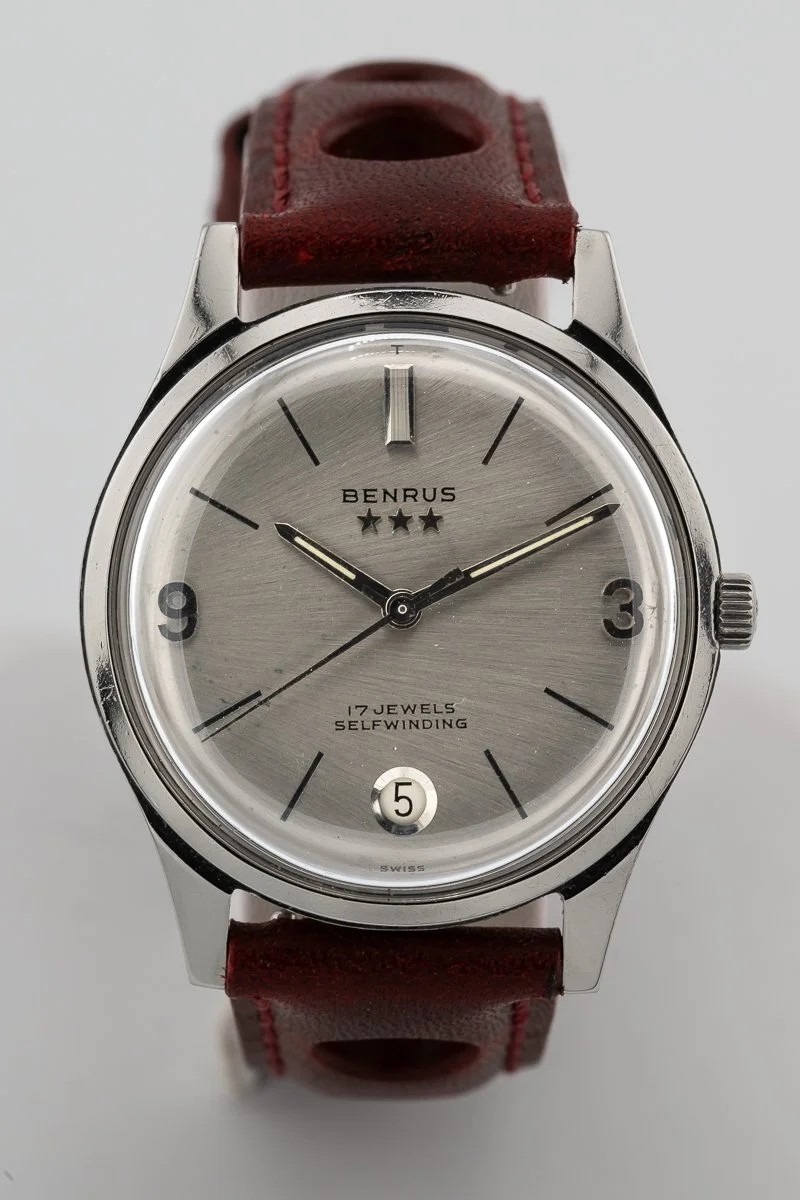
There is something incredibly satisfying about finding a vintage piece that punches far above its weight class. Benrus is a brand often remembered for its utilitarian military field watches or standard gold-plated dress pieces, but this Reference 7026 "Three Star" is an entirely different animal.
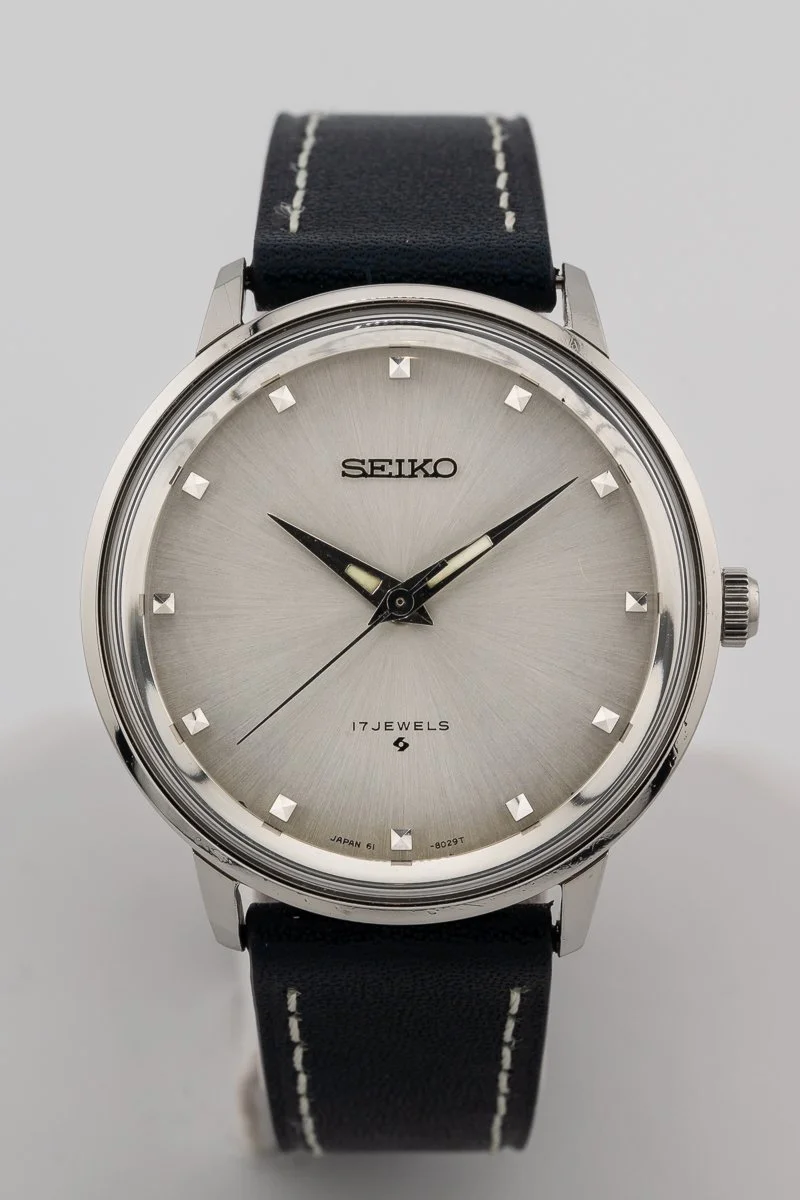
I kept this Seiko because it does something I always appreciate in a watch: it looks simple at first, and then gets more interesting the longer I stare at it. The large (for the era) dial is extremely clean, but not at all plain. The faceted applied markers and sharply shaped hands give it a lot of character, and the whole thing feels elegant without trying too hard. It is a very restrained design, but a striking one.
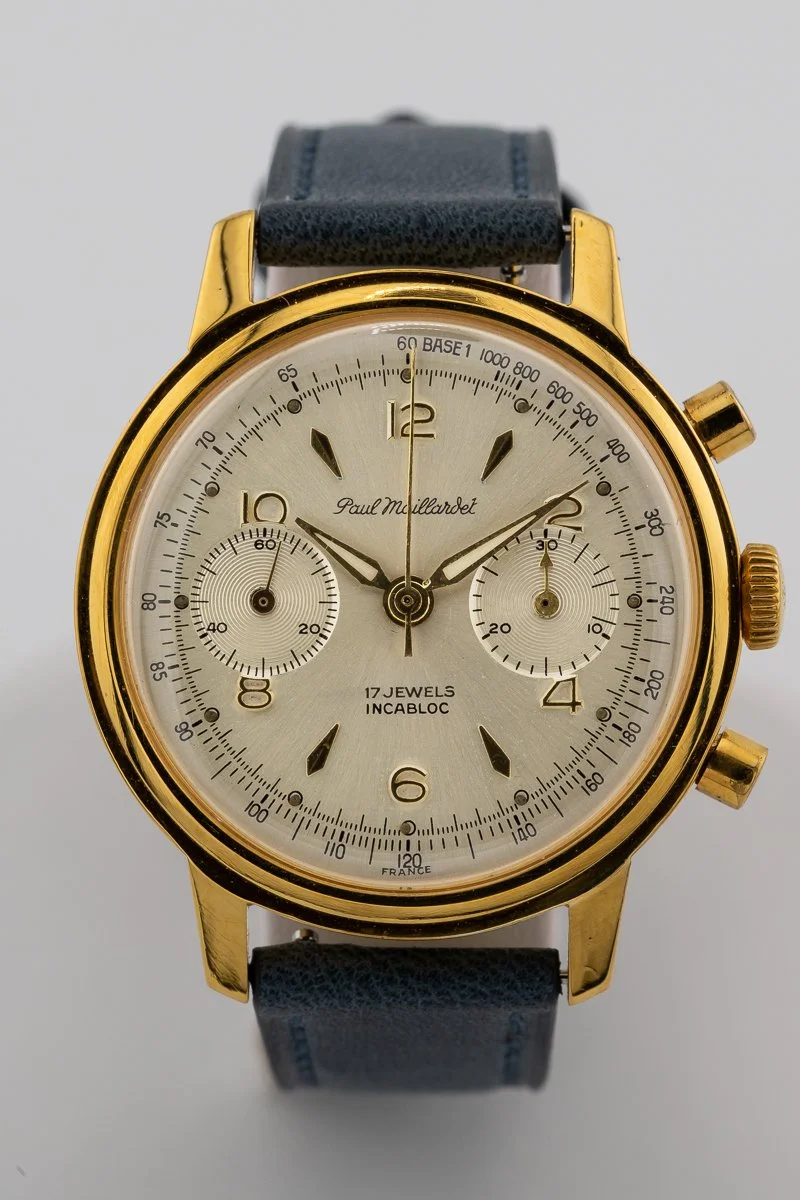
I added this Paul Maillardet to my collection because it manages to be a chronograph without looking busy. What grabs me every time is how clean and elegant the dial is: two balanced registers, nicely shaped applied numerals and markers, and just enough scale printing to remind you that it is a real instrument without turning it into clutter. It has the sort of visual restraint that a lot of vintage chronographs never quite achieve.
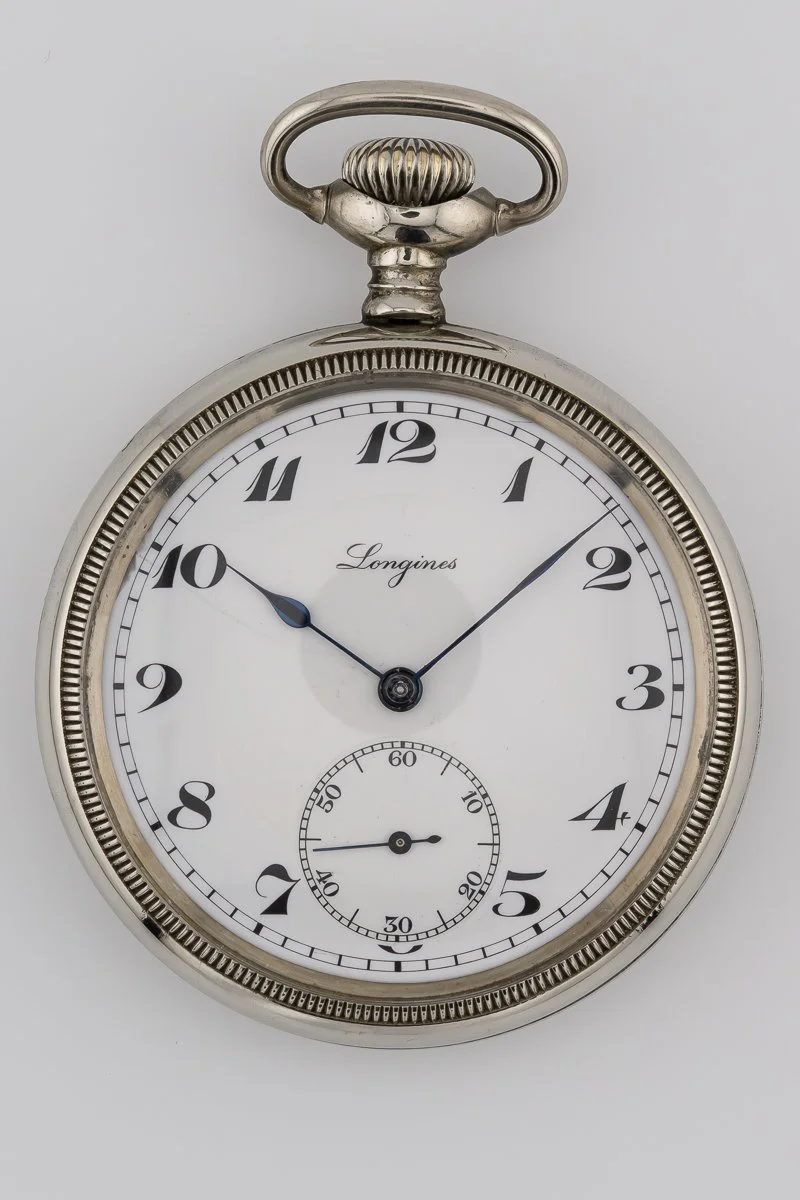
This Longines because it does exactly what I want an early 20th century pocket watch to do: it feels elegant without trying too hard. The dial and case are wonderfully clean and restrained, with those flowing Arabic numerals and lovely blued steel hands that give the whole watch just enough personality. Even with the small dial flaws, it still has that calm, refined look that made me want to save it.
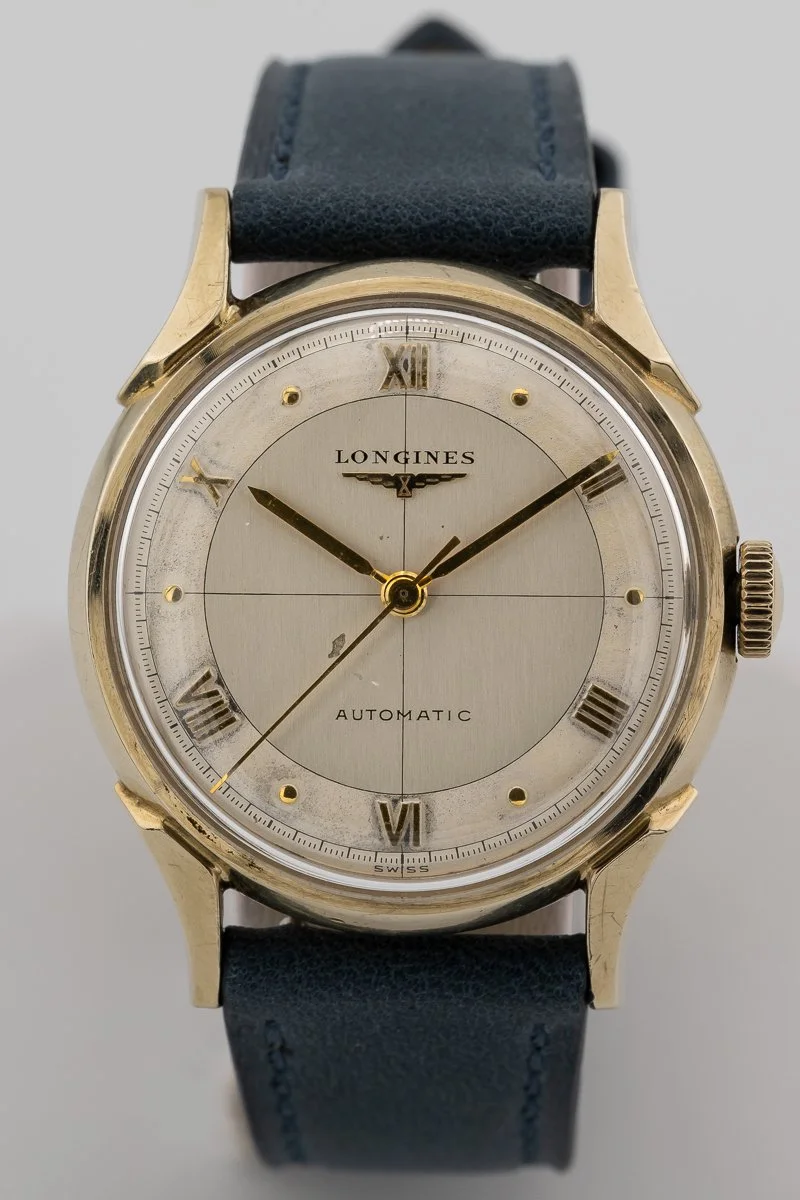
This US-market Longines sits right on an interesting fault line in automatic watch movement history. On the wrist it reads like a classic early-1950s dress watch—gold-fill, sharp lugs, and an interesting 2-tone dial with roman numeral indices. However, the real reason I’m attached to it is the movement. The Longines 19AS is one of those interesting, transitional full-rotor automatics that still feels distinctly like it was “engineered,” with a unique winding system that doesn’t simply follow the later, cookie-cutter ETA-style playbook. It’s from a period when Longines was at the top of its engineering game and actively iterating on how best to translate rotor motion into consistent winding—right as the industry was leaving bumpers behind and converging on modern layouts. The resulting design, while not as efficient as later systems, was clearly built to be a lifelong companion, not a disposable fashion piece.
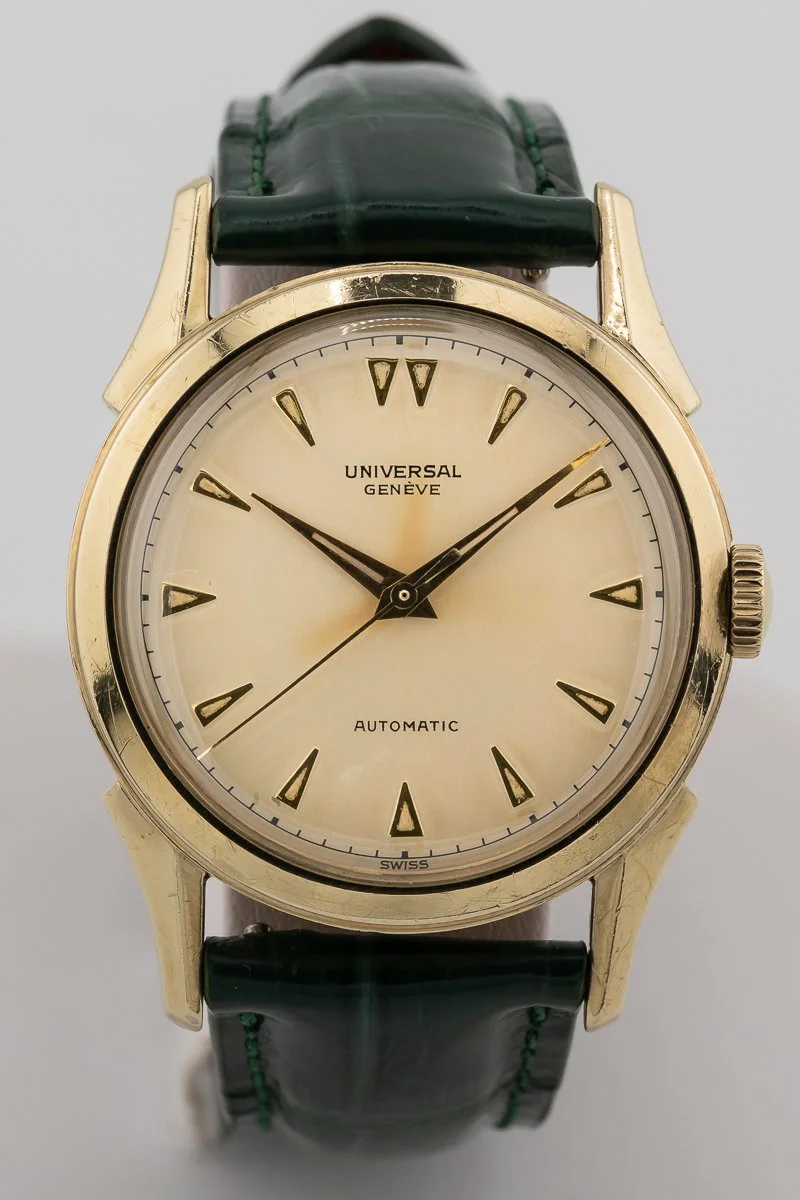
I added this Universal Genève to my collection because it checks the boxes I’m always hunting for: a great looking vintage watch that’s genuinely elegant and mechanically significant. The dial is what hooks me—clean, balanced, and just a little sharper than the average 1950s dress watch thanks to those applied arrowhead markers with integrated lume, as opposed to the more typical “lume dots as an afterthought” setup.
The movement is the real reason it stays in my collection. Universal’s cal. 138SS is one of the brand’s important early automatics—a classic bumper design introduced around 1948, right at the moment when automatic winding was still evolving fast. This is a watch from the “in-between” years—when automatics still had personality you can feel every time the bumper twitches on the wrist.
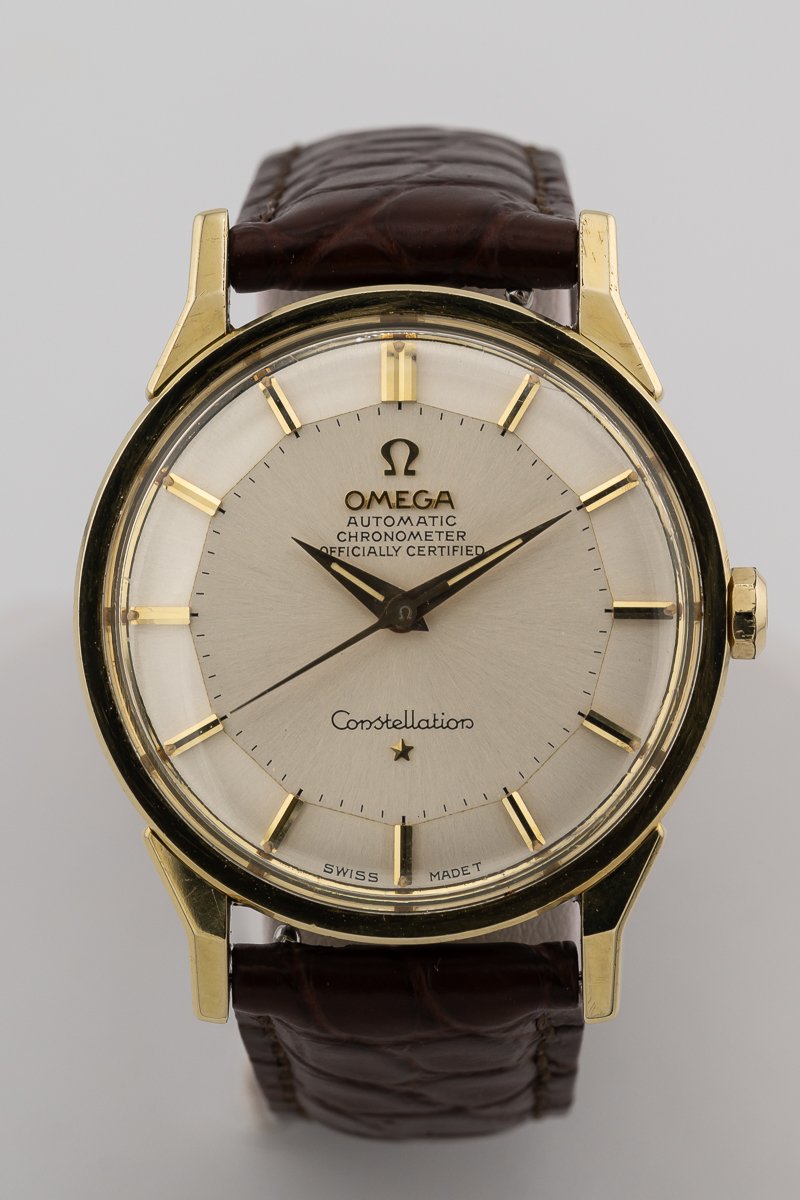
I had been looking to add a Constellation to my collection for some time before I finally scored this example in an auction. The pie pan dial is gorgeous, and the proportions are exactly what I love in a mid-century Omega: a clean 34mm case that wears bigger thanks to those crisp, faceted “dog-leg” lugs, and a dial that’s quietly dramatic once you notice what you’re looking at. The pie-pan facets catch the light in a way photos never fully capture, and the little applied star above six feels like Omega couldn’t resist a victory lap.
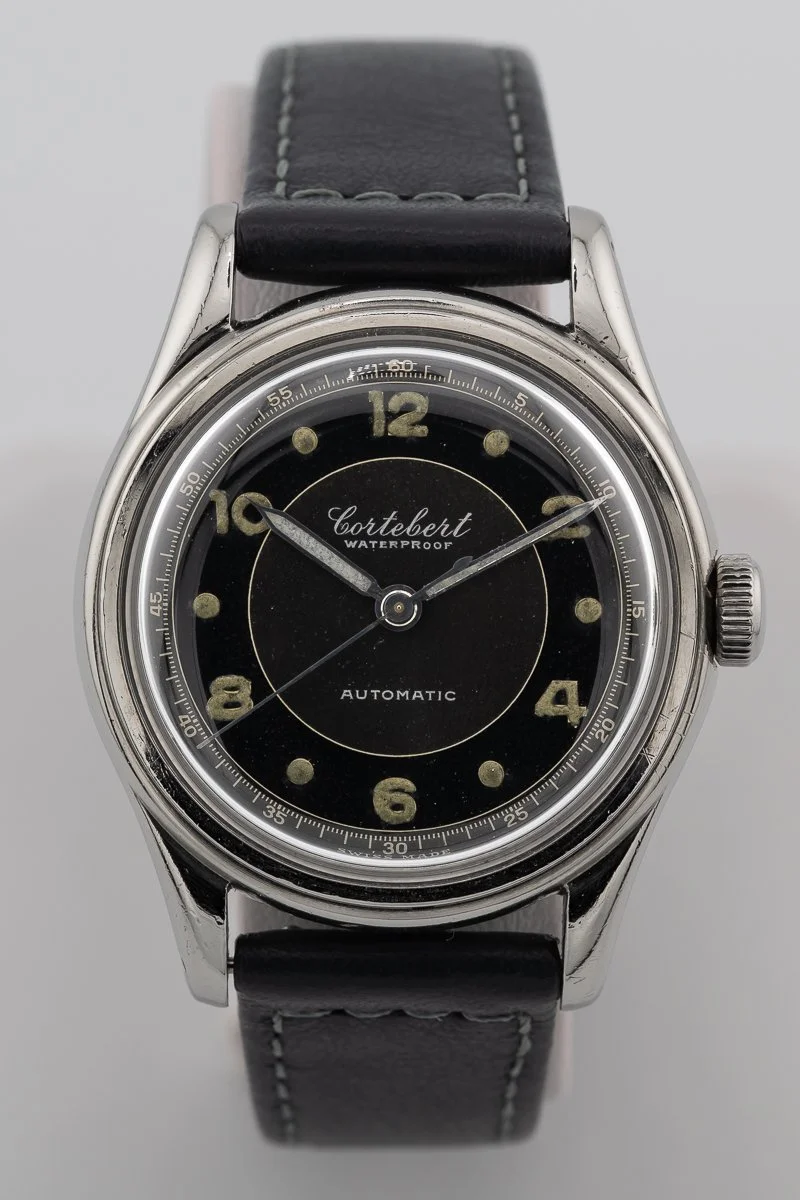
I had been looking for the right vintage Cortébert to add to my collection for a while, and I was thrilled to find this early bumper automatic example. The black and charcoal dial with, crisp minute track, and restored stainless steel hands give it real presence, and the whole thing pops even more against the bright, polished stainless case. It’s one of those watches that looks like it was built to be read instantly, in bad light, in the real world—not just to be admired in a box.
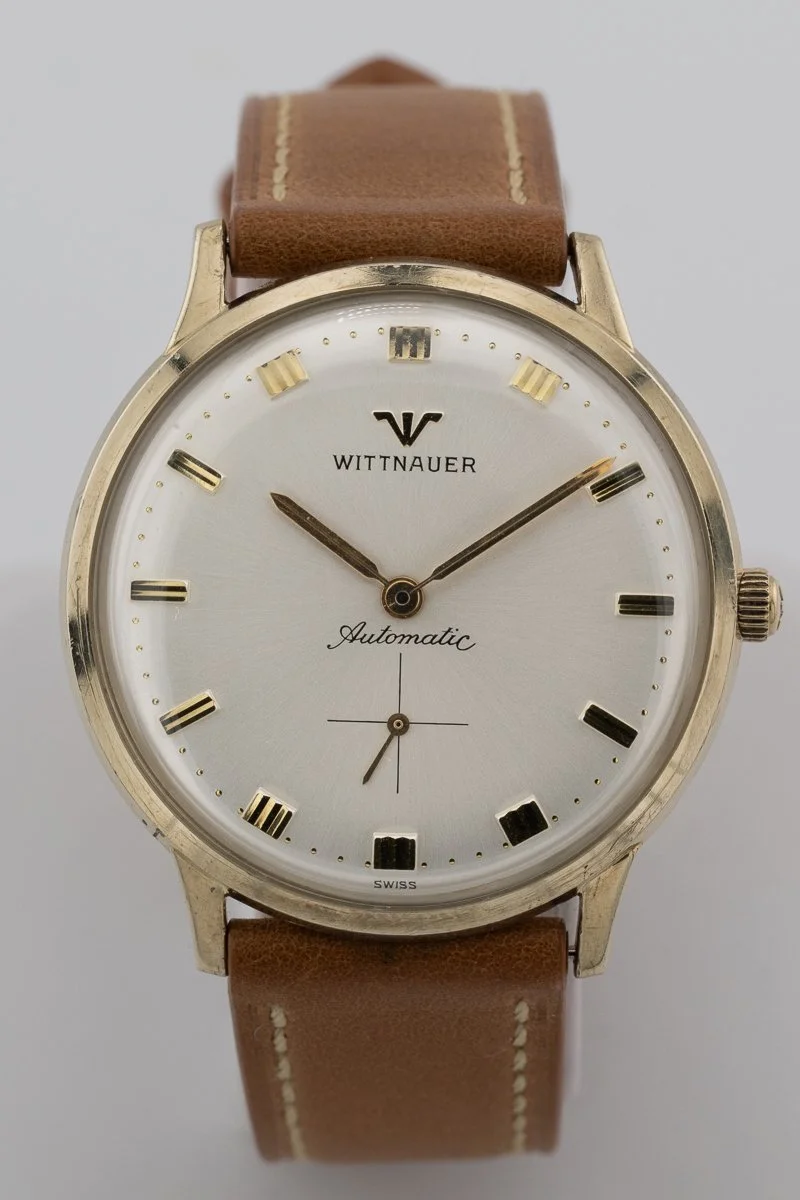
I originally planned to list this Wittnauer for sale, but it completely won me over once I had it in hand, so I’m keeping it (sorry, everyone). It’s the kind of watch that looks almost too simple—until you realize how hard it is to get “simple” this right. The big, clean dial and thin bezel give it a surprisingly modern presence for a vintage dress watch, and the applied markers add just enough texture to keep the whole thing from feeling sterile.
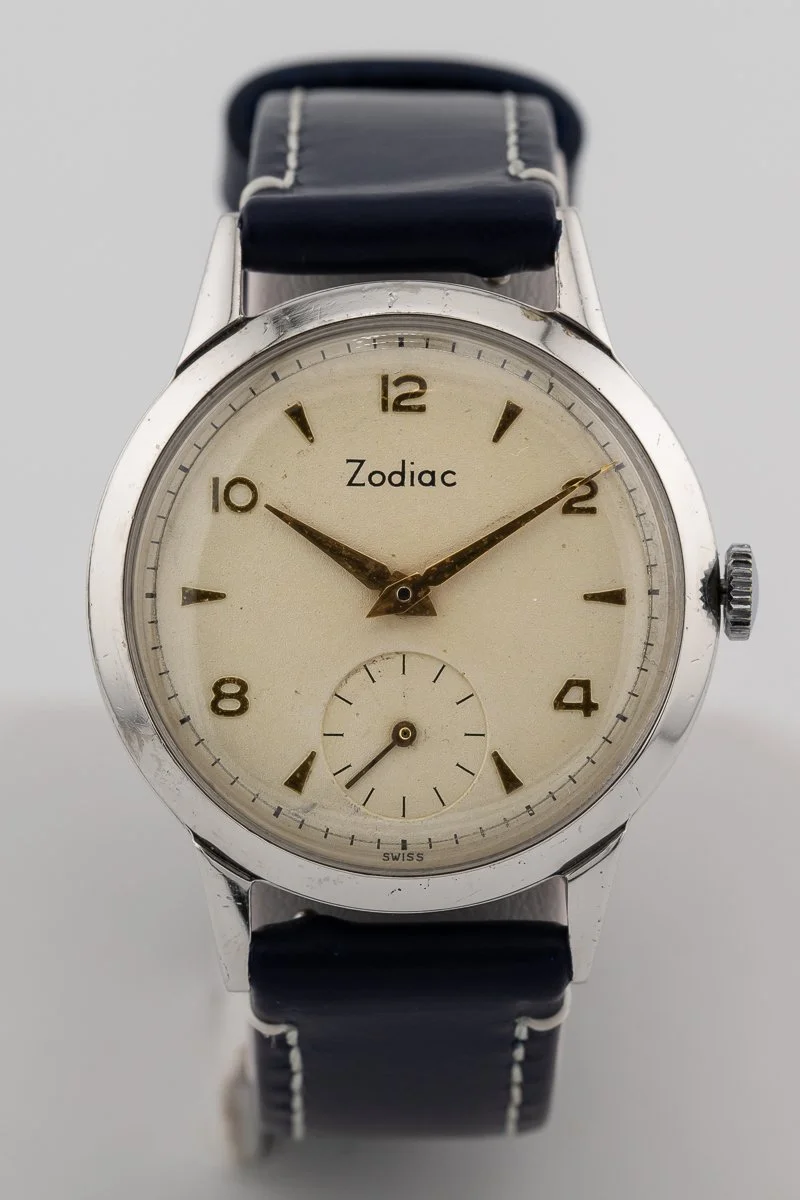
I added this Zodiac to my collection because this simple, sub-second dress model is a great example of what Zodiac used to be before it was consumed by sport and dive watches in the 1960s. I also love the contrast between the gold hands and markers and the bright silver (rhodium) case - a combination that goes particularly well with the navy blue strap.
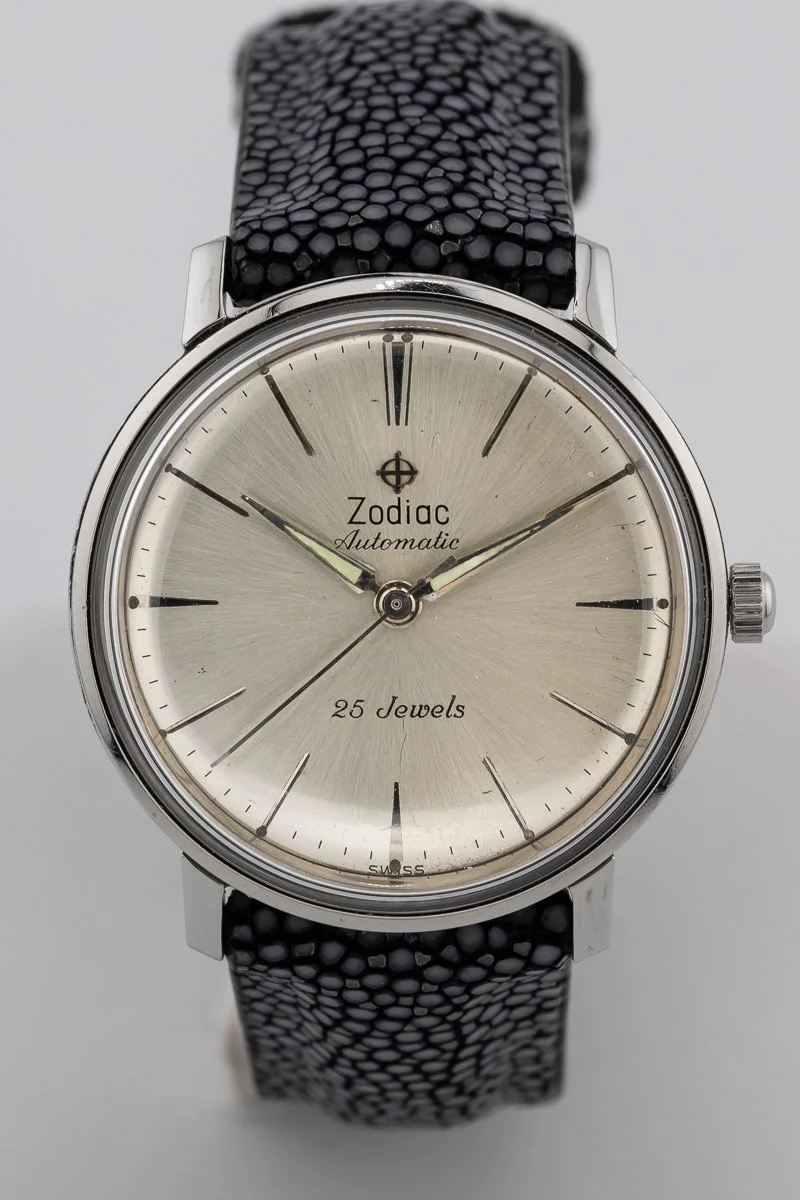
This sleek silver Zodiac is powered by a 25 jewel variation of Zodiac’s 1960s workhorse 70-72 movement. It has a somewhat unusual (for the time period) monoblock case (solid back) case, with a split stem to allow insertion and removal of the movement through the front of the case.
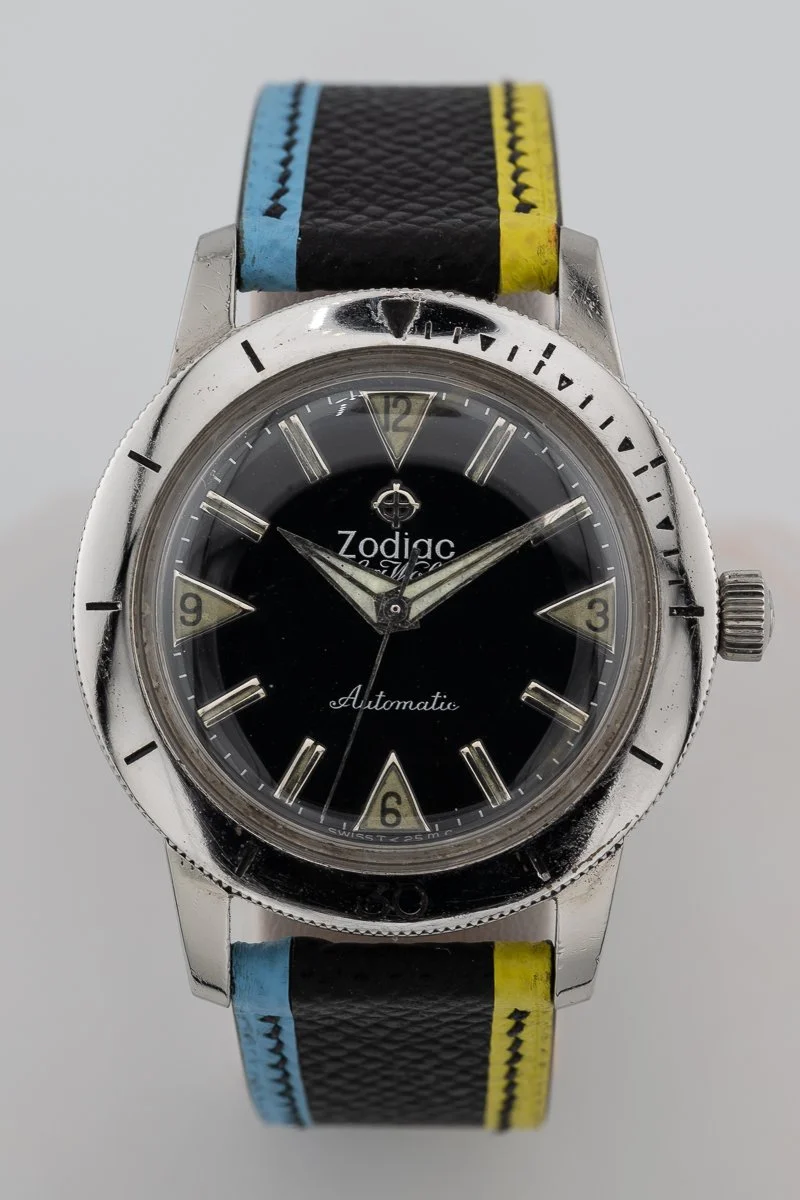
The Zodiac Sea Wolf was one of the first vintage watches that really spoke to me. I had seen other examples and decided I really wanted one of my own, and fortunately I was able to find this one in reasonable condition for a restoration - actually one of the first restorations I undertook after cutting my teeth as a watchmaker. The Sea Wolf comes with a stainless steel case, but the bezel is plated, and unfortunately it was in pretty rough shape when I aquired it. I ended up re-plating it in rhodium, which is attractive but also gives the watch a slightly different, more formal look than when it was new. The markings on the bezel were also restored (imperfectly) with the help of some epoxy paint. It is powered by the famous Zodiac 70-72 automatic movement, which is based on a manual wind A. Schild design.
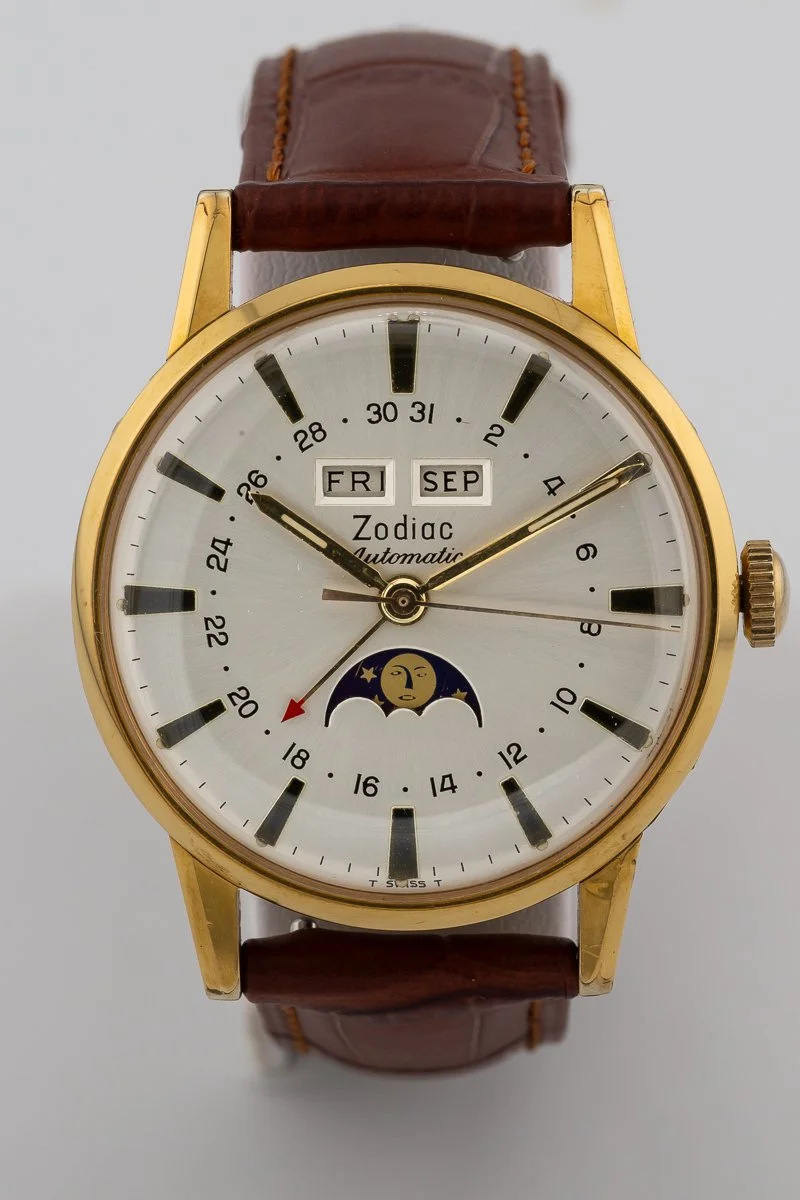
Triple calendar with moon phase is one of my favorite complications, and I didn’t have to think very hard about purchasing this Zodiac when it showed up as a “For Repair” listing. It badly needed a service, and the case had some cosmetic issues that were mostly addressed by over-plating with 14K gold plate. That plus a new crystal, and the end result is really something special. The movement is essentially a reliable and accurate Zodiac 70-72 automatic with the extra calendar bits added to the dial side. Four small pushers make it relatively easy to set the various calendar functions.
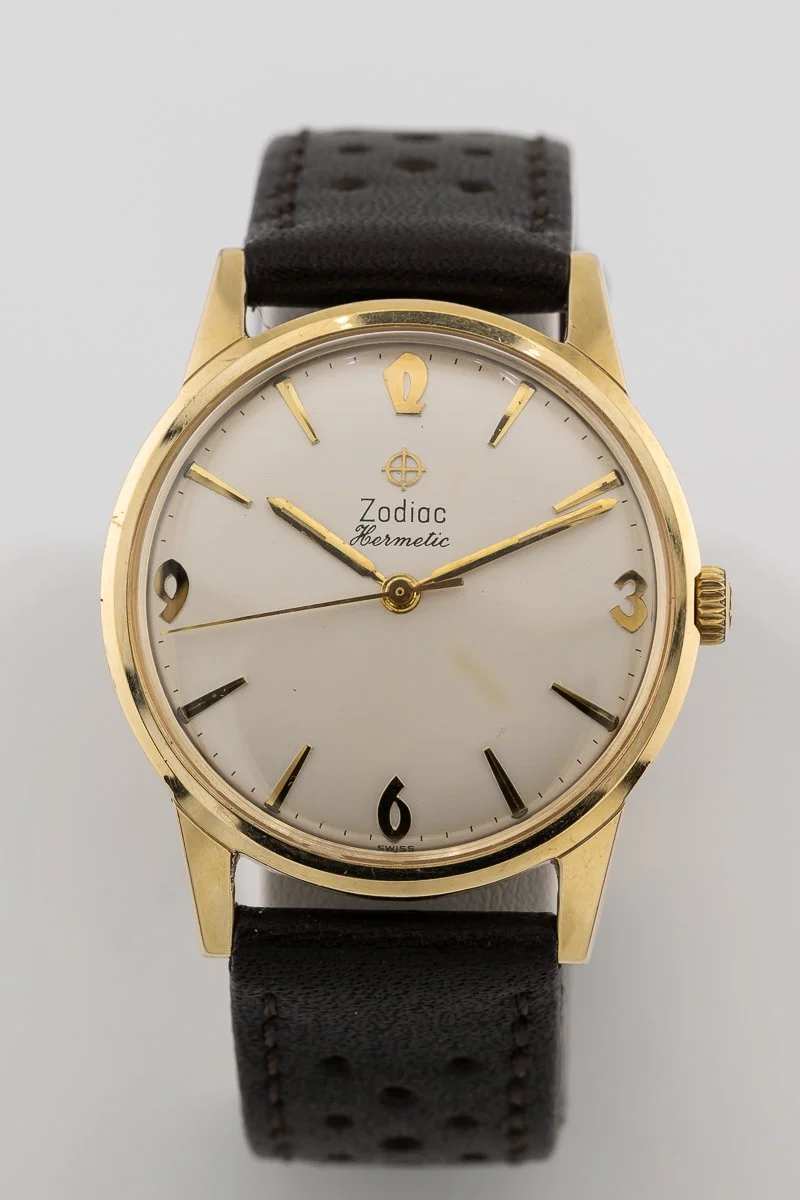
I’m a big fan of Zodiac as a high quality but accessible vintage brand. This is a rather basic example, but is still a very handsome vintage watch. The A. Schild-sourced Zodiac 61 movement is a manual-wind-only design that forms the basis of the famous Zodiac 70-72 automatic line.
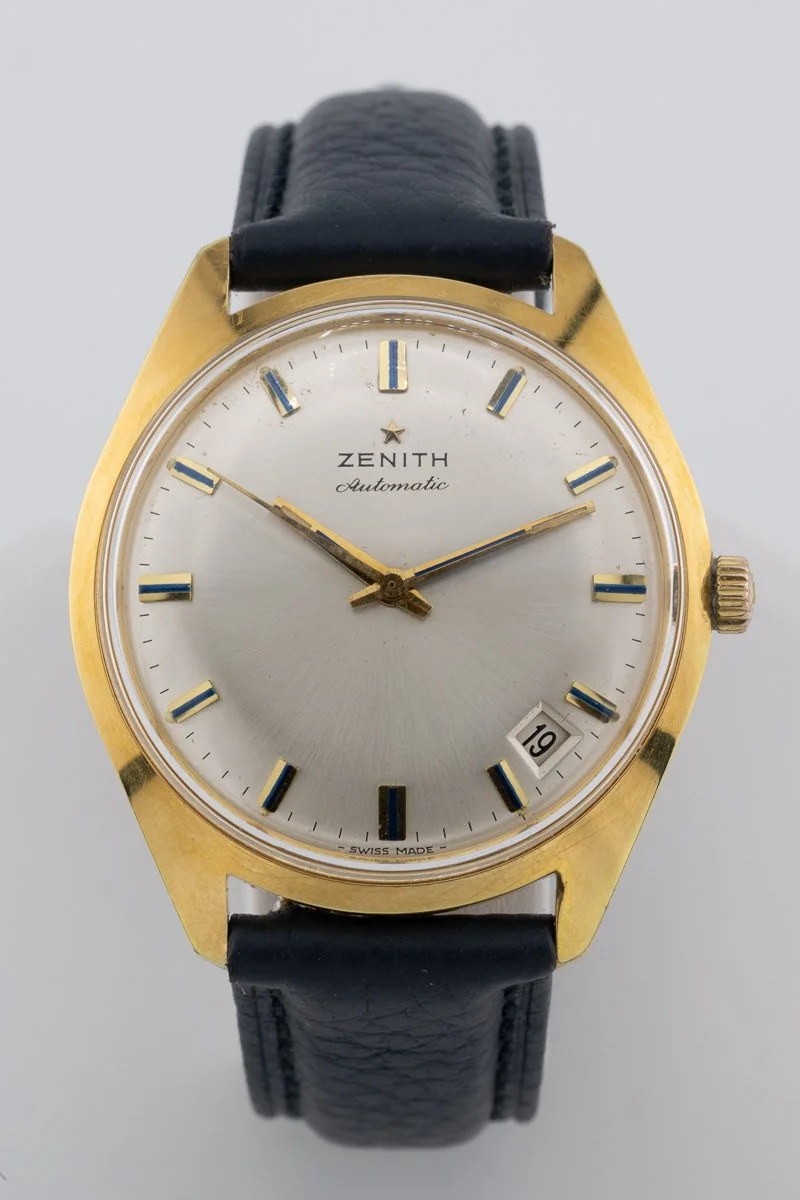
I have tremendous respect for Zenith as a watchmaker, and good restoration candidates don’t pop up on eBay that often, so I was pleased to find this one. The movement in this thing did not disappoint - it’s beautifully made. This is definitely a cut above the usual watches they used to hand out on service anniversaries. W.H. Rogers must have done a really good job.
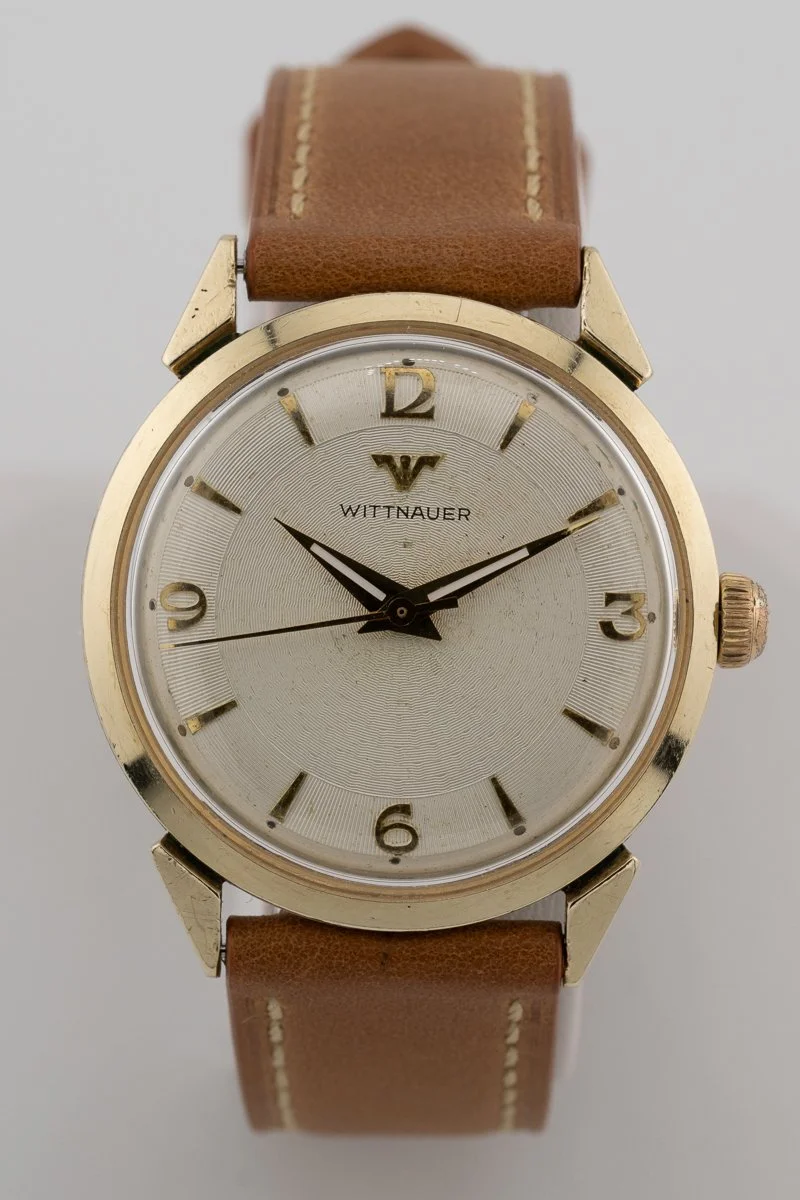
So, what do when you have a vintage Wittnauer with a fabulous dial but a broken lug, and another with a good case but an ugly, damaged dial? You make a marriage watch! In this case the marriage is pretty incestuous, as the dial/movement and case are both from contemporaneous Wittnauers. Fitment wasn’t that difficult, but did require a thin 3D printed spacer around the perimeter of the dial, which is barely visible in the assembled watch. I also needed to install new hands, since the original minute hand had been badly bent. I’m pretty happy with the result and glad I could preserve this cool guilloché dial, even if it gets points off for historical accuracy.
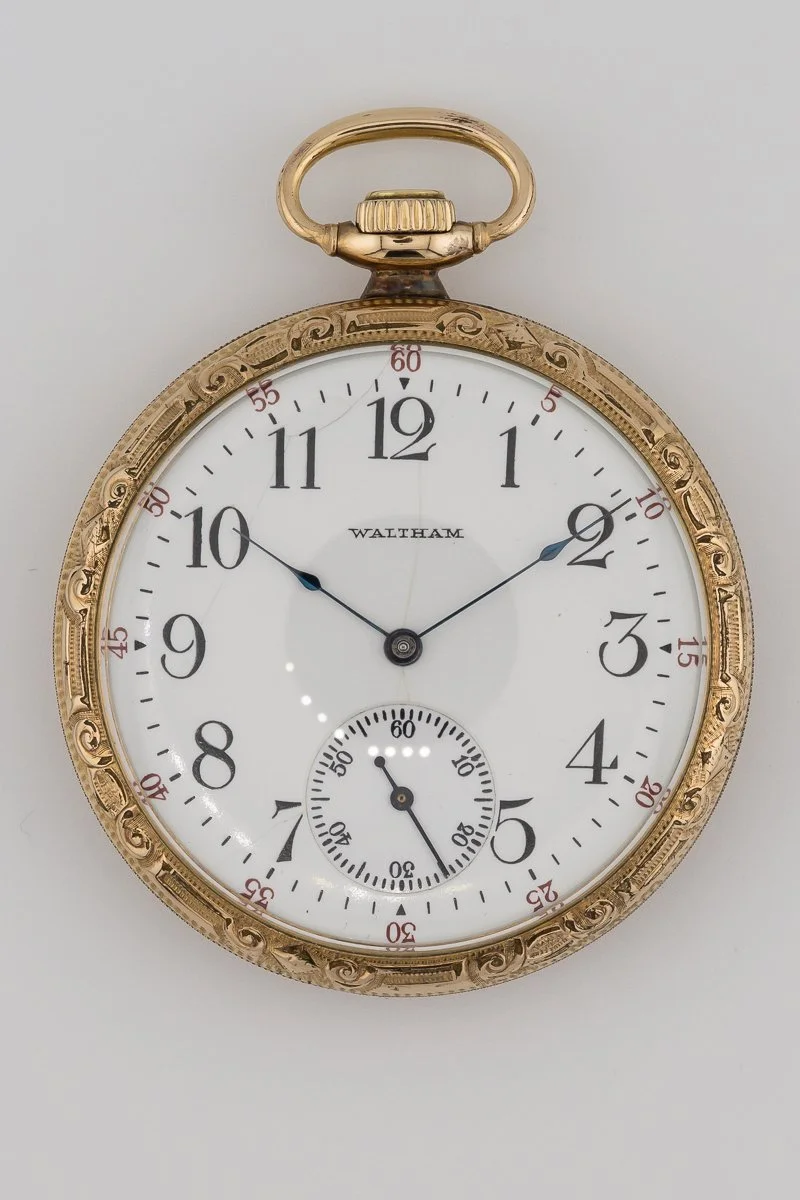
I wanted a very prototypical American pocket watch for my collection, and found this Waltham. It’s nothing fancy - 15 jewels, not railroad grade, but it works well and serves me as a reminder of a time when the best watches in the world were made in the USA. The porcelain dial unfortuntely has several hairline cracks (not unusual for porcelain), but otherwise it’s a very clean example.
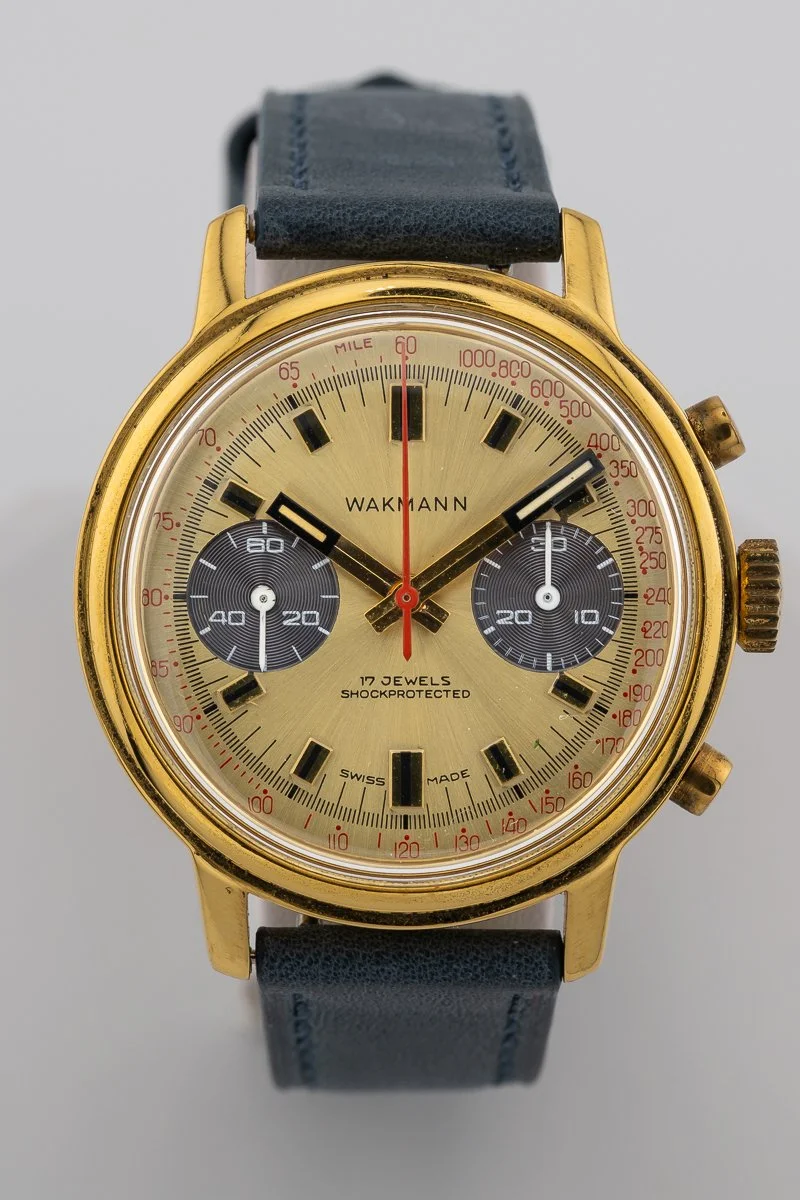
The very bold and and very gold style of this chronograph kinda screams 1970s, but regardless of what you think of the exterior, inside sits one of the all time great movements - the Valjoux 236. This uses a column wheel for smooth operation, and has a high 21,600 bph beat rate for accuracy. Interestingly, unlike many other chronographs, the hammer in this movement only makes momentary contact with the register cams when the reset pusher is pressed. A separate brake is used to fix the central chronograph second hand. This was likely done to enable engineering of a flyback variation, the Valjoux 235.
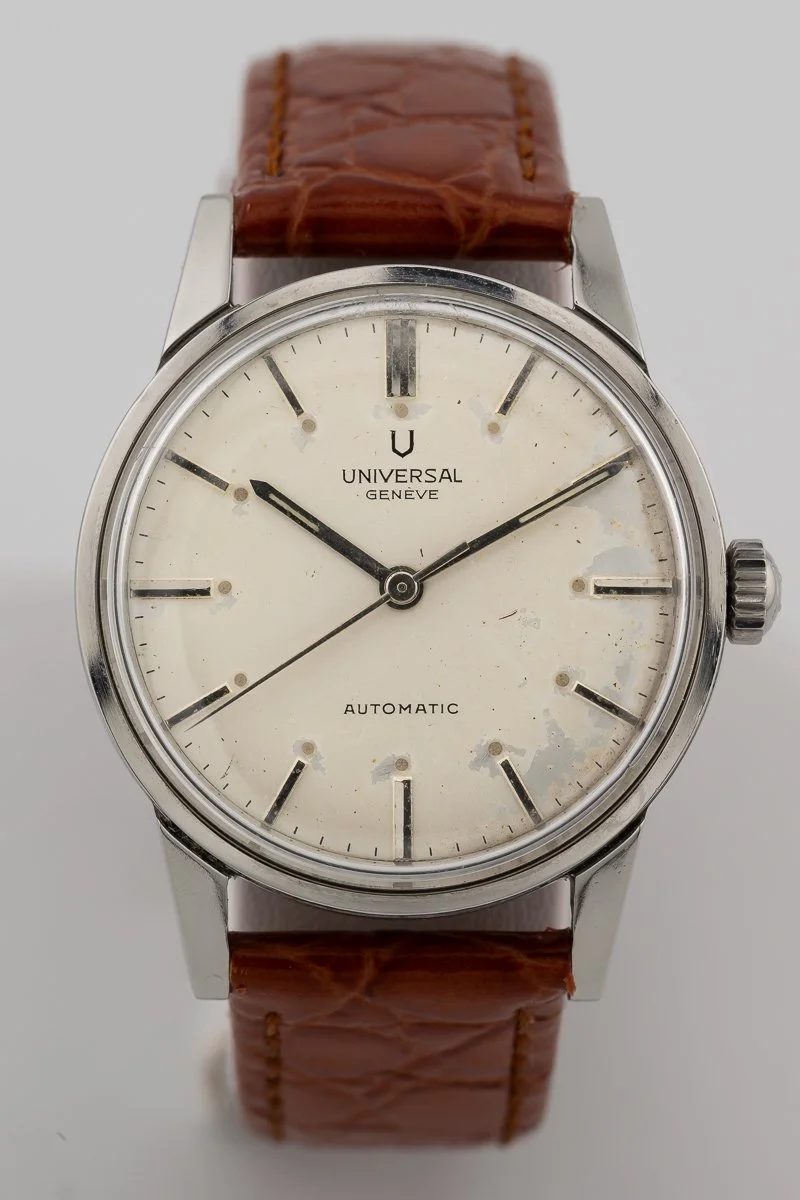
Leave it to Universal Genève to make a microrotor movement that, somewhat in contrast to the Buren microrotor in my Hamilton 688, is genuinely well designed and engineered (and pretty to look at, with Geneva striping across the entire movement). It still has the usual microrotor efficiency issues, but the hand winding mechanism is so solid that it hardly matters. It’s too bad the dial on this watch was subjected to an overly aggressive attempt at cleaning and tritium dot removal, but it still looks good in person - better than the photos.
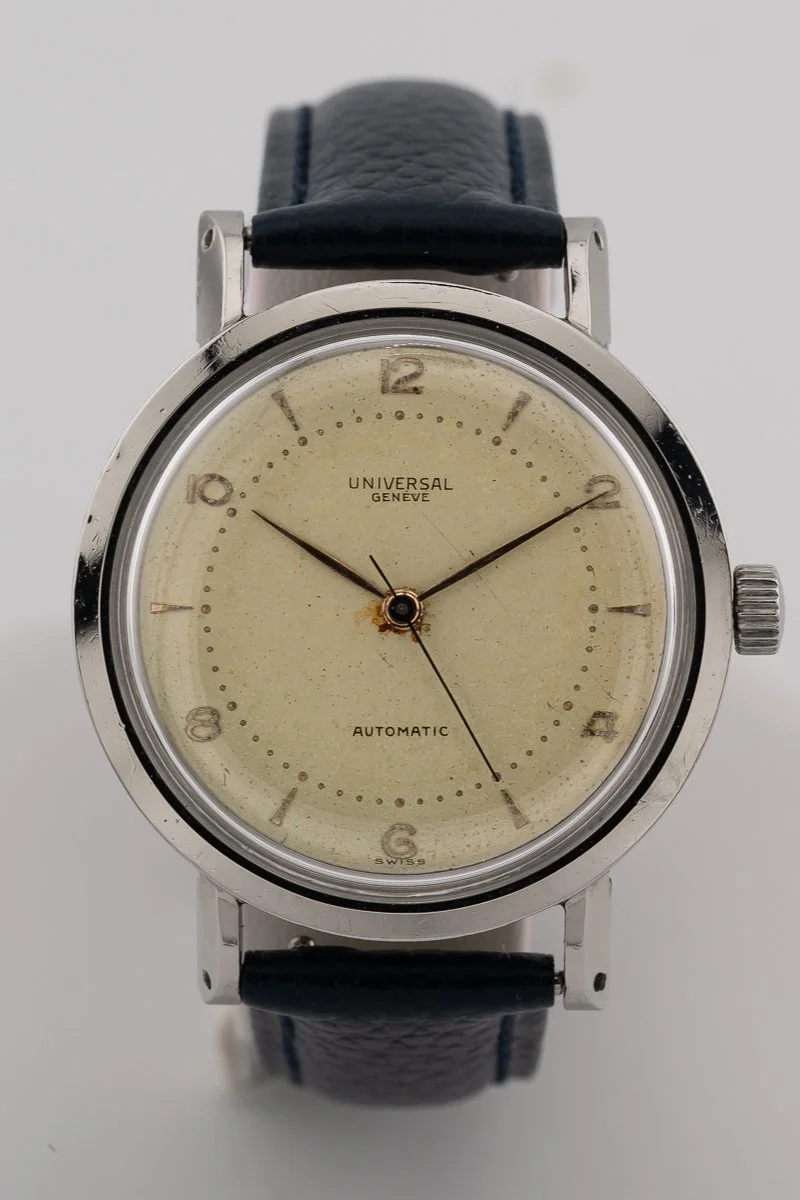
I tend to be pretty picky about dial condition when I’m shopping for parts and repair watches to restore. This one has a bit more patina than I’m used to, but I wasn’t about to pass up a good deal on a Universal bumper auto, and I have to admit that the somewhat weathered dial looks pretty good sitting in a polished case under a new crystal. The movement, as expected of Universal Genève, is really well made and was a breeze to service.
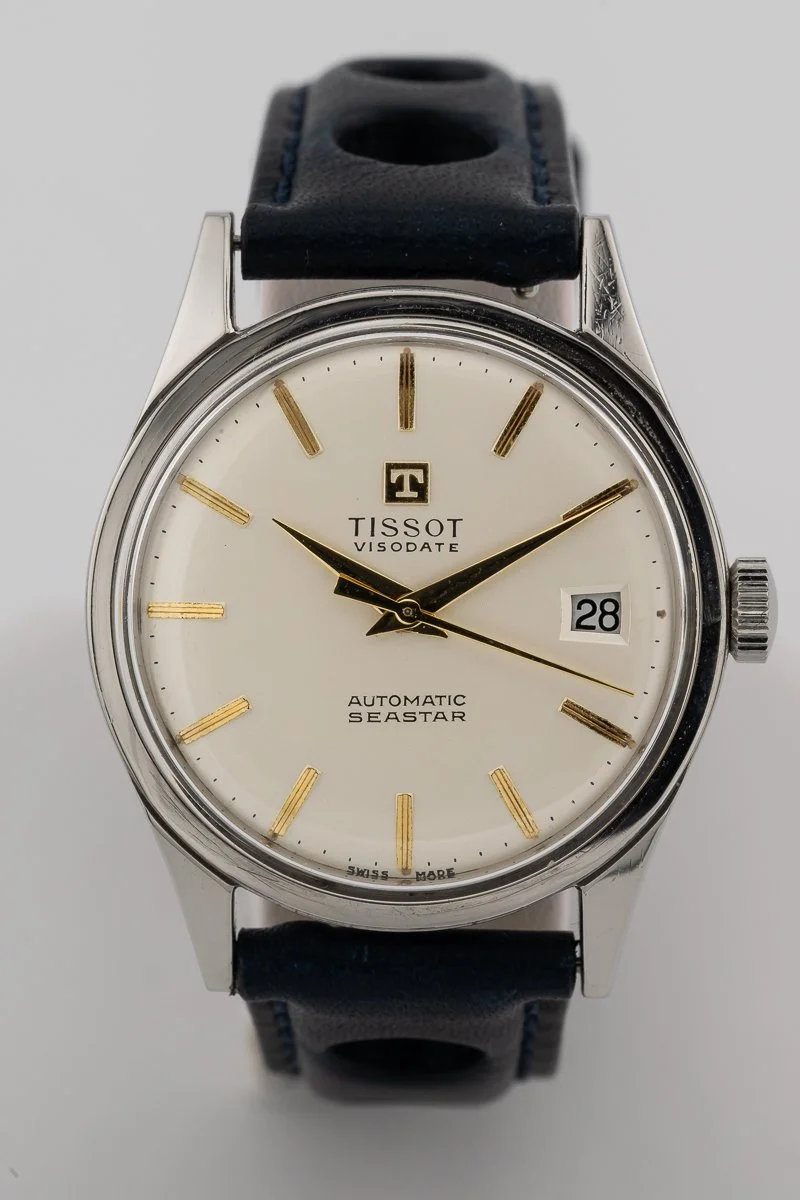
You can see the distinct aesthetic of modern Tissot watches start to take shape already in this Seastar from the early 1960s, although the contrasting gold hands/indices and steel case is definitely a classic look. One oddity about this watch is that the Tissot 784 movement has no quickset at all for the calendar - not even a unidirectional calendar driving wheel - so setting the date can be a pain. I usually don’t bother when I wear this one.
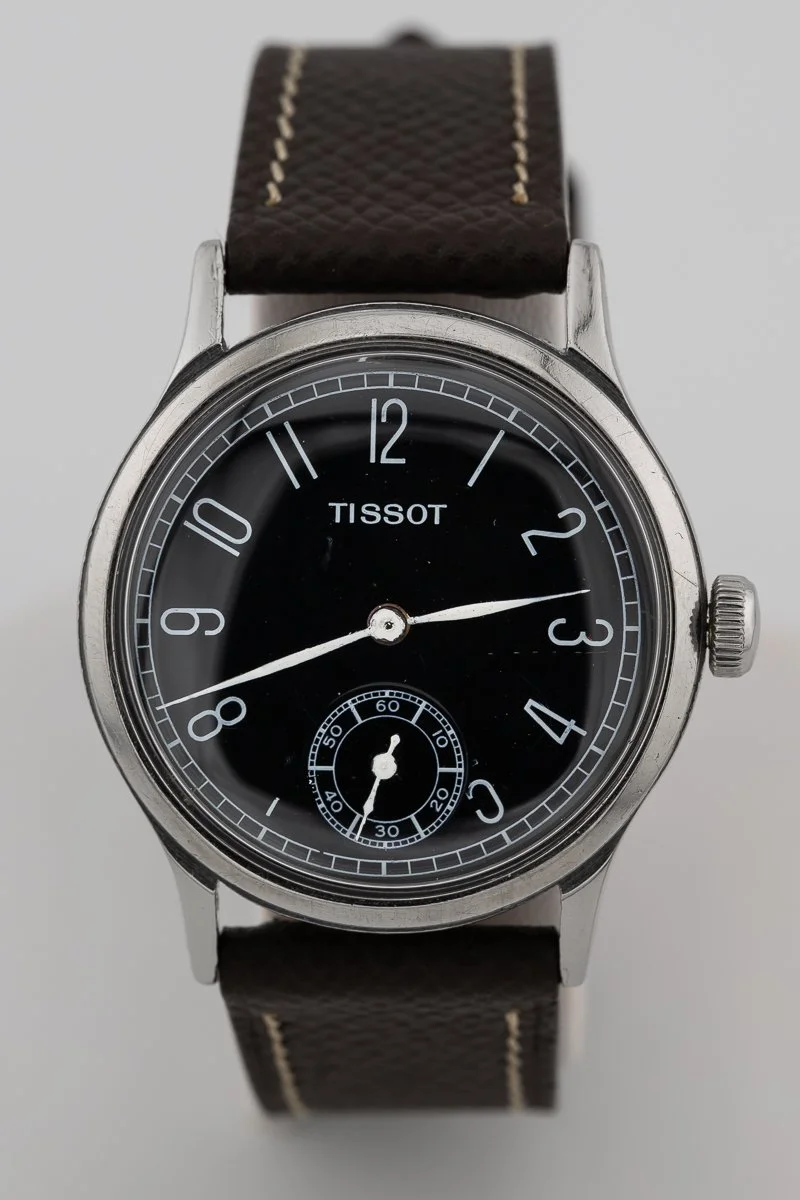
Classic Tissot watches tended to be very “fashion forward” and they always seem to look particularly modern relative to their actual age. That’s certainly true of this example, with its high-contrast white on black dial. It’s possible, in fact, that this is a re-dial, although it’s difficult to be sure. Regardless, it’s a great looking watch. The Tissot 27-3 movement has an unusual early shock protection design, with the balance cap jewel mounted in a housing that is attached to the balance cock from below by a pair of screws that have polished tips for better aesthetics. The movement ring for this watch was missing, so I 3D printed a replacement.
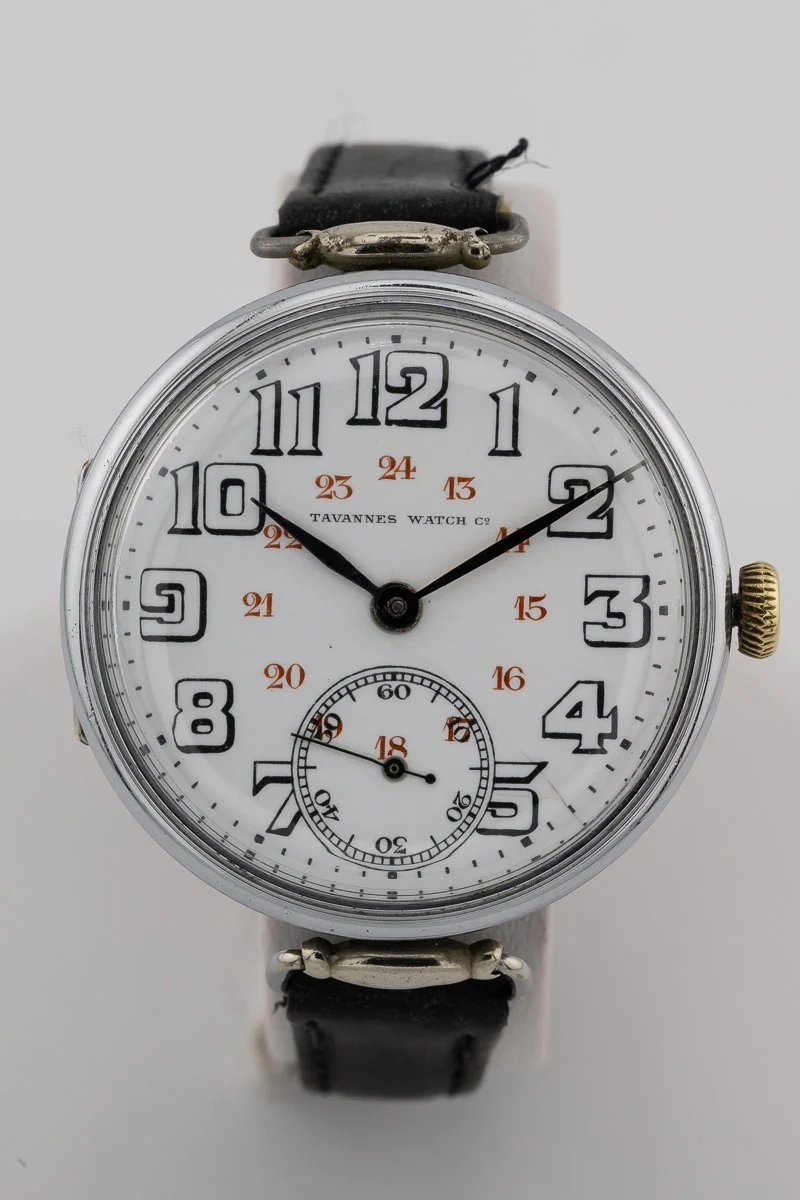
The wrist watch revolution started when so-called trench watches became popular with soldiers during WW1. Initially, these were basically small pocket watch movements strapped to the wrist, and this Tavannes example, with a porcelian dial and hinged caseback, certainly fits that bill. I wish I knew a bit more about this watch - the movement is unfortunately unmarked - but I treasure it as the real “granddaddy” of my wristwatch collection.
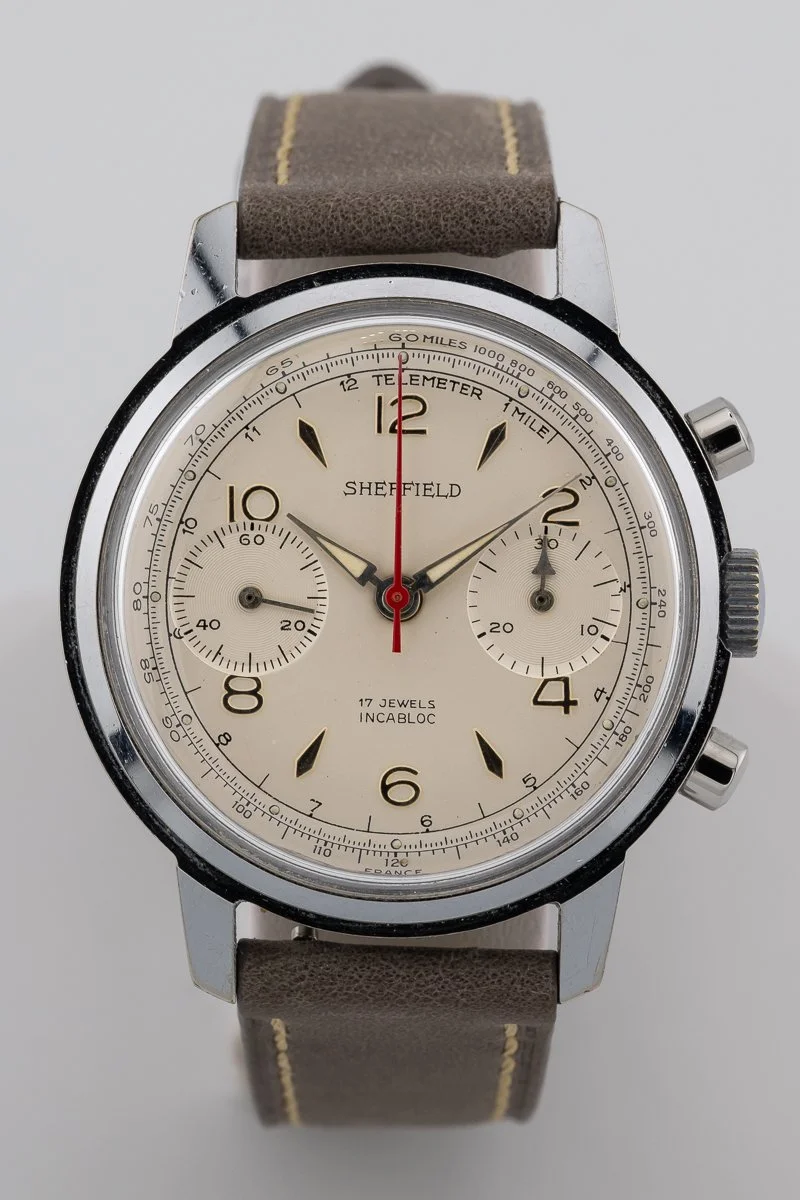
This is probably my favorite vintage chronograph in my collection for everyday wear. The pictures don’t completely do it justice, but the chrome plated case, cream colored dial, red chronograph second hand, and the grey stitched band just look really good together. The Venus 188 movement in this one is also a strong, accurate runner.
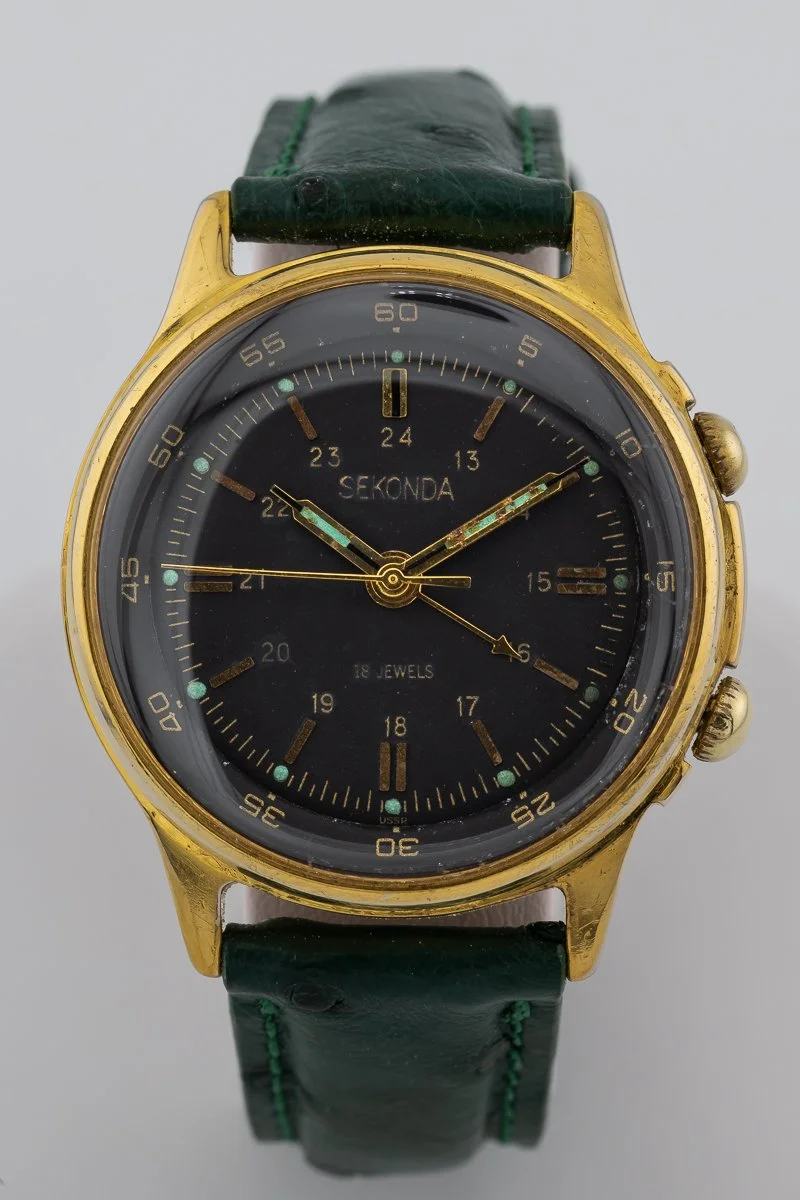
In the early 1990s, As the Soviet Union was experiencing its terminal collapse following the fall of the Berlin Wall in 1989, Poljot and other Soviet watch factories were still churning out watches for re-sale in the West under secondary Eurpoean brands like Sekonda. This alarm watch is from that interesting point in history. It’s still a good looking watch, if you don’t stare at it too hard (some of the dial and hand elements haven’t aged all that well). Re-plating in 14K gold certainly helped in that department. The movement is, in typical Soviet fashion, very workmanlike and pretty much devoid of anything resembling finishing. It still runs well, however, which as any good Soviet will tell you, is the important part.
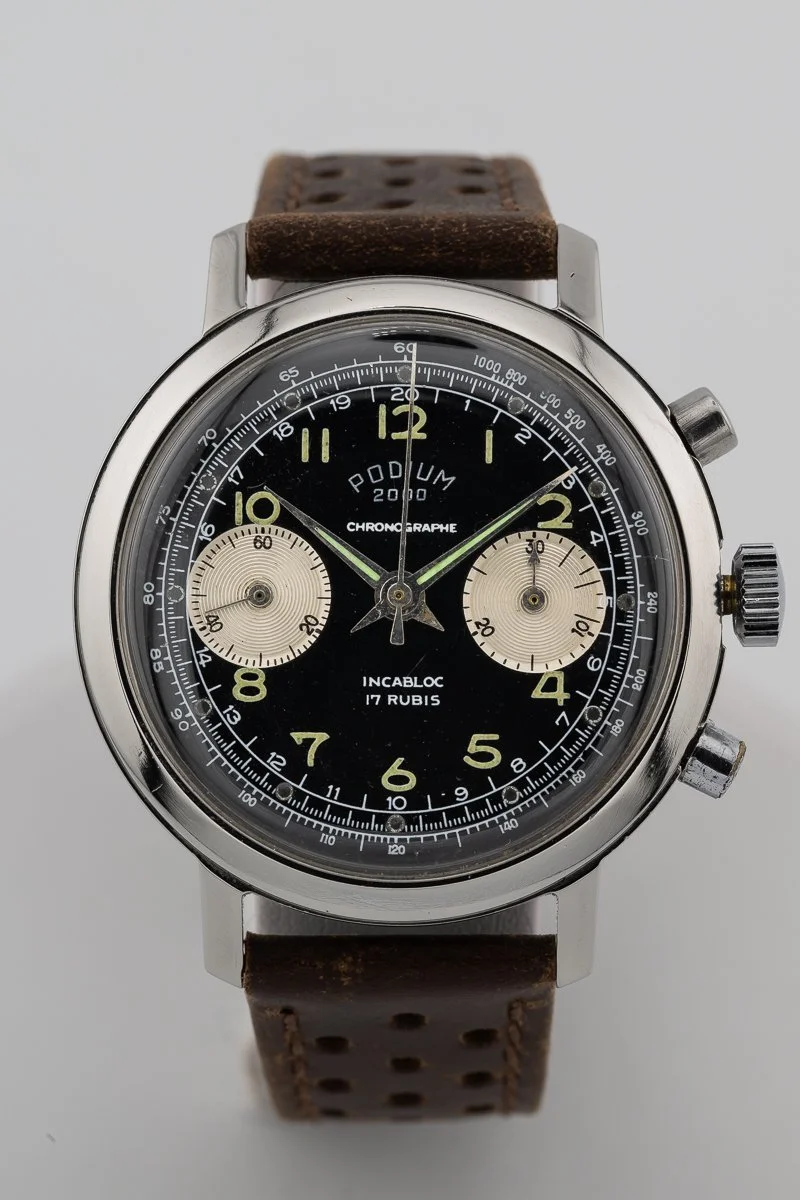
I really love the look of the reverse panda dial on this Landeron-driven chronograph. Podium 2000 is a great example of a pre-quartz-crisis Swiss watch “micro-brand,” where small distributors, jewelers, and export agents could contract various Swiss ebauche manuafacturers to assemble all the parts needed to build a watch.
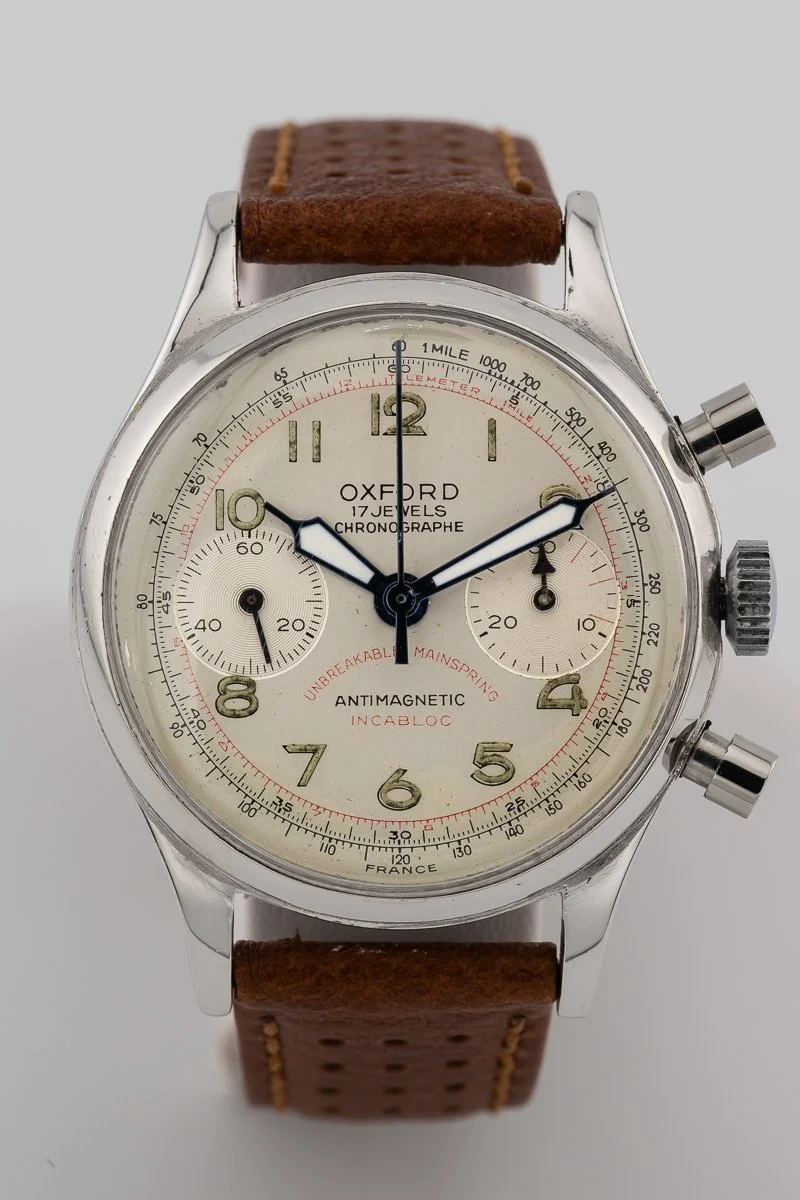
Occasionally I get a watch to restore that I know is going to be a bit of an odyssey. This Oxford chronograph certainly qualifies. It came to me with a beat up & corroded case & bezel. Both the pushers and hands, other than the minute counter, had been thoroughly trashed. Fortunately the, other than replacing the mainspring, the movement didn’t require anything beyond a standard service. I was able to track down hands with a blue tint that match the aesthetic of the originals fairly well, and I (eventually, after a lot of hunting) found a pair of modern replacement pushers that, while a bit oversized, fit and function well. The case and bezel - originally chrome - were restored and re-plated in rhodium, and the crystal was replaced. After all of that, I ended up with a good looking and strong running Venus-based chronograph, so I think it was all worth it.
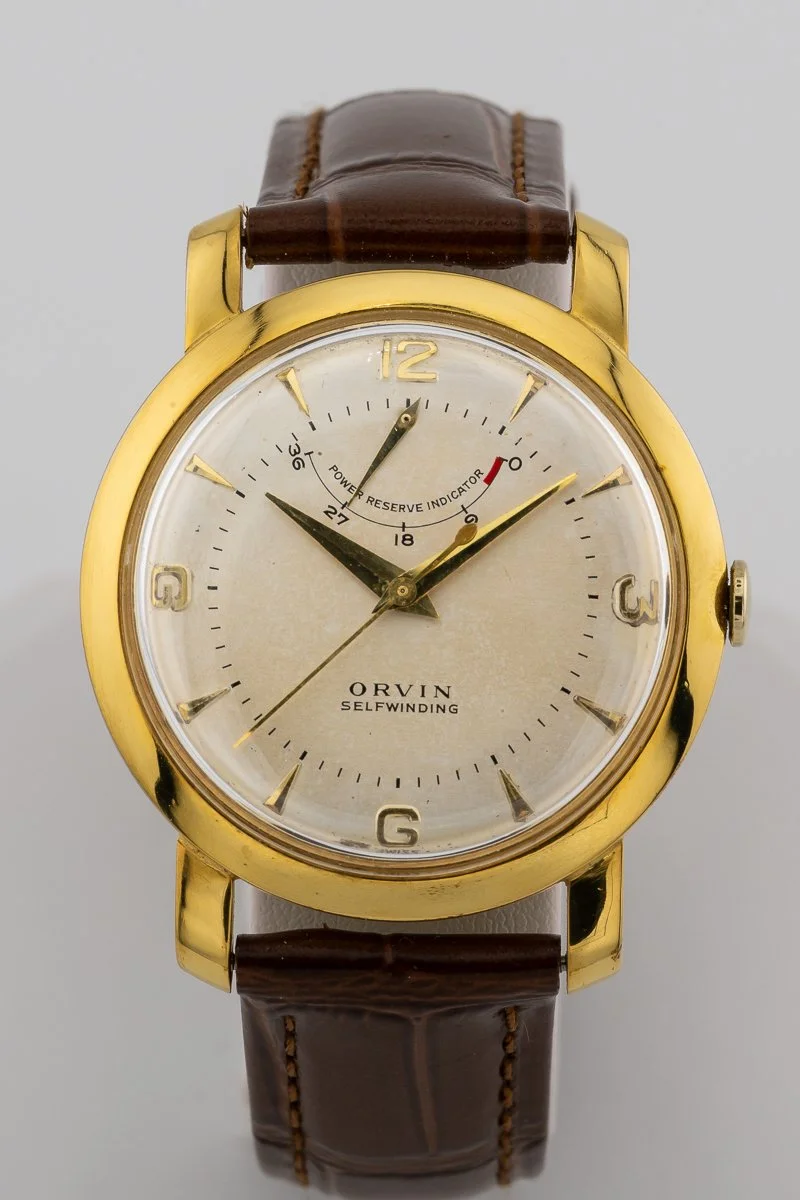
Back in the 1950s when Sears Roebuck sold pretty much everything, “everything” included luxury Swiss watches, and Orvin was their exclusive brand. I was particularly excited to open this one up, as I had never serviced a movement with a power reserve indicator and I was very curious how it worked. What I found was some very clever mechanical engineering able to track & differentiate the independent rotation of both the mainspring barrel and the winding arbor. Really cool stuff. The watch doesn’t look half bad either. I ended up overplating the case, and it turned out very nicely.
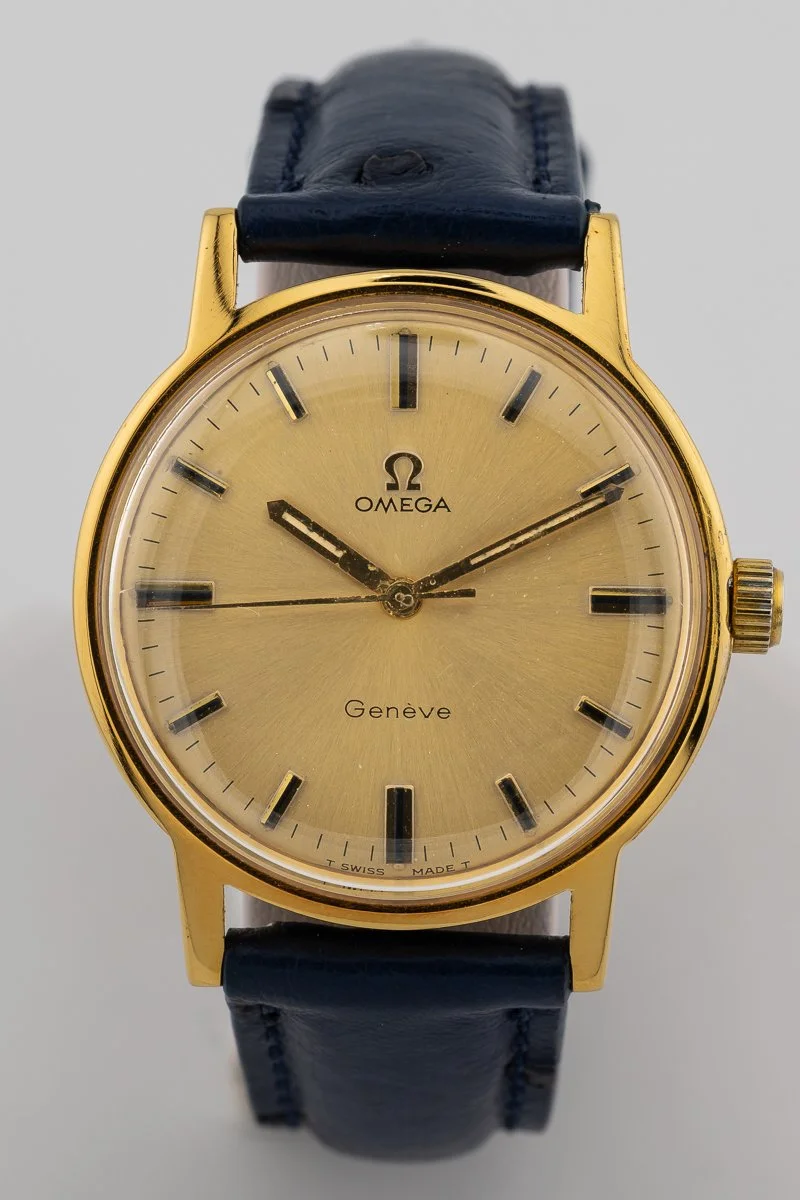
This handsome Omega must have led a pretty tough life, as the back side of the case had suffered a considerable amount of erosion, the plating was in poor shape, and the original crown was missing. I couldn’t do anything about the erosion of the case material, but with a service, new crown, case polish, crystal polish, and overplate in 18K gold, you still have a good running Omega that looks great on the wrist.
This 1965 Longines Grand Prize Automatic combines one of my favorite dial designs with an equally interesting movement. Its silver radial-finished dial uses applied faceted markers, fine concentric tracks and restrained gold accents, while the caliber 342 beneath it employs Longines’ distinctive toothed-rim automatic rotor. Integrating the winding system into a movement only about 4.6 mm thick helped keep the complete 34 mm watch under 10 mm, including its crystal. I especially enjoy that contrast: an elegant, quietly detailed dress watch whose unusual engineering only becomes apparent when the case is opened.