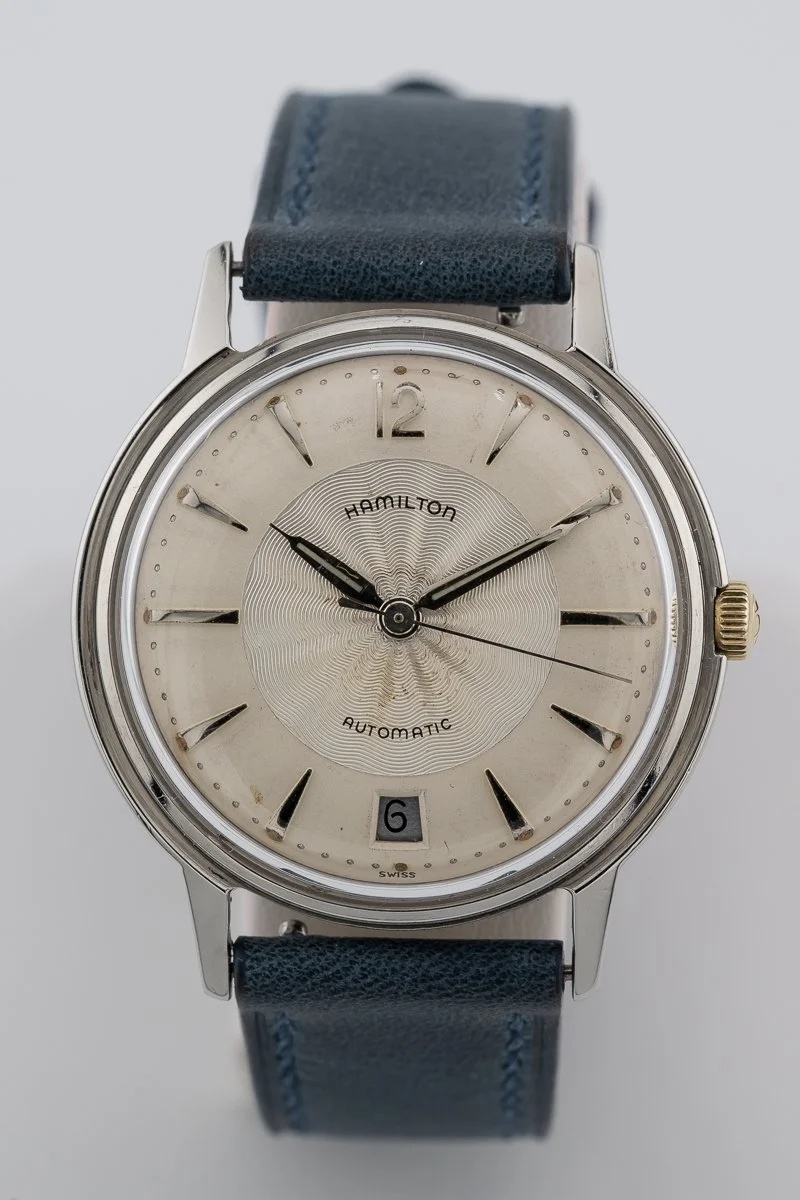
Hamilton c. 1960 Calendar Microrotor Automatic
Some vintage watches are highly cooperative. Others, not so much. This particular Hamilton fought me tooth & nail, but I persisted (through multiple donor movements) because I really love the style of the dial. The Buren-sourced microrotor movement in this thing is cool looking, but not fun to work on. Lowlights include a complex and cantankerous compound ratchet wheel, a frankly terrible click spring design, and a difficult-to-assemble automatic winding mechanism underneath the rotor. Eventually I got it working, however. Well, except for the calendar - the calendar driving wheel, like most of the rest of this movement, is complex and delicate, and the one in this watch literally fell apart. I have not yet been able to source a replacement, so the calendar is currently stuck on 6 (short for “666”).
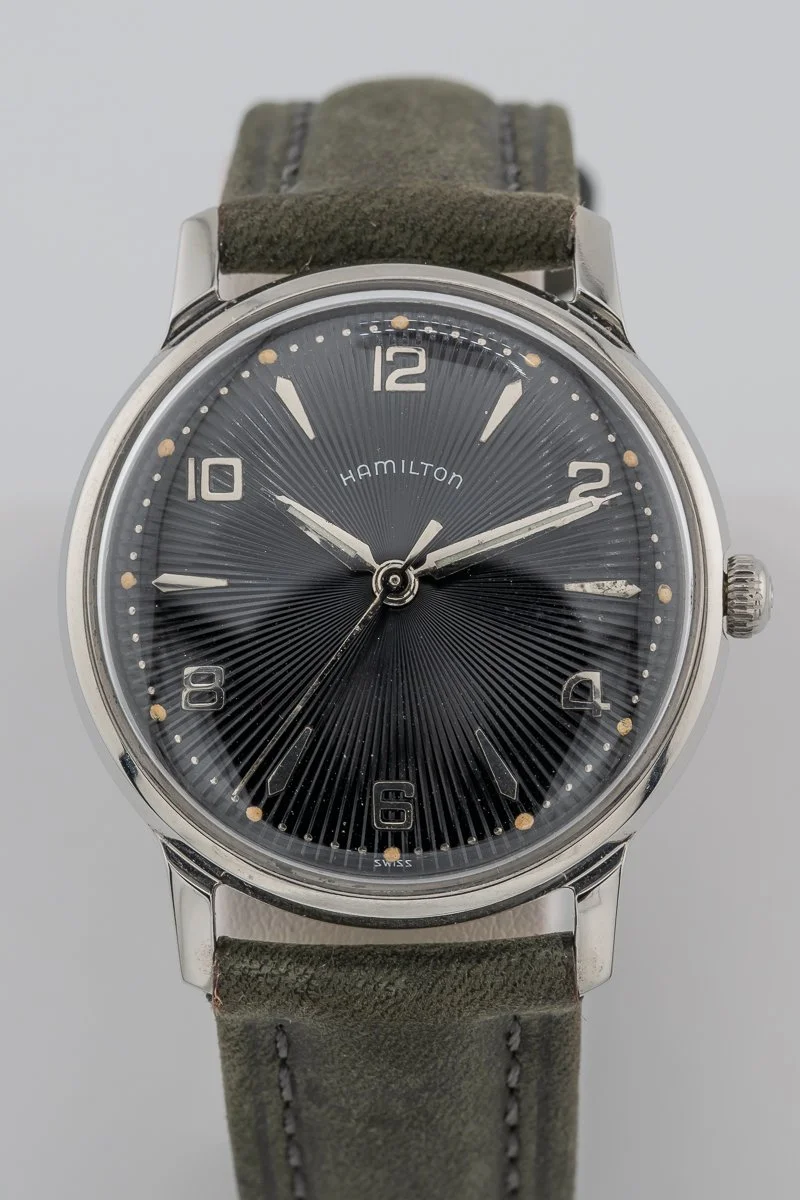
Hamilton Early 1960s Black Ray Dial Stainless Manual
The Soundgarden tune Black Hole Sun always comes to mind when I look at this Hamilton with its unusual black sunburst pattern dial. This really is a great looking watch which somehow manages to be both classic and different at the same time. It’s not all looks though; the ETA Swiss movement is a strong runner. Interestingly, the balance shock spring design resembles Seiko’s diashock design in both form and function. Seiko released the first diashock watch in 1956, while ETA ramped up production of the 1080 caliber in the mid 1950s, so it’s not clear who was first here.
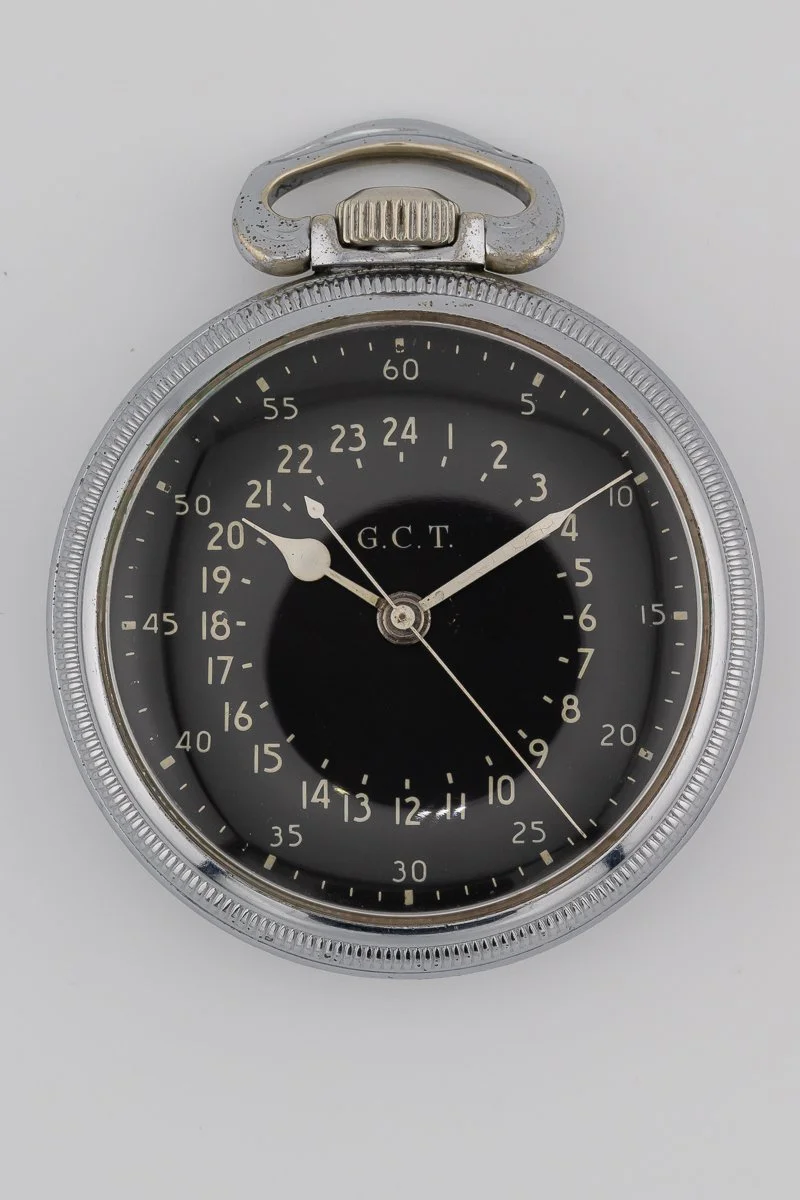
Hamilton 1944 4992B AN 5740 Military Pocket Watch
AN 5740 military pocket watches were issued to aircraft (primarily bomber) navigators in all service branches during WWII and into the early post war period. Watches meeting the specification were manufactured by Elgin, Waltham, and Hamilton. Unusually for a pocket watch, they have a central second hand and a hacking mechanism, as well as a 24 hour dial. They were typically mounted in special cases, meant to protect the watch from the effects of vibration, temperature and altitude, and were generally set to Greewich Mean Time (hence the G.C.T. on the dial). This Hamilton example, despite its age, still tells time very accurately.
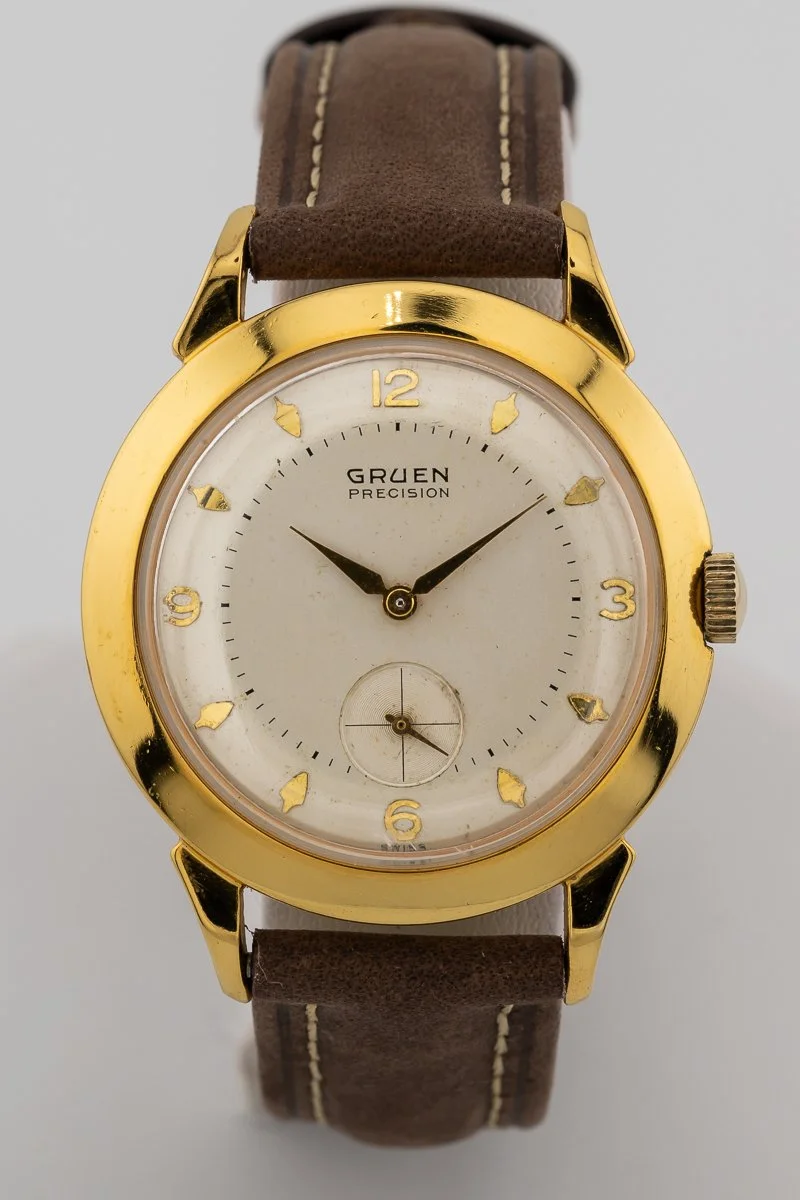
Gruen c. 1956 Precision Pie Pan Sub-second Manual
I have restored a lot of Gruens for sale on my shop, but I’ve only kept a few special examples for my personal collection. This is one of them. In this case I really love the watch’s appearance, with its pie pan style dial, sub-second hand, and wide polished gold bezel which together give the watch a nearly perfect vintage aesthetic. It looks especially good after being over-plated in 18K gold.
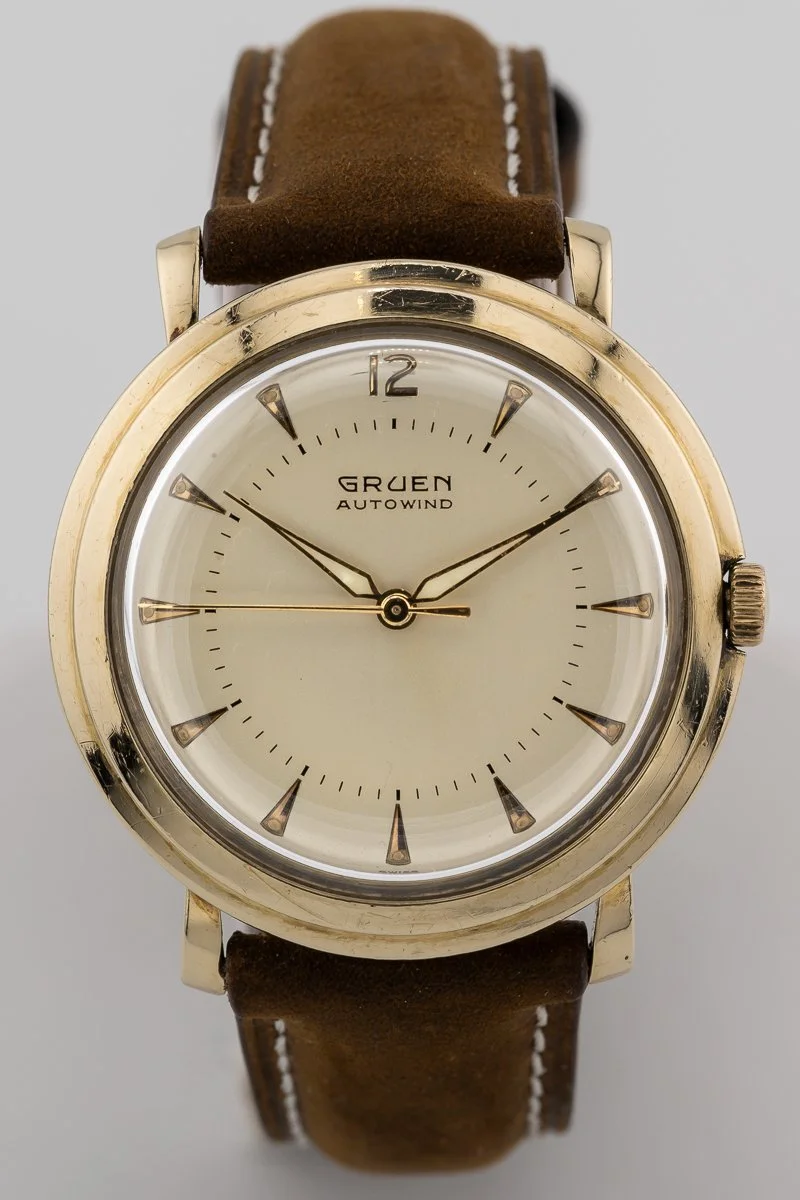
Gruen Mid 1950s 480SS Automatic
This is a fine example of Gruen’s mid-century Autowind series, which introduced full-rotor automatic technology to the American market. I particularly love the overall look of this watch, with its subtly recessed arrowhead dial markers, tiered, sloping bezel, and flared lugs. It’s really a timeless, elegant look.
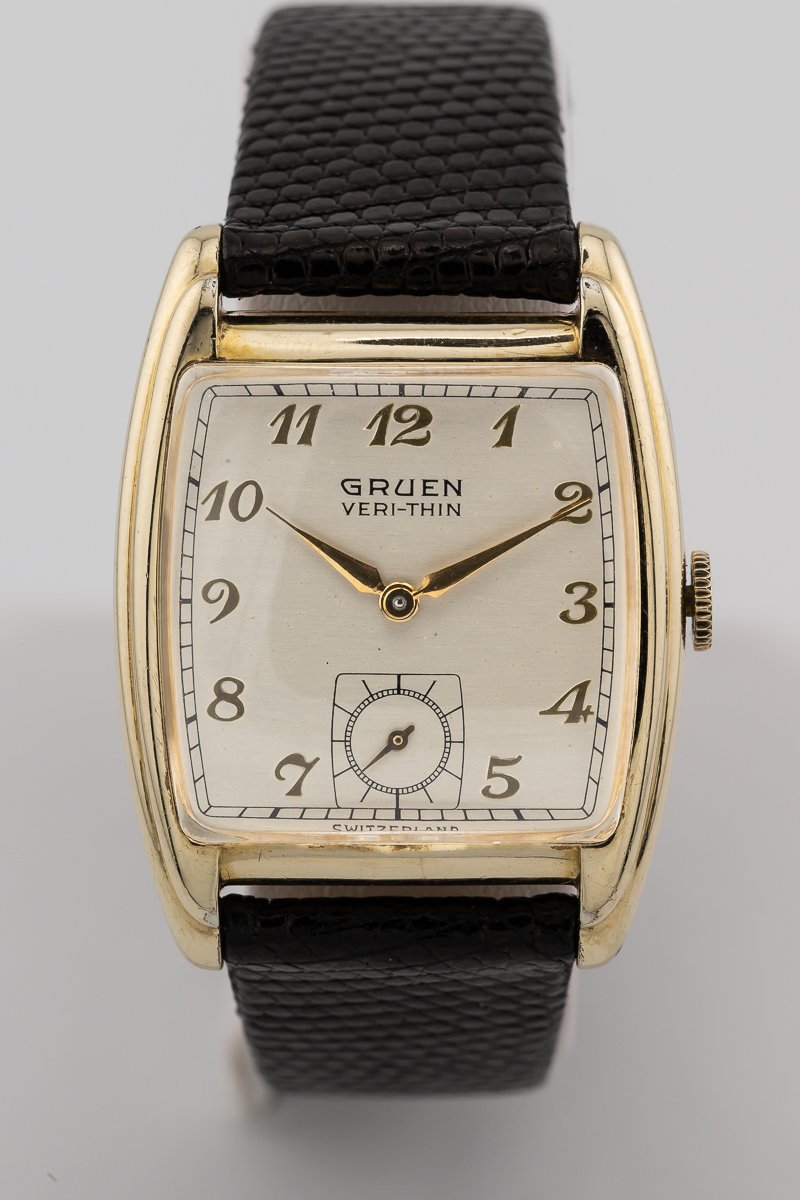
Gruen Early 1950s Veri-Thin 423-664 Tank
This the elegant lines of this mid century Veri-Thin captures everything I love about the Gruen’s post-war design language. Inside, Gruen’s caliber 423 manual movement keeps the profile thin. Gruen movements from this era are simple but beautifully engineered and consistent. With nothing more than a basic service, this one still delivers reliable, accurate timekeeping after 3/4 of a century.
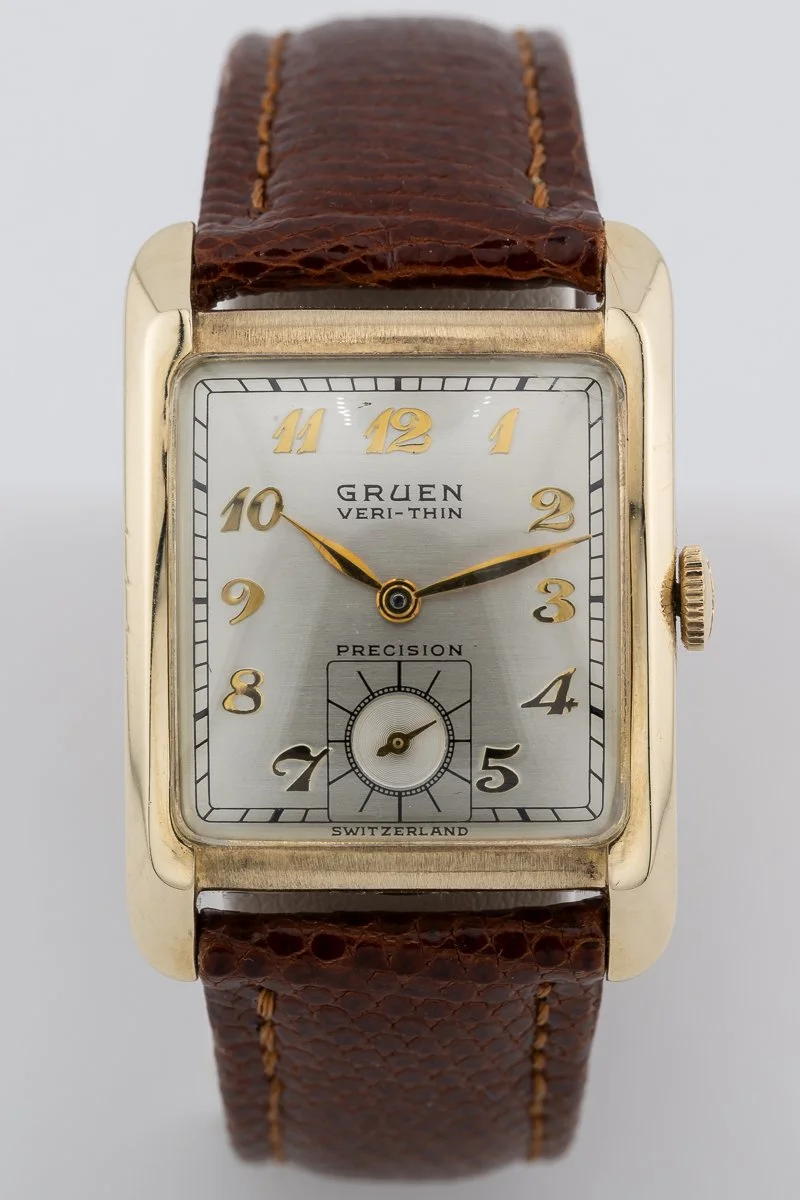
Gruen 1947 Veri-Thin 425-592 Tank
Tank-style watches like this one were popular throughout the 1940s and early 50s. This particularly clean example is also dimensionally larger than typical tanks from the 40s, so it looks a bit more modern on the wrist than many similar examples and it still makes for an elegant dress watch. Typical for Gruens of this era, the 425 movement is Swiss, while the case was manufactured in the USA.
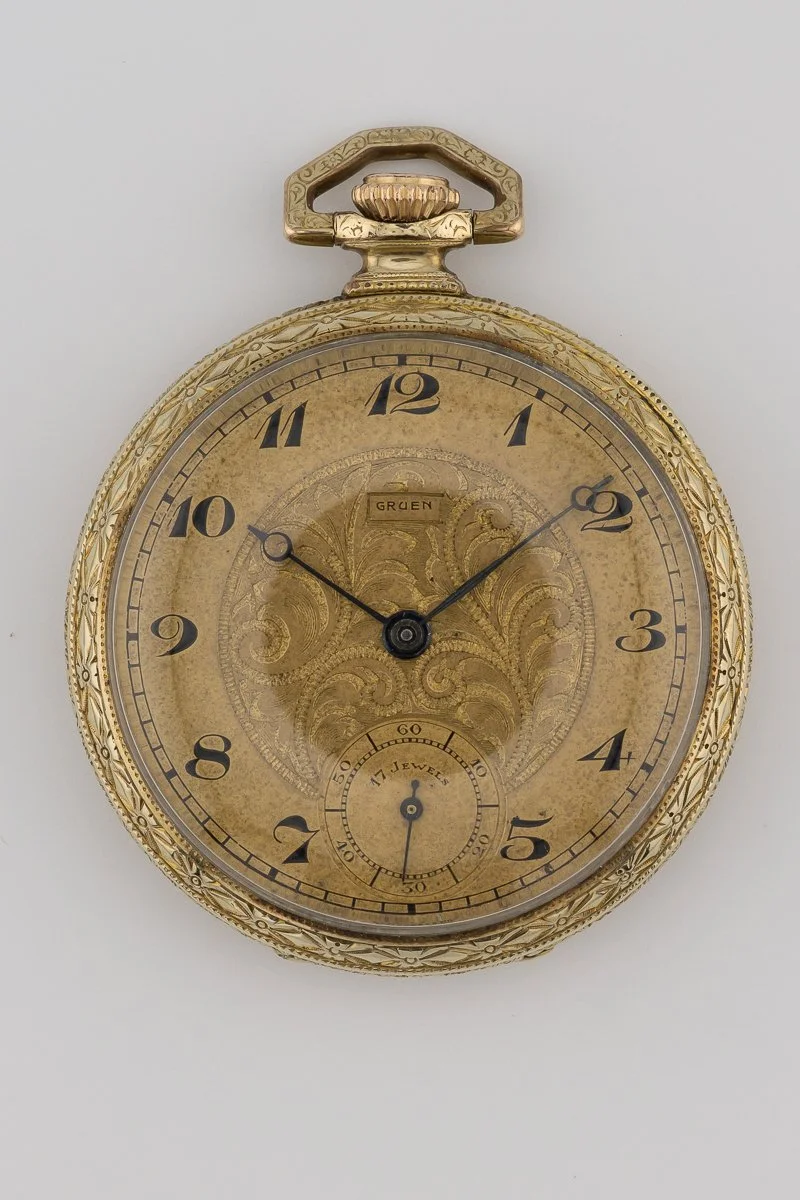
Gruen 1924 “Guild” 650 Pocket Watch
I honed in on this Gruen pocket watch from the 1920s for its lovely gold relief dial. It’s interesting to contrast the relatively simple finishing of the Swiss made movement in this watch with the relatively elaborate finishing on contemporary American-made pocket watch movements. The keyless works design on this watch is also very much in line with the Swiss designs that would come to dominate the wristwatch industry, in contrast to keyless works designs on American pocket watches, which were designed quite differently.
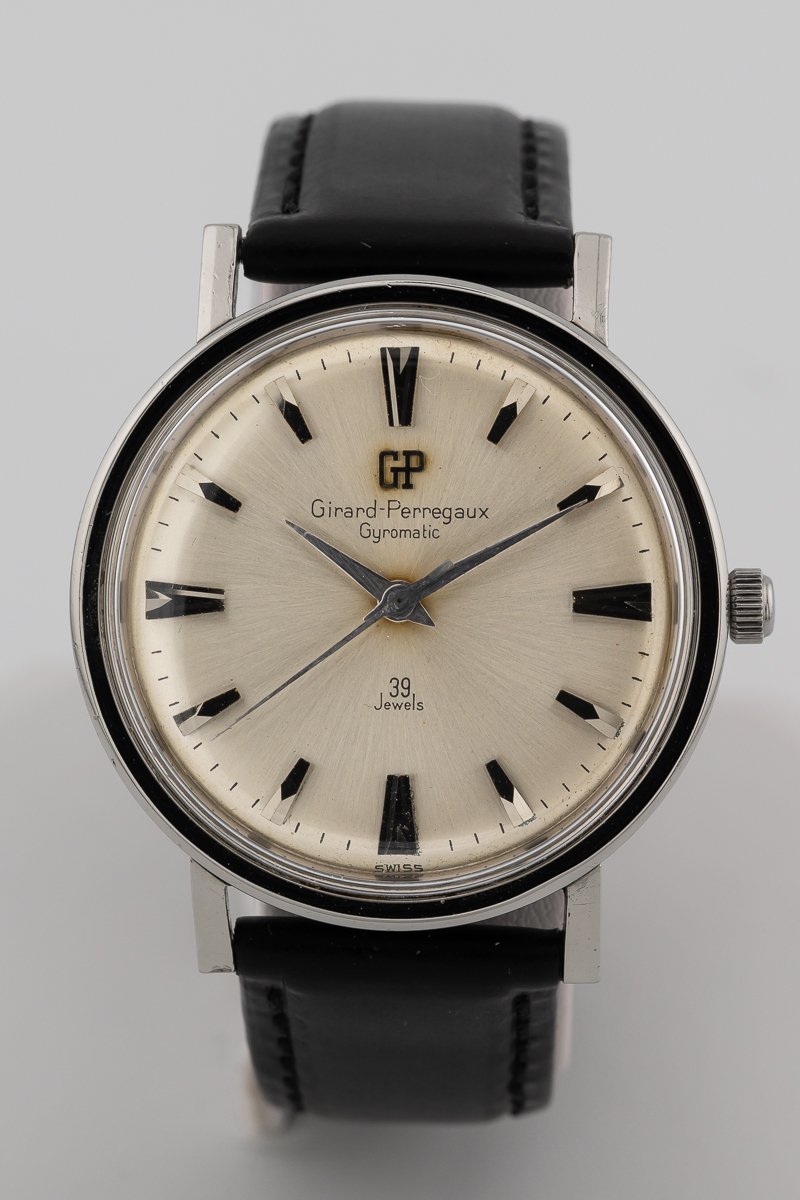
Girard-Perregaux 1960s Gyromatic 39 Jewel Stainless Automatic
I have restored several Girard-Perregaux pieces for sale in my shop, but this is the only one, so far, that I’ve decided to add to my own collection. Something about the deep relief of the prominent dial indices on this watch looks particularly good to my eyes. The 39 jewel count of the GP 31 movement is impressive, but a bit of a cheat, with 14 of those jewels incorporated into the pawls of the automatic reversing wheels. Still, it’s a nice, accurate movement, with a high (for the era) 21,600 bph rate. This watch was in pretty good vintage shape, except for the hands, which had experienced significant finish oxidation and looked much rougher and older than the dial. I went ahead and refished them, with fresh rhodium plating. Re-finishing watch hands is definitely a tricky operation (for me at least - I’m not a jeweler), but I think it turned out quite well in this case.
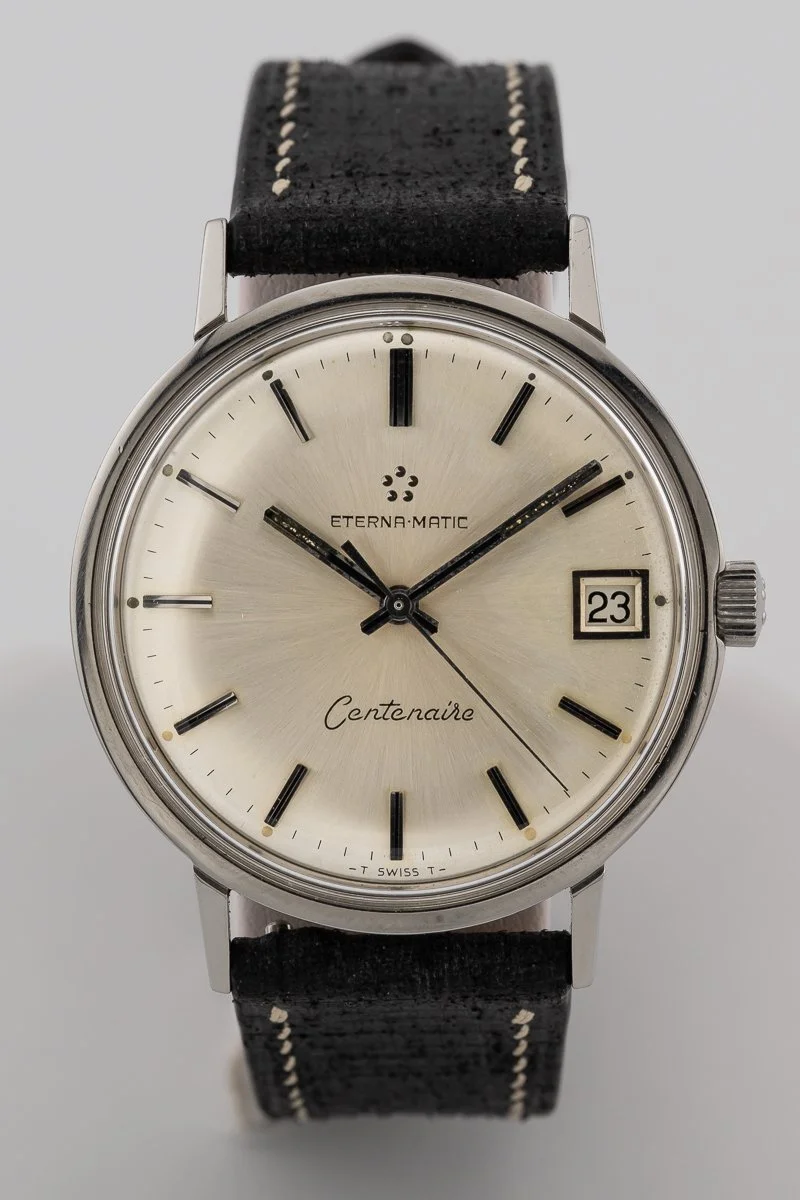
Eterna 1966 Centenaire Calendar Automatic
This is a really clean example of a 60’s Eterna, and the simple silver and black look goes great with the dark grey band I got for it. It’s not quite as pretty as my favorite Eterna, but still a very handsome & reliable watch. The 1481K movement exhibits typical Eterna quality.
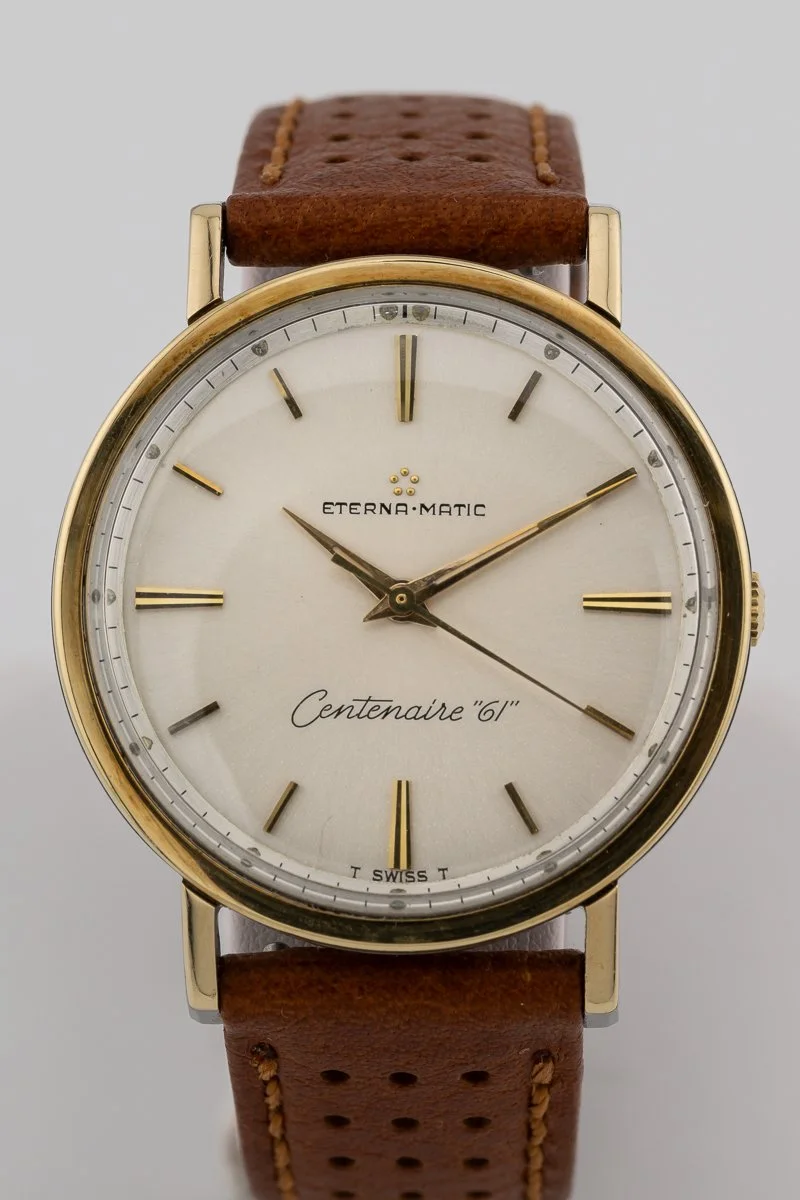
Eterna 1965 Centenaire “61” Automatic
Here’s another one of my favorites and, IMO, one of the best-looking watches in my collection. There’s something just “right” about the design of the watch face, and the gold capped-stainless case is also very cool. Eterna was always on point as far as the quality and engineering of their movements, and the 1428U in this example was a joy to service. I particularly like the way Eterna handles the automatic reversing wheels so that the full wheel is visible. The only thing I don’t love about this watch is the tiny semi-recessed crown, which looks great, but which is particularly difficult to grip when manually winding.
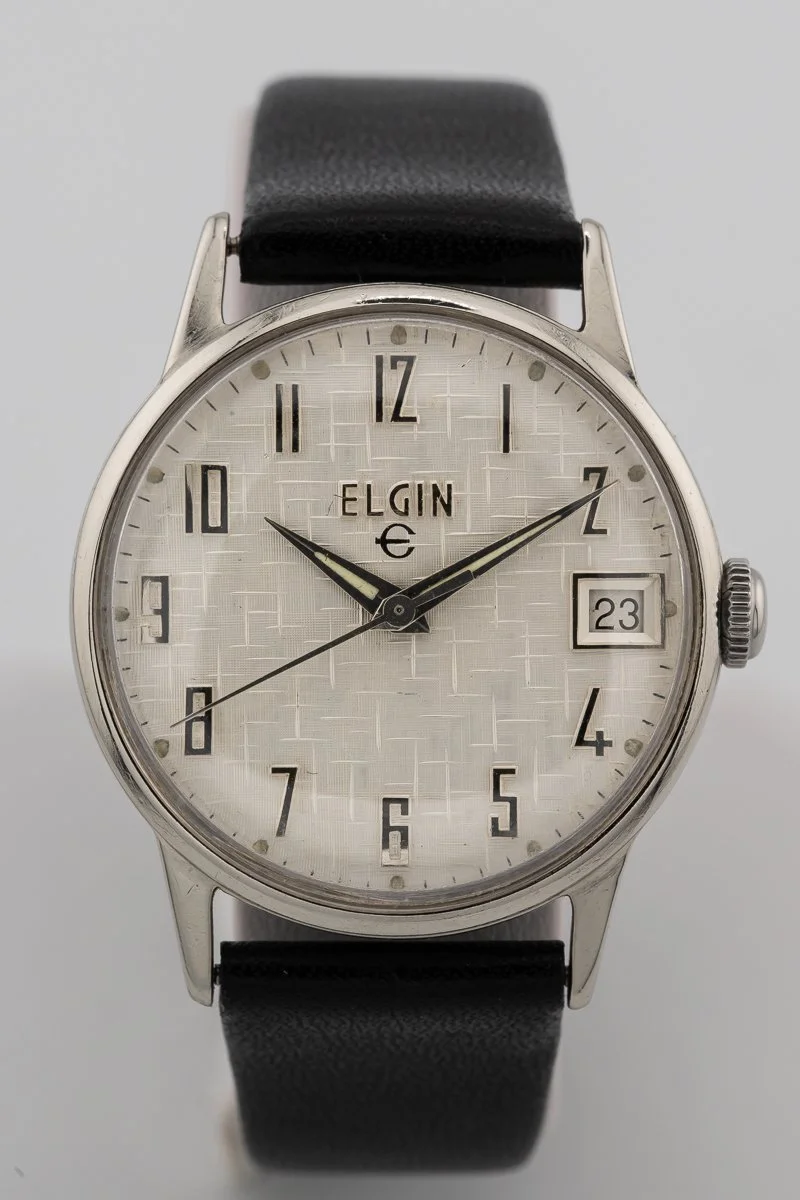
Elgin Early 1970s 4974 “Basket Weave” Dial Manual
This early 1970s Elgin is highlighted by an unusual and striking “basket weave” dial. It is powered by a Swiss-made FHF manual wind movement with surprisingly nice finishing, cosplaying as an “Elgin 394.”
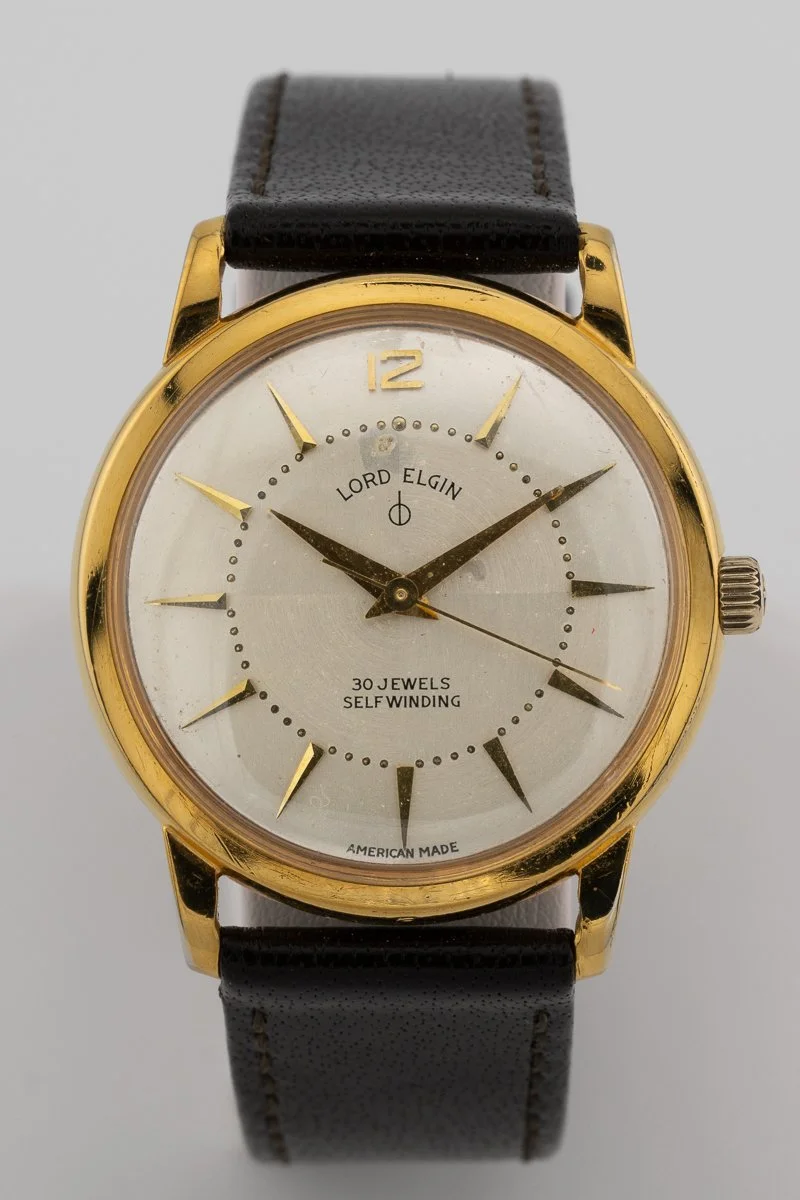
Elgin Lord Elgin c. 1960 024603 Automatic
Representing the last gasp of American watchmaking, we have this elegant Lord Elgin automatic. Elgin certainly pulled out all the stops for this one - the 760 movement has a highly innovative and unusual integrated automatic mechanism resulting in a very thin automatic watch, even by today’s standards, and the balance is free-sprung, eliminating the need for regulator pins. Unfortunately, all of this innovation makes servicing these movements a bit of a headache - they are not particularly watchmaker-friendly. The automatic winding mechanism is also a bit delicate and most of the moving parts are fully engaged during manual winding, so you definitely want to minimize manual winding of these movements.
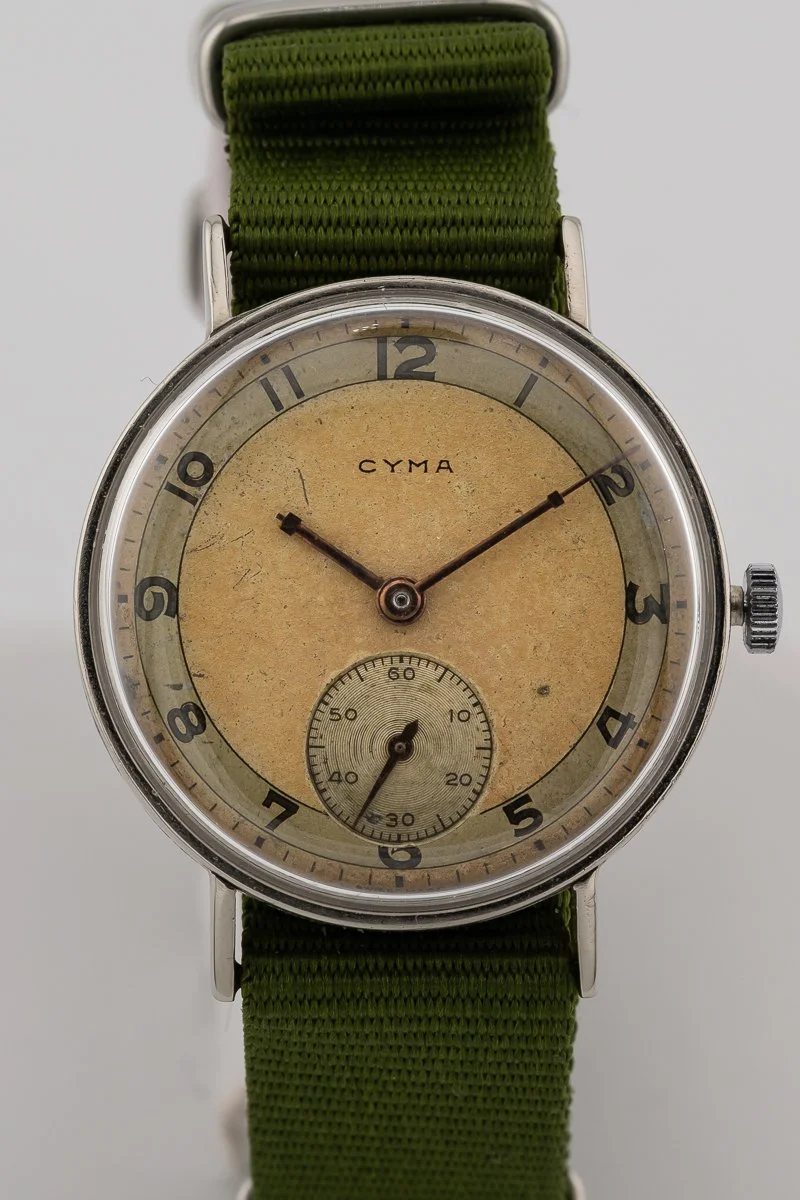
Cyma 1933 Sub Second Manual
There’s nothing actually “military” about this early 1930s Cyma, but with its tan dial and green nato strap, it certainly looks the part. The fixed lugs on this watch are a bit battered (not that you can see them with the strap intalled), but the nickel-plated case is otherwise in very good shape,. The Cyma/Tavannnes 15 jewel movement is some variation of the 182 family (there were several, and the differences aren’t clear) and, with a fresh mainspring, is still a strong runner.
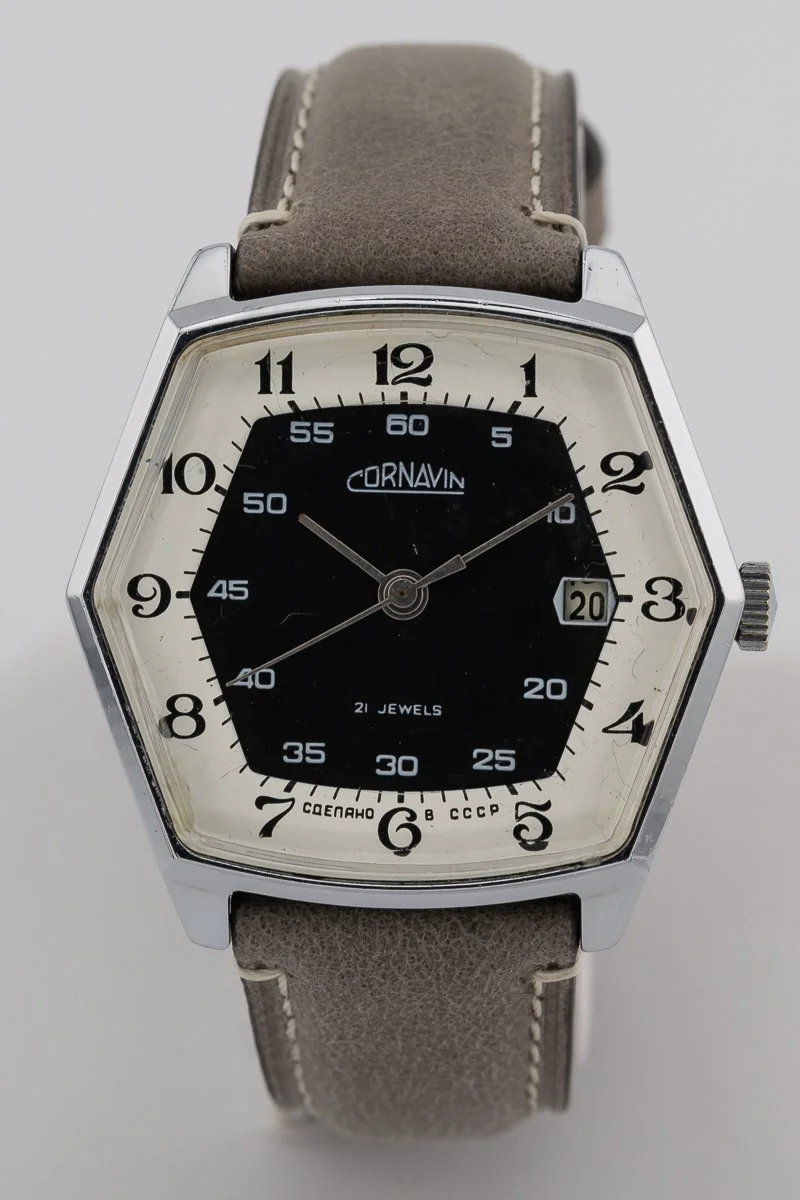
Cornavin Early 1980s Calendar Manual
Produced at the gloriously named Second Moscow Watch Factory by Slava in the twilight years of the USSR, this watch was slated for European sale under the Cornavin brand name. It’s certainly an interesting design, with its unusal hexagonal case. The Slava movement is also unusual and quite innovative, with an indirect drive mechanism, oversized balance, and twin mainspring barrels for space efficiency. It also has the customary soviet industrial finishing on the movement parts. However, even if it isn’t very pretty it still tells time well!
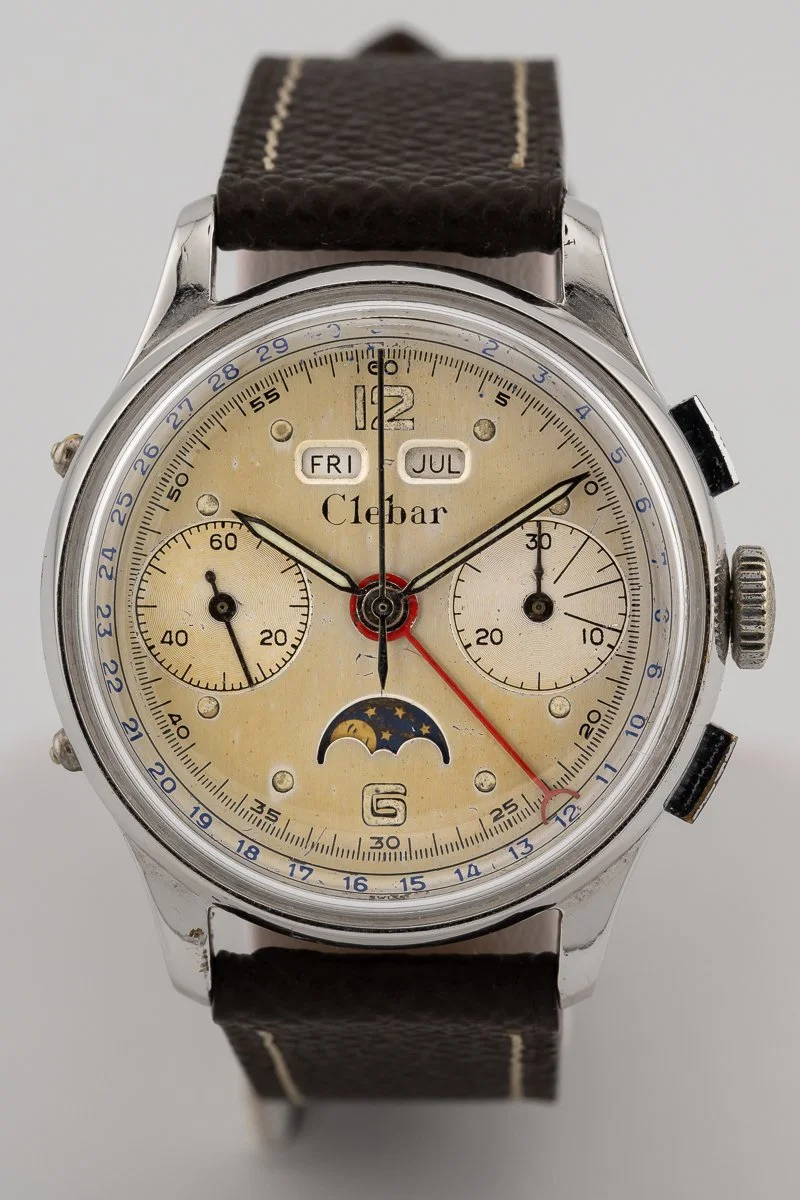
Clebar Early 1950s Triple Calendar Moon Phase Chronograph
Possibly the most complex watch I have ever restored, this Clebar combines a full chronograph with a triple calendar & moon phase. Fortunately, these movements are built in clear layers, so the complexity of the chronograph and the complexity of the calendar mechanism become totally separate problems. It’s interesting to note that the small pushers at the 8 & 10 o’clock positions both do double-duty - the lower pusher advances the moon phase with a light press, and the date with a firmer press, while the upper controls the date and month in a similar fashion. The lever design to accomplish this dual-action behavior is definitely interesting. This watch was originally chrome plated, but the plating was in poor condition, so I stripped it and re-plated the watch in rhodium, which looks great. I probably should have done the pushers and crown while I was at it but I was being a bit lazy - I’ll get back to those eventually…
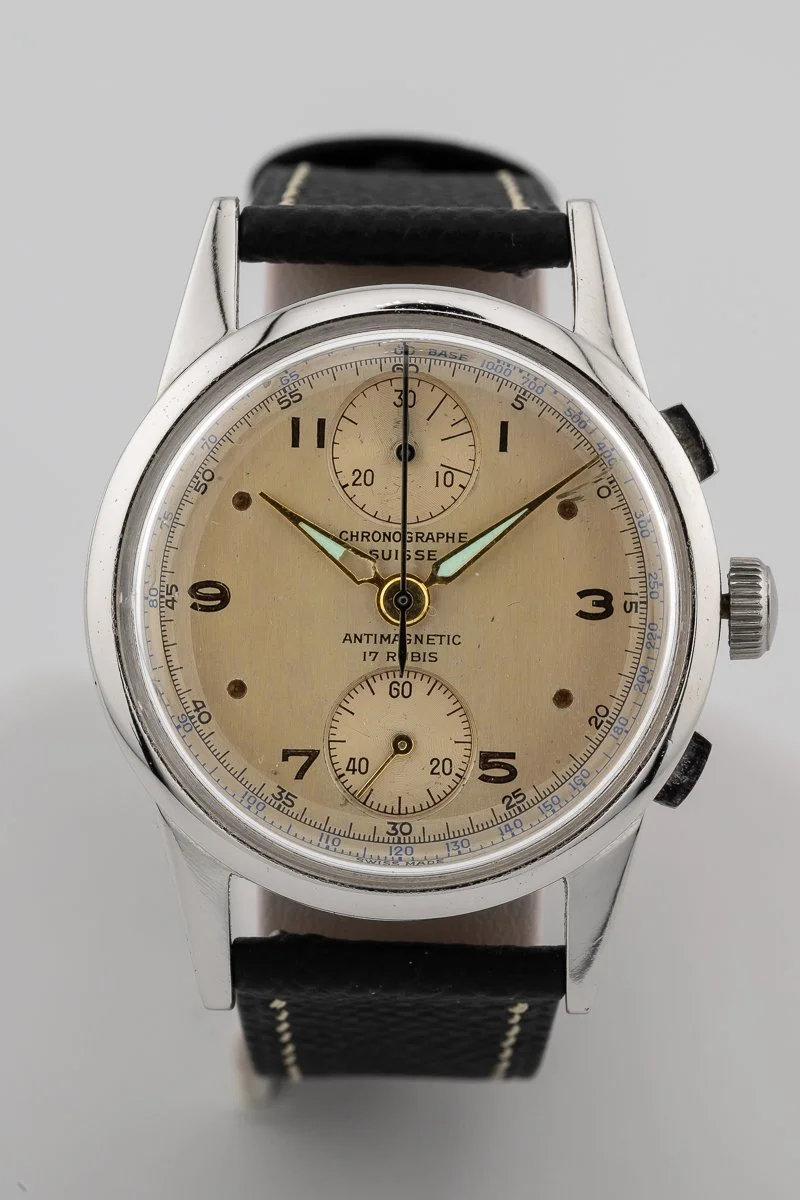
Chronographe Suisse 1950s Gold Dial Venus 170 Chronograph
One of two Venus 170-based Chronographe Suisse watches in my collection, this one has a nice golden dial and was treated to a full case restoration with re-plating in rhodium. The hands also needed to be replaced, and unfortunately, as you can see, some of the lume separated from the brand-new hour hand (grrrr.). Watch hands that fit these old chronograph movements aren’t all that easy to find, and I didn’t think it was worth the trouble of re-luming both hands (so they would match), so I left it as is.
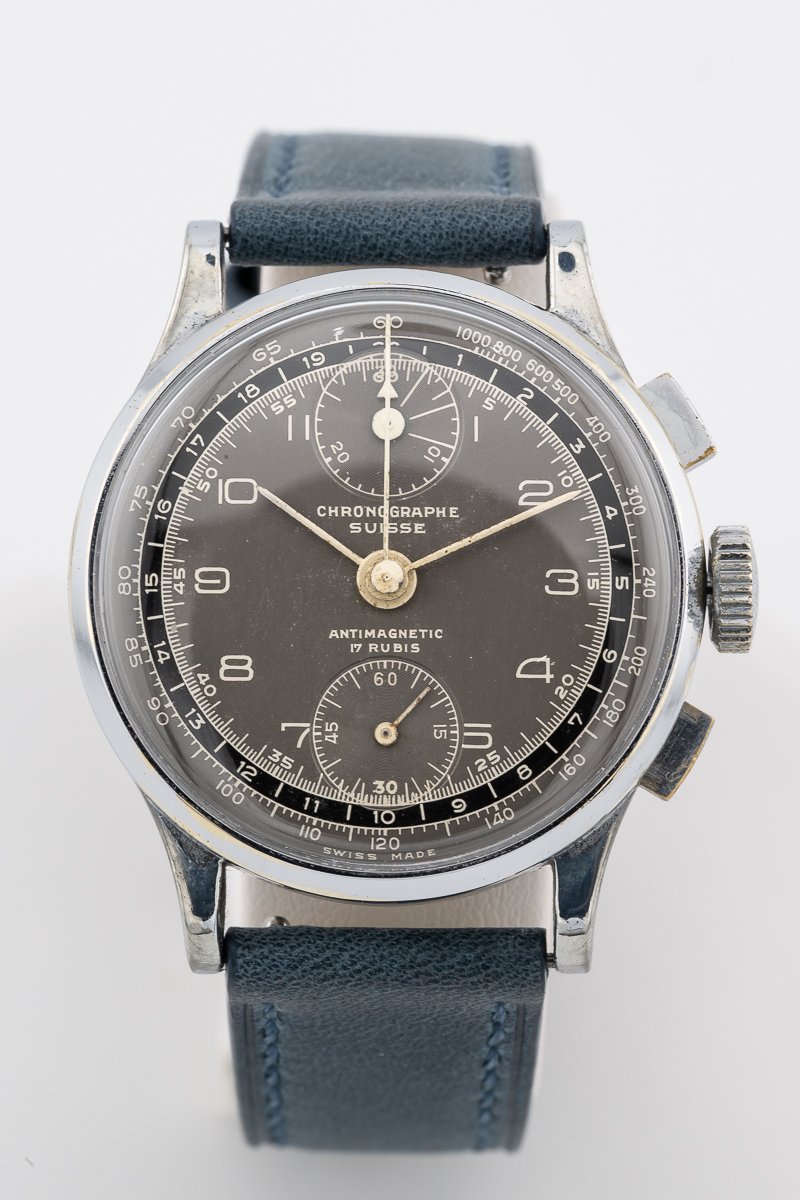
Chronographe Suisse Early 1950s Cal. 1012 Grey Dial Chronograph
This Chronograph Suisse really stands out among its contemporaries with its unusual grey dial. I’m honestly not 100% sure about the provenance of this dial. It shows definite signs of age but is nonetheless in remarkably good condition. If it’s a re-dial, it’s extremely well-done. The movement is a tried and true Venus 170 with its column-wheel-driven top/bottom chronograph layout. I’ve serviced several 170s at this point, and they can be tricky to get operating properly. In particular they rely on tension from a number of rather simple and delicate wire springs that don’t age all that well, and the tip of the main operating level that engages with the column wheel is also subject to wear. With some tweaking however the column wheel mechanism operates smoothly and reliably.
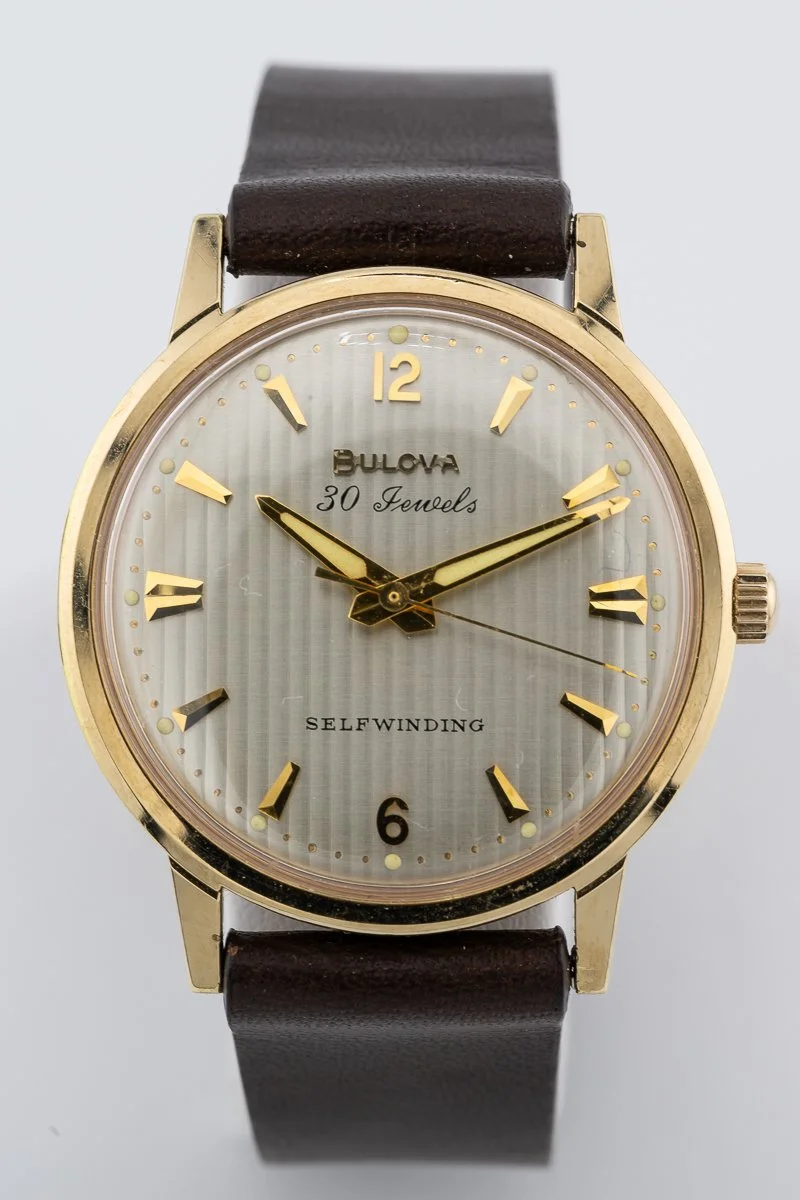
Bulova 1965 Tapestry Dial Automatic
I pretty much fell in love with the silver, tapestry-style dial of this Bulova the moment I say it. Pictures don’t really do it justice, but this is really a great looking watch, and in fantastic condition as well. The USA-manufactured 30 jewel Bulova automatic movement is also in excellent condition.
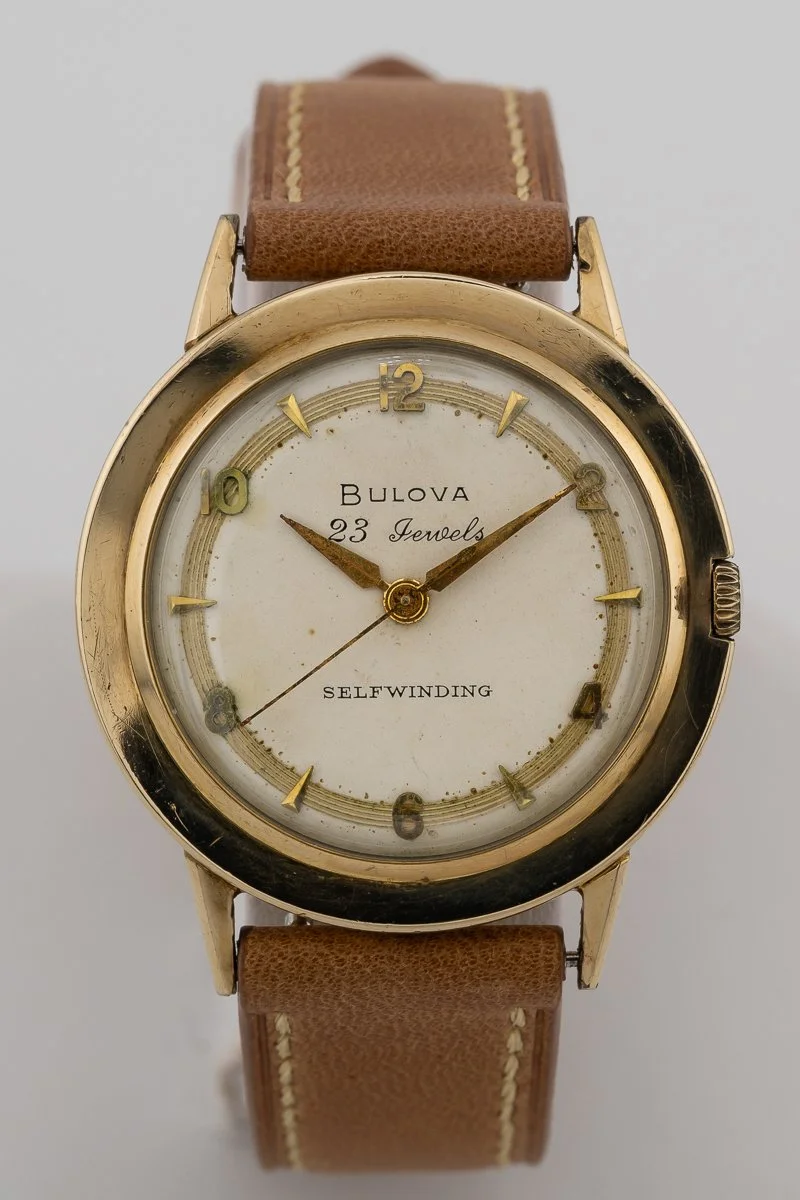
Bulova 1960 Sector Dial Automatic
I was taken in by the sector-style dial of this 1960 Bulova, with multiple thin gold rings creating a halo that joins the dial indices. The Bulova movement is also a nice automatic design that was in great shape and runs well following a service. Unfortunately this watch is also a great example of why watchmakers tend to use stainless steel casebacks, as the plated brass back has eroded to the point where it is being held together with epoxy…