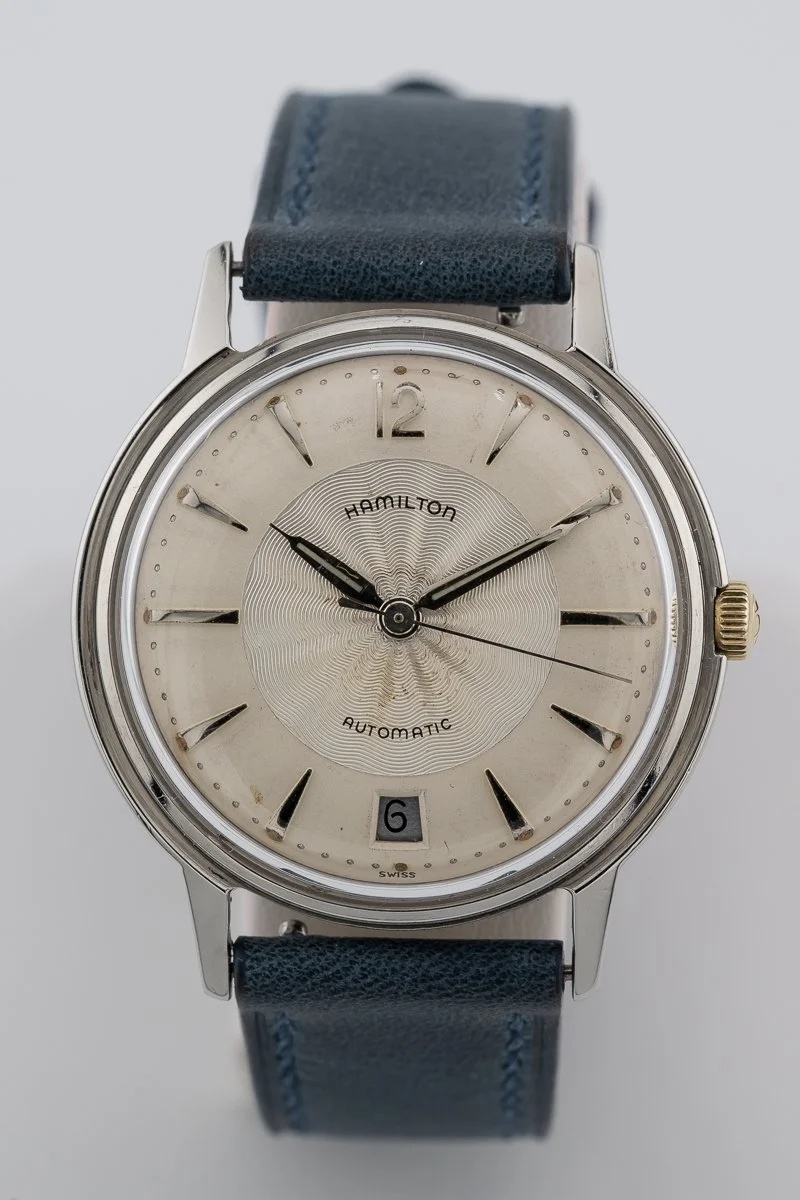
Hamilton c. 1960 Calendar Microrotor Automatic
Some vintage watches are highly cooperative. Others, not so much. This particular Hamilton fought me tooth & nail, but I persisted (through multiple donor movements) because I really love the style of the dial. The Buren-sourced microrotor movement in this thing is cool looking, but not fun to work on. Lowlights include a complex and cantankerous compound ratchet wheel, a frankly terrible click spring design, and a difficult-to-assemble automatic winding mechanism underneath the rotor. Eventually I got it working, however. Well, except for the calendar - the calendar driving wheel, like most of the rest of this movement, is complex and delicate, and the one in this watch literally fell apart. I have not yet been able to source a replacement, so the calendar is currently stuck on 6 (short for “666”).
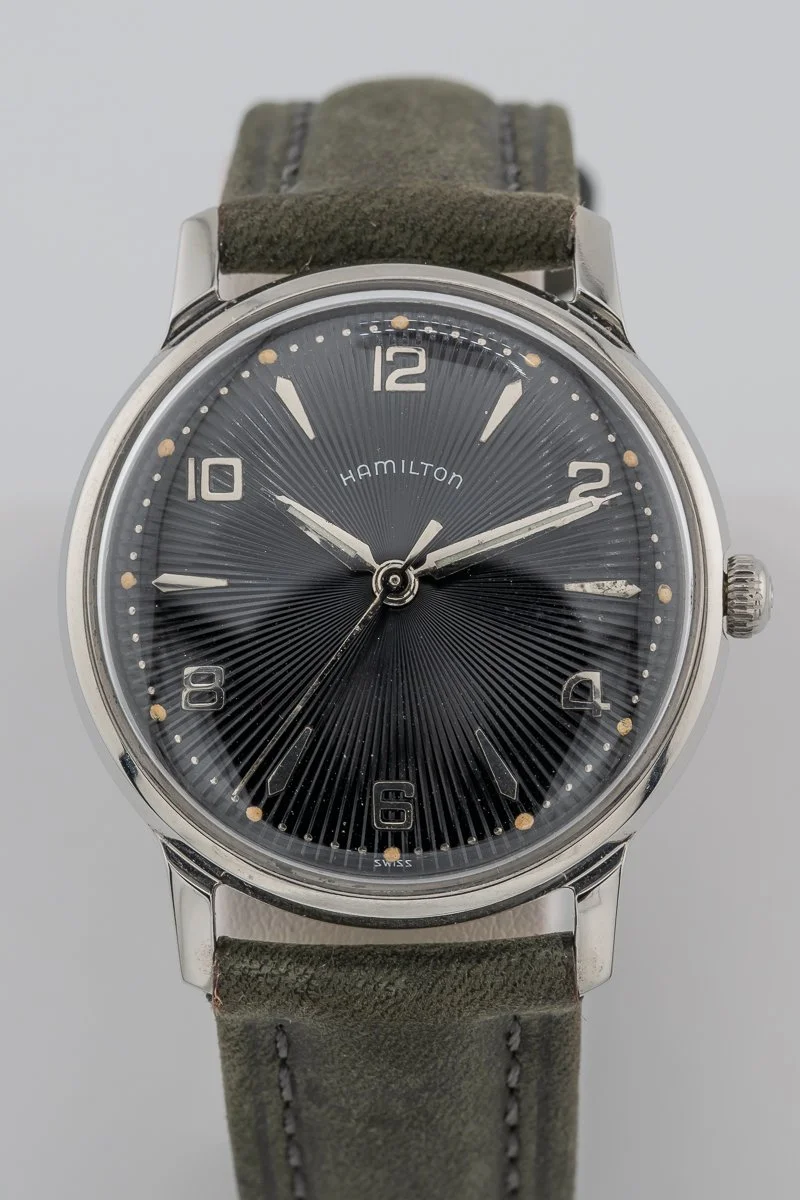
Hamilton Early 1960s Black Ray Dial Stainless Manual
The Soundgarden tune Black Hole Sun always comes to mind when I look at this Hamilton with its unusual black sunburst pattern dial. This really is a great looking watch which somehow manages to be both classic and different at the same time. It’s not all looks though; the ETA Swiss movement is a strong runner. Interestingly, the balance shock spring design resembles Seiko’s diashock design in both form and function. Seiko released the first diashock watch in 1956, while ETA ramped up production of the 1080 caliber in the mid 1950s, so it’s not clear who was first here.
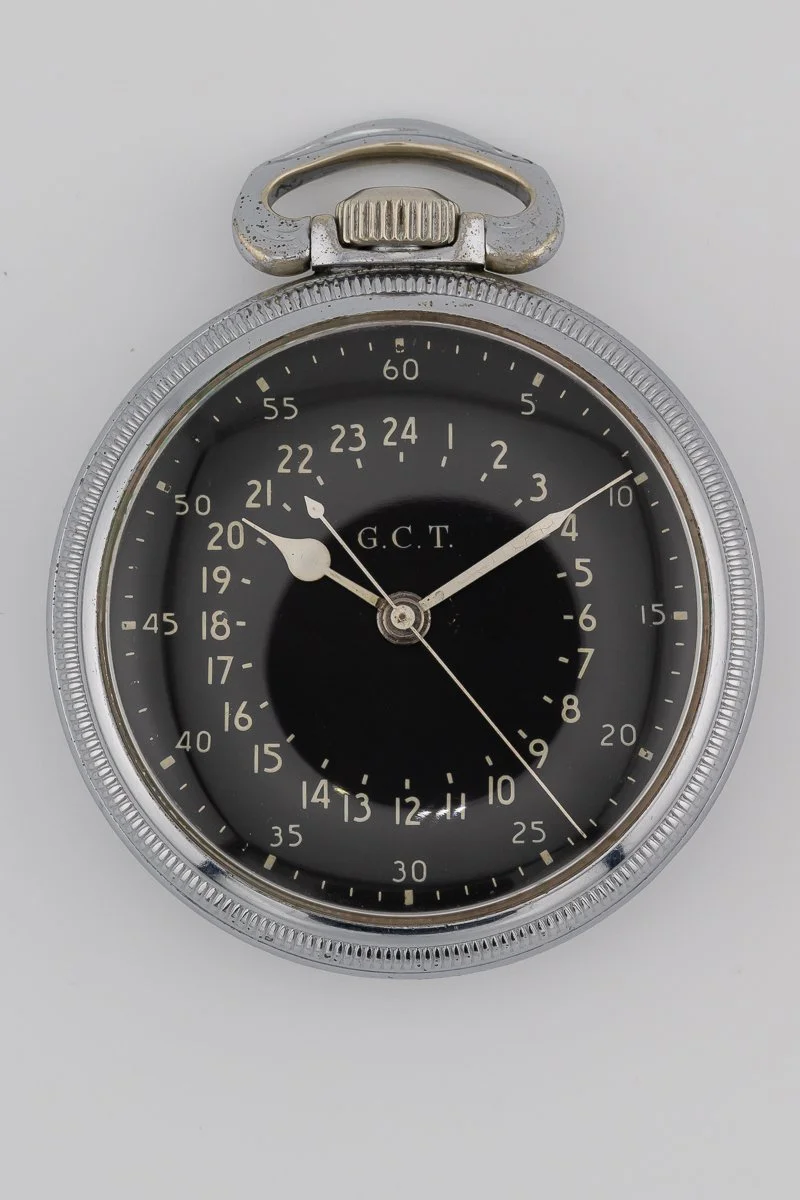
Hamilton 1944 4992B AN 5740 Military Pocket Watch
AN 5740 military pocket watches were issued to aircraft (primarily bomber) navigators in all service branches during WWII and into the early post war period. Watches meeting the specification were manufactured by Elgin, Waltham, and Hamilton. Unusually for a pocket watch, they have a central second hand and a hacking mechanism, as well as a 24 hour dial. They were typically mounted in special cases, meant to protect the watch from the effects of vibration, temperature and altitude, and were generally set to Greewich Mean Time (hence the G.C.T. on the dial). This Hamilton example, despite its age, still tells time very accurately.