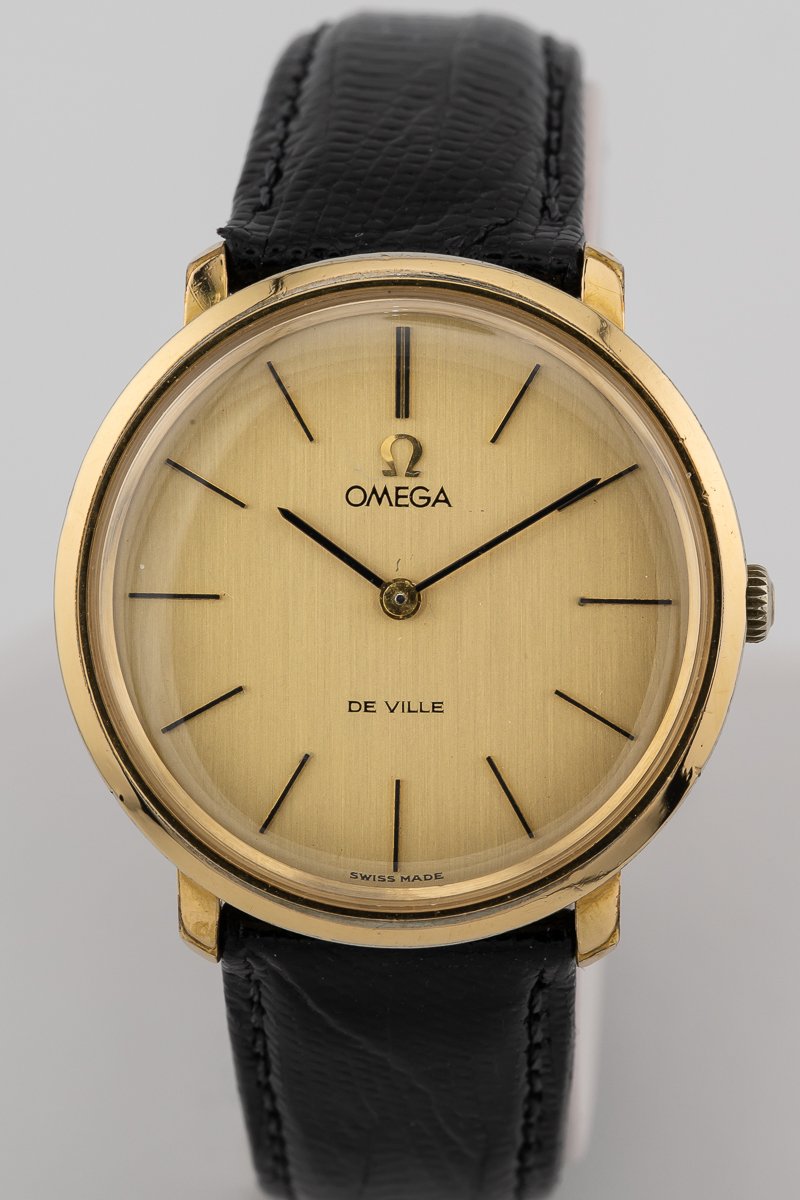
Omega 1964 DeVille 111.077 Manual
The prototypical mid-60s Omega dress watch. Simple and elegant. The small, manual-only 620 movement makes for a very thin watch. Not much more to say, other than the fact I feel lucky to have found this one in really excellent condition.
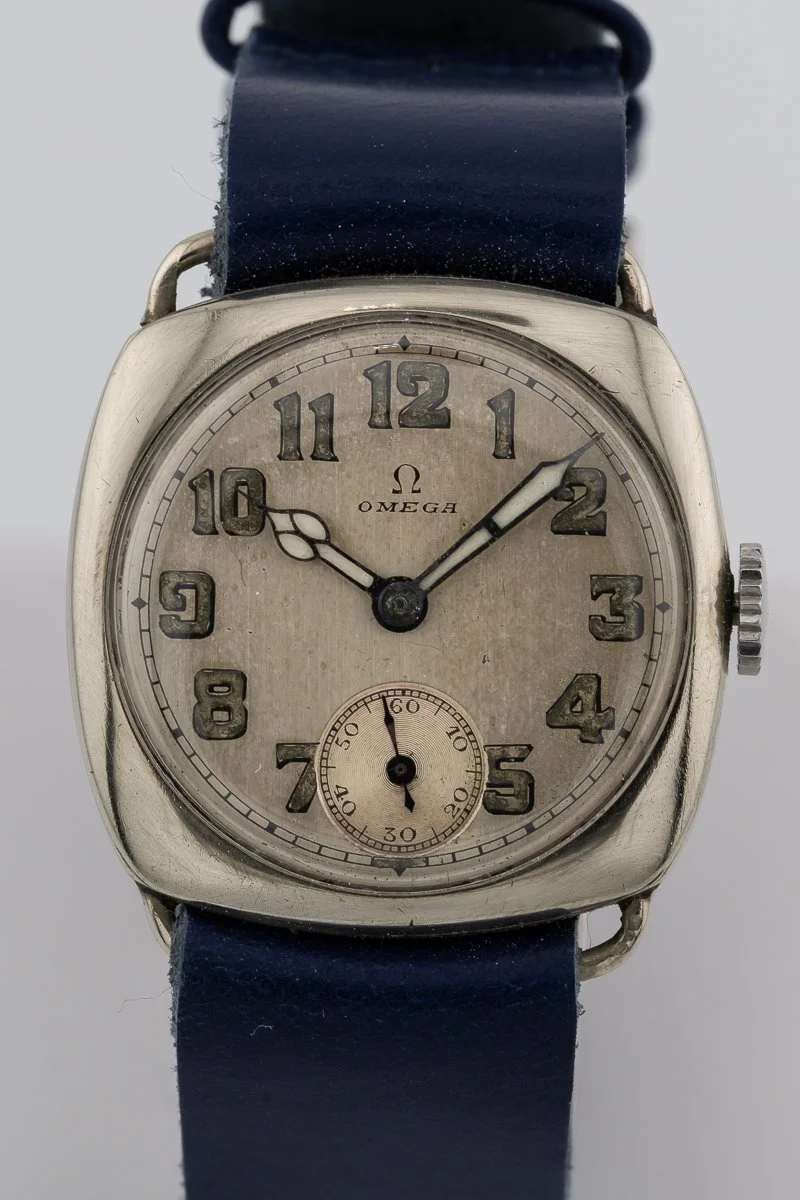
Omega c. 1927 26.5 Nickel Silver Cushion Case Manual
Based on Omega’s 1920s workhorse 26.5 movement, this example is in nickel silver (a.k.a. German silver) and styled to resemble military trench watches from a decade earlier. I love the cathedral-style hands, although re-luming them was a bit tricky. The nickel silver is a bit soft, so the case back wore through on the edges and it was patched by a jeweler at some point.

IWC 1944 Caliber 61 Stainless Manual
I had my eyes out for a vintage IWC to add to my collection for quite some time before stumbling upon this example. Even in non-running condition, it didn’t exactly come cheap, but I love the end result. While it’s on the small side, it still looks great on the wrist with the cream colored dial and gold numerals offset by a blued center second hand. The IWC 61 movement is also beautiful but has some flaws. Notably, the indirect drive for the center second hand uses a very light tension spring in an attempt to control flutterg. Unfortunately, the original tension spring was worn out, leading to a distracting amount of second hand flutter when the watch was running (this doesn’t affect timekeeping, but it’s certainly distracting). After some experimentation, I found that a piece of hairspring from a large vintage pocket watch was just the right size and tension to substitute for the original, and the flutter tendencies and now much reduced.
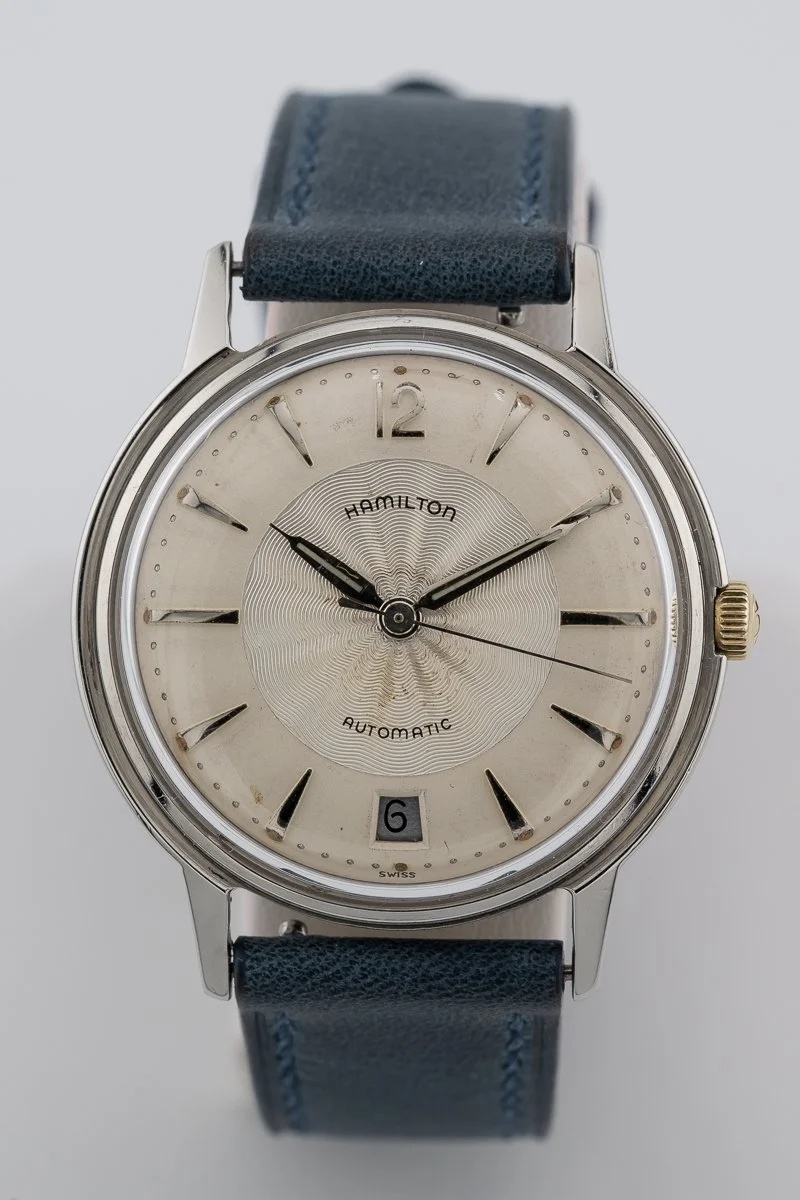
Hamilton c. 1960 Calendar Microrotor Automatic
Some vintage watches are highly cooperative. Others, not so much. This particular Hamilton fought me tooth & nail, but I persisted (through multiple donor movements) because I really love the style of the dial. The Buren-sourced microrotor movement in this thing is cool looking, but not fun to work on. Lowlights include a complex and cantankerous compound ratchet wheel, a frankly terrible click spring design, and a difficult-to-assemble automatic winding mechanism underneath the rotor. Eventually I got it working, however. Well, except for the calendar - the calendar driving wheel, like most of the rest of this movement, is complex and delicate, and the one in this watch literally fell apart. I have not yet been able to source a replacement, so the calendar is currently stuck on 6 (short for “666”).
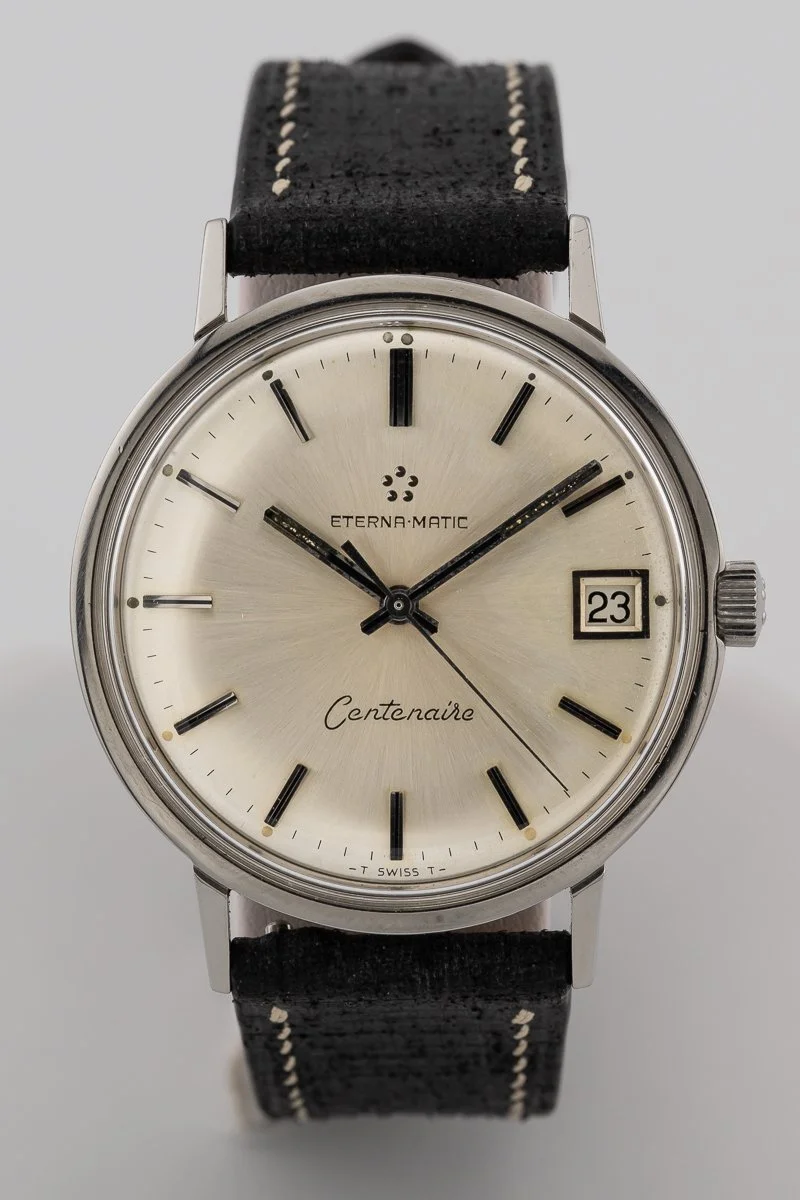
Eterna 1966 Centenaire Calendar Automatic
This is a really clean example of a 60’s Eterna, and the simple silver and black look goes great with the dark grey band I got for it. It’s not quite as pretty as my favorite Eterna, but still a very handsome & reliable watch. The 1481K movement exhibits typical Eterna quality.
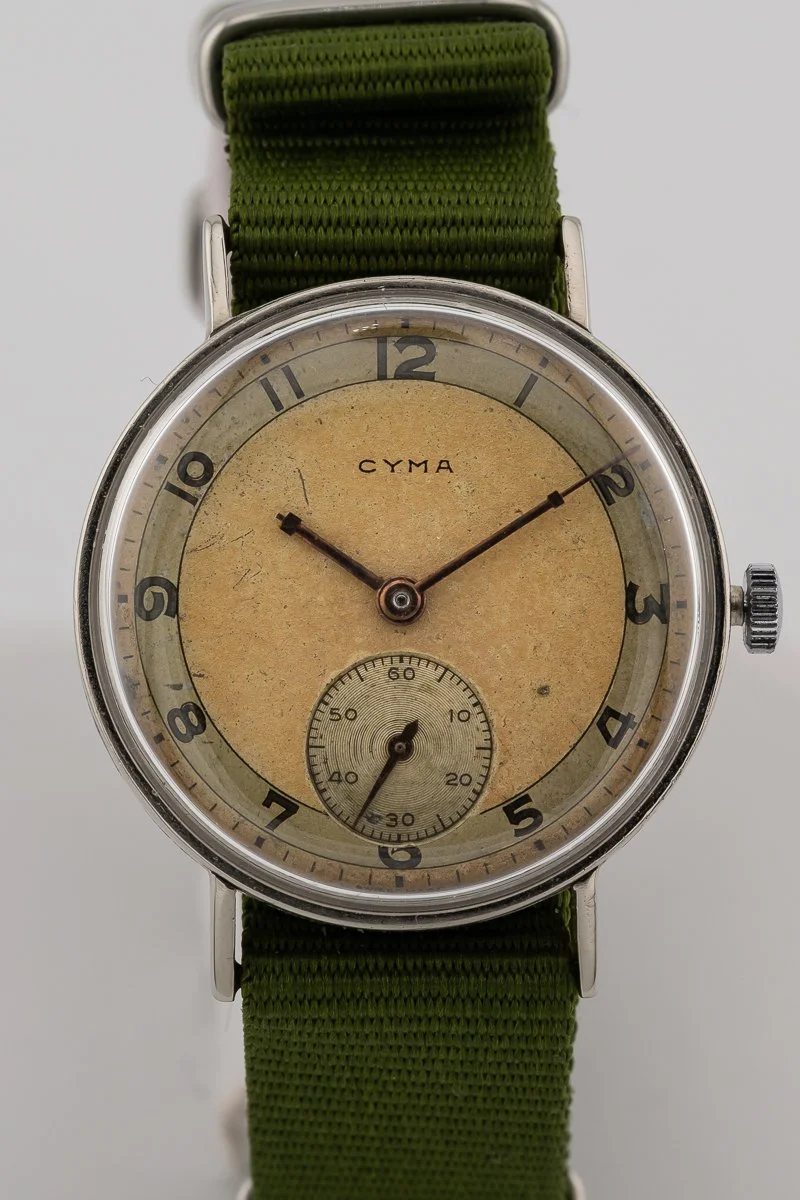
Cyma 1933 Sub Second Manual
There’s nothing actually “military” about this early 1930s Cyma, but with its tan dial and green nato strap, it certainly looks the part. The fixed lugs on this watch are a bit battered (not that you can see them with the strap intalled), but the nickel-plated case is otherwise in very good shape,. The Cyma/Tavannnes 15 jewel movement is some variation of the 182 family (there were several, and the differences aren’t clear) and, with a fresh mainspring, is still a strong runner.
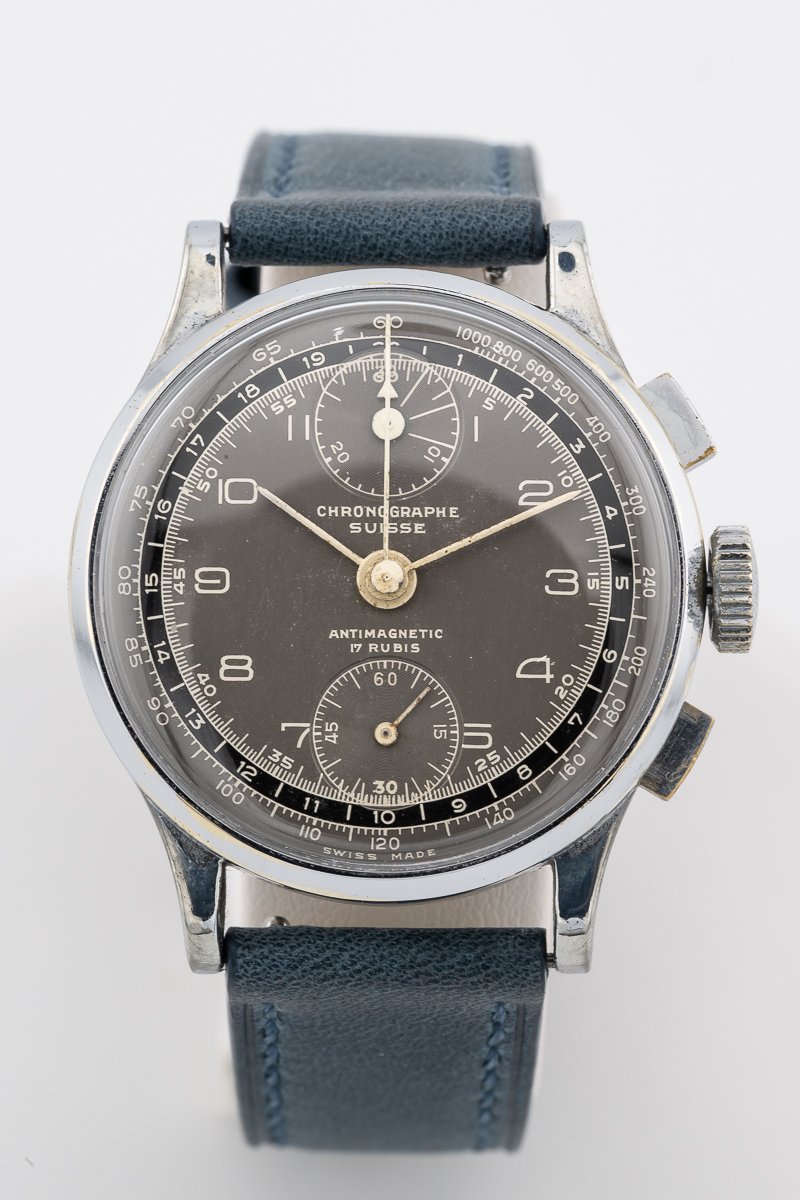
Chronographe Suisse Early 1950s Cal. 1012 Grey Dial Chronograph
This Chronograph Suisse really stands out among its contemporaries with its unusual grey dial. I’m honestly not 100% sure about the provenance of this dial. It shows definite signs of age but is nonetheless in remarkably good condition. If it’s a re-dial, it’s extremely well-done. The movement is a tried and true Venus 170 with its column-wheel-driven top/bottom chronograph layout. I’ve serviced several 170s at this point, and they can be tricky to get operating properly. In particular they rely on tension from a number of rather simple and delicate wire springs that don’t age all that well, and the tip of the main operating level that engages with the column wheel is also subject to wear. With some tweaking however the column wheel mechanism operates smoothly and reliably.
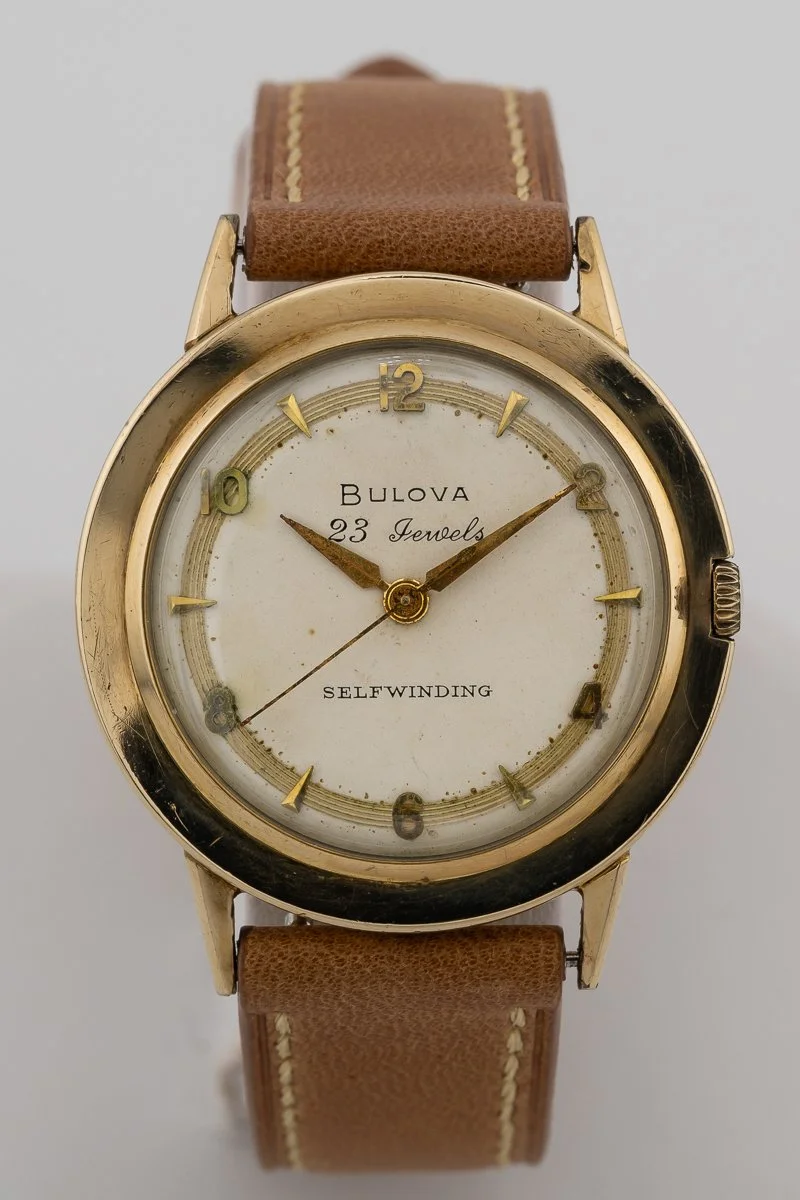
Bulova 1960 Sector Dial Automatic
I was taken in by the sector-style dial of this 1960 Bulova, with multiple thin gold rings creating a halo that joins the dial indices. The Bulova movement is also a nice automatic design that was in great shape and runs well following a service. Unfortunately this watch is also a great example of why watchmakers tend to use stainless steel casebacks, as the plated brass back has eroded to the point where it is being held together with epoxy…
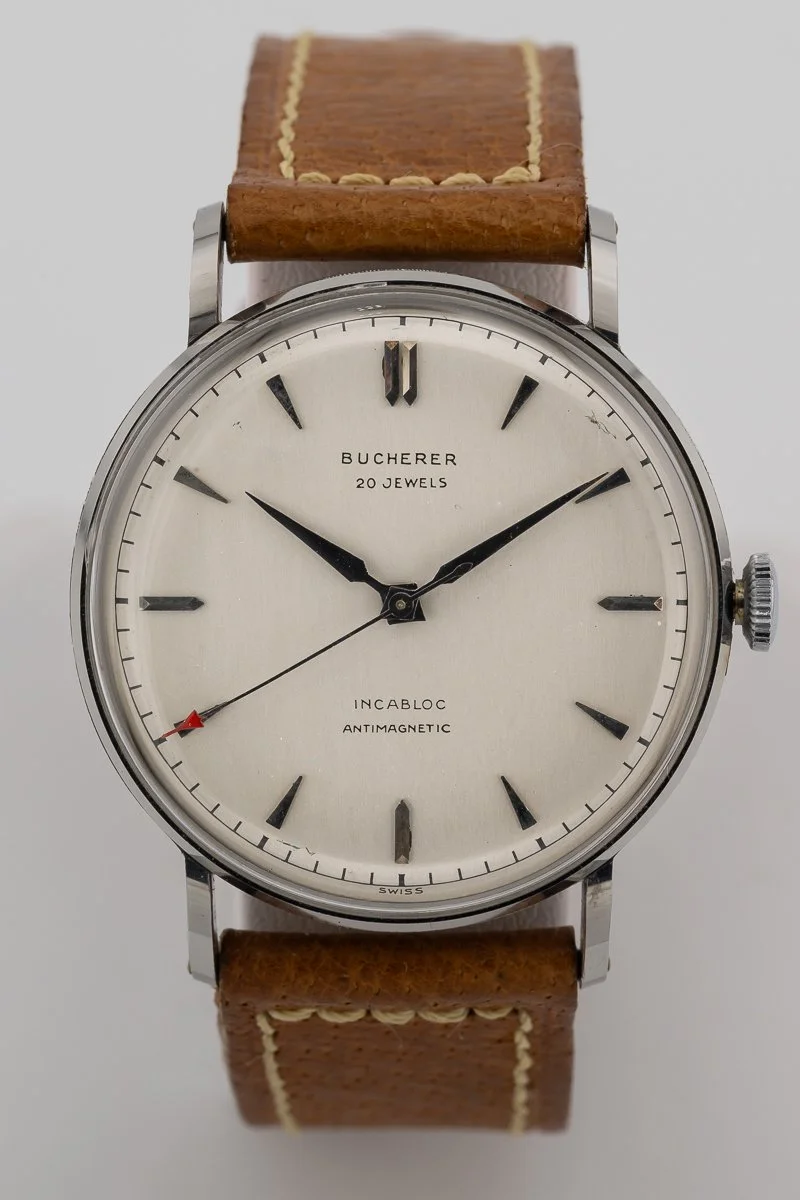
Bucherer c. 1960 1287 Silver Dial Manual
Have you ever received a watch as a gift, worn it once or twice, then put it away in a drawer? It seems like this watch was one of those. I received it in its original box, with what (I think) is the original band, and in nearly perfect condition. In fact, it was so clean that I thought it was probably much more recent than it is. The first thing that clued me into its true age was when I opened the case and saw the design of the nicely-finished 20-jewel movement, with its above-the-bridge indirect drive center second hand and separate excape wheel bridge. Unfortunately, while it’s distinctive and almost certainly an ebauche of some sort, I have not been able to identify the movement (if you know, please comment!).
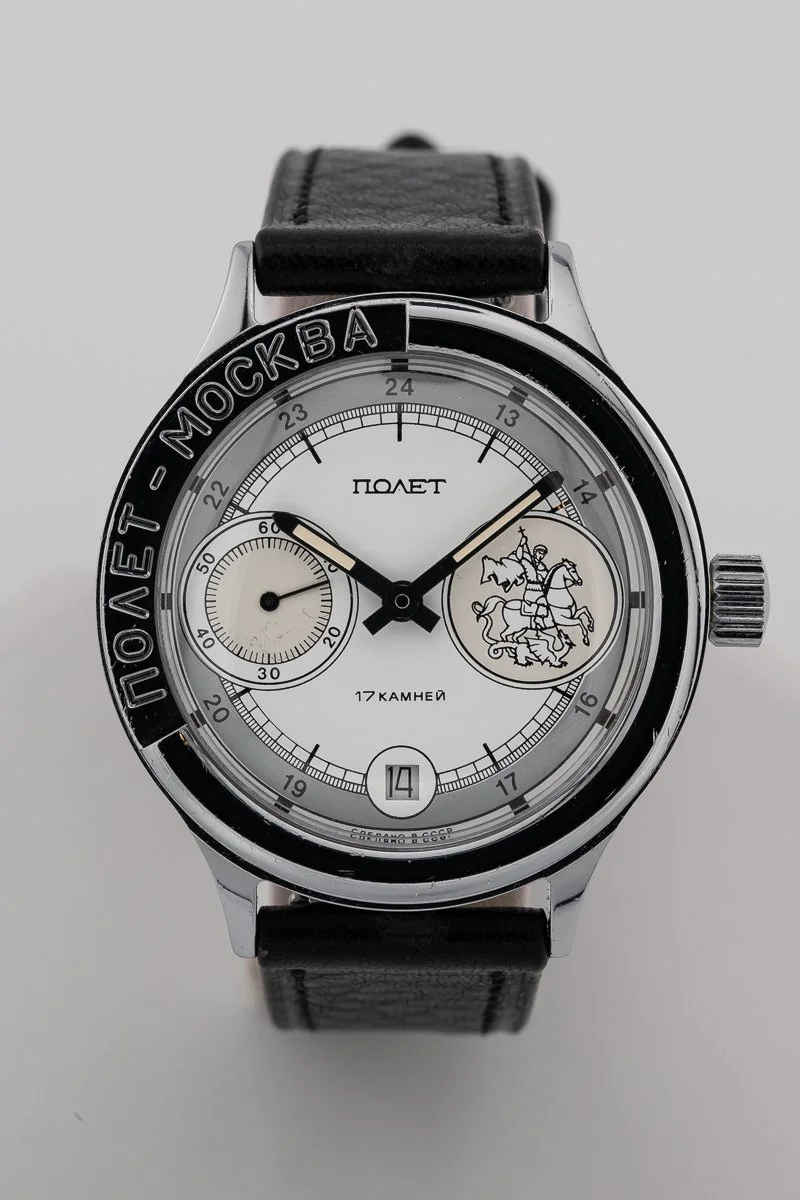
Poljot Early 1990s Moscow 3105 Manual
This "transitional ghost" is a masterclass in post-Soviet pragmatism, likely commissioned around 1992 as a commemorative gift for Moscow dignitaries. While the dial features a striking icon of St. George—the city's patron saint—and a "Made in USSR" hallmark, the true story lies in its over-engineered heart. Poljot engineers created the Caliber 3105 by stripping the stopwatch components from their legendary 3133 Chronograph, the same movement worn by Cosmonauts in space. This industrial hybrid retains the chronograph’s massive 31mm architecture and rugged pivots, resulting in a sub-seconds hand uniquely positioned at 9 o'clock.