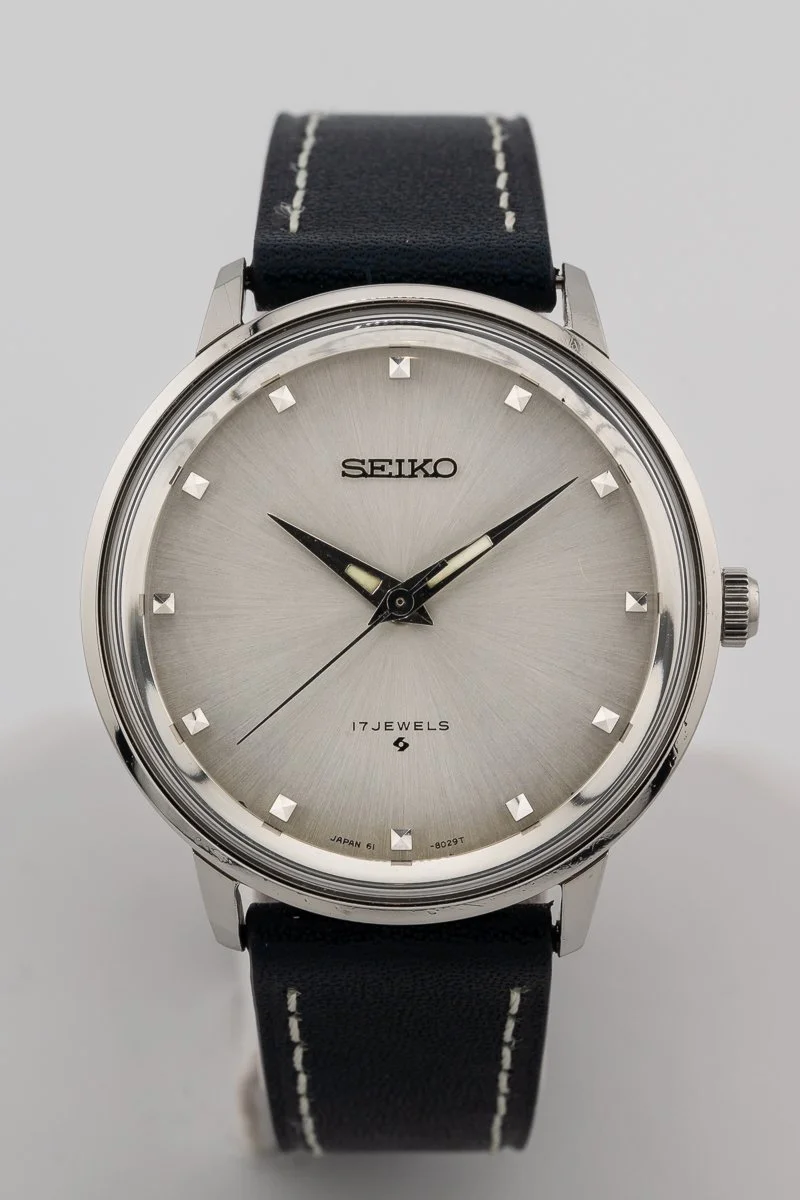
Seiko 1970 61-8019 Stainless Manual
I kept this Seiko because it does something I always appreciate in a watch: it looks simple at first, and then gets more interesting the longer I stare at it. The large (for the era) dial is extremely clean, but not at all plain. The faceted applied markers and sharply shaped hands give it a lot of character, and the whole thing feels elegant without trying too hard. It is a very restrained design, but a striking one.
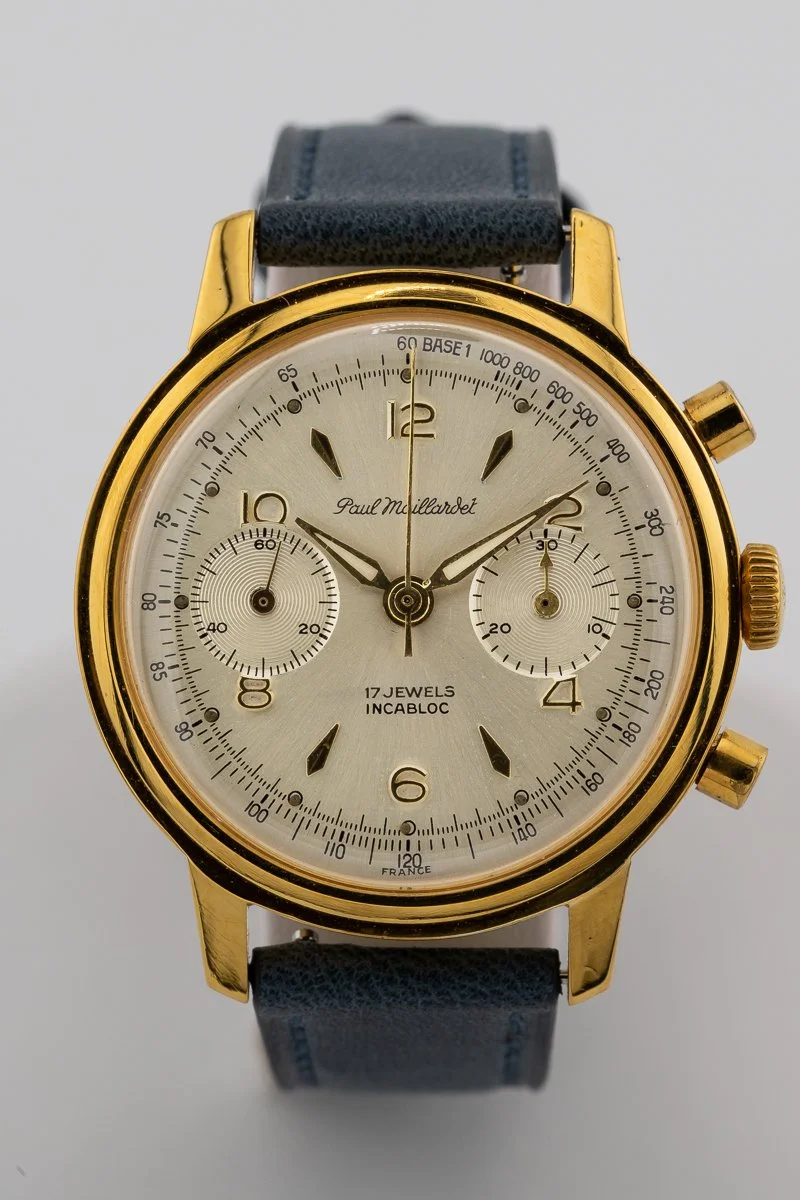
Paul Maillardet Late 1950s Landeron 149 Chronograph
I added this Paul Maillardet to my collection because it manages to be a chronograph without looking busy. What grabs me every time is how clean and elegant the dial is: two balanced registers, nicely shaped applied numerals and markers, and just enough scale printing to remind you that it is a real instrument without turning it into clutter. It has the sort of visual restraint that a lot of vintage chronographs never quite achieve.
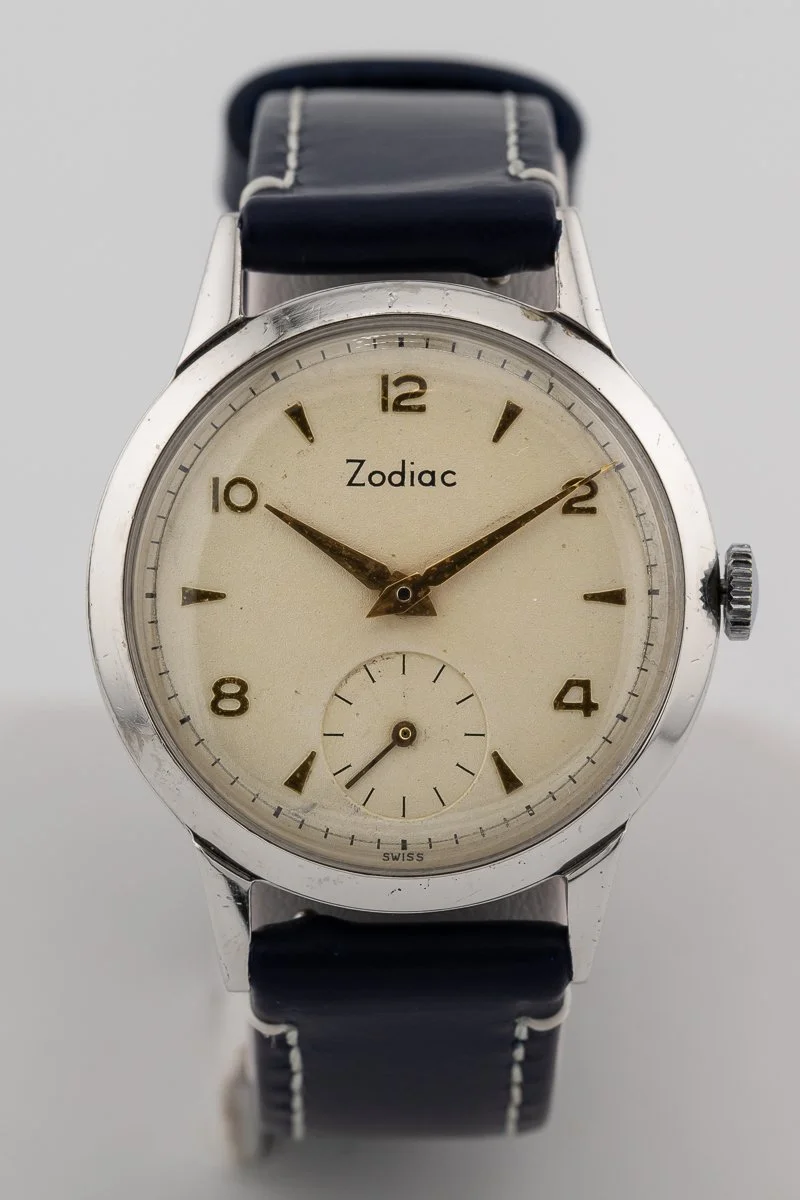
Zodiac Early 1950s 916 Sub Second Manual
I added this Zodiac to my collection because this simple, sub-second dress model is a great example of what Zodiac used to be before it was consumed by sport and dive watches in the 1960s. I also love the contrast between the gold hands and markers and the bright silver (rhodium) case - a combination that goes particularly well with the navy blue strap.
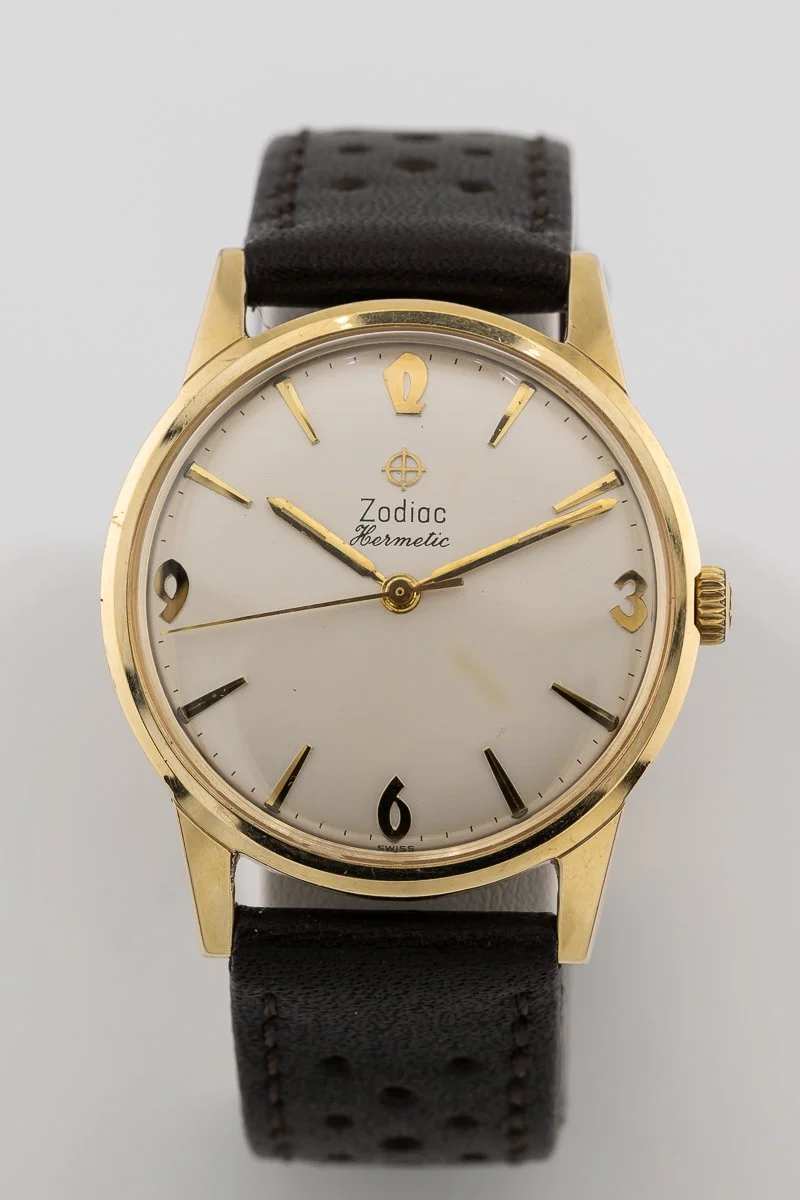
Zodiac Early 1960s 613-102 Hermetic Manual
I’m a big fan of Zodiac as a high quality but accessible vintage brand. This is a rather basic example, but is still a very handsome vintage watch. The A. Schild-sourced Zodiac 61 movement is a manual-wind-only design that forms the basis of the famous Zodiac 70-72 automatic line.
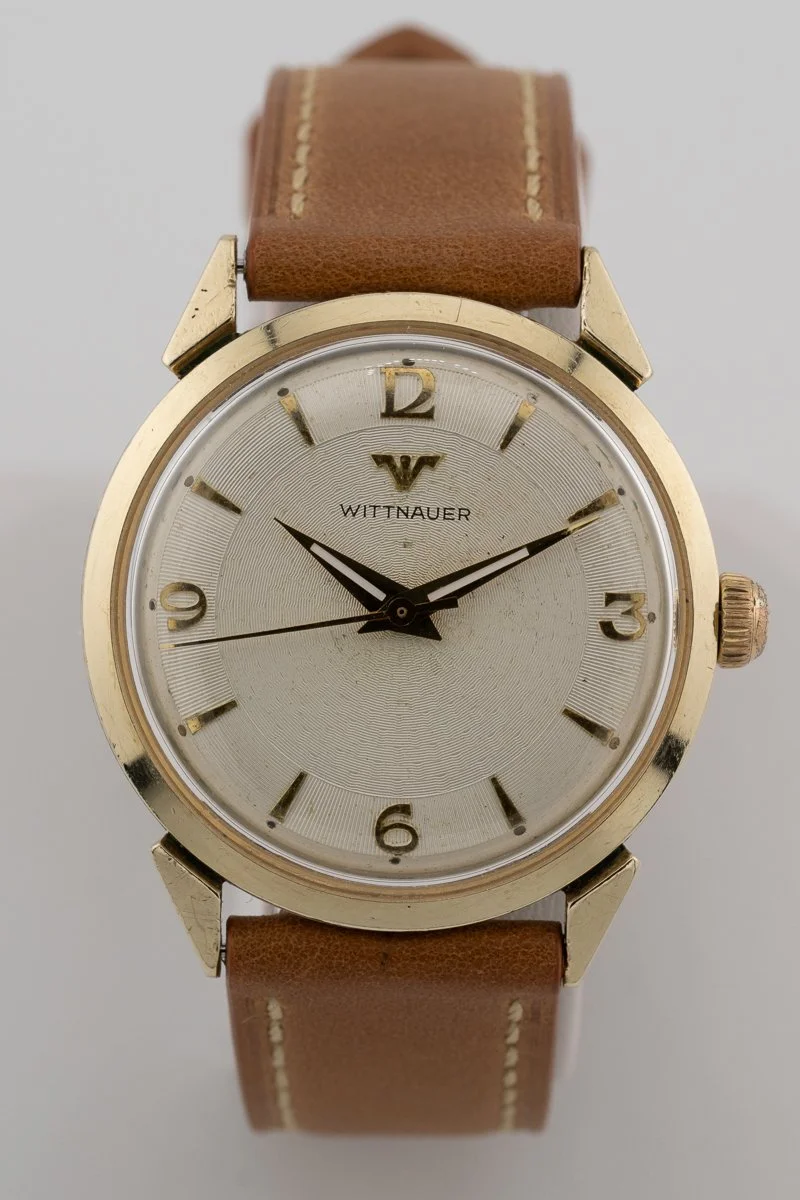
Wittnauer Late 1950s Guilloché Dial Manual Marriage Watch
So, what do when you have a vintage Wittnauer with a fabulous dial but a broken lug, and another with a good case but an ugly, damaged dial? You make a marriage watch! In this case the marriage is pretty incestuous, as the dial/movement and case are both from contemporaneous Wittnauers. Fitment wasn’t that difficult, but did require a thin 3D printed spacer around the perimeter of the dial, which is barely visible in the assembled watch. I also needed to install new hands, since the original minute hand had been badly bent. I’m pretty happy with the result and glad I could preserve this cool guilloché dial, even if it gets points off for historical accuracy.
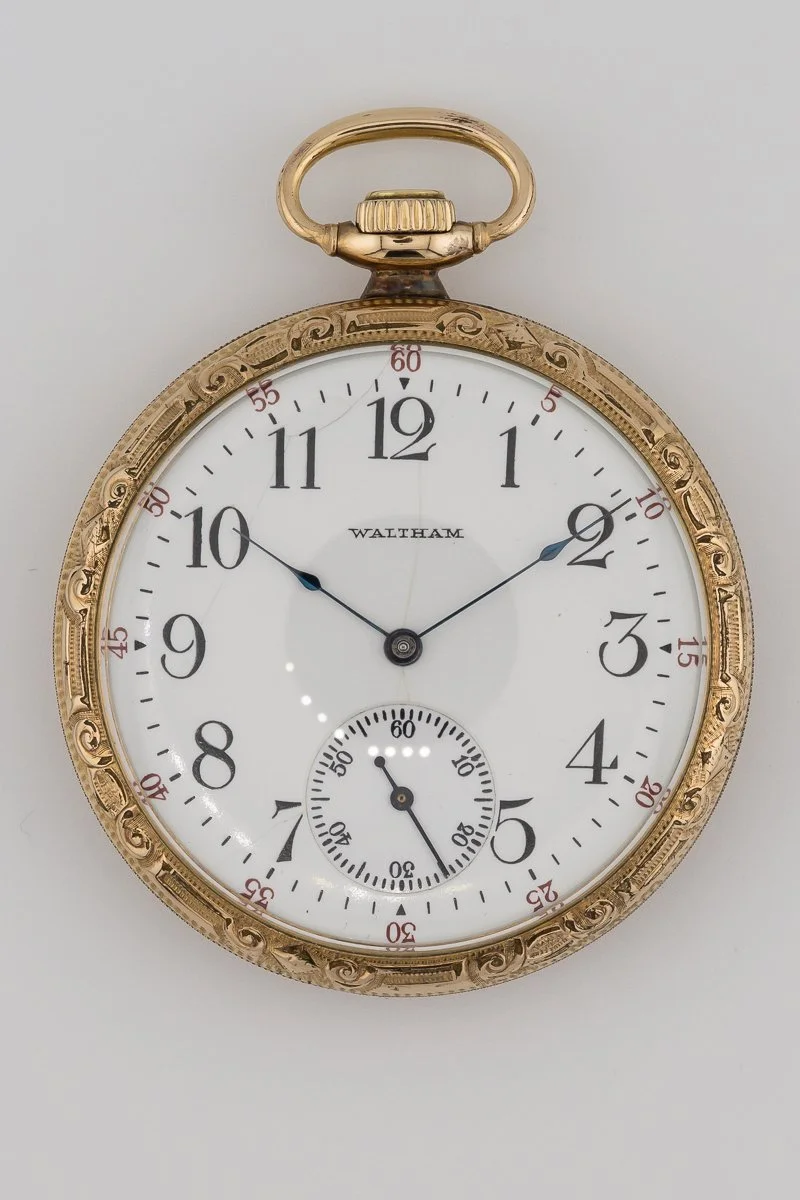
Waltham 1904 Model 1894 Pocket Watch
I wanted a very prototypical American pocket watch for my collection, and found this Waltham. It’s nothing fancy - 15 jewels, not railroad grade, but it works well and serves me as a reminder of a time when the best watches in the world were made in the USA. The porcelain dial unfortuntely has several hairline cracks (not unusual for porcelain), but otherwise it’s a very clean example.
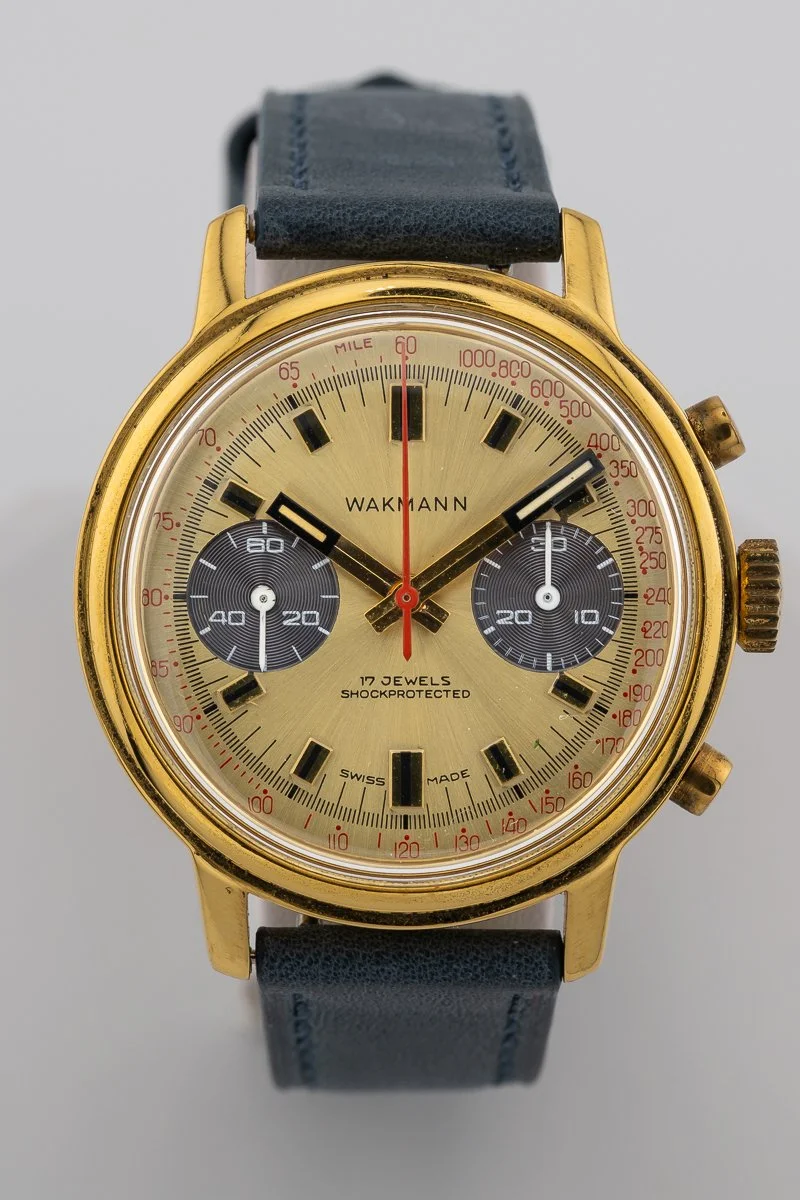
Wakmann 1970s Gold Panda Dial Valjoux Chronograph
The very bold and and very gold style of this chronograph kinda screams 1970s, but regardless of what you think of the exterior, inside sits one of the all time great movements - the Valjoux 236. This uses a column wheel for smooth operation, and has a high 21,600 bph beat rate for accuracy. Interestingly, unlike many other chronographs, the hammer in this movement only makes momentary contact with the register cams when the reset pusher is pressed. A separate brake is used to fix the central chronograph second hand. This was likely done to enable engineering of a flyback variation, the Valjoux 235.
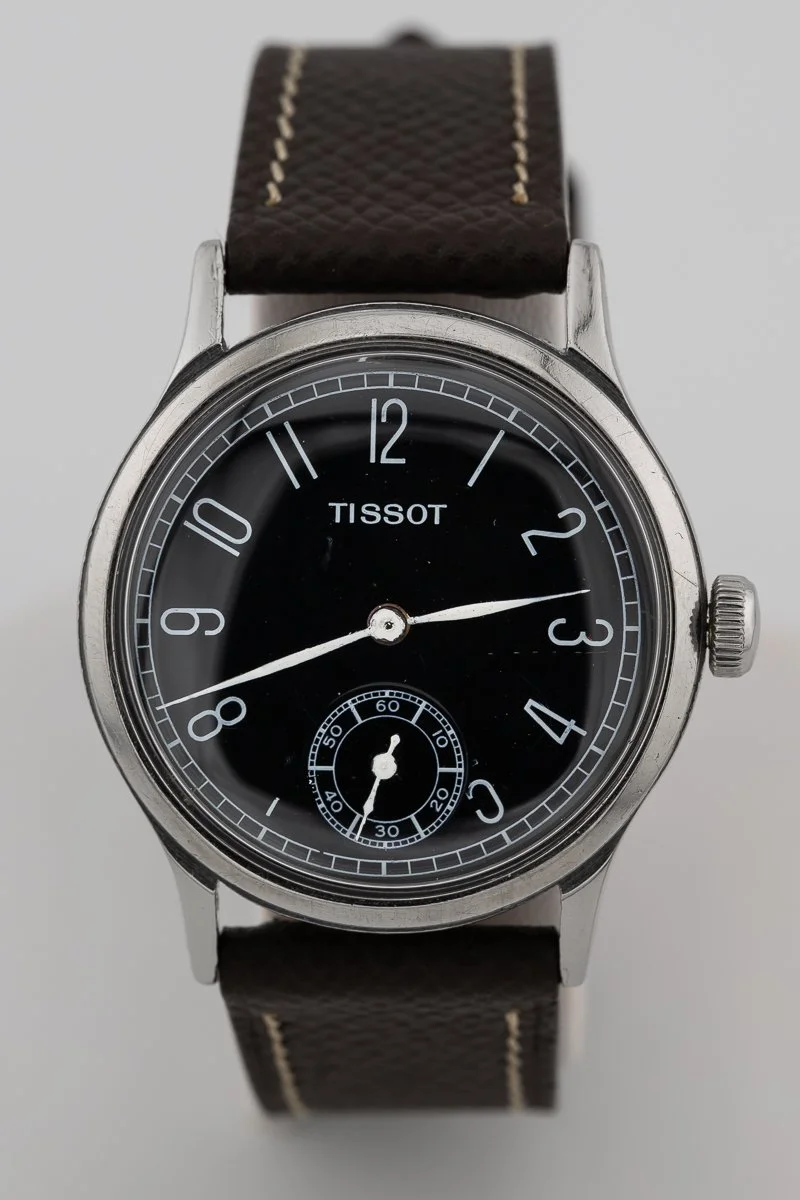
Tissot 1943 Black Dial Sub-second Stainless Steel Manual
Classic Tissot watches tended to be very “fashion forward” and they always seem to look particularly modern relative to their actual age. That’s certainly true of this example, with its high-contrast white on black dial. It’s possible, in fact, that this is a re-dial, although it’s difficult to be sure. Regardless, it’s a great looking watch. The Tissot 27-3 movement has an unusual early shock protection design, with the balance cap jewel mounted in a housing that is attached to the balance cock from below by a pair of screws that have polished tips for better aesthetics. The movement ring for this watch was missing, so I 3D printed a replacement.
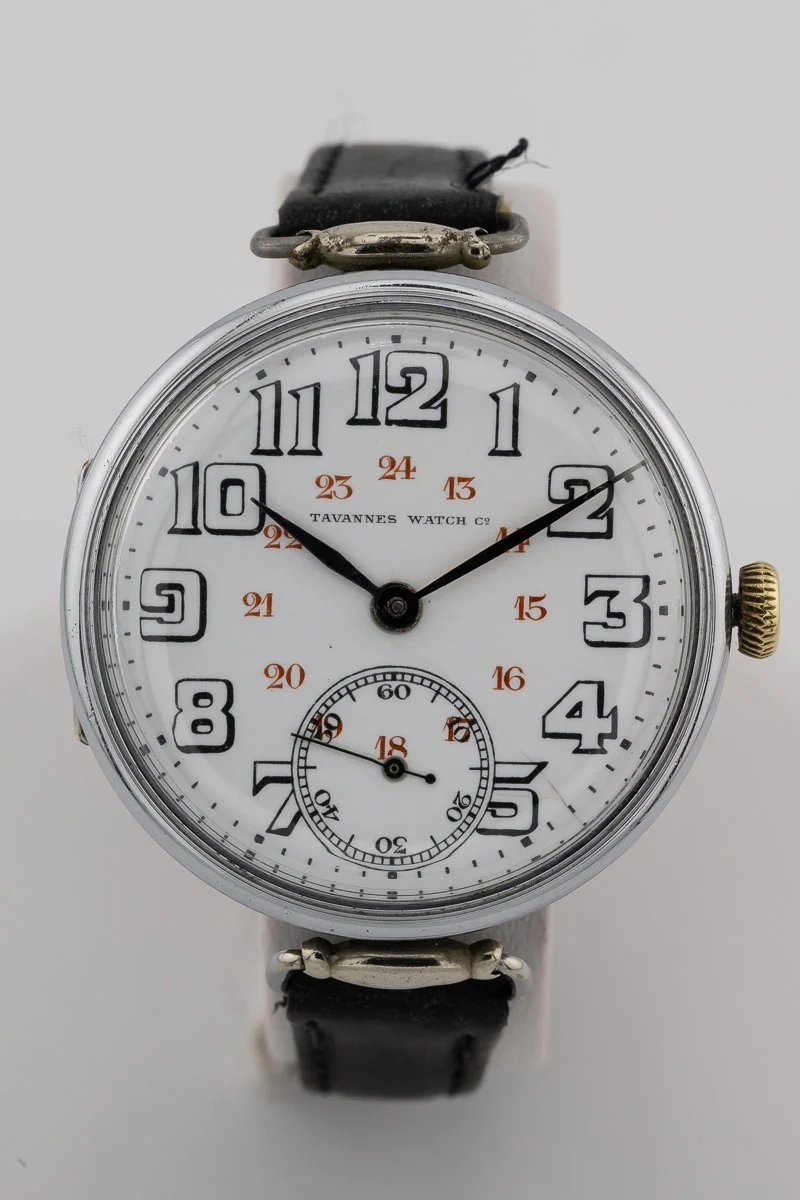
Tavannes WW1 Trench Watch
The wrist watch revolution started when so-called trench watches became popular with soldiers during WW1. Initially, these were basically small pocket watch movements strapped to the wrist, and this Tavannes example, with a porcelian dial and hinged caseback, certainly fits that bill. I wish I knew a bit more about this watch - the movement is unfortunately unmarked - but I treasure it as the real “granddaddy” of my wristwatch collection.
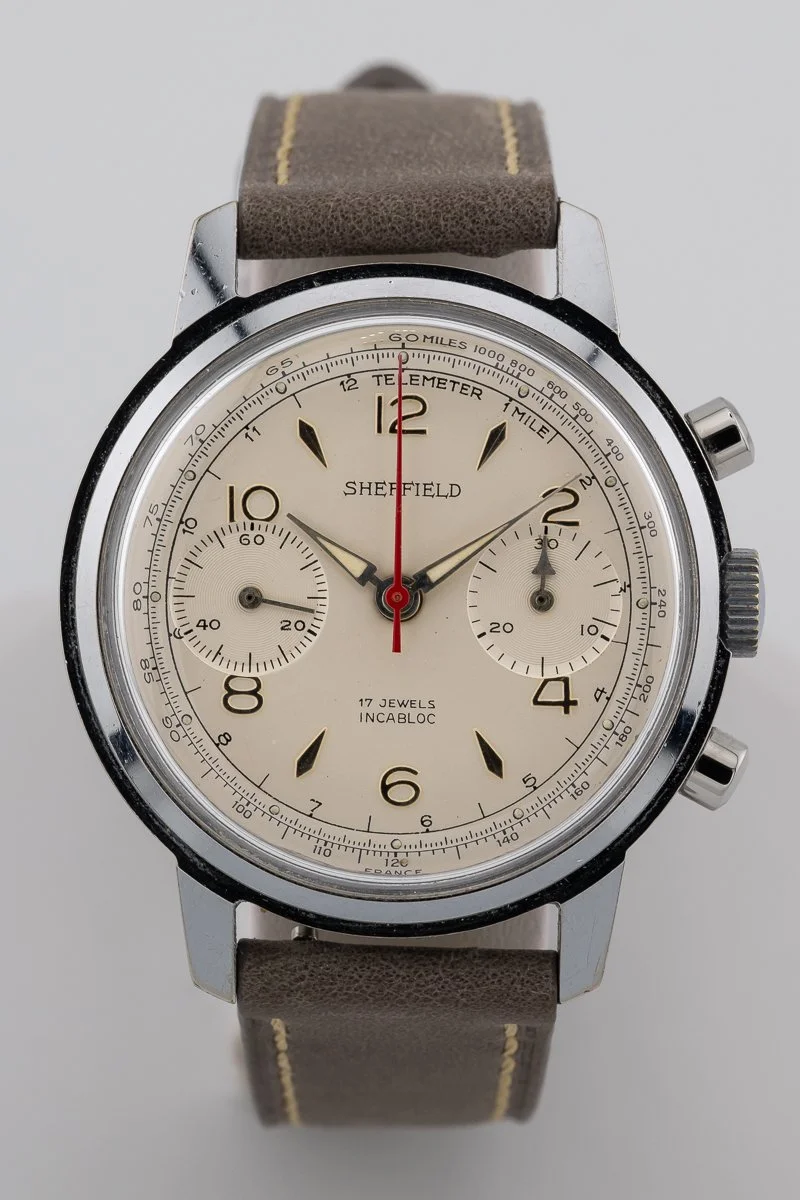
Sheffield 1960s Venus 188 Chronograph
This is probably my favorite vintage chronograph in my collection for everyday wear. The pictures don’t completely do it justice, but the chrome plated case, cream colored dial, red chronograph second hand, and the grey stitched band just look really good together. The Venus 188 movement in this one is also a strong, accurate runner.
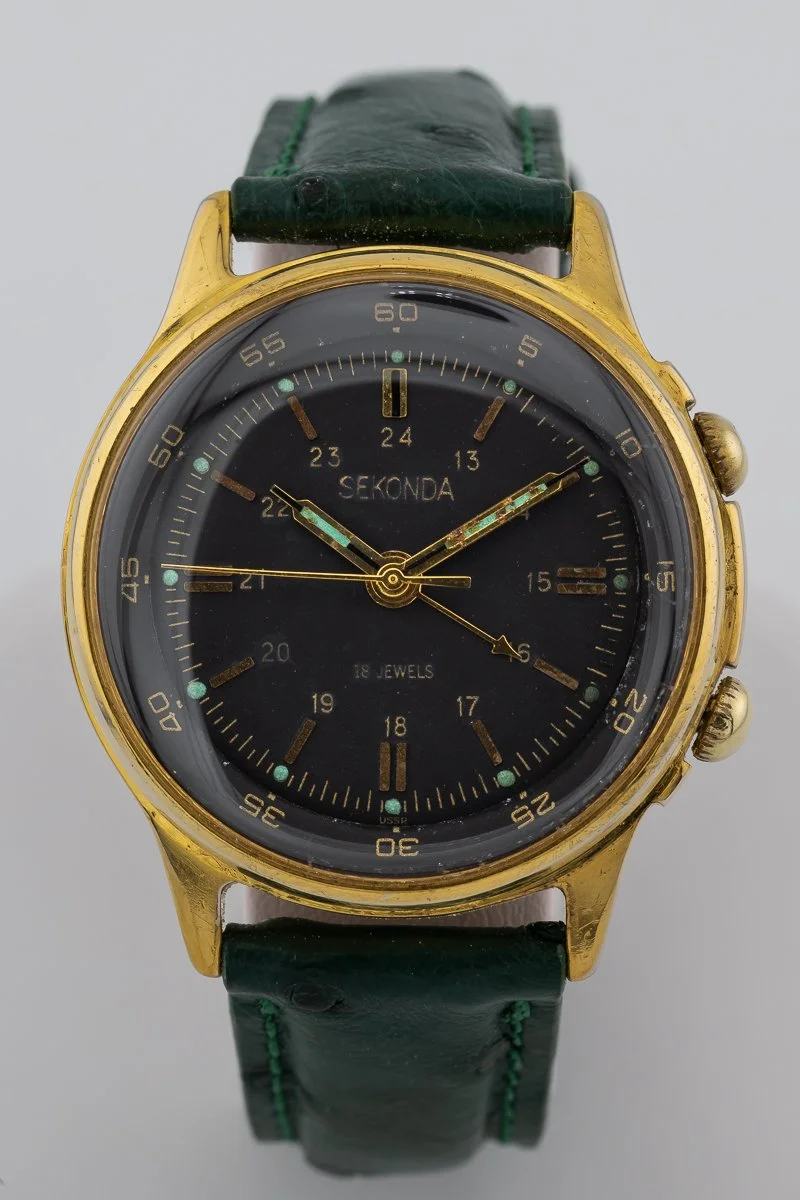
Sekonda c. 1990 Black Dial Alarm Manual
In the early 1990s, As the Soviet Union was experiencing its terminal collapse following the fall of the Berlin Wall in 1989, Poljot and other Soviet watch factories were still churning out watches for re-sale in the West under secondary Eurpoean brands like Sekonda. This alarm watch is from that interesting point in history. It’s still a good looking watch, if you don’t stare at it too hard (some of the dial and hand elements haven’t aged all that well). Re-plating in 14K gold certainly helped in that department. The movement is, in typical Soviet fashion, very workmanlike and pretty much devoid of anything resembling finishing. It still runs well, however, which as any good Soviet will tell you, is the important part.
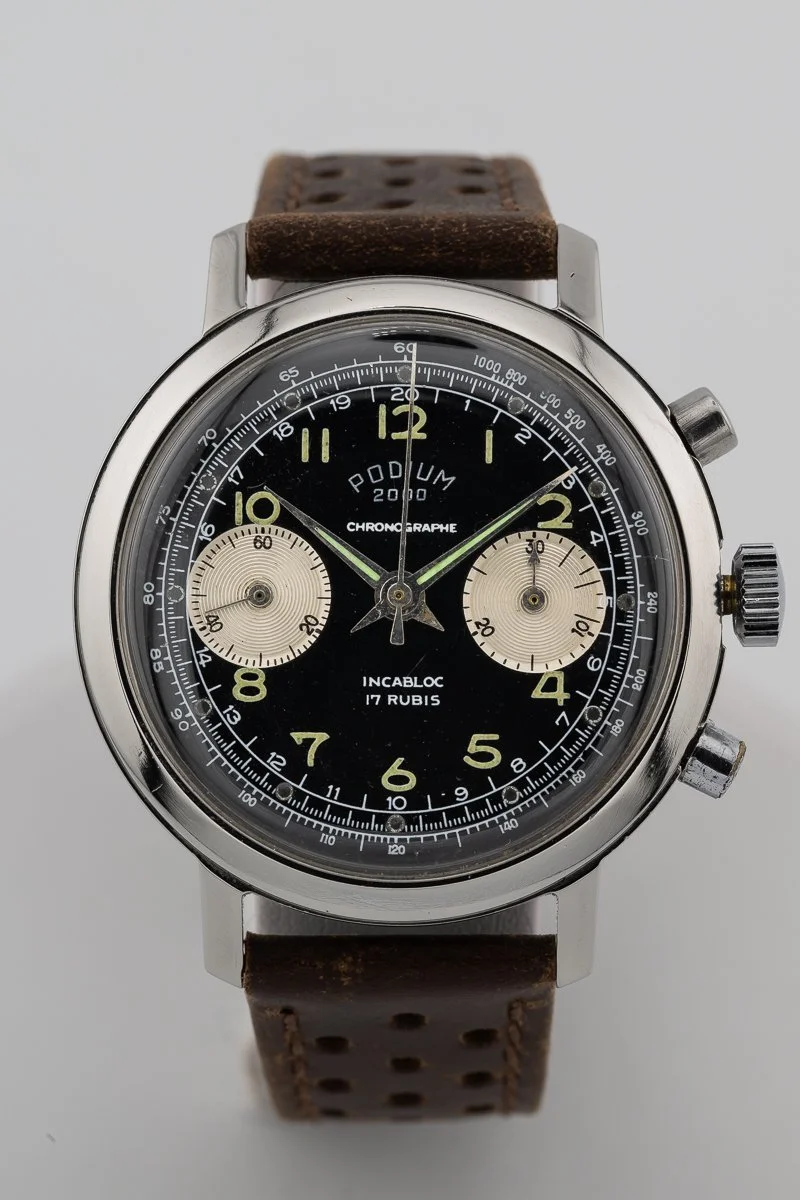
Podium 2000 Late 1960s Reverse Panda Landeron Chronograph
I really love the look of the reverse panda dial on this Landeron-driven chronograph. Podium 2000 is a great example of a pre-quartz-crisis Swiss watch “micro-brand,” where small distributors, jewelers, and export agents could contract various Swiss ebauche manuafacturers to assemble all the parts needed to build a watch.
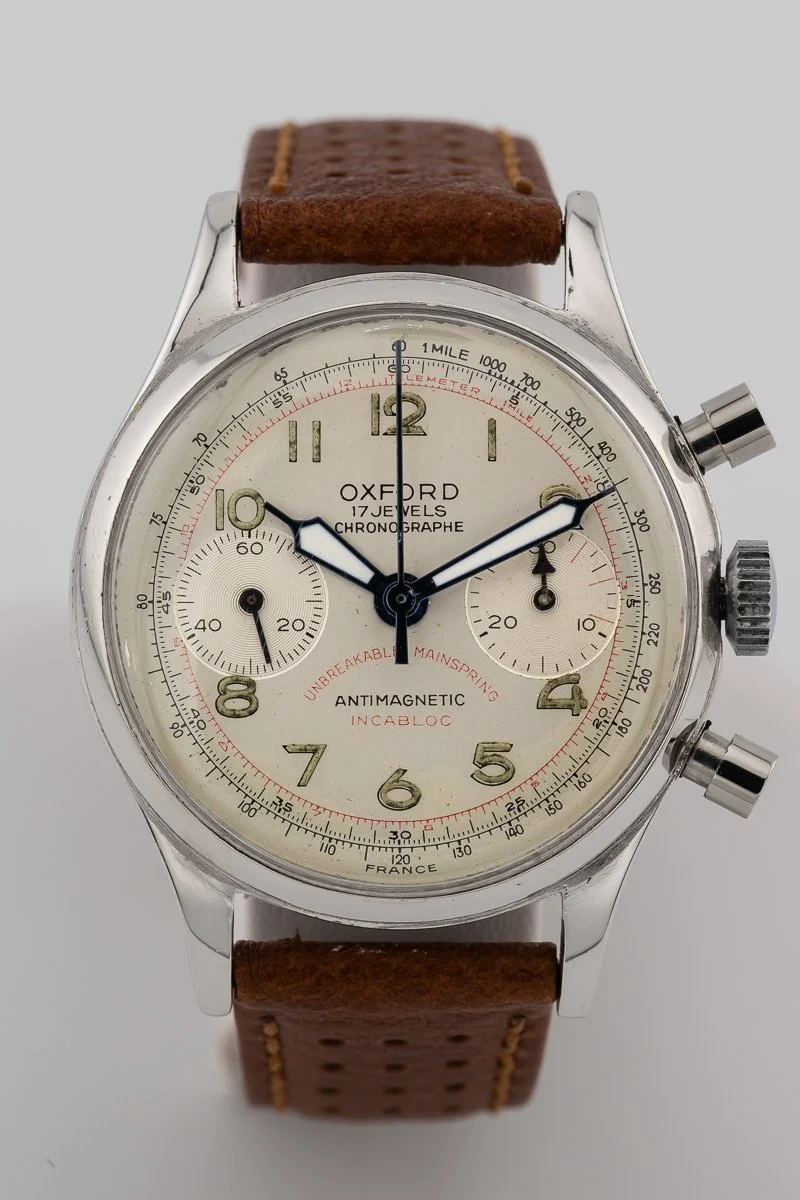
Oxford 1950s Venus 188 Chronograph
Occasionally I get a watch to restore that I know is going to be a bit of an odyssey. This Oxford chronograph certainly qualifies. It came to me with a beat up & corroded case & bezel. Both the pushers and hands, other than the minute counter, had been thoroughly trashed. Fortunately the, other than replacing the mainspring, the movement didn’t require anything beyond a standard service. I was able to track down hands with a blue tint that match the aesthetic of the originals fairly well, and I (eventually, after a lot of hunting) found a pair of modern replacement pushers that, while a bit oversized, fit and function well. The case and bezel - originally chrome - were restored and re-plated in rhodium, and the crystal was replaced. After all of that, I ended up with a good looking and strong running Venus-based chronograph, so I think it was all worth it.
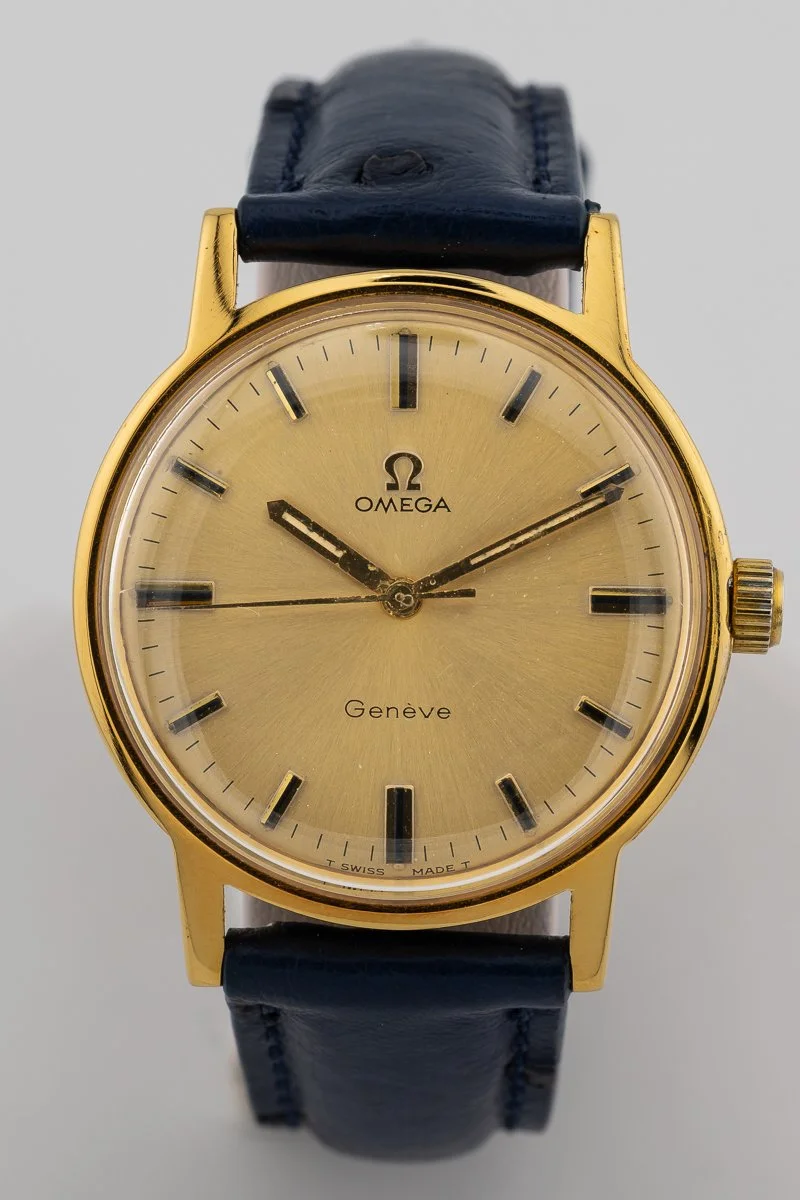
Omega 1971 Genève 135.070 Manual
This handsome Omega must have led a pretty tough life, as the back side of the case had suffered a considerable amount of erosion, the plating was in poor shape, and the original crown was missing. I couldn’t do anything about the erosion of the case material, but with a service, new crown, case polish, crystal polish, and overplate in 18K gold, you still have a good running Omega that looks great on the wrist.
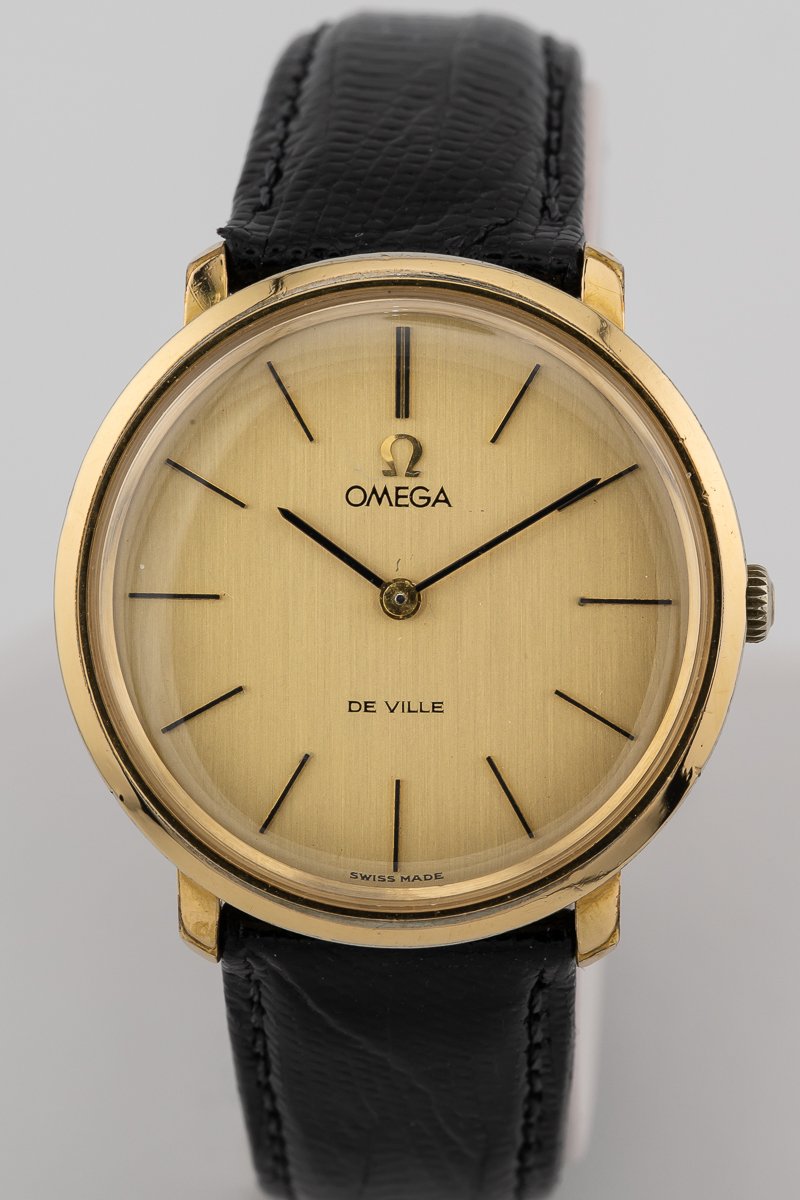
Omega 1964 DeVille 111.077 Manual
The prototypical mid-60s Omega dress watch. Simple and elegant. The small, manual-only 620 movement makes for a very thin watch. Not much more to say, other than the fact I feel lucky to have found this one in really excellent condition.
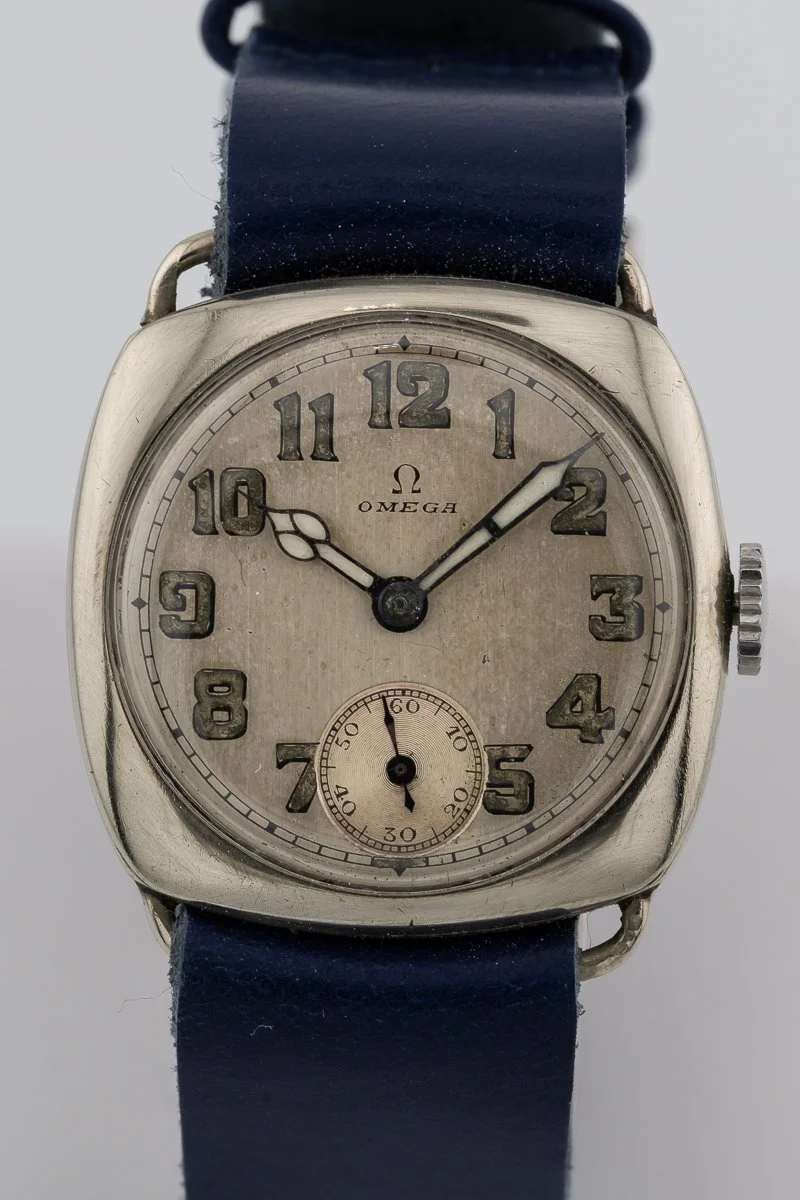
Omega c. 1927 26.5 Nickel Silver Cushion Case Manual
Based on Omega’s 1920s workhorse 26.5 movement, this example is in nickel silver (a.k.a. German silver) and styled to resemble military trench watches from a decade earlier. I love the cathedral-style hands, although re-luming them was a bit tricky. The nickel silver is a bit soft, so the case back wore through on the edges and it was patched by a jeweler at some point.
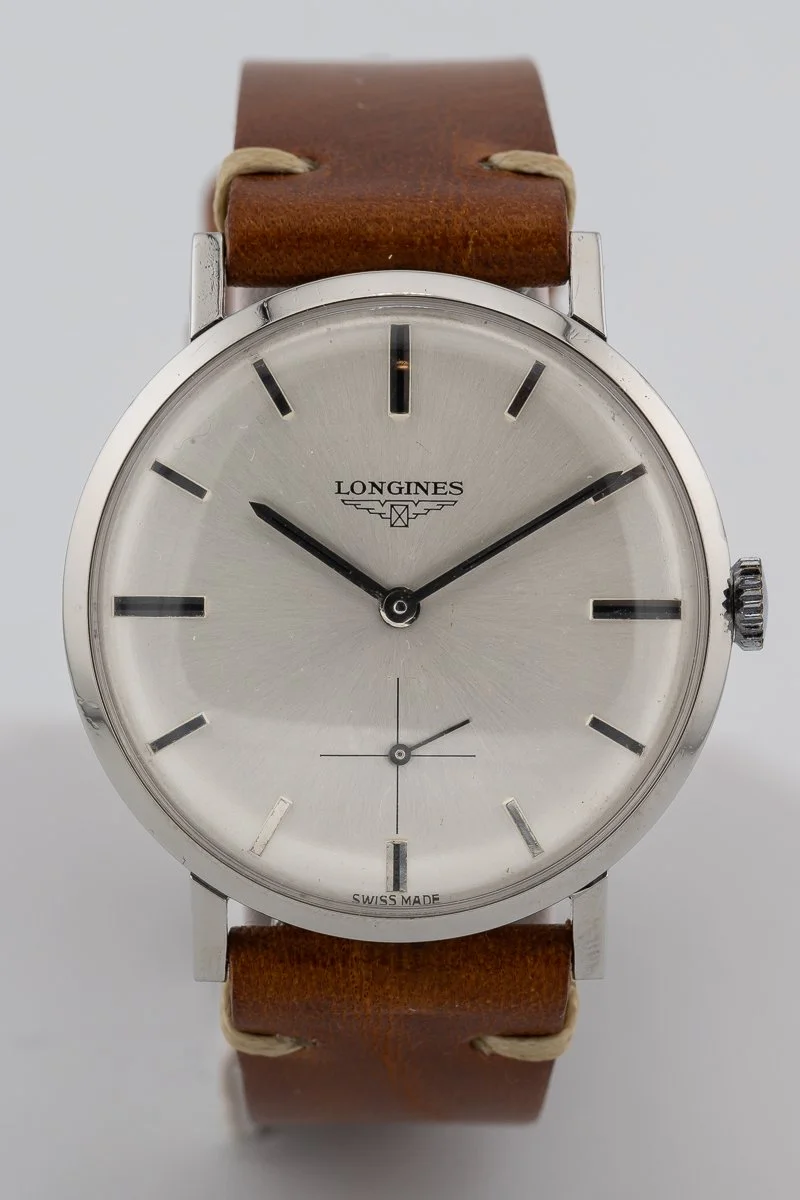
Longines 1968 7855 Stainless Manual
This handsome silver Longines from the late 1960s still wears exceptionally well, with its large (for the era) case size and clean, modernist look. The cal. 302 movement inside is part of the brand’s celebrated 30L lineage—thin, beautifully finished, and mechanically robust—making it one of the better manual-wind calibers of its era. When I received this watch it was in pretty good shape (compared to many of the watches I work on, anyway), but was not running due to a broken balance pivot - a fairly unusual occurence in shock protected watches. The only sources for a new balance stem were in Europe, and, without the de minimus exemption, getting it through US customs, tiny as it was, was quite an adventure in itself.
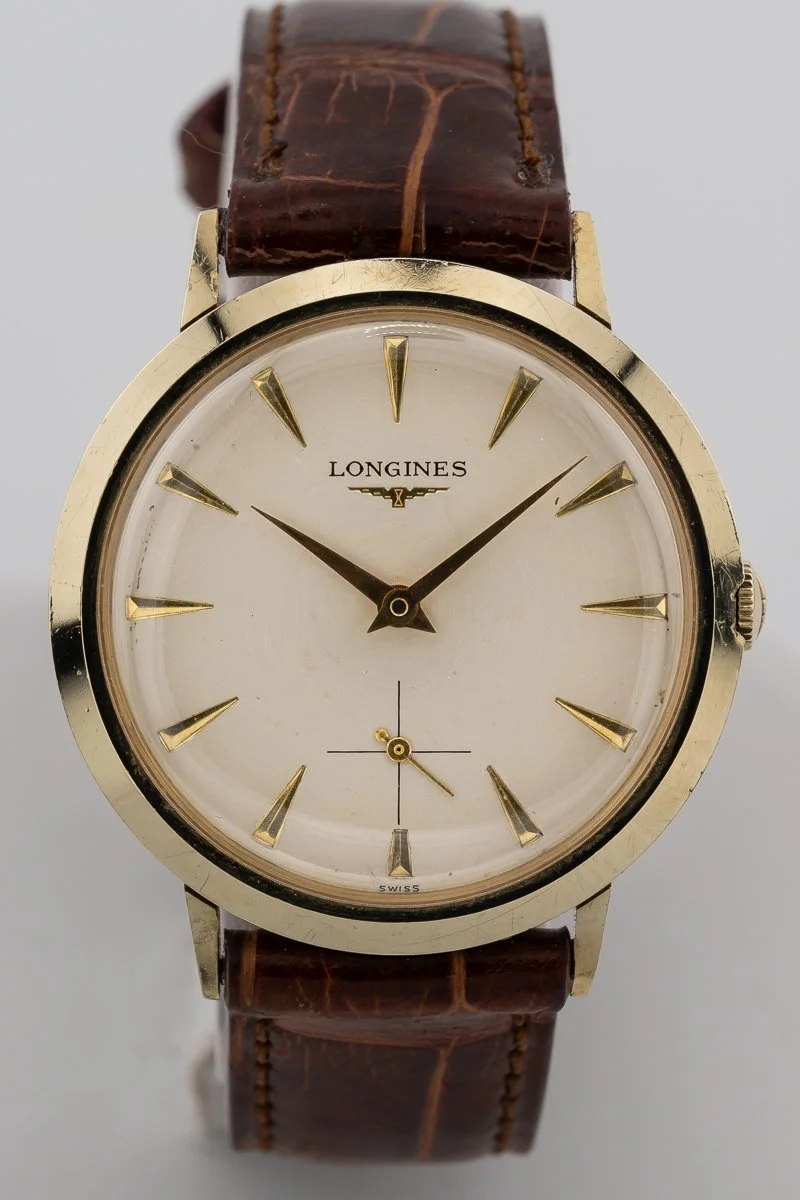
Longines 1959 1048 Sub Second Manual
This is a great example of Longines’ mid-century design mastery - really a great looking watch which manages to look much more modern than it is. The Longines 27M movement inside is beautifully crafted, and also demonstrates Longines’ long devotion to non-shock-protected balances, at least for their dress watches, which extended into the early 1960s.
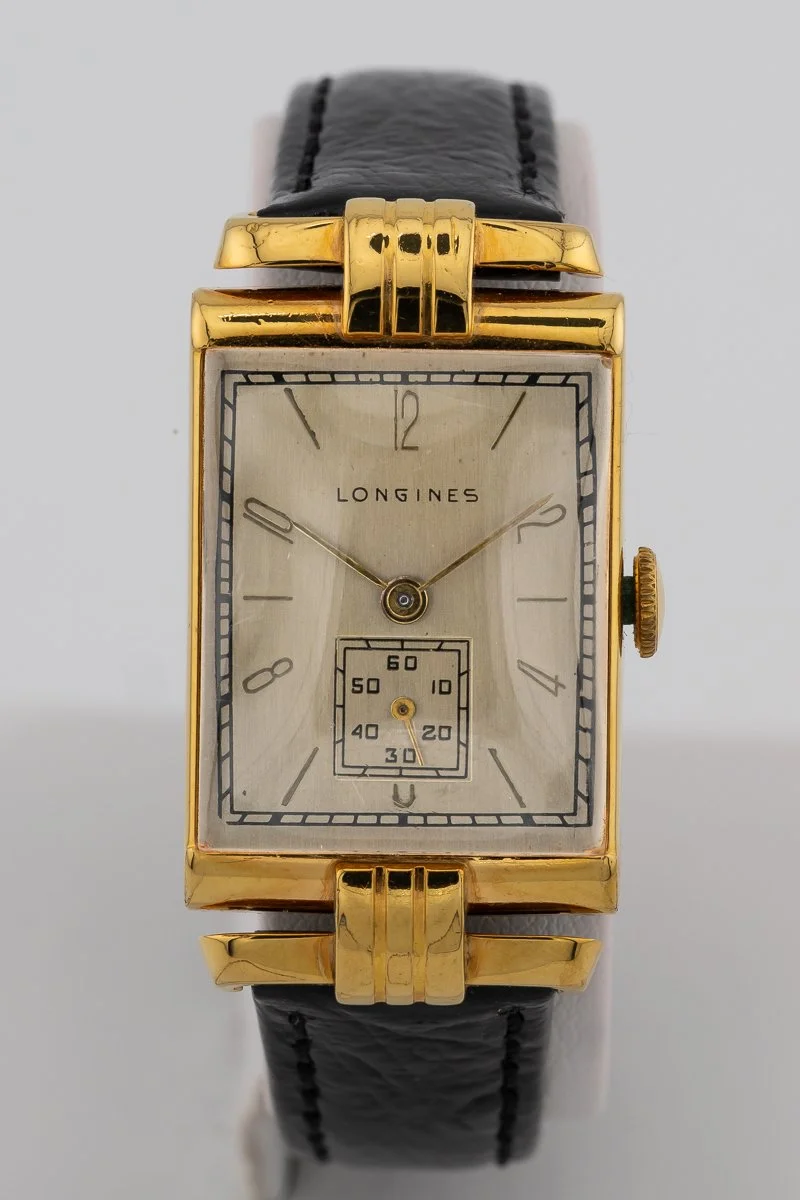
Longines 1941 9L Tank
This elegant Longines tank really captures the refined Art-Deco style of the early 1940s with its dramatic triple-bar “wedding band” lugs. Inside beats Longines’ in-house caliber 9L, a finely finished 17-jewel rectangular movement produced for the brand’s U.S. market dress watches of the era.
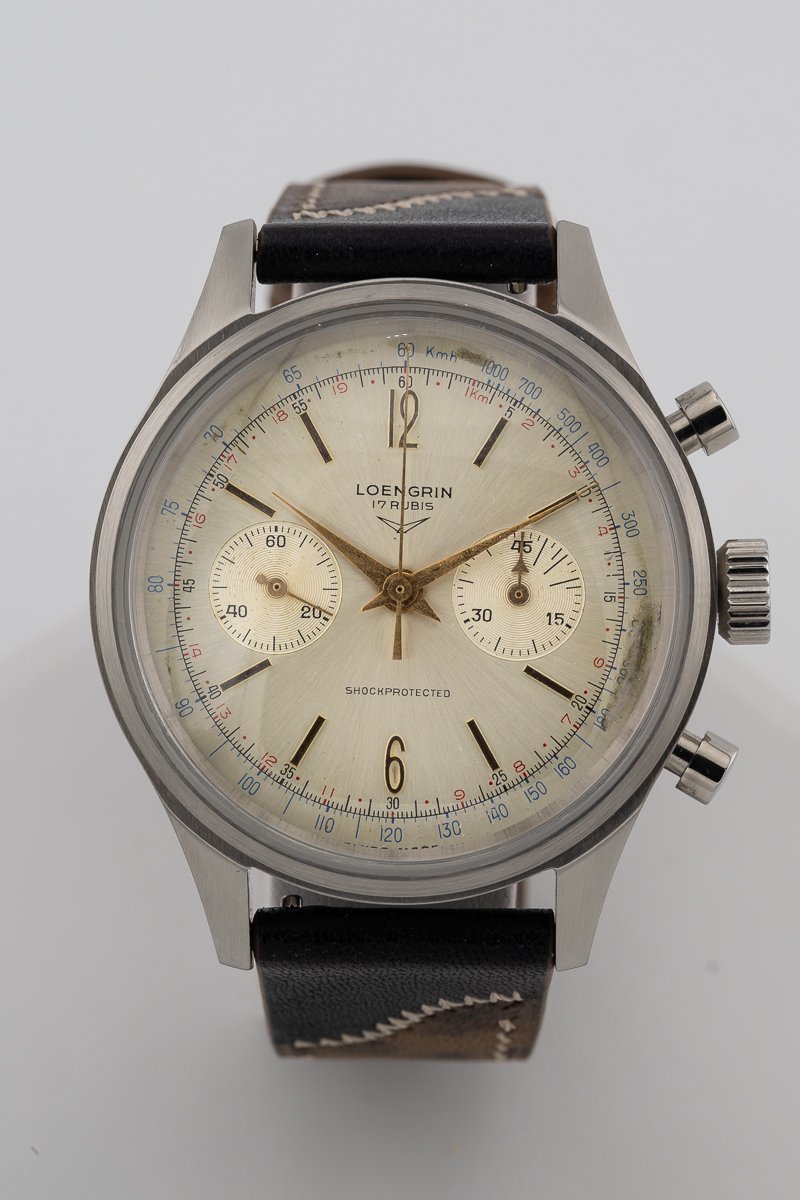
Loengrin Landeron Marriage Watch Chronograph
One day I was casually scanning EBay listings and I ran across a gentleman selling brand new modern cases designed for vintage Landeron movements. As it happened, I also had a perfectly good Landeron 149 movement - originally purchased as a parts movement but never used - that came with a decent Loengrin-branded dial and hands. And just like that this marriage watch was born. The new case is extremely chunky and heavily built, and definitely gives the watch a look that is more modern than vintage, but mostly I was glad to be able to put this nice Landeron movement back to work!