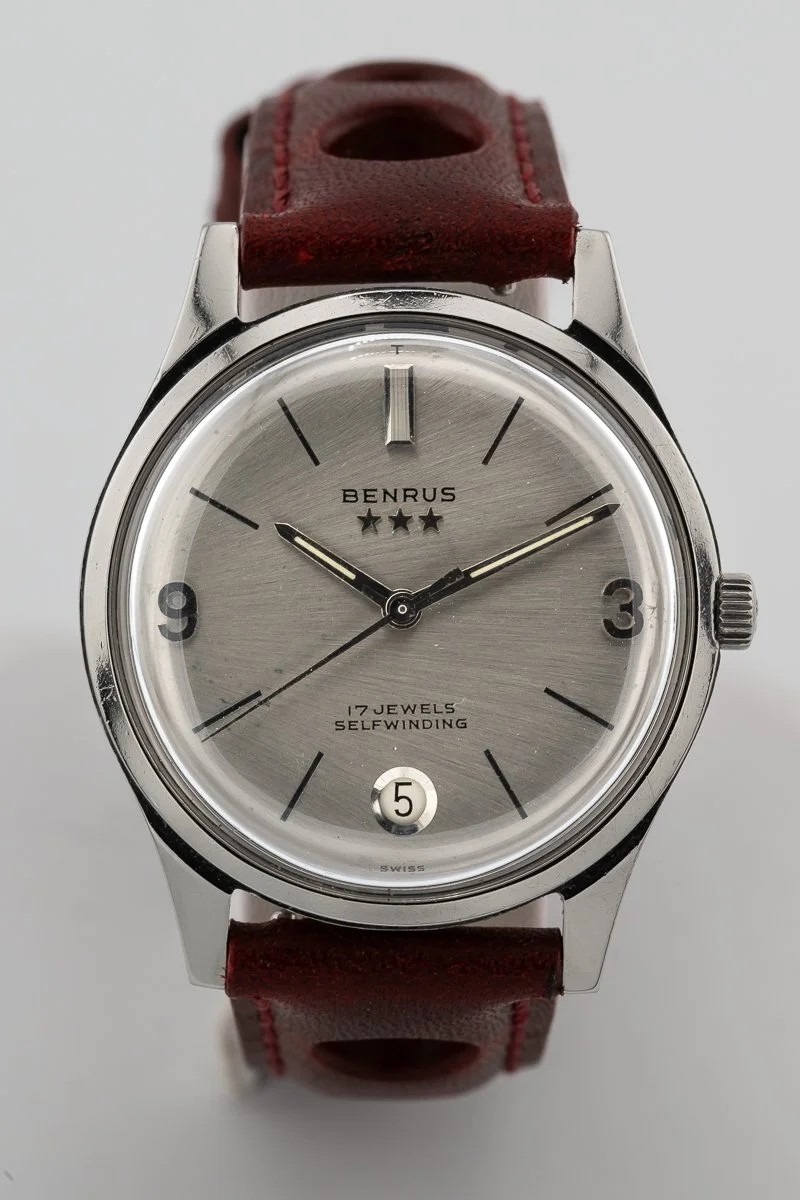
Benrus Early 1960s Three Star Stainless Automatic
There is something incredibly satisfying about finding a vintage piece that punches far above its weight class. Benrus is a brand often remembered for its utilitarian military field watches or standard gold-plated dress pieces, but this Reference 7026 "Three Star" is an entirely different animal.
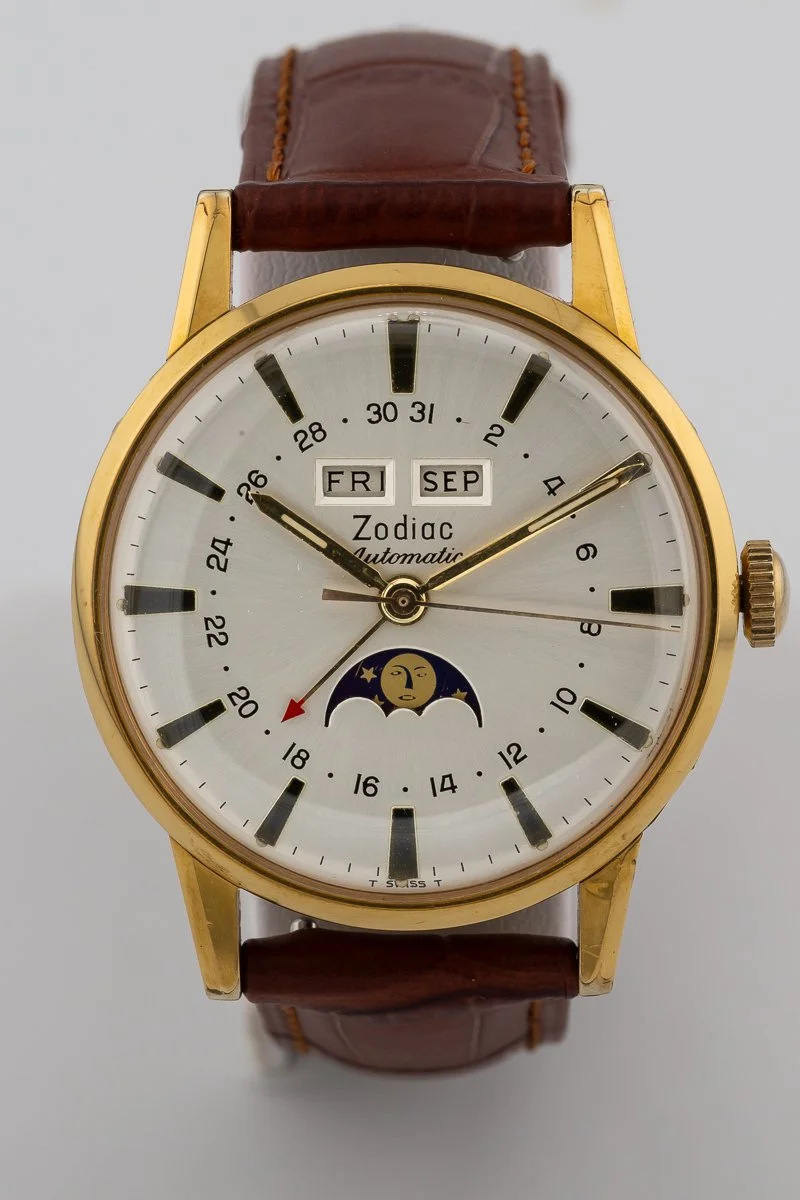
Zodiac Late 1960s 743-908 Triple Calendar Moon Phase Automatic
Triple calendar with moon phase is one of my favorite complications, and I didn’t have to think very hard about purchasing this Zodiac when it showed up as a “For Repair” listing. It badly needed a service, and the case had some cosmetic issues that were mostly addressed by over-plating with 14K gold plate. That plus a new crystal, and the end result is really something special. The movement is essentially a reliable and accurate Zodiac 70-72 automatic with the extra calendar bits added to the dial side. Four small pushers make it relatively easy to set the various calendar functions.
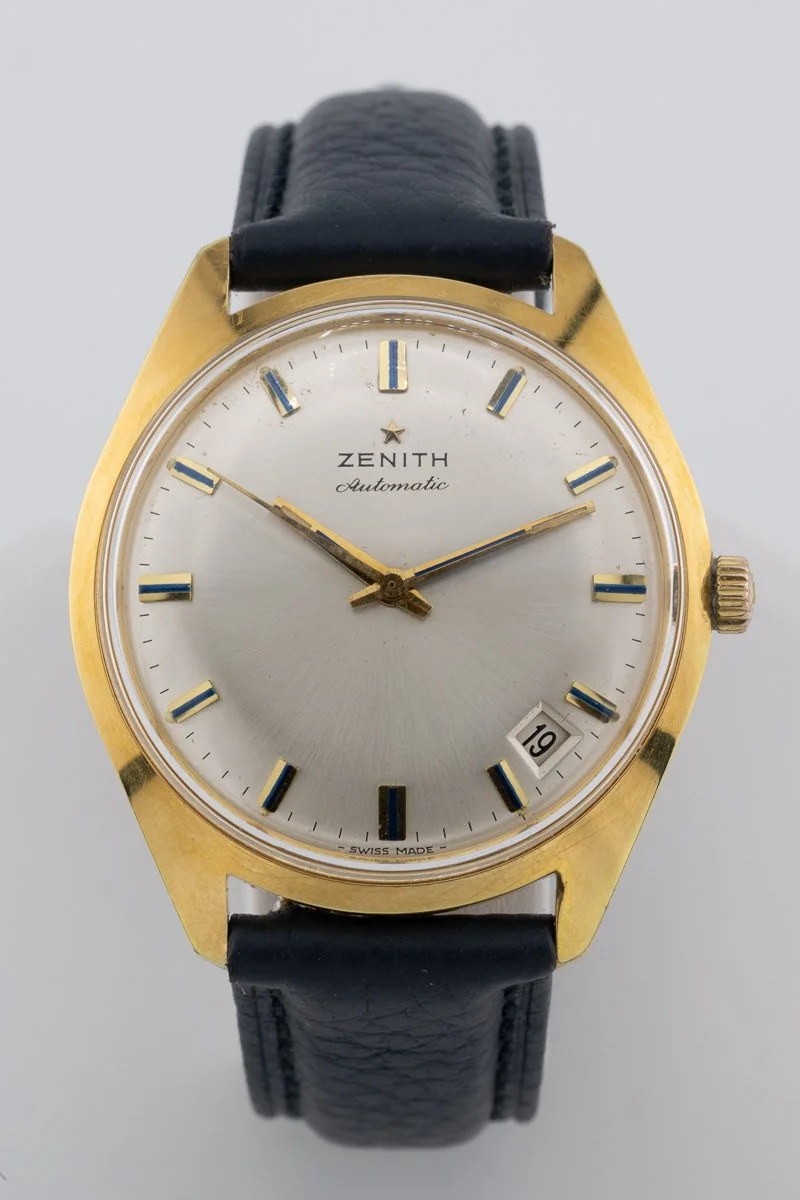
Zenith 1969 2542PC Calendar Automatic
I have tremendous respect for Zenith as a watchmaker, and good restoration candidates don’t pop up on eBay that often, so I was pleased to find this one. The movement in this thing did not disappoint - it’s beautifully made. This is definitely a cut above the usual watches they used to hand out on service anniversaries. W.H. Rogers must have done a really good job.
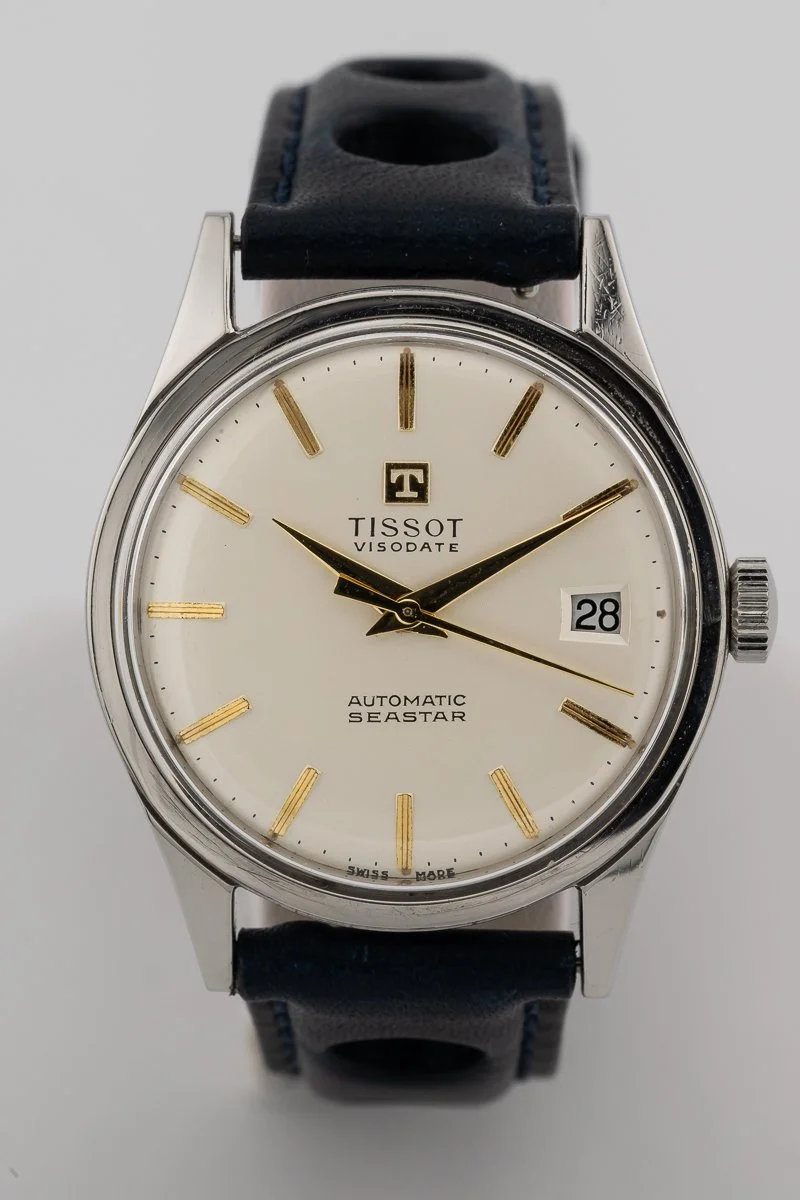
Tissot 1963 Seastar Calendar Automatic
You can see the distinct aesthetic of modern Tissot watches start to take shape already in this Seastar from the early 1960s, although the contrasting gold hands/indices and steel case is definitely a classic look. One oddity about this watch is that the Tissot 784 movement has no quickset at all for the calendar - not even a unidirectional calendar driving wheel - so setting the date can be a pain. I usually don’t bother when I wear this one.
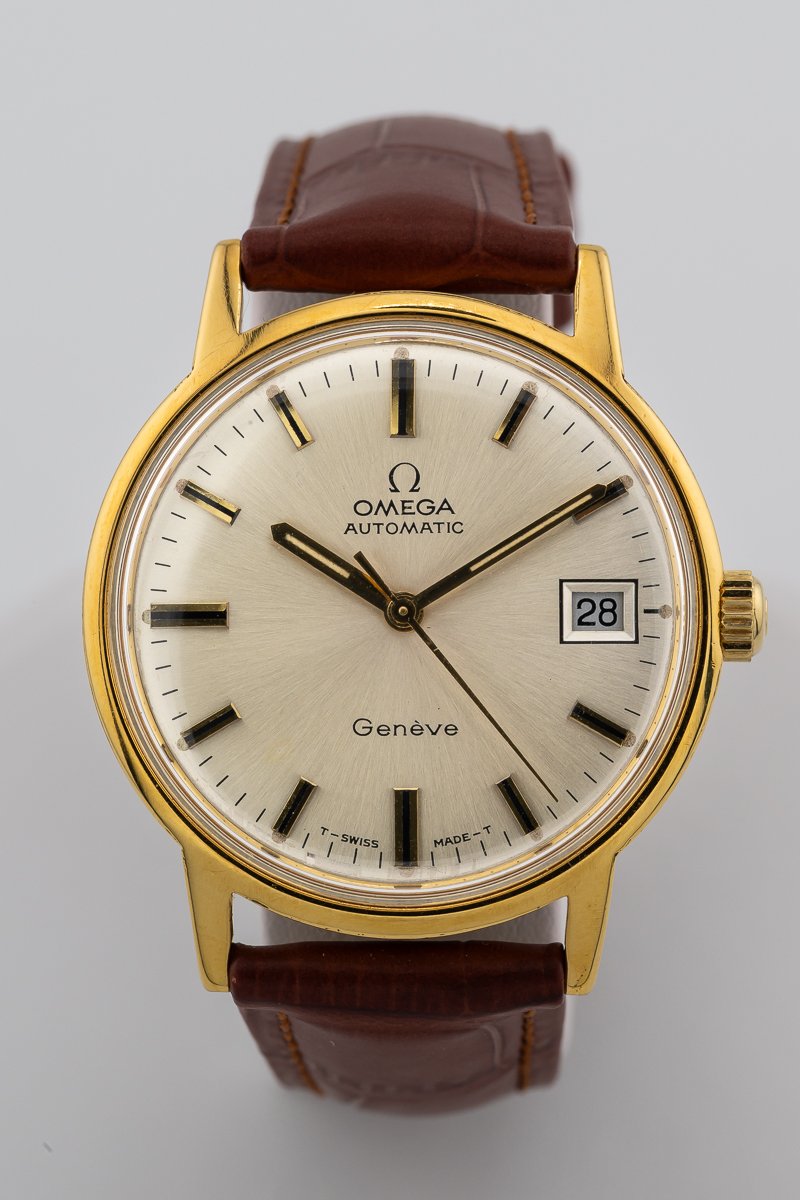
Omega 1970 Genève 166.070 Calendar Automatic
This lovely Genève really captures the understated elegance Omega perfected in the early 1970s, with a champagne silver sunburst dial framed by sharply faceted gold-plated markers that catch the light with every turn of the wrist. Beneath that beautiful dial beats Omega’s revered caliber 565, a 24-jewel automatic workhorse celebrated for its smooth winding action and quick-set date mechanism — one of the finest movements the company ever produced.
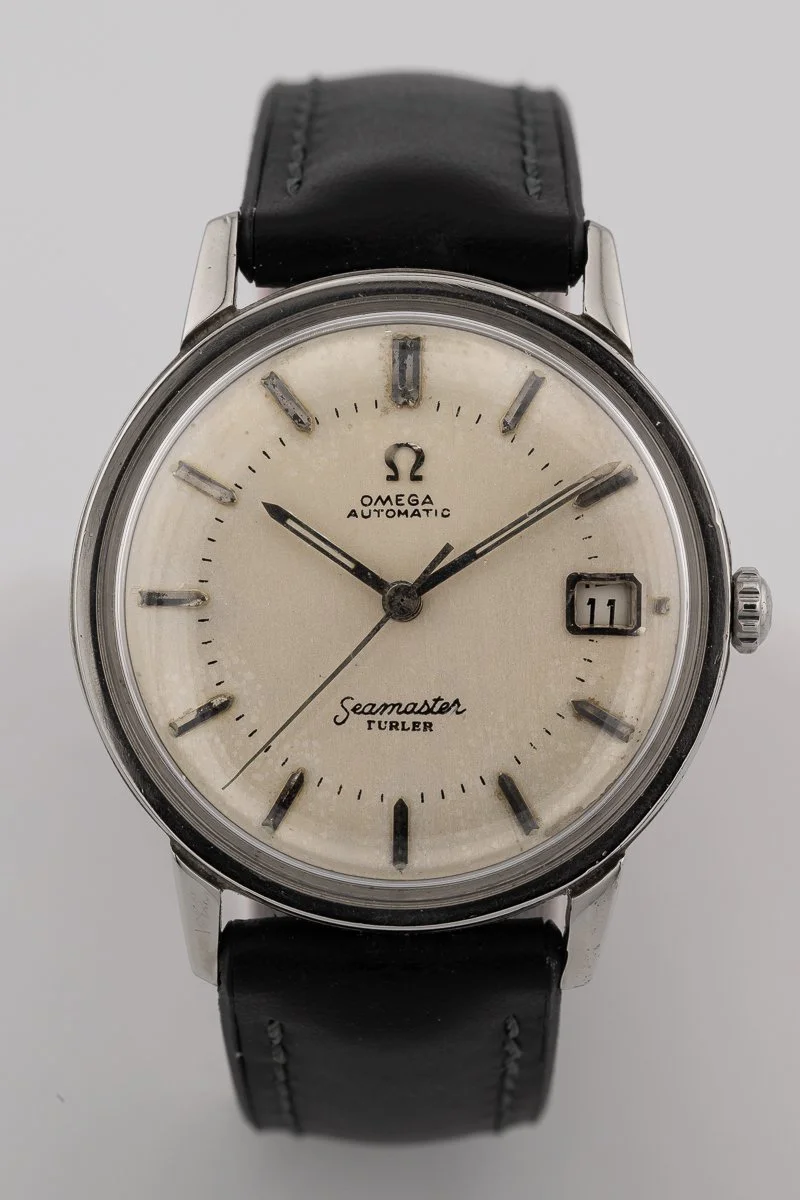
Omega 1965 Seamaster 166.002 Turler Calendar Automatic
Back in the days when the big watch brands hadn’t really established a dedicated retail presence, it wasn’t uncommon for major watch boutiques like Turler to sell pieces with their name co-signed on the dial. The 562 automatic movement powering this example is a bit aesthetically compromised due to oxidation - probably from being worn while swimming - but it works very well and keeps great time. It’s an important watch for me, both because it was my first Omega restoration, and because it was the first watch where I was able to successfully straighten a damaged, bent hairspring - an important milestone in my watchmaking journey.
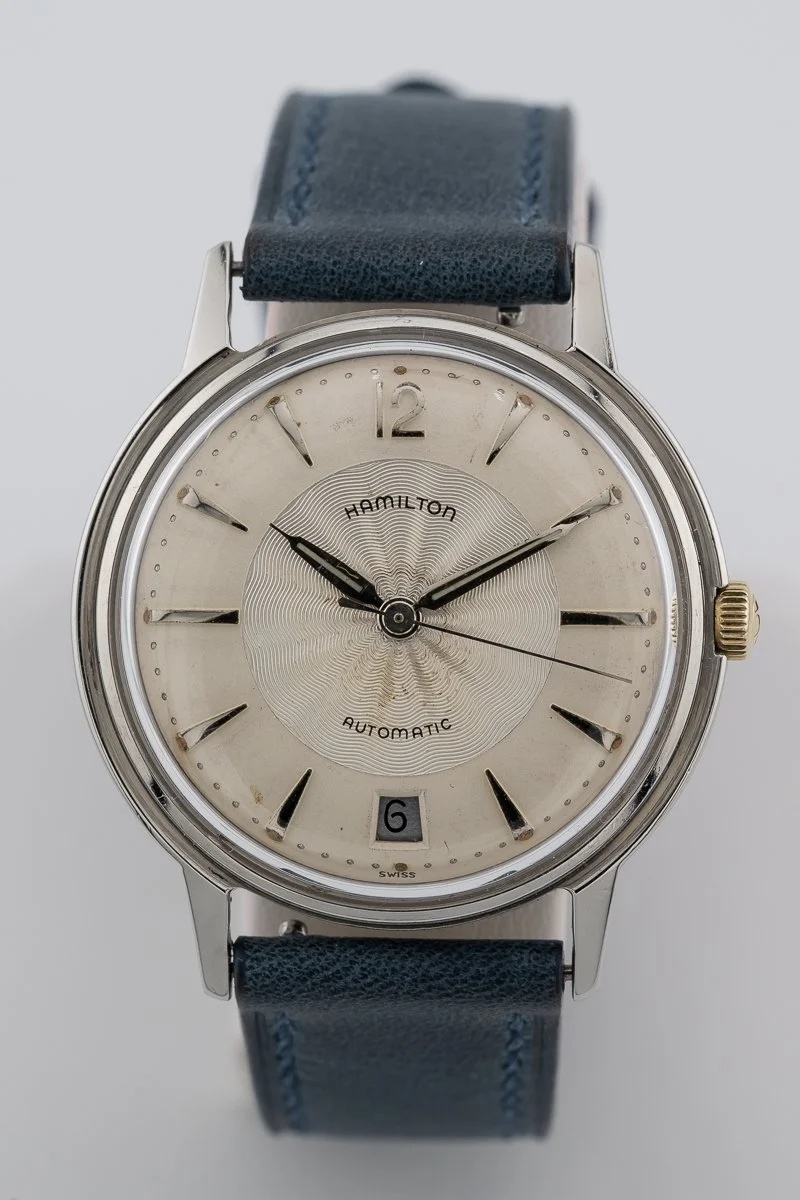
Hamilton c. 1960 Calendar Microrotor Automatic
Some vintage watches are highly cooperative. Others, not so much. This particular Hamilton fought me tooth & nail, but I persisted (through multiple donor movements) because I really love the style of the dial. The Buren-sourced microrotor movement in this thing is cool looking, but not fun to work on. Lowlights include a complex and cantankerous compound ratchet wheel, a frankly terrible click spring design, and a difficult-to-assemble automatic winding mechanism underneath the rotor. Eventually I got it working, however. Well, except for the calendar - the calendar driving wheel, like most of the rest of this movement, is complex and delicate, and the one in this watch literally fell apart. I have not yet been able to source a replacement, so the calendar is currently stuck on 6 (short for “666”).
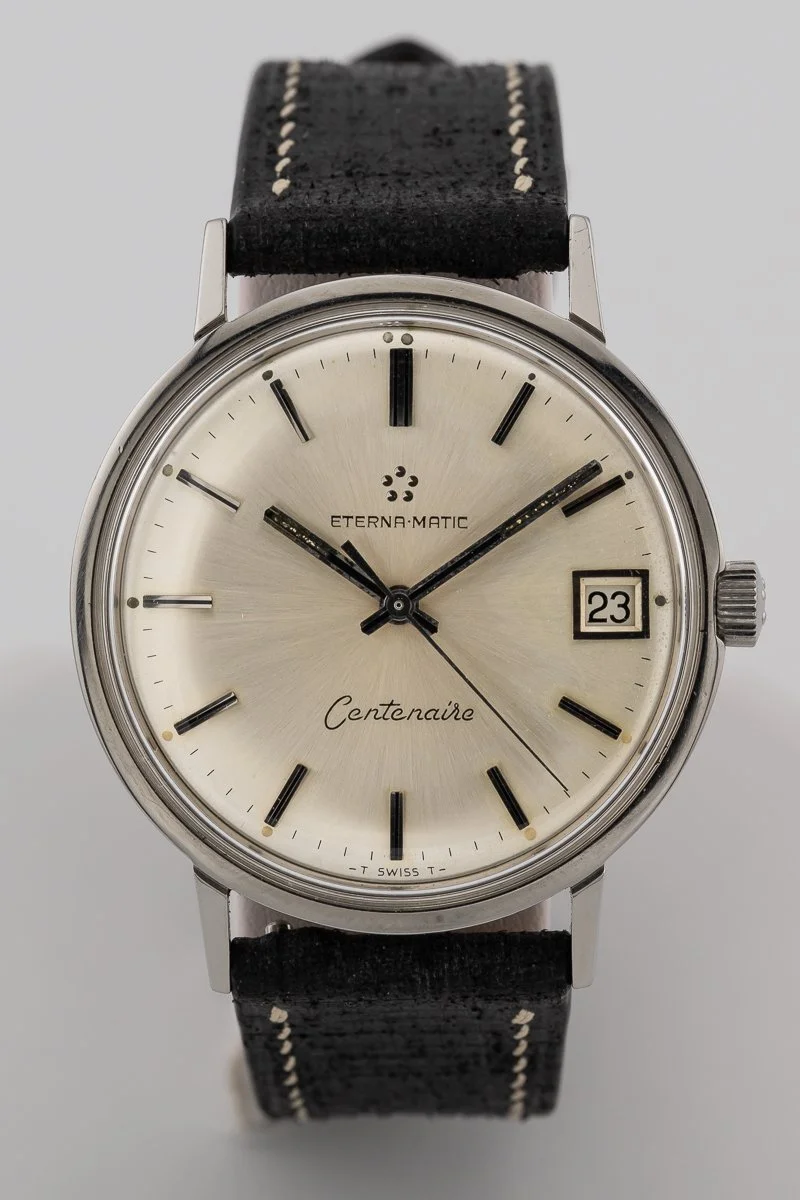
Eterna 1966 Centenaire Calendar Automatic
This is a really clean example of a 60’s Eterna, and the simple silver and black look goes great with the dark grey band I got for it. It’s not quite as pretty as my favorite Eterna, but still a very handsome & reliable watch. The 1481K movement exhibits typical Eterna quality.
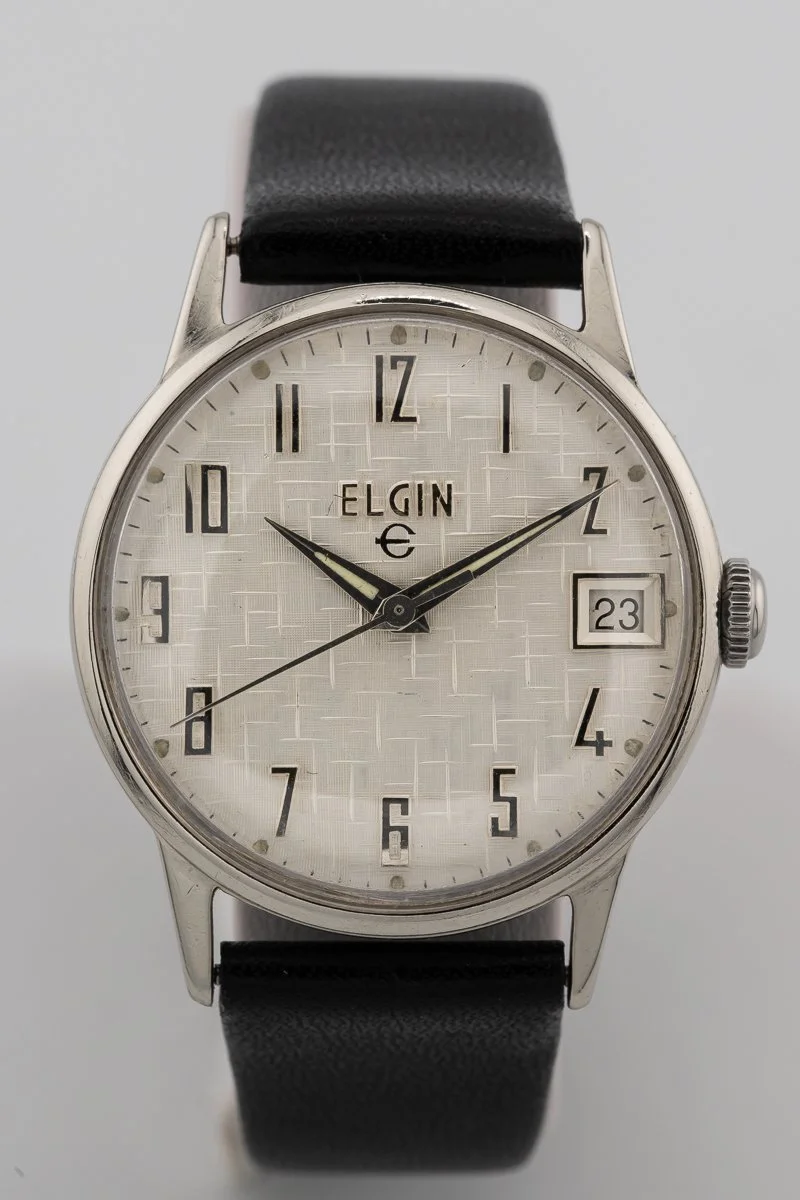
Elgin Early 1970s 4974 “Basket Weave” Dial Manual
This early 1970s Elgin is highlighted by an unusual and striking “basket weave” dial. It is powered by a Swiss-made FHF manual wind movement with surprisingly nice finishing, cosplaying as an “Elgin 394.”
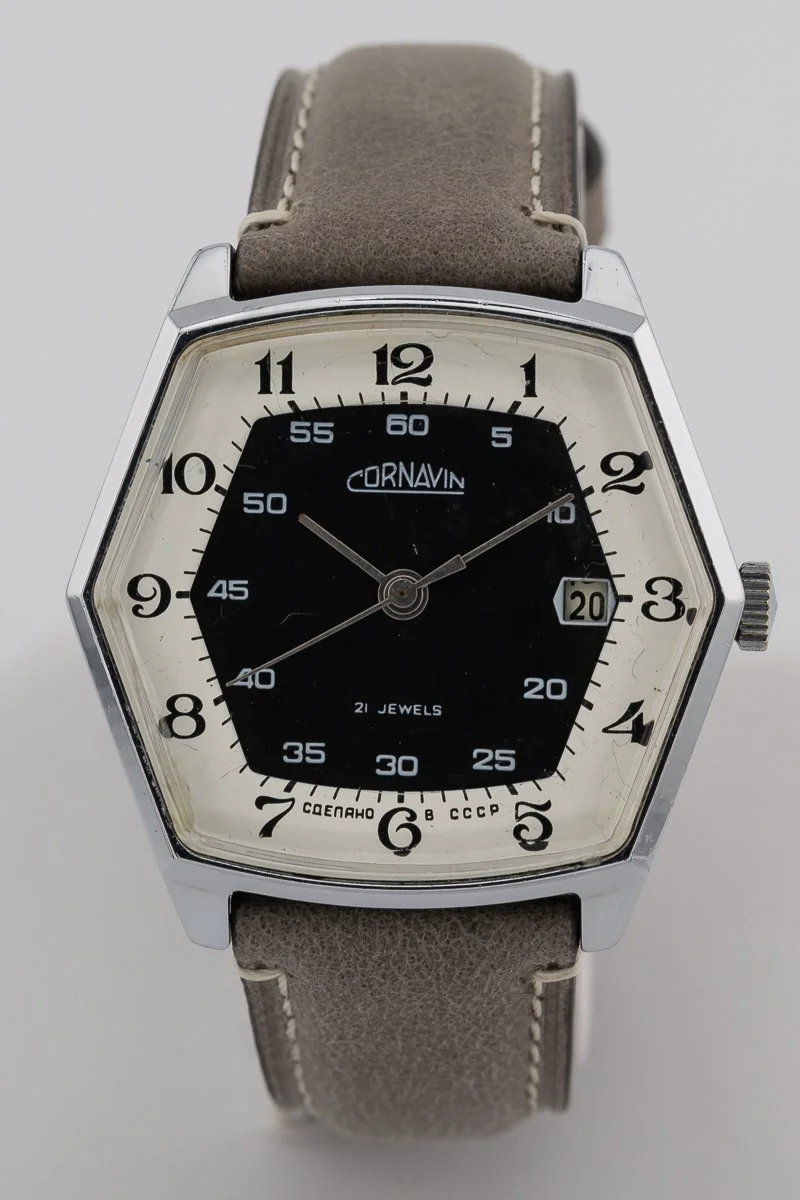
Cornavin Early 1980s Calendar Manual
Produced at the gloriously named Second Moscow Watch Factory by Slava in the twilight years of the USSR, this watch was slated for European sale under the Cornavin brand name. It’s certainly an interesting design, with its unusal hexagonal case. The Slava movement is also unusual and quite innovative, with an indirect drive mechanism, oversized balance, and twin mainspring barrels for space efficiency. It also has the customary soviet industrial finishing on the movement parts. However, even if it isn’t very pretty it still tells time well!
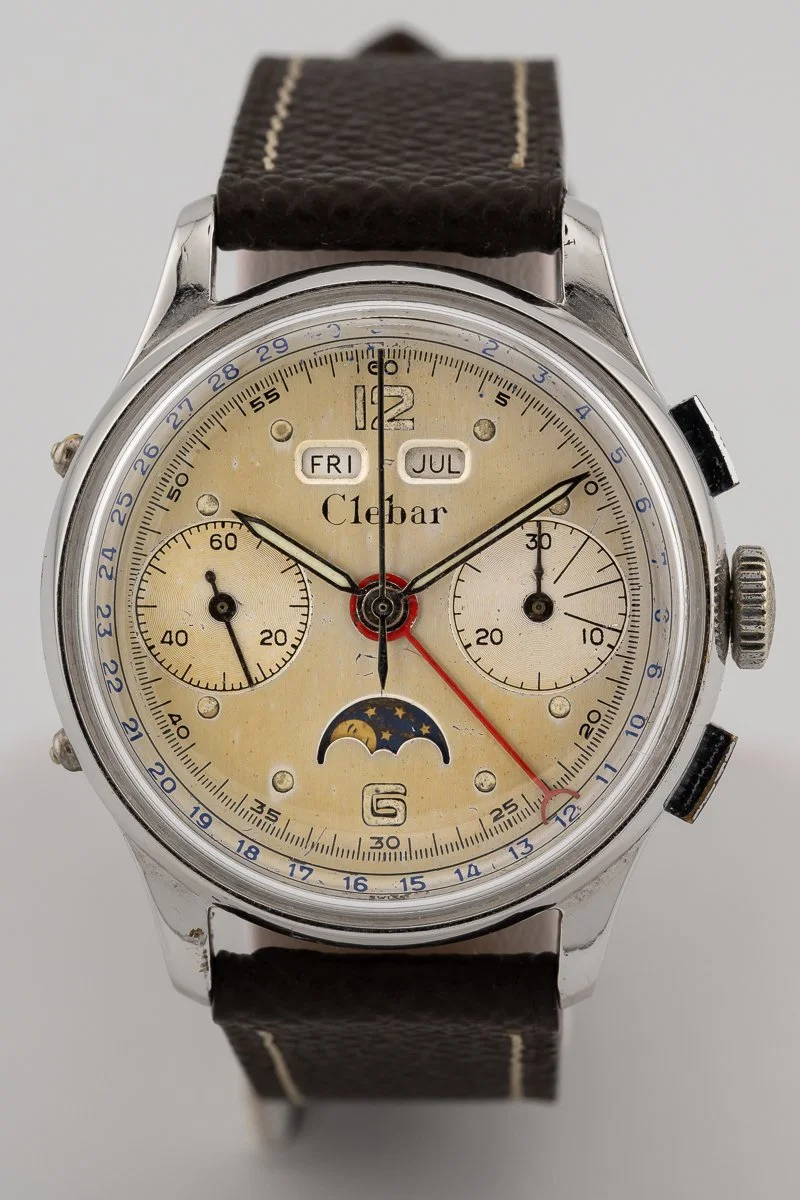
Clebar Early 1950s Triple Calendar Moon Phase Chronograph
Possibly the most complex watch I have ever restored, this Clebar combines a full chronograph with a triple calendar & moon phase. Fortunately, these movements are built in clear layers, so the complexity of the chronograph and the complexity of the calendar mechanism become totally separate problems. It’s interesting to note that the small pushers at the 8 & 10 o’clock positions both do double-duty - the lower pusher advances the moon phase with a light press, and the date with a firmer press, while the upper controls the date and month in a similar fashion. The lever design to accomplish this dual-action behavior is definitely interesting. This watch was originally chrome plated, but the plating was in poor condition, so I stripped it and re-plated the watch in rhodium, which looks great. I probably should have done the pushers and crown while I was at it but I was being a bit lazy - I’ll get back to those eventually…
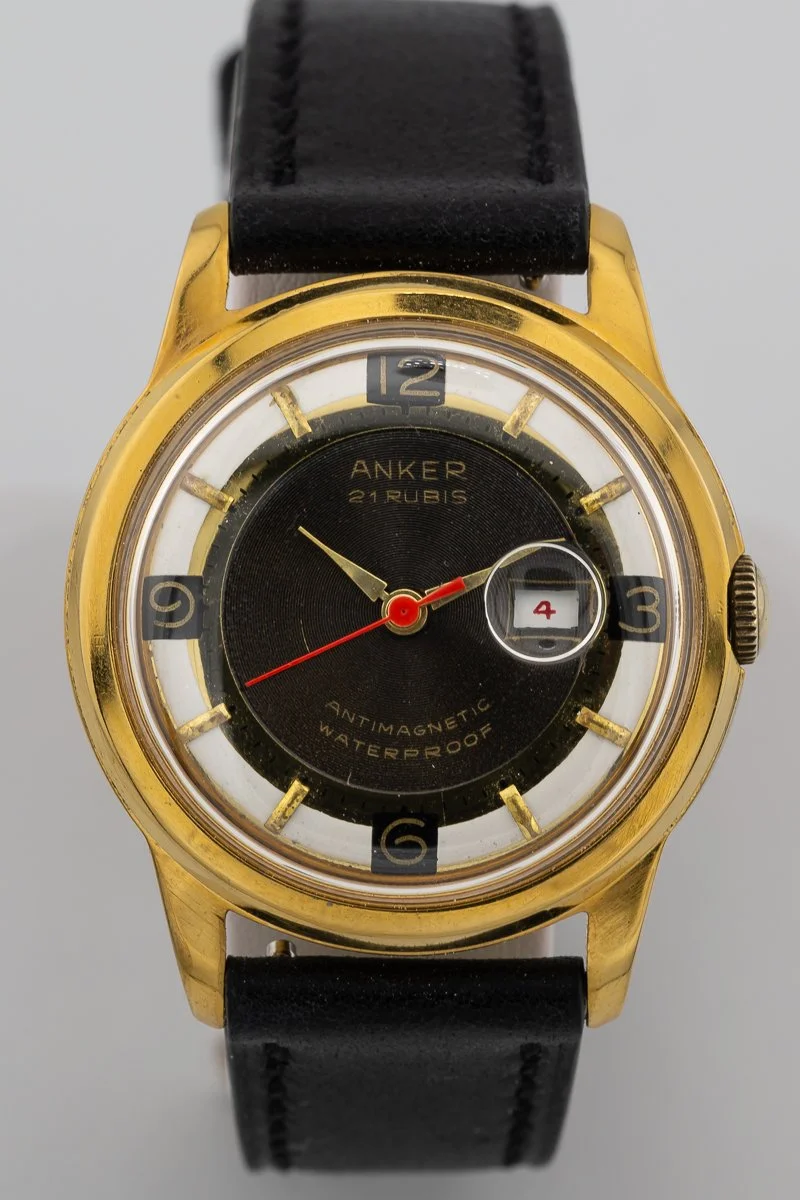
Anker Early 1950s “Patent” Calendar Manual
I love the unique aesthetic of this Anker, which somehow looks much older than it actually is, even with the central second hand and calendar mechanism. It’s difficult to date these watches precisely, but it is likely from the early 1950s. The movement, despite the high jewel count, was inexpensively made, with a single large bridge and a pin palette escapement. Regardless, it still runs well. Anker was clearly very proud of this movement design, because the case back is quite literally covered with patent information, including the Swiss, French, and German patent numbers. I’m not sure about this, but the prominence of the Swiss patent on the back leads me to believe that this was a Swiss-manufactured movement, even though Anker is actually a German company. Restoration of this piece was straightforward, although the case was in pretty rough shape so I elected to re-plate it in 18K gold, which works well with the dial.
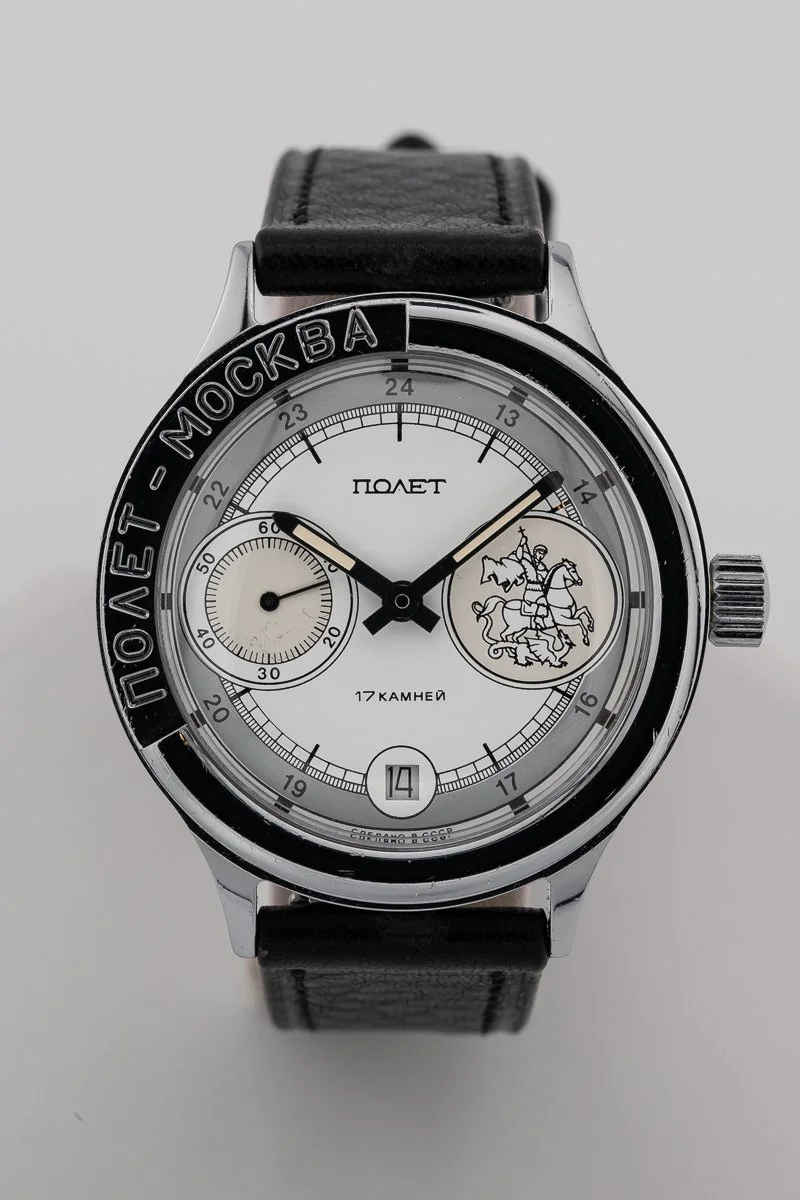
Poljot Early 1990s Moscow 3105 Manual
This "transitional ghost" is a masterclass in post-Soviet pragmatism, likely commissioned around 1992 as a commemorative gift for Moscow dignitaries. While the dial features a striking icon of St. George—the city's patron saint—and a "Made in USSR" hallmark, the true story lies in its over-engineered heart. Poljot engineers created the Caliber 3105 by stripping the stopwatch components from their legendary 3133 Chronograph, the same movement worn by Cosmonauts in space. This industrial hybrid retains the chronograph’s massive 31mm architecture and rugged pivots, resulting in a sub-seconds hand uniquely positioned at 9 o'clock.