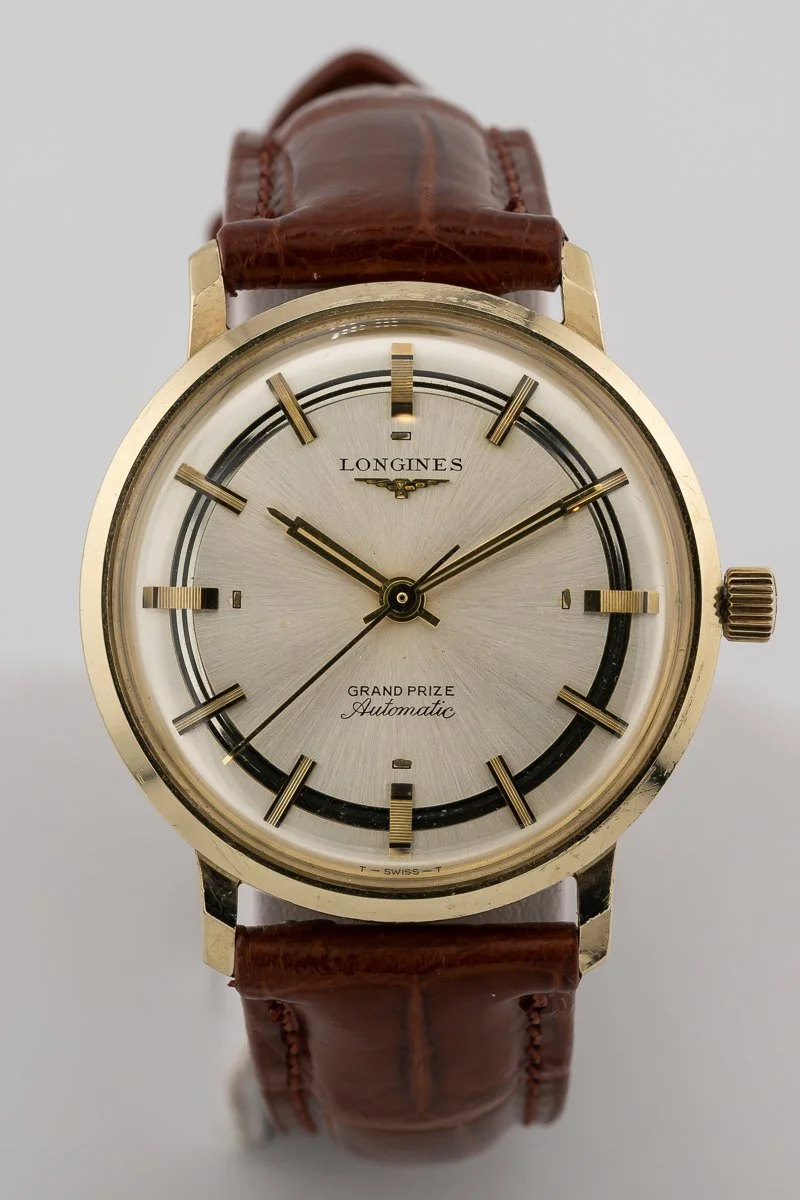
Longines 1965 2773-342 Automatic
This 1965 Longines Grand Prize Automatic combines one of my favorite dial designs with an equally interesting movement. Its silver radial-finished dial uses applied faceted markers, fine concentric tracks and restrained gold accents, while the caliber 342 beneath it employs Longines’ distinctive toothed-rim automatic rotor. Integrating the winding system into a movement only about 4.6 mm thick helped keep the complete 34 mm watch under 10 mm, including its crystal. I especially enjoy that contrast: an elegant, quietly detailed dress watch whose unusual engineering only becomes apparent when the case is opened.
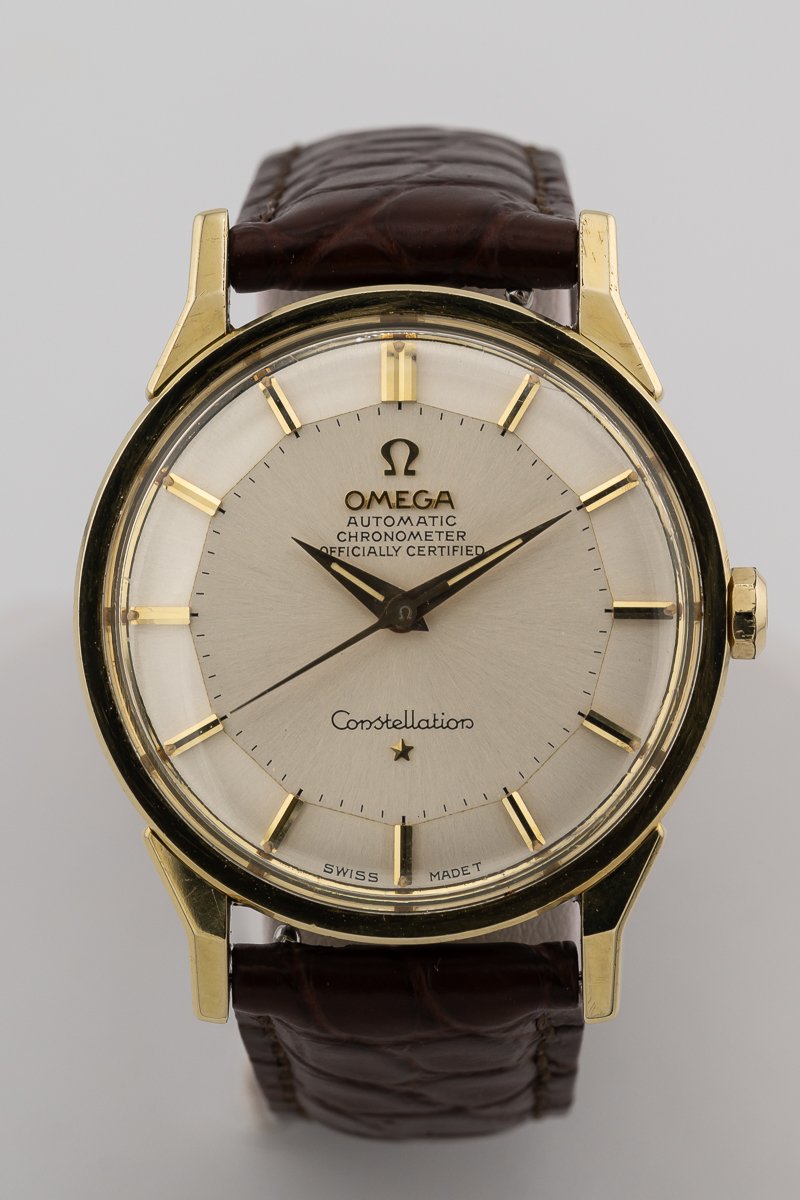
Omega 1963 167.005 Constellation Chronometer Automatic
I had been looking to add a Constellation to my collection for some time before I finally scored this example in an auction. The pie pan dial is gorgeous, and the proportions are exactly what I love in a mid-century Omega: a clean 34mm case that wears bigger thanks to those crisp, faceted “dog-leg” lugs, and a dial that’s quietly dramatic once you notice what you’re looking at. The pie-pan facets catch the light in a way photos never fully capture, and the little applied star above six feels like Omega couldn’t resist a victory lap.
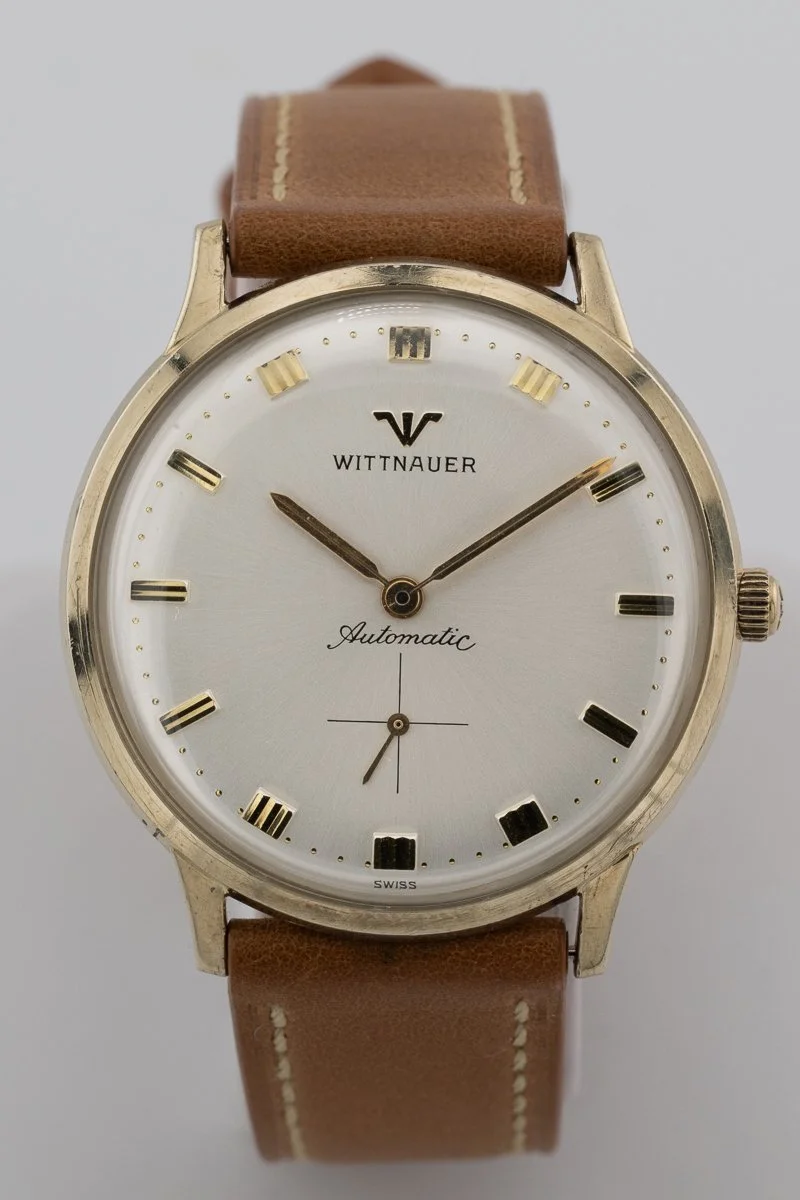
Wittnauer Early 1960s 2555 Sub-Second Automatic
I originally planned to list this Wittnauer for sale, but it completely won me over once I had it in hand, so I’m keeping it (sorry, everyone). It’s the kind of watch that looks almost too simple—until you realize how hard it is to get “simple” this right. The big, clean dial and thin bezel give it a surprisingly modern presence for a vintage dress watch, and the applied markers add just enough texture to keep the whole thing from feeling sterile.
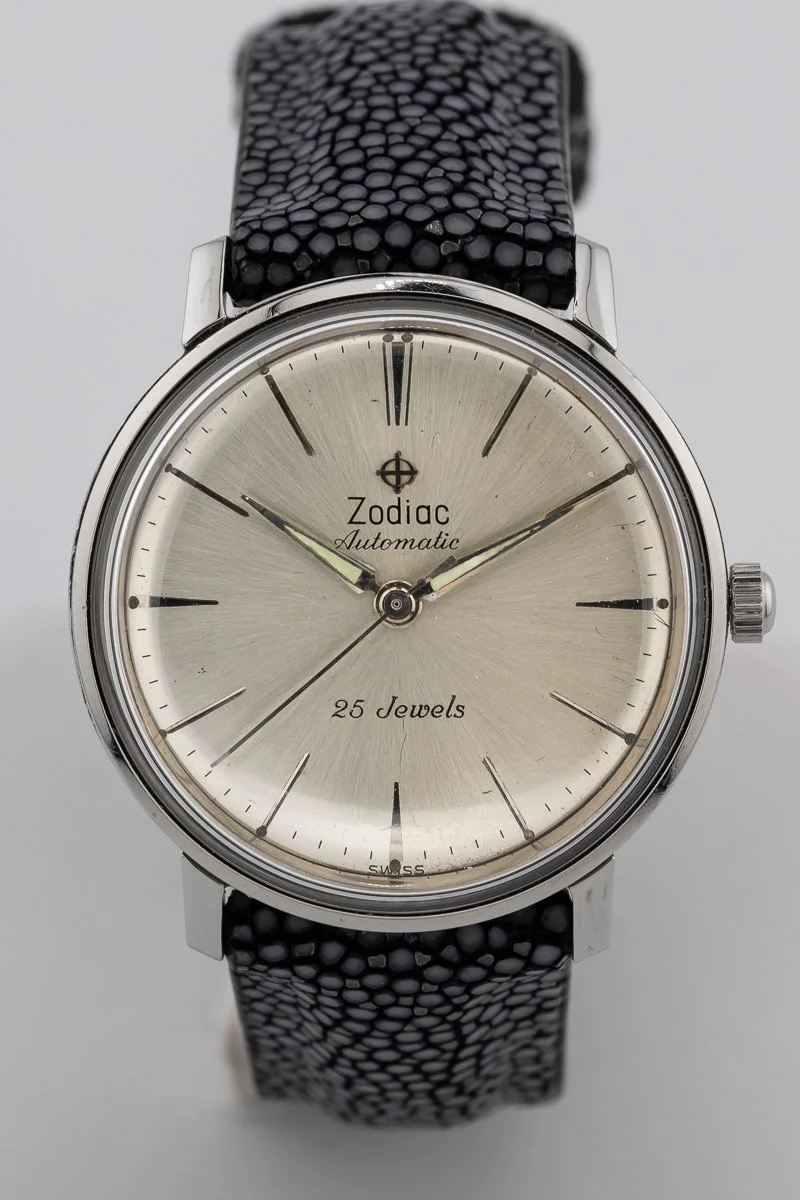
Zodiac Late 1960s 702-919 Monoblock Automatic
This sleek silver Zodiac is powered by a 25 jewel variation of Zodiac’s 1960s workhorse 70-72 movement. It has a somewhat unusual (for the time period) monoblock case (solid back) case, with a split stem to allow insertion and removal of the movement through the front of the case.
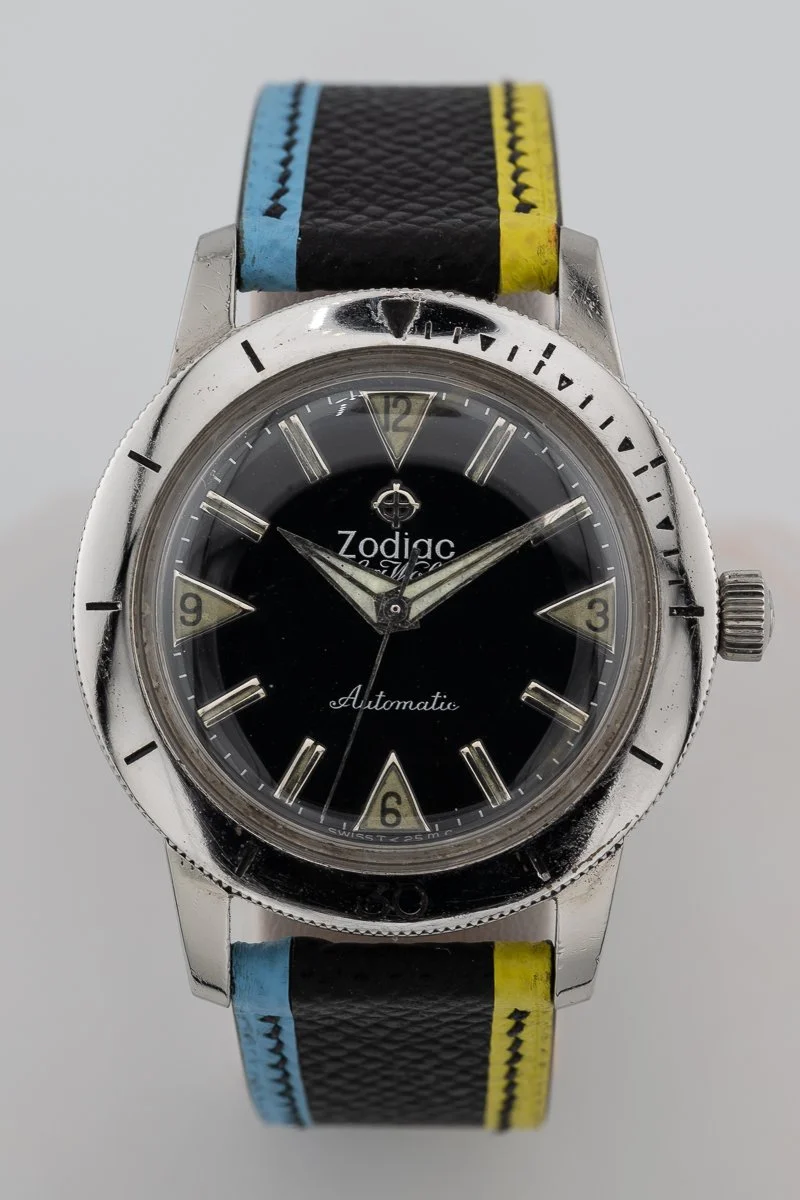
Zodiac Late 1960s 702-916 Sea Wolf Automatic
The Zodiac Sea Wolf was one of the first vintage watches that really spoke to me. I had seen other examples and decided I really wanted one of my own, and fortunately I was able to find this one in reasonable condition for a restoration - actually one of the first restorations I undertook after cutting my teeth as a watchmaker. The Sea Wolf comes with a stainless steel case, but the bezel is plated, and unfortunately it was in pretty rough shape when I aquired it. I ended up re-plating it in rhodium, which is attractive but also gives the watch a slightly different, more formal look than when it was new. The markings on the bezel were also restored (imperfectly) with the help of some epoxy paint. It is powered by the famous Zodiac 70-72 automatic movement, which is based on a manual wind A. Schild design.
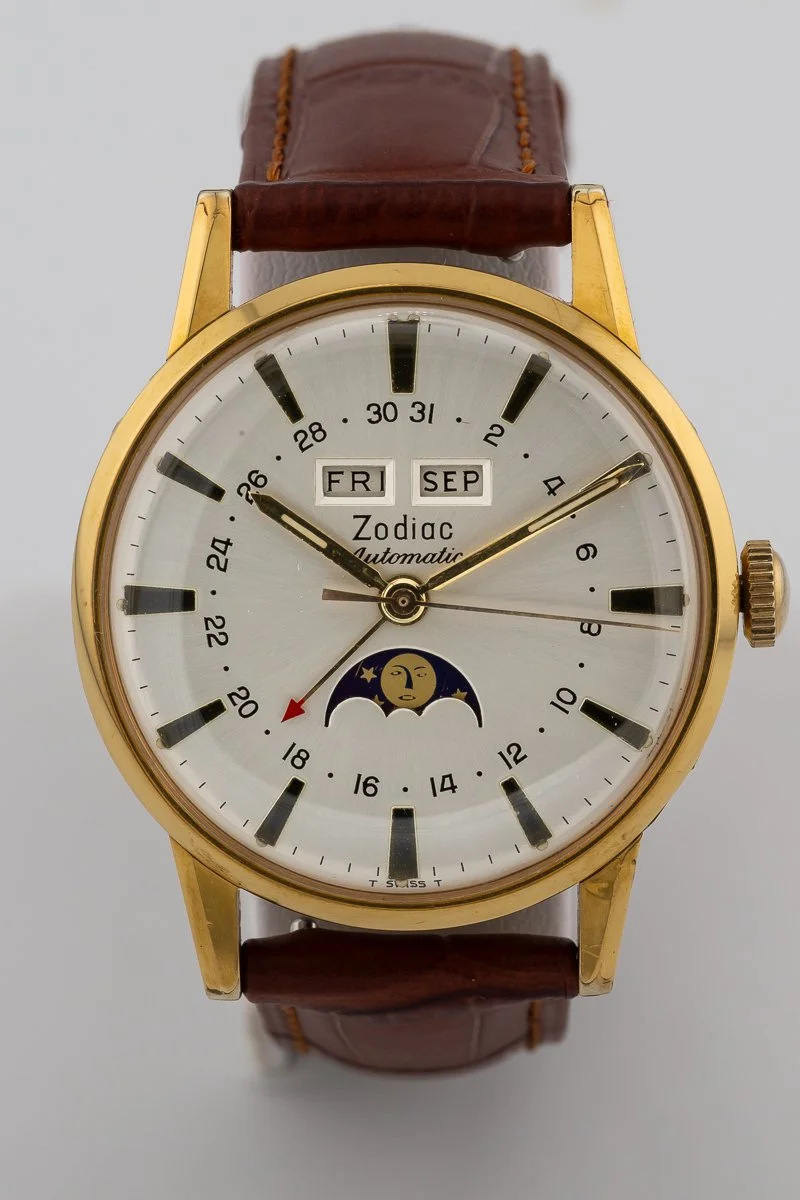
Zodiac Late 1960s 743-908 Triple Calendar Moon Phase Automatic
Triple calendar with moon phase is one of my favorite complications, and I didn’t have to think very hard about purchasing this Zodiac when it showed up as a “For Repair” listing. It badly needed a service, and the case had some cosmetic issues that were mostly addressed by over-plating with 14K gold plate. That plus a new crystal, and the end result is really something special. The movement is essentially a reliable and accurate Zodiac 70-72 automatic with the extra calendar bits added to the dial side. Four small pushers make it relatively easy to set the various calendar functions.
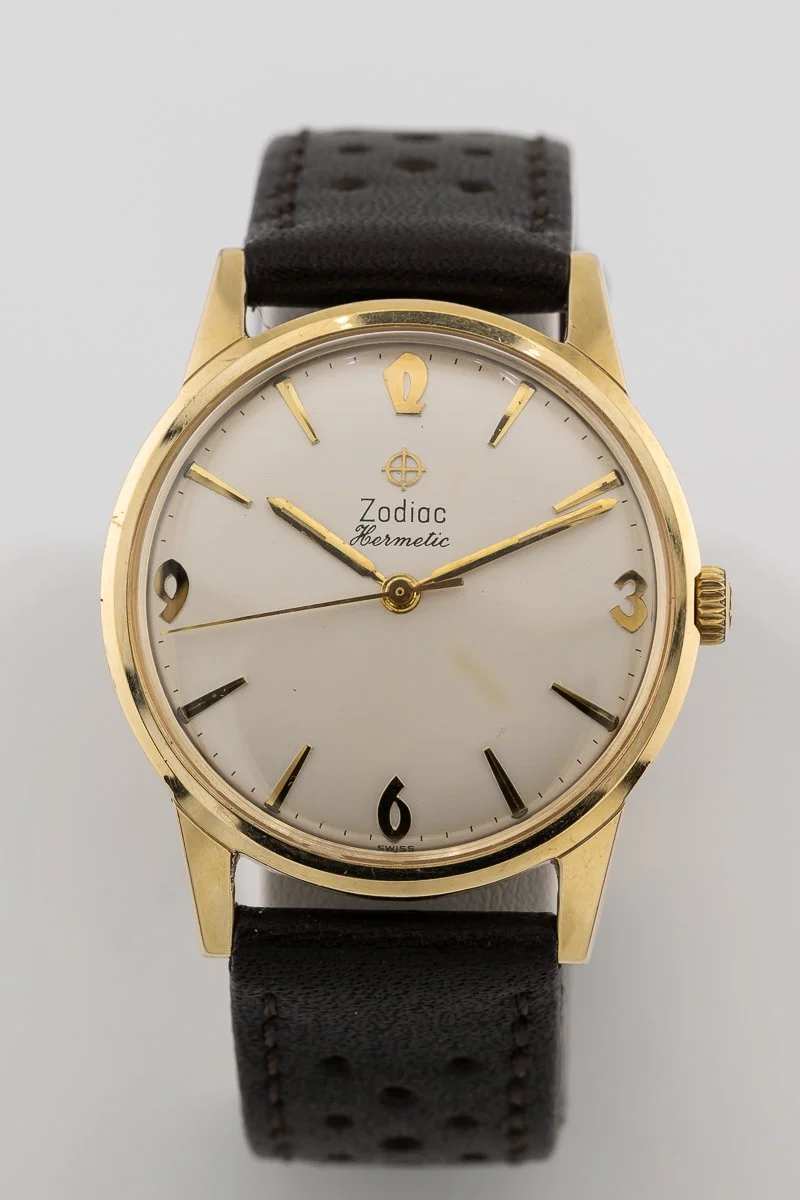
Zodiac Early 1960s 613-102 Hermetic Manual
I’m a big fan of Zodiac as a high quality but accessible vintage brand. This is a rather basic example, but is still a very handsome vintage watch. The A. Schild-sourced Zodiac 61 movement is a manual-wind-only design that forms the basis of the famous Zodiac 70-72 automatic line.
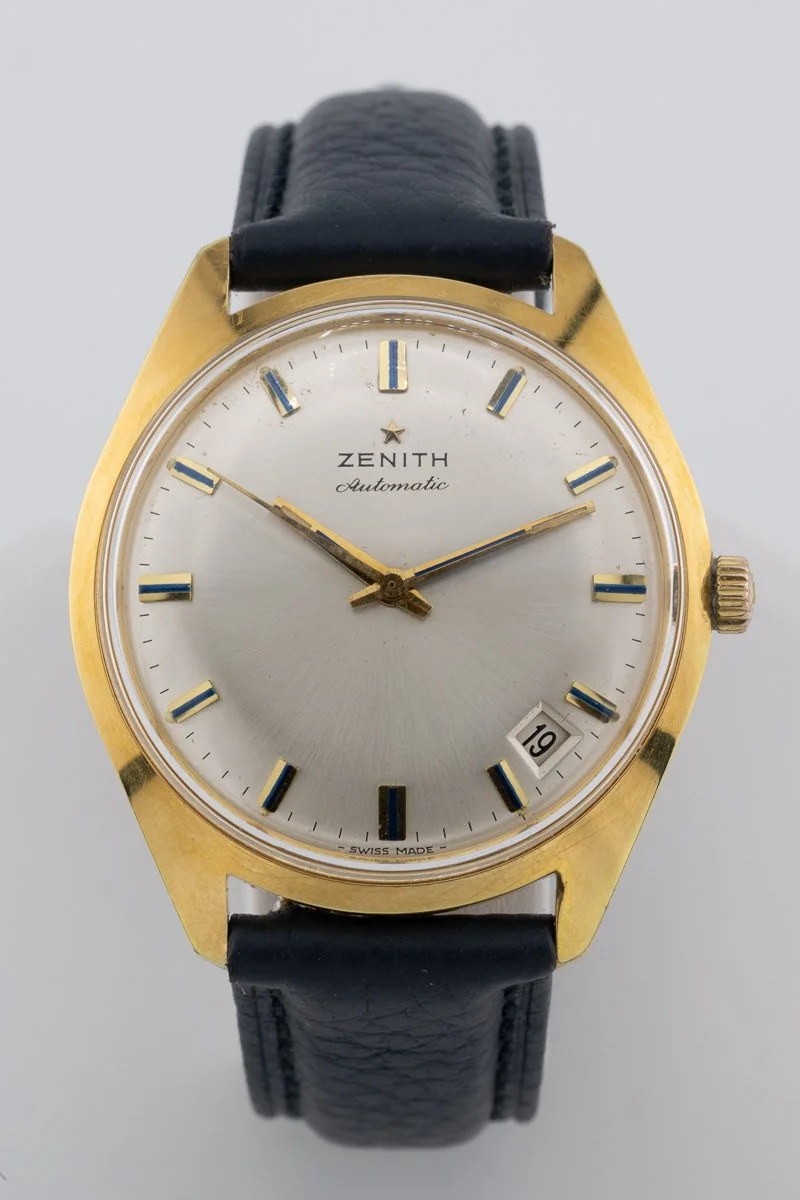
Zenith 1969 2542PC Calendar Automatic
I have tremendous respect for Zenith as a watchmaker, and good restoration candidates don’t pop up on eBay that often, so I was pleased to find this one. The movement in this thing did not disappoint - it’s beautifully made. This is definitely a cut above the usual watches they used to hand out on service anniversaries. W.H. Rogers must have done a really good job.
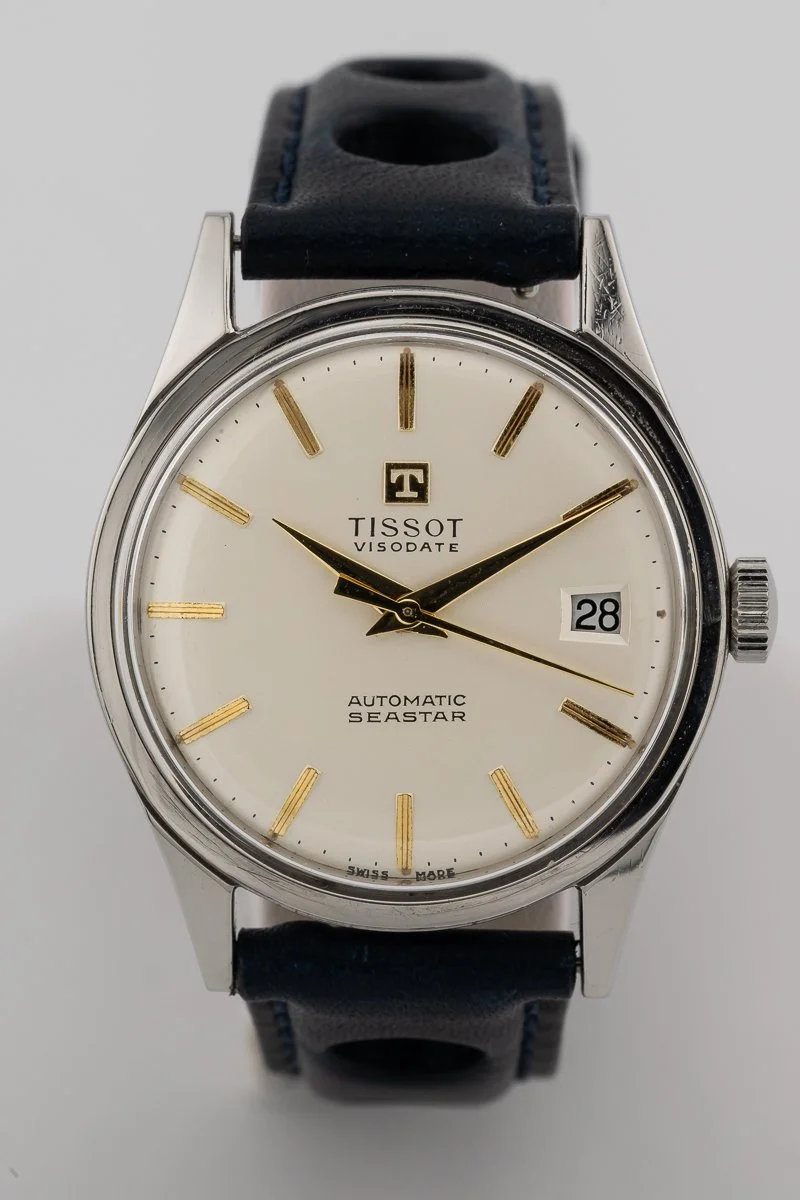
Tissot 1963 Seastar Calendar Automatic
You can see the distinct aesthetic of modern Tissot watches start to take shape already in this Seastar from the early 1960s, although the contrasting gold hands/indices and steel case is definitely a classic look. One oddity about this watch is that the Tissot 784 movement has no quickset at all for the calendar - not even a unidirectional calendar driving wheel - so setting the date can be a pain. I usually don’t bother when I wear this one.
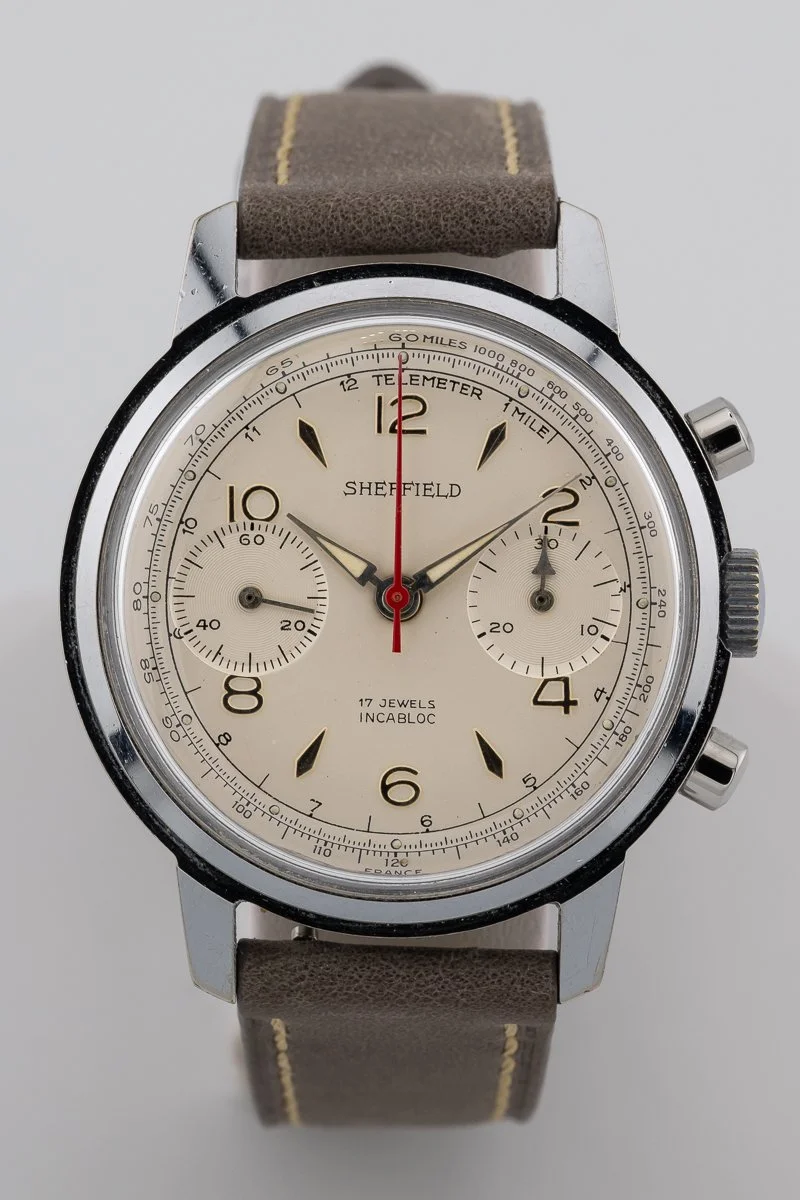
Sheffield 1960s Venus 188 Chronograph
This is probably my favorite vintage chronograph in my collection for everyday wear. The pictures don’t completely do it justice, but the chrome plated case, cream colored dial, red chronograph second hand, and the grey stitched band just look really good together. The Venus 188 movement in this one is also a strong, accurate runner.
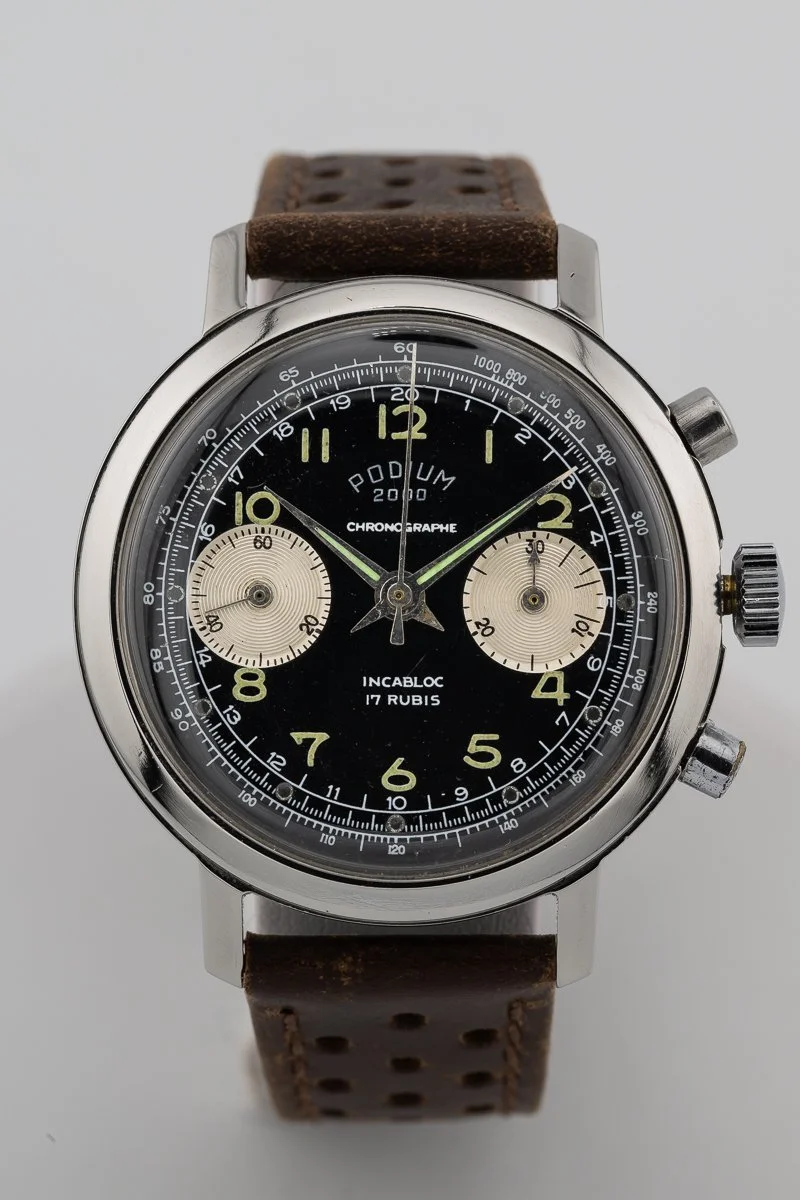
Podium 2000 Late 1960s Reverse Panda Landeron Chronograph
I really love the look of the reverse panda dial on this Landeron-driven chronograph. Podium 2000 is a great example of a pre-quartz-crisis Swiss watch “micro-brand,” where small distributors, jewelers, and export agents could contract various Swiss ebauche manuafacturers to assemble all the parts needed to build a watch.
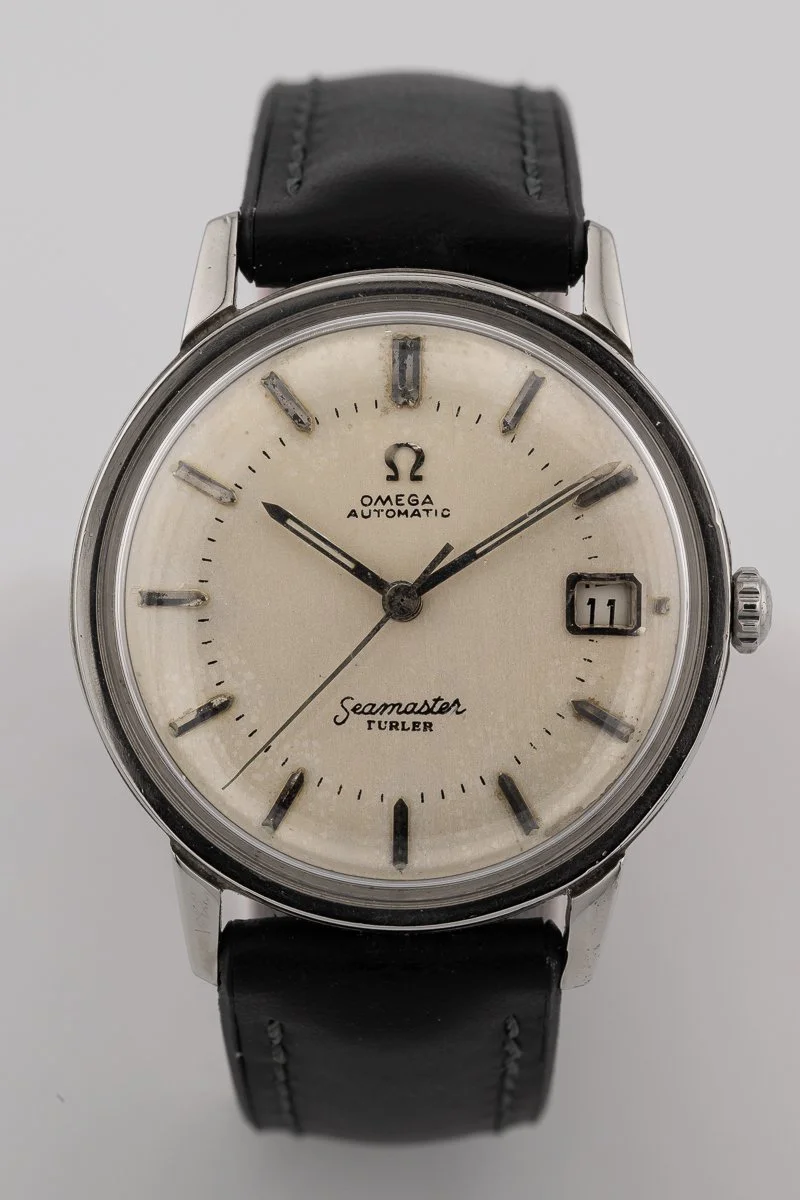
Omega 1965 Seamaster 166.002 Turler Calendar Automatic
Back in the days when the big watch brands hadn’t really established a dedicated retail presence, it wasn’t uncommon for major watch boutiques like Turler to sell pieces with their name co-signed on the dial. The 562 automatic movement powering this example is a bit aesthetically compromised due to oxidation - probably from being worn while swimming - but it works very well and keeps great time. It’s an important watch for me, both because it was my first Omega restoration, and because it was the first watch where I was able to successfully straighten a damaged, bent hairspring - an important milestone in my watchmaking journey.
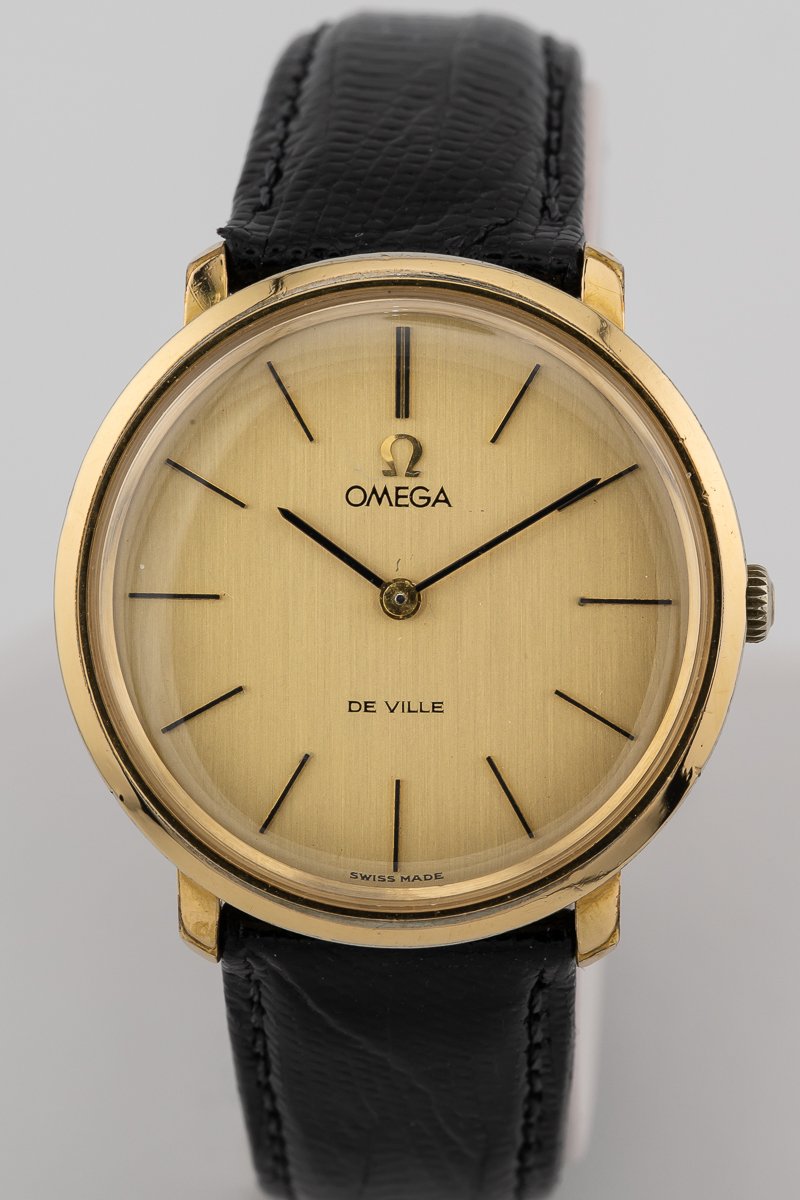
Omega 1964 DeVille 111.077 Manual
The prototypical mid-60s Omega dress watch. Simple and elegant. The small, manual-only 620 movement makes for a very thin watch. Not much more to say, other than the fact I feel lucky to have found this one in really excellent condition.
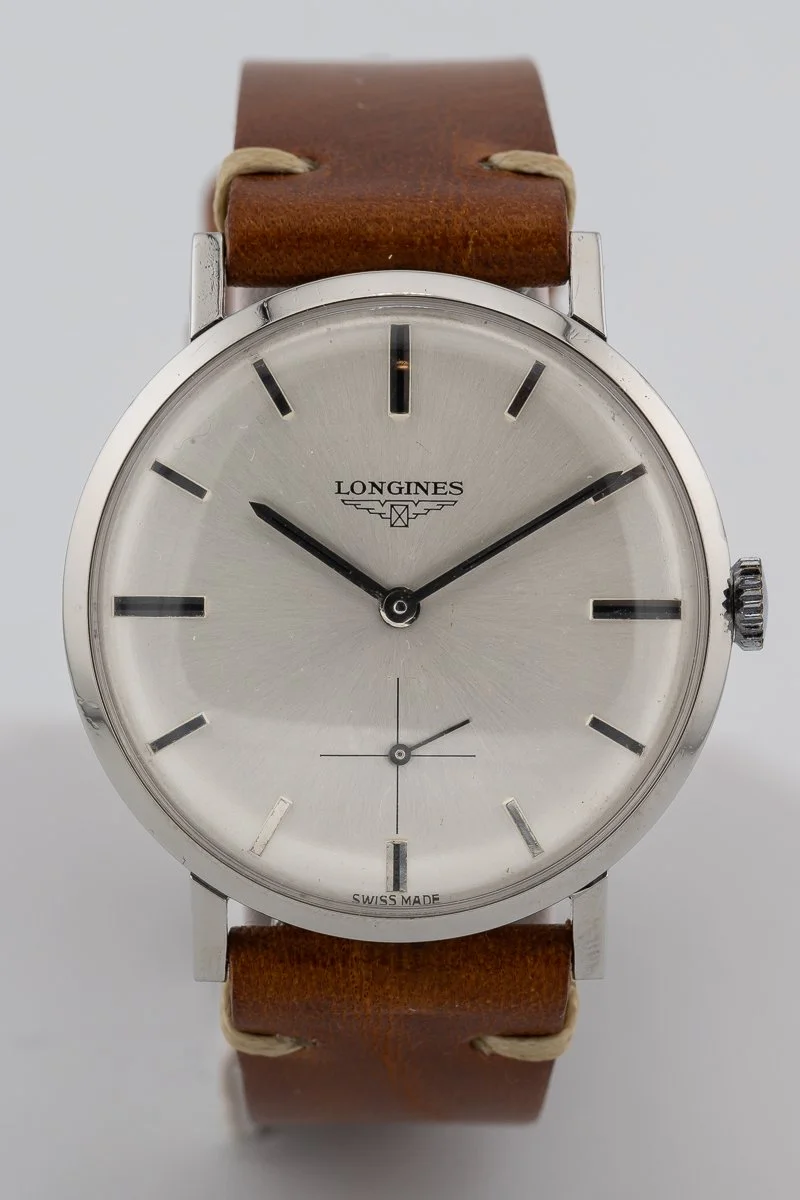
Longines 1968 7855 Stainless Manual
This handsome silver Longines from the late 1960s still wears exceptionally well, with its large (for the era) case size and clean, modernist look. The cal. 302 movement inside is part of the brand’s celebrated 30L lineage—thin, beautifully finished, and mechanically robust—making it one of the better manual-wind calibers of its era. When I received this watch it was in pretty good shape (compared to many of the watches I work on, anyway), but was not running due to a broken balance pivot - a fairly unusual occurence in shock protected watches. The only sources for a new balance stem were in Europe, and, without the de minimus exemption, getting it through US customs, tiny as it was, was quite an adventure in itself.
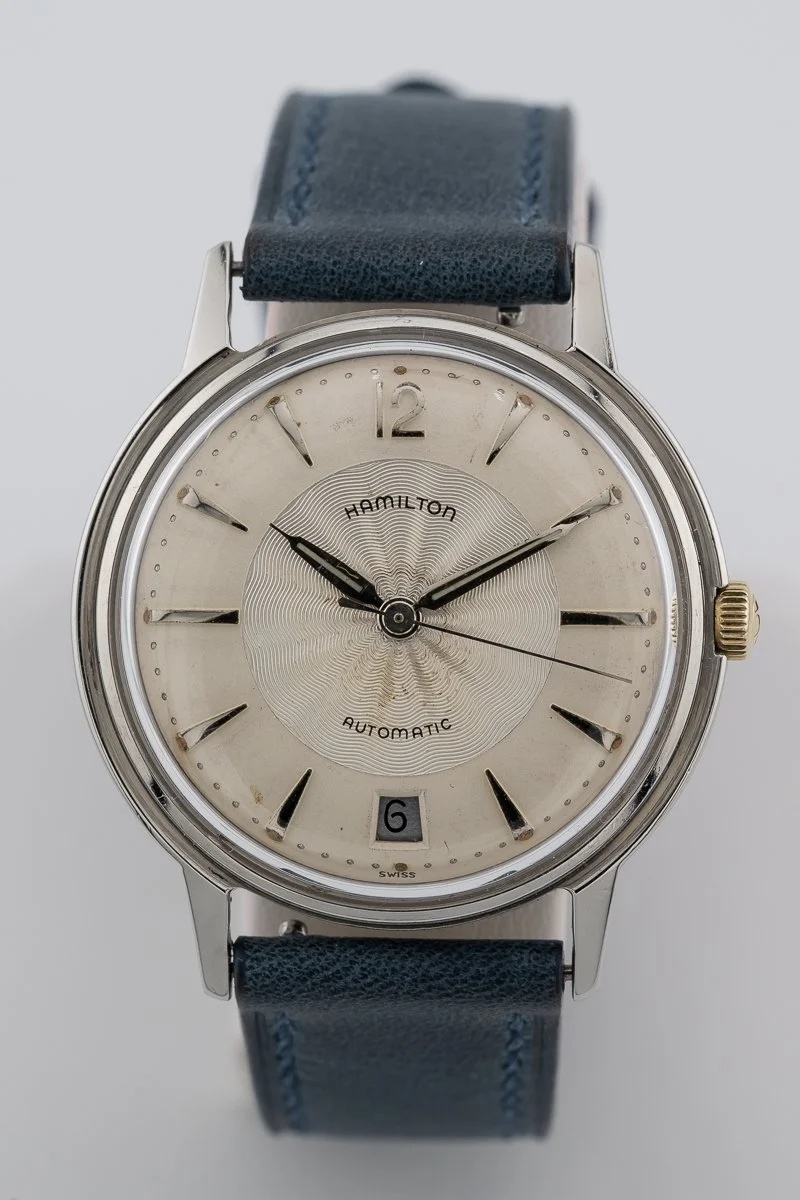
Hamilton c. 1960 Calendar Microrotor Automatic
Some vintage watches are highly cooperative. Others, not so much. This particular Hamilton fought me tooth & nail, but I persisted (through multiple donor movements) because I really love the style of the dial. The Buren-sourced microrotor movement in this thing is cool looking, but not fun to work on. Lowlights include a complex and cantankerous compound ratchet wheel, a frankly terrible click spring design, and a difficult-to-assemble automatic winding mechanism underneath the rotor. Eventually I got it working, however. Well, except for the calendar - the calendar driving wheel, like most of the rest of this movement, is complex and delicate, and the one in this watch literally fell apart. I have not yet been able to source a replacement, so the calendar is currently stuck on 6 (short for “666”).
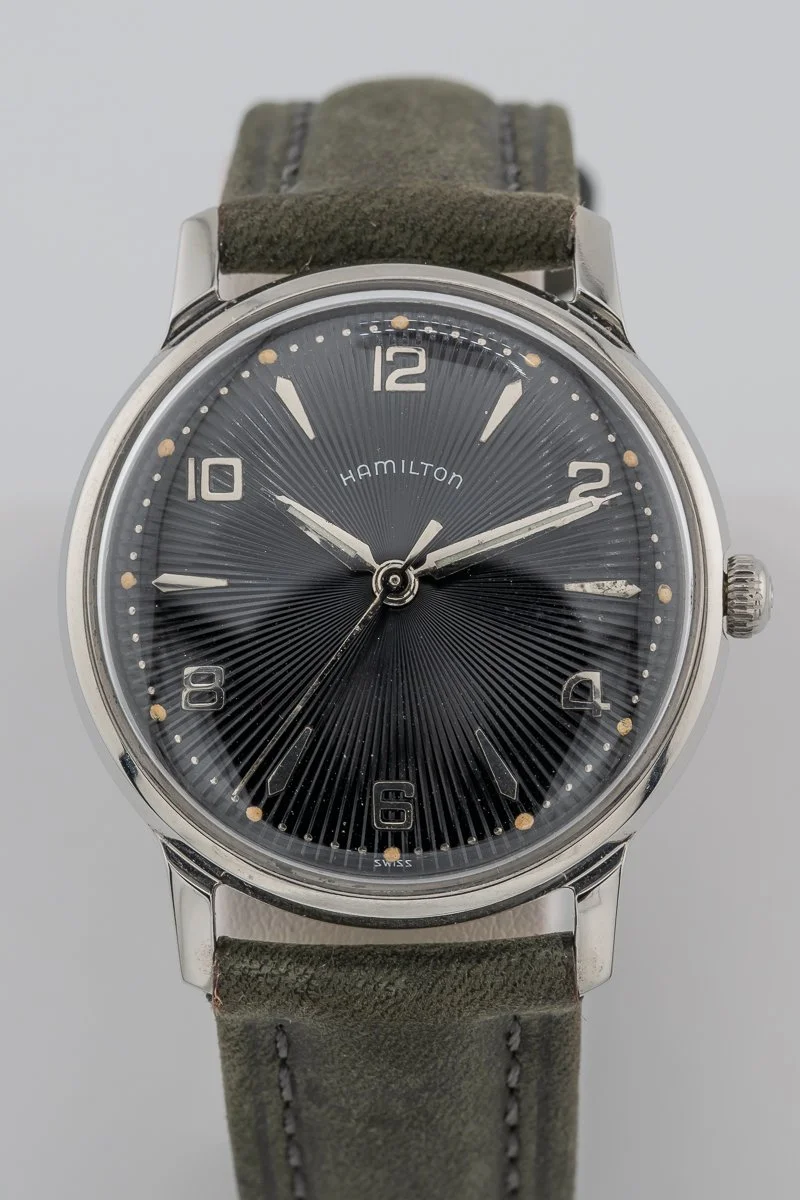
Hamilton Early 1960s Black Ray Dial Stainless Manual
The Soundgarden tune Black Hole Sun always comes to mind when I look at this Hamilton with its unusual black sunburst pattern dial. This really is a great looking watch which somehow manages to be both classic and different at the same time. It’s not all looks though; the ETA Swiss movement is a strong runner. Interestingly, the balance shock spring design resembles Seiko’s diashock design in both form and function. Seiko released the first diashock watch in 1956, while ETA ramped up production of the 1080 caliber in the mid 1950s, so it’s not clear who was first here.
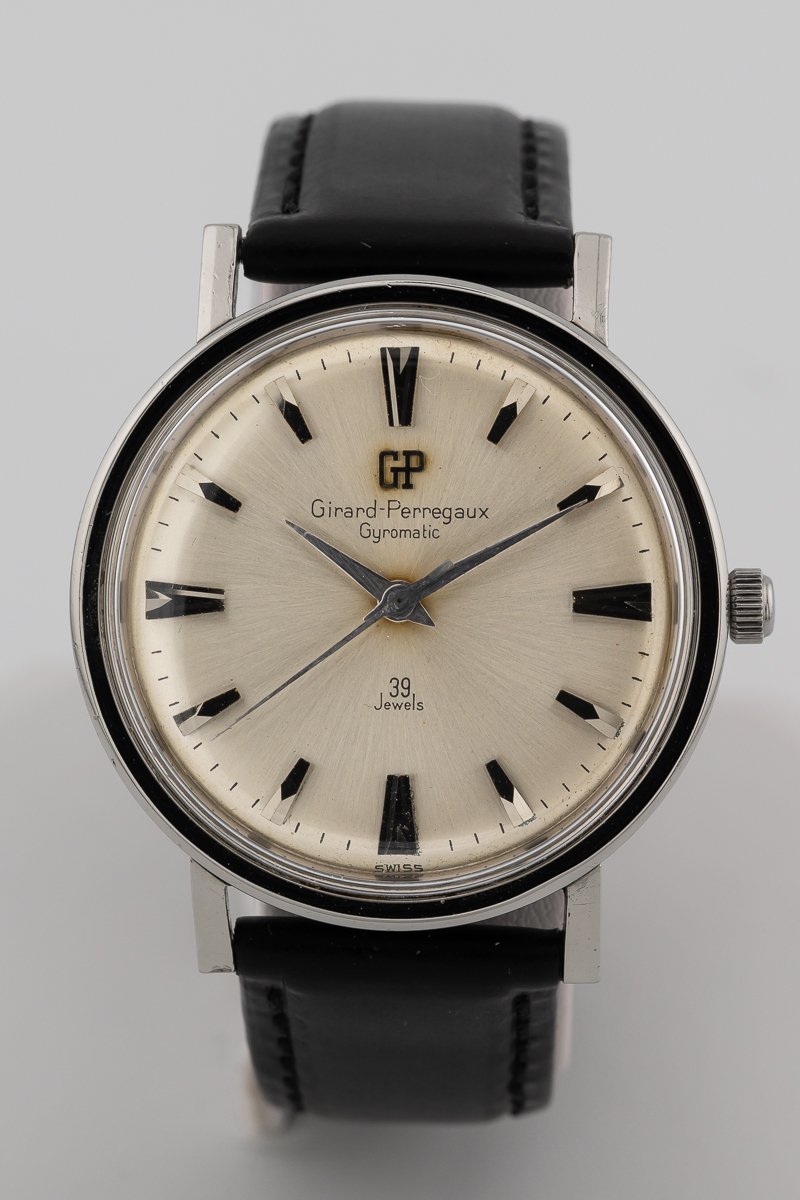
Girard-Perregaux 1960s Gyromatic 39 Jewel Stainless Automatic
I have restored several Girard-Perregaux pieces for sale in my shop, but this is the only one, so far, that I’ve decided to add to my own collection. Something about the deep relief of the prominent dial indices on this watch looks particularly good to my eyes. The 39 jewel count of the GP 31 movement is impressive, but a bit of a cheat, with 14 of those jewels incorporated into the pawls of the automatic reversing wheels. Still, it’s a nice, accurate movement, with a high (for the era) 21,600 bph rate. This watch was in pretty good vintage shape, except for the hands, which had experienced significant finish oxidation and looked much rougher and older than the dial. I went ahead and refished them, with fresh rhodium plating. Re-finishing watch hands is definitely a tricky operation (for me at least - I’m not a jeweler), but I think it turned out quite well in this case.
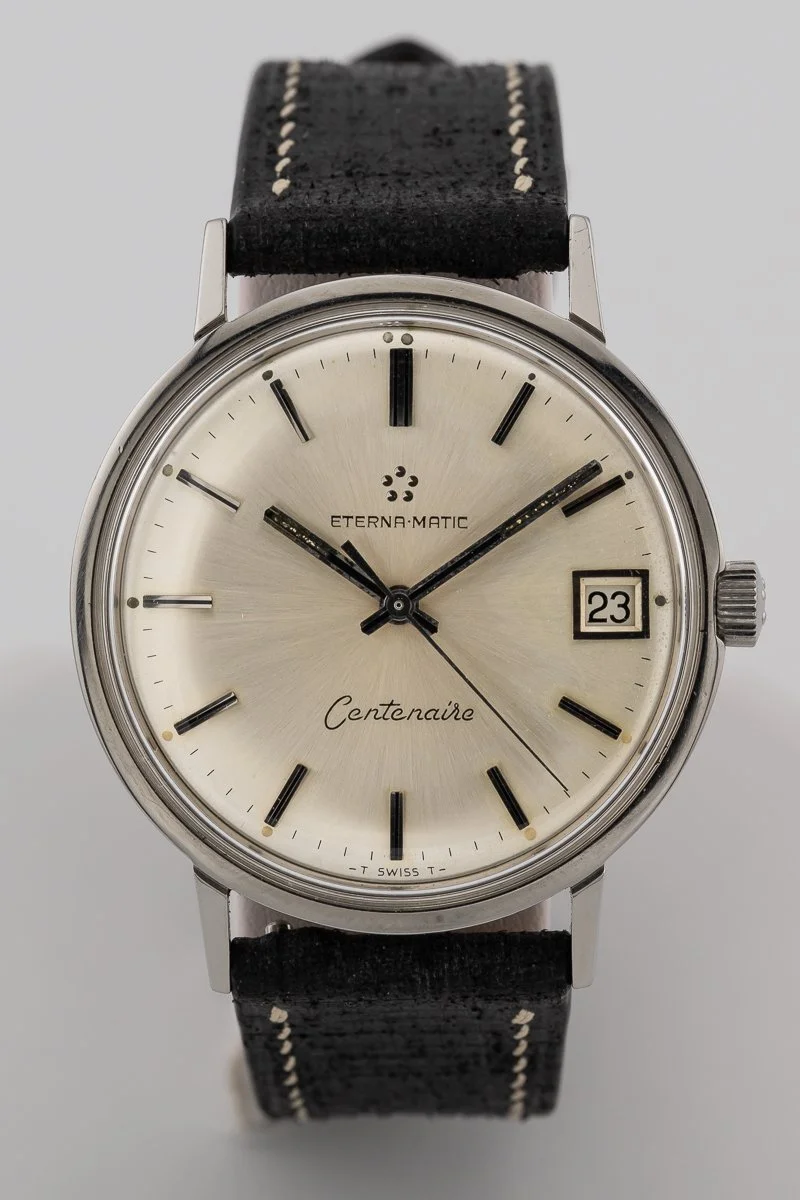
Eterna 1966 Centenaire Calendar Automatic
This is a really clean example of a 60’s Eterna, and the simple silver and black look goes great with the dark grey band I got for it. It’s not quite as pretty as my favorite Eterna, but still a very handsome & reliable watch. The 1481K movement exhibits typical Eterna quality.
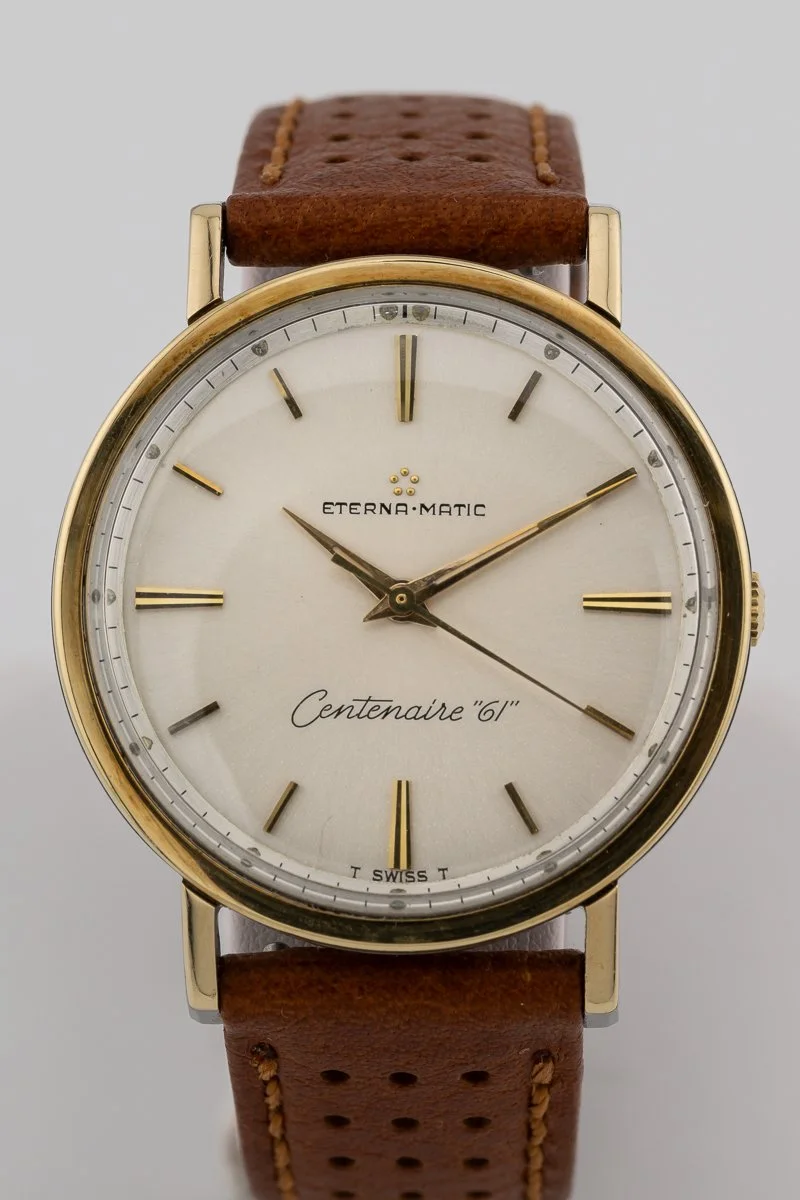
Eterna 1965 Centenaire “61” Automatic
Here’s another one of my favorites and, IMO, one of the best-looking watches in my collection. There’s something just “right” about the design of the watch face, and the gold capped-stainless case is also very cool. Eterna was always on point as far as the quality and engineering of their movements, and the 1428U in this example was a joy to service. I particularly like the way Eterna handles the automatic reversing wheels so that the full wheel is visible. The only thing I don’t love about this watch is the tiny semi-recessed crown, which looks great, but which is particularly difficult to grip when manually winding.
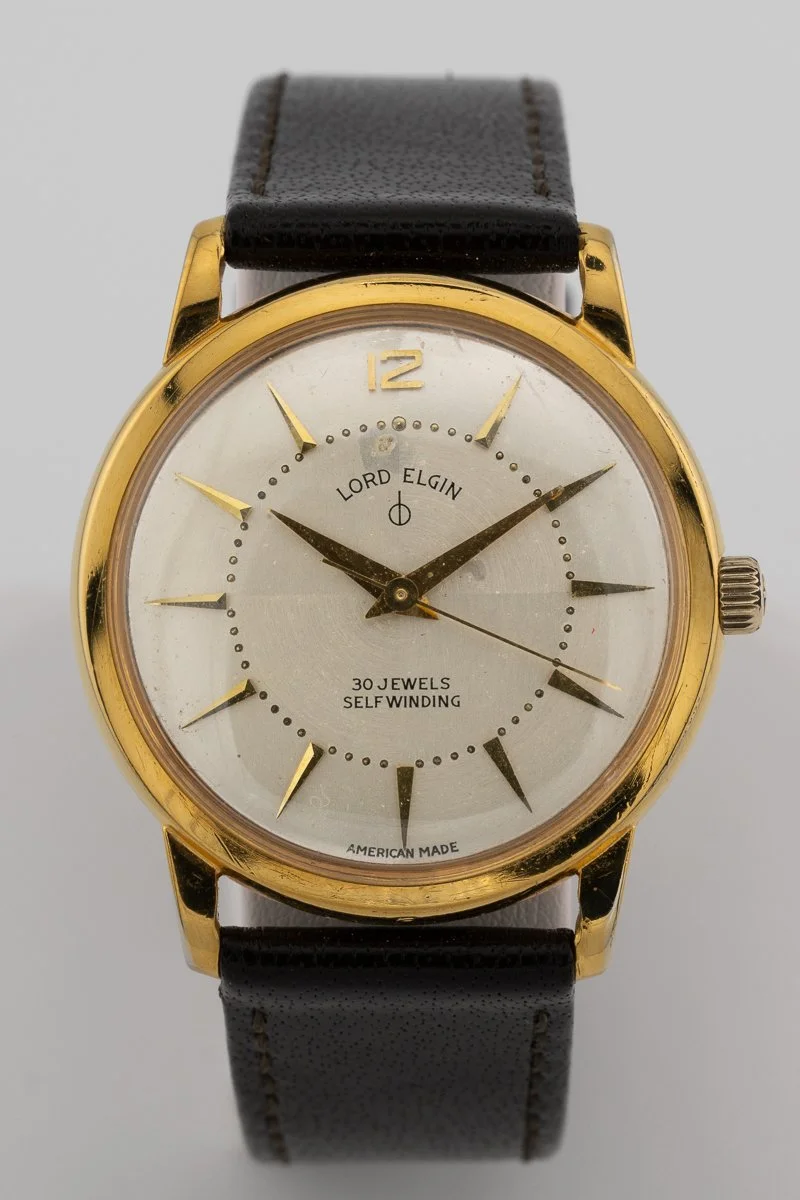
Elgin Lord Elgin c. 1960 024603 Automatic
Representing the last gasp of American watchmaking, we have this elegant Lord Elgin automatic. Elgin certainly pulled out all the stops for this one - the 760 movement has a highly innovative and unusual integrated automatic mechanism resulting in a very thin automatic watch, even by today’s standards, and the balance is free-sprung, eliminating the need for regulator pins. Unfortunately, all of this innovation makes servicing these movements a bit of a headache - they are not particularly watchmaker-friendly. The automatic winding mechanism is also a bit delicate and most of the moving parts are fully engaged during manual winding, so you definitely want to minimize manual winding of these movements.