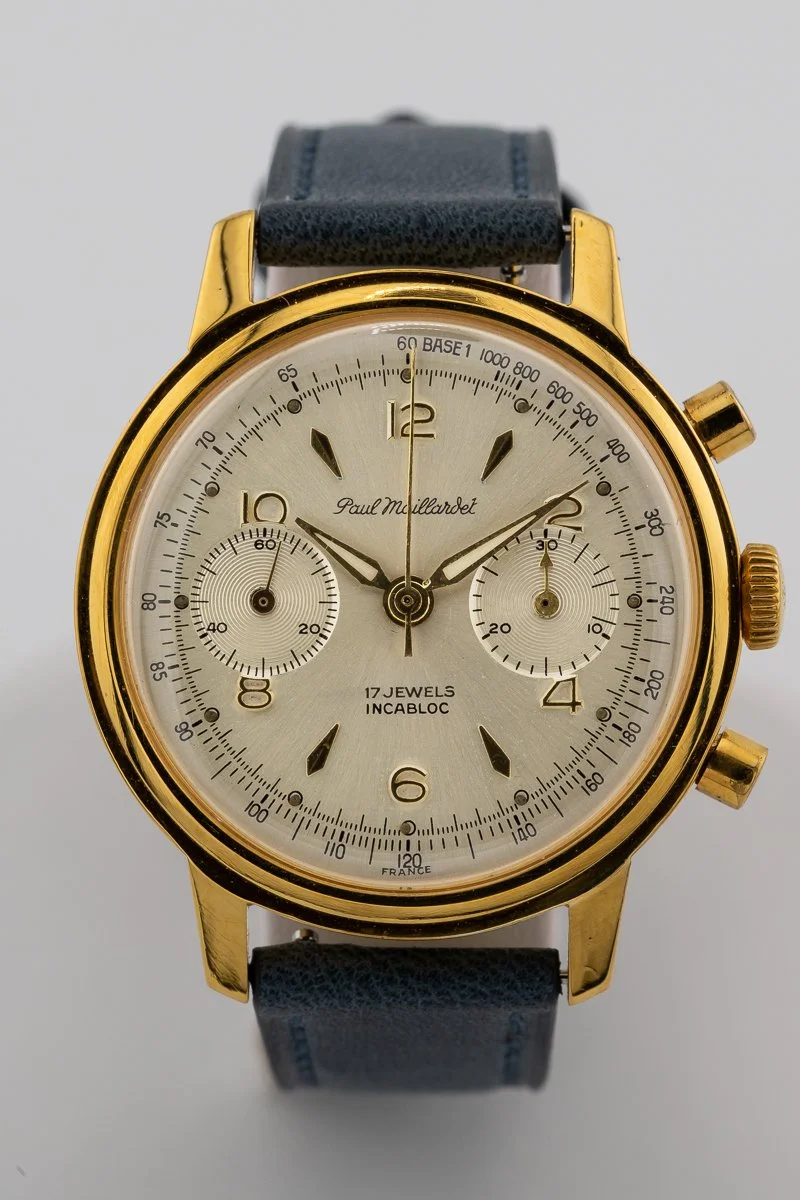
Paul Maillardet Late 1950s Landeron 149 Chronograph
I added this Paul Maillardet to my collection because it manages to be a chronograph without looking busy. What grabs me every time is how clean and elegant the dial is: two balanced registers, nicely shaped applied numerals and markers, and just enough scale printing to remind you that it is a real instrument without turning it into clutter. It has the sort of visual restraint that a lot of vintage chronographs never quite achieve.
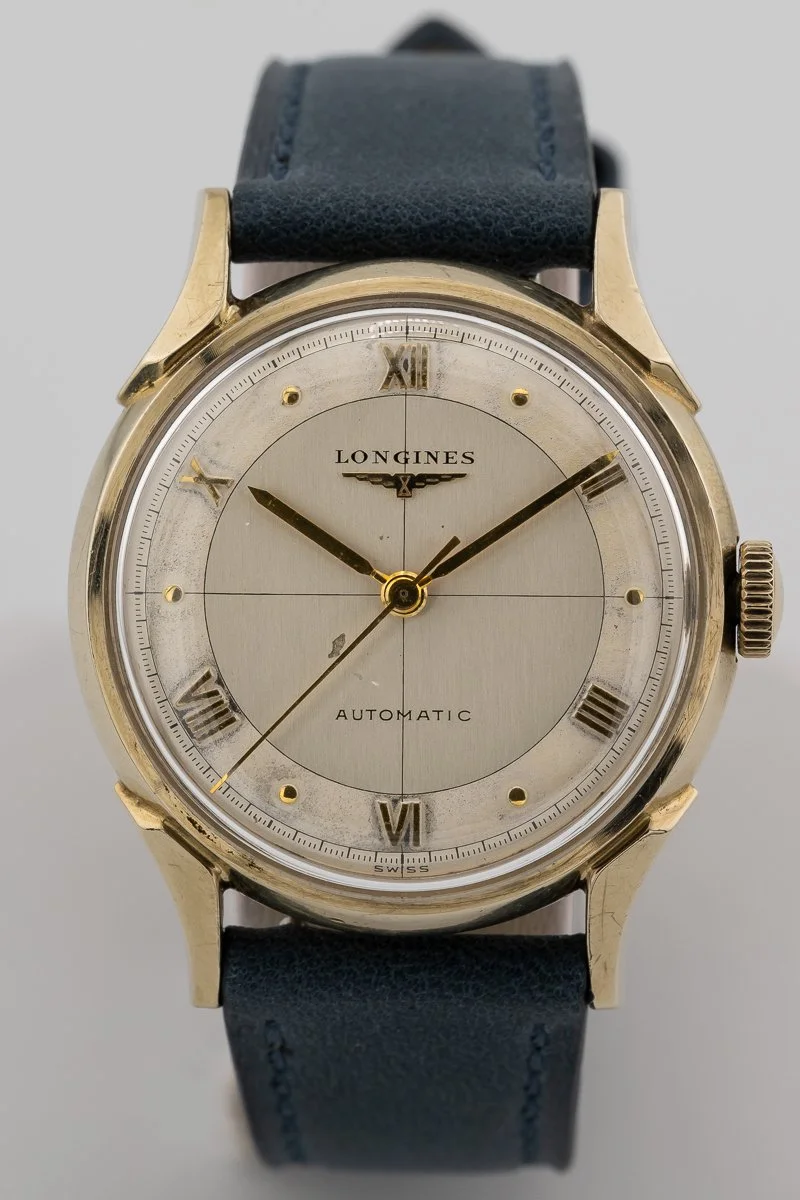
Longines 1952 19AS “Cam-Drive” Automatic
This US-market Longines sits right on an interesting fault line in automatic watch movement history. On the wrist it reads like a classic early-1950s dress watch—gold-fill, sharp lugs, and an interesting 2-tone dial with roman numeral indices. However, the real reason I’m attached to it is the movement. The Longines 19AS is one of those interesting, transitional full-rotor automatics that still feels distinctly like it was “engineered,” with a unique winding system that doesn’t simply follow the later, cookie-cutter ETA-style playbook. It’s from a period when Longines was at the top of its engineering game and actively iterating on how best to translate rotor motion into consistent winding—right as the industry was leaving bumpers behind and converging on modern layouts. The resulting design, while not as efficient as later systems, was clearly built to be a lifelong companion, not a disposable fashion piece.
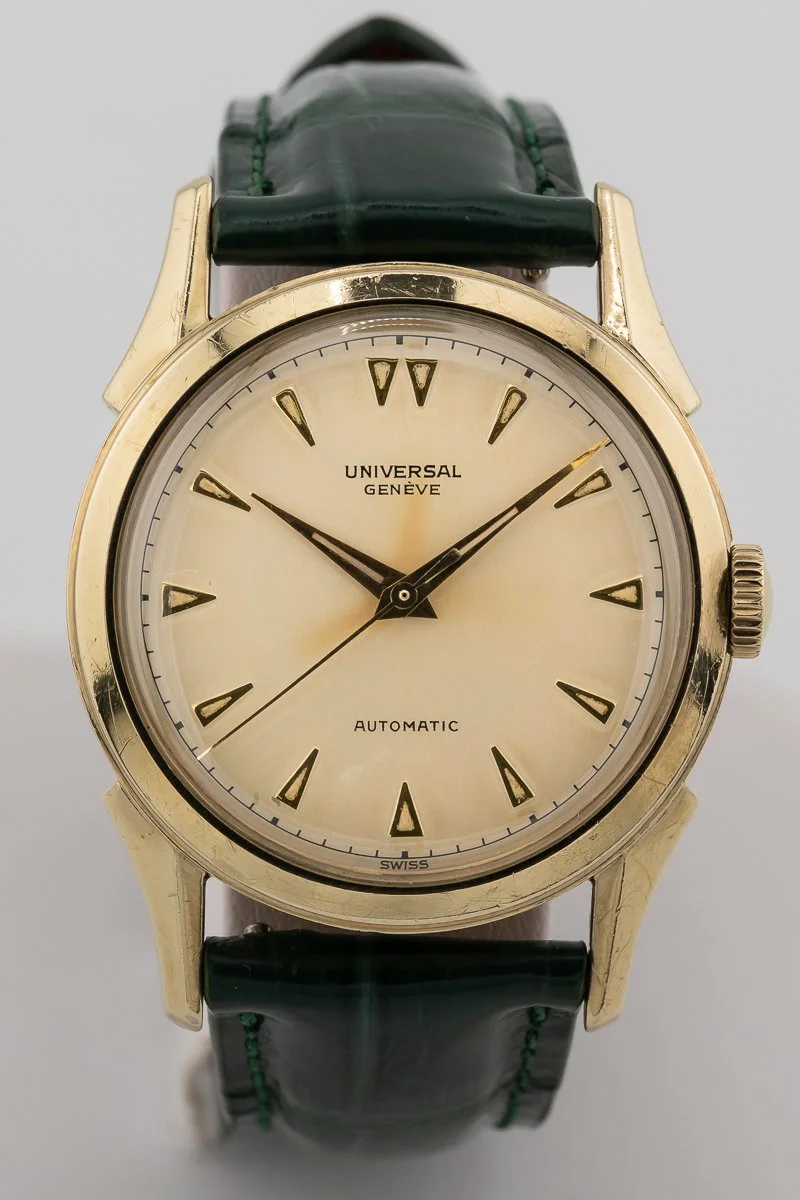
Universal Genève c. 1956 138SS Bumper Automatic
I added this Universal Genève to my collection because it checks the boxes I’m always hunting for: a great looking vintage watch that’s genuinely elegant and mechanically significant. The dial is what hooks me—clean, balanced, and just a little sharper than the average 1950s dress watch thanks to those applied arrowhead markers with integrated lume, as opposed to the more typical “lume dots as an afterthought” setup.
The movement is the real reason it stays in my collection. Universal’s cal. 138SS is one of the brand’s important early automatics—a classic bumper design introduced around 1948, right at the moment when automatic winding was still evolving fast. This is a watch from the “in-between” years—when automatics still had personality you can feel every time the bumper twitches on the wrist.
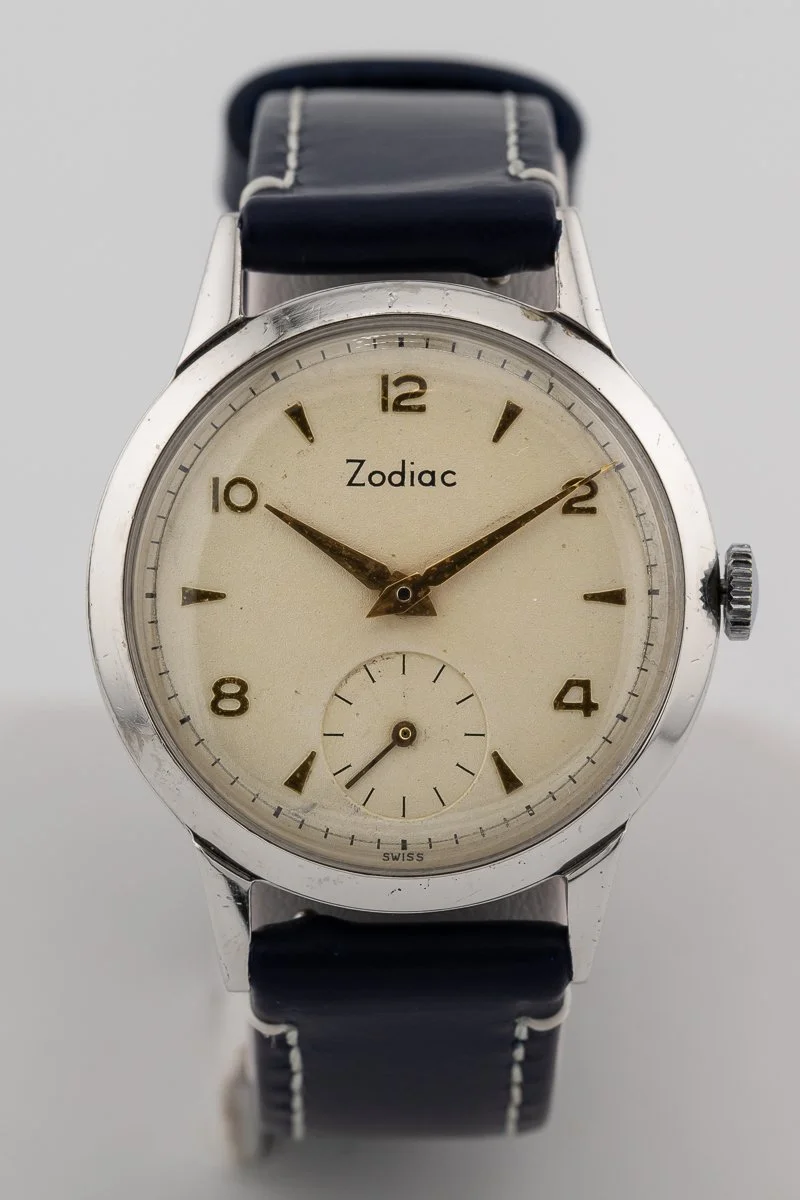
Zodiac Early 1950s 916 Sub Second Manual
I added this Zodiac to my collection because this simple, sub-second dress model is a great example of what Zodiac used to be before it was consumed by sport and dive watches in the 1960s. I also love the contrast between the gold hands and markers and the bright silver (rhodium) case - a combination that goes particularly well with the navy blue strap.
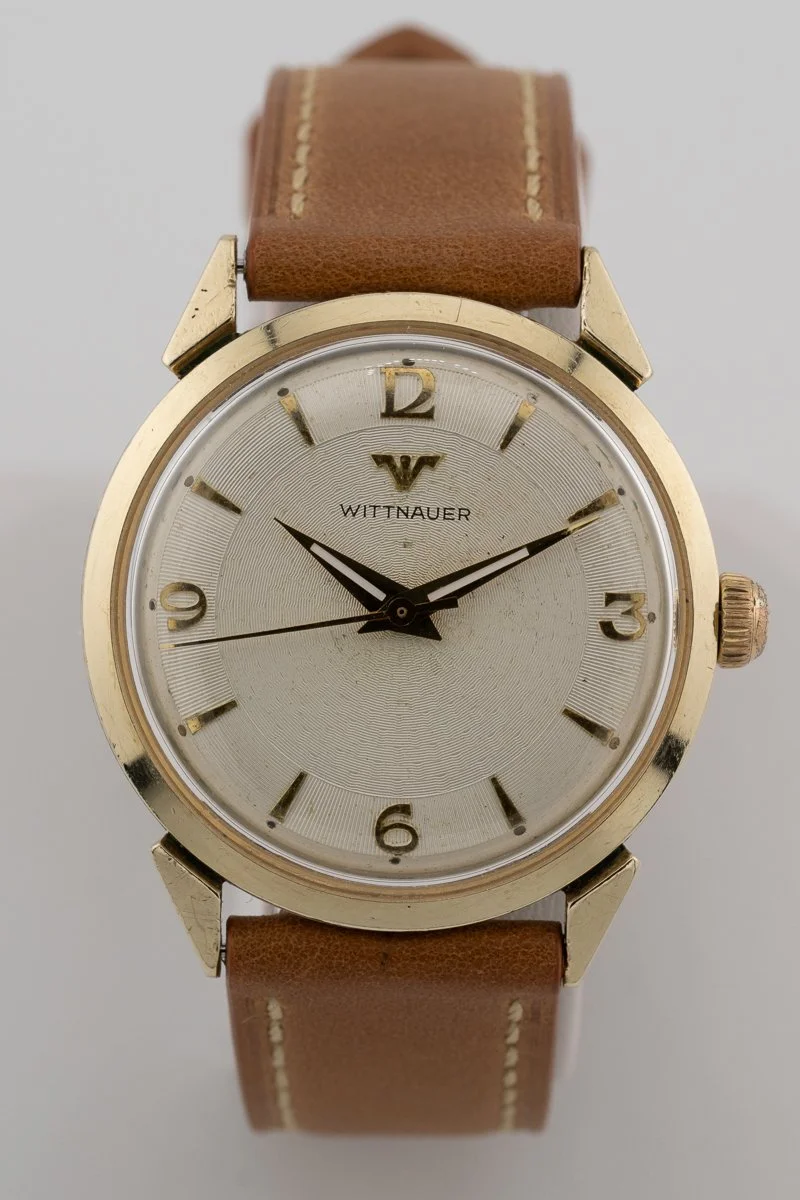
Wittnauer Late 1950s Guilloché Dial Manual Marriage Watch
So, what do when you have a vintage Wittnauer with a fabulous dial but a broken lug, and another with a good case but an ugly, damaged dial? You make a marriage watch! In this case the marriage is pretty incestuous, as the dial/movement and case are both from contemporaneous Wittnauers. Fitment wasn’t that difficult, but did require a thin 3D printed spacer around the perimeter of the dial, which is barely visible in the assembled watch. I also needed to install new hands, since the original minute hand had been badly bent. I’m pretty happy with the result and glad I could preserve this cool guilloché dial, even if it gets points off for historical accuracy.
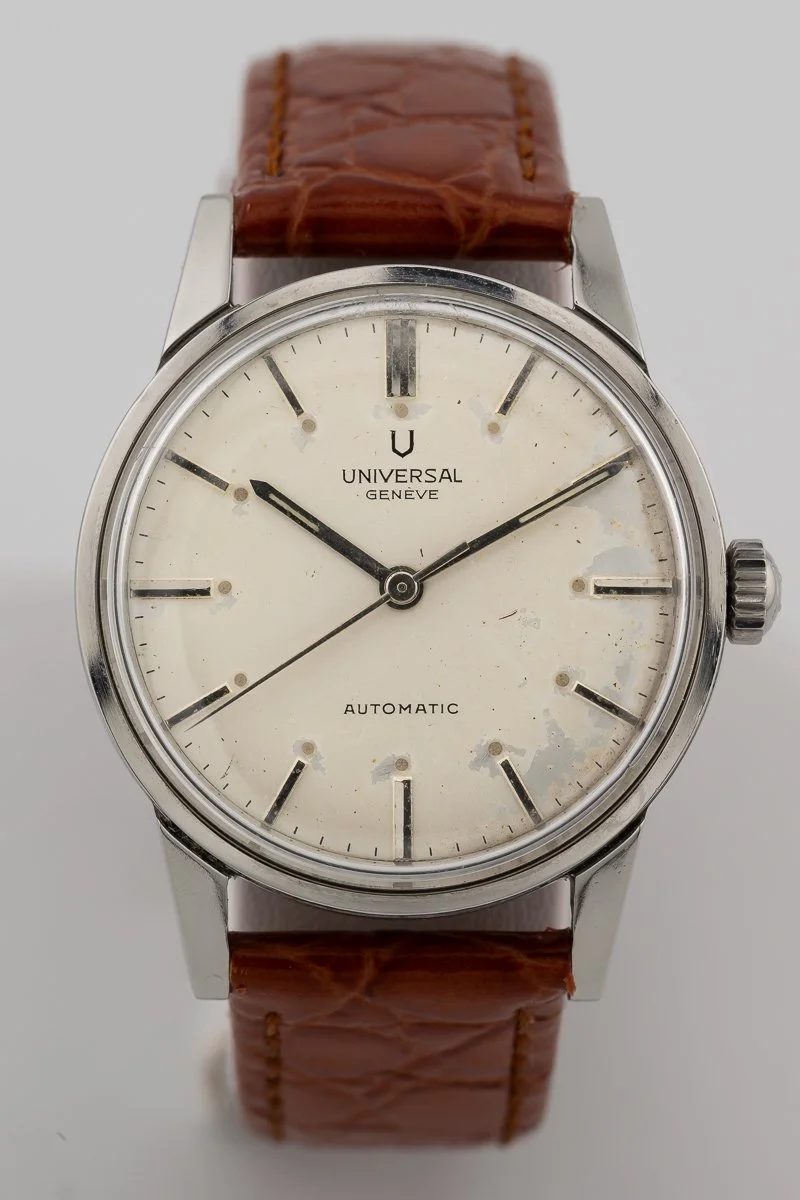
Univeral Genève 1959 Stainless “Microtor” Automatic
Leave it to Universal Genève to make a microrotor movement that, somewhat in contrast to the Buren microrotor in my Hamilton 688, is genuinely well designed and engineered (and pretty to look at, with Geneva striping across the entire movement). It still has the usual microrotor efficiency issues, but the hand winding mechanism is so solid that it hardly matters. It’s too bad the dial on this watch was subjected to an overly aggressive attempt at cleaning and tritium dot removal, but it still looks good in person - better than the photos.
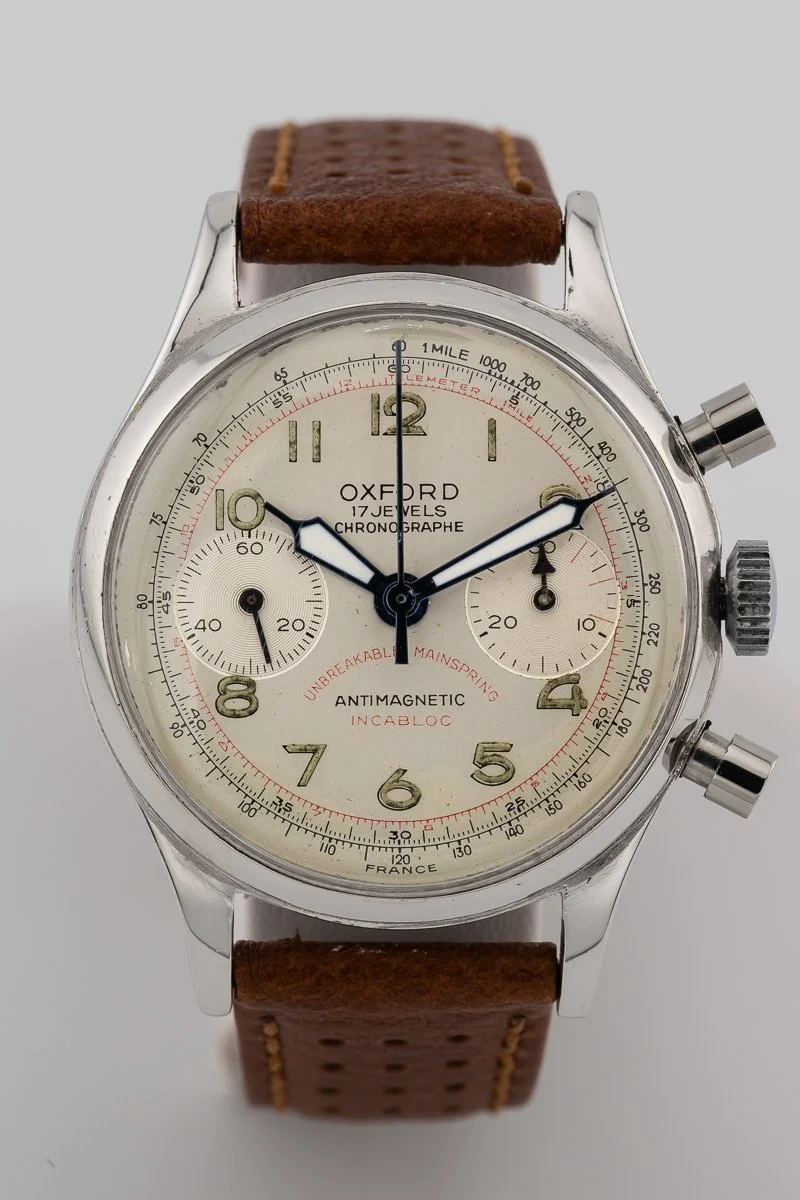
Oxford 1950s Venus 188 Chronograph
Occasionally I get a watch to restore that I know is going to be a bit of an odyssey. This Oxford chronograph certainly qualifies. It came to me with a beat up & corroded case & bezel. Both the pushers and hands, other than the minute counter, had been thoroughly trashed. Fortunately the, other than replacing the mainspring, the movement didn’t require anything beyond a standard service. I was able to track down hands with a blue tint that match the aesthetic of the originals fairly well, and I (eventually, after a lot of hunting) found a pair of modern replacement pushers that, while a bit oversized, fit and function well. The case and bezel - originally chrome - were restored and re-plated in rhodium, and the crystal was replaced. After all of that, I ended up with a good looking and strong running Venus-based chronograph, so I think it was all worth it.
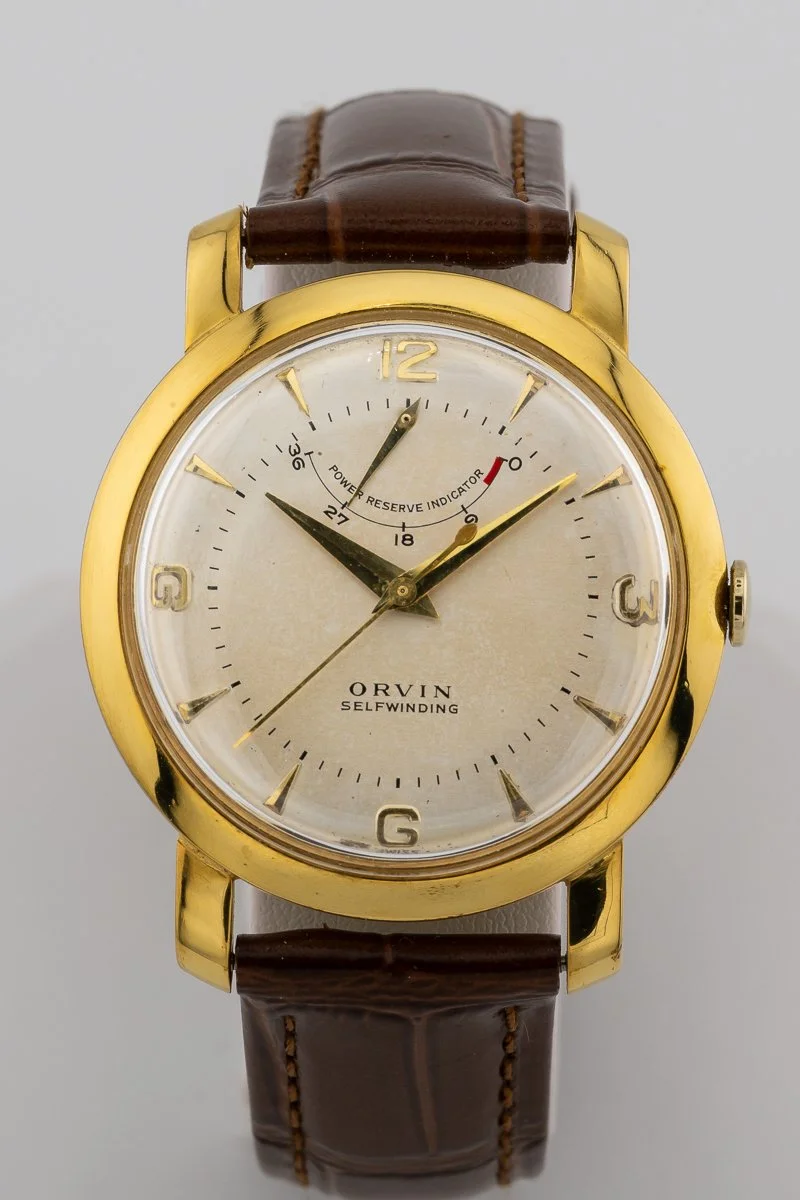
Orvin 1954 Power Reserve Automatic
Back in the 1950s when Sears Roebuck sold pretty much everything, “everything” included luxury Swiss watches, and Orvin was their exclusive brand. I was particularly excited to open this one up, as I had never serviced a movement with a power reserve indicator and I was very curious how it worked. What I found was some very clever mechanical engineering able to track & differentiate the independent rotation of both the mainspring barrel and the winding arbor. Really cool stuff. The watch doesn’t look half bad either. I ended up overplating the case, and it turned out very nicely.
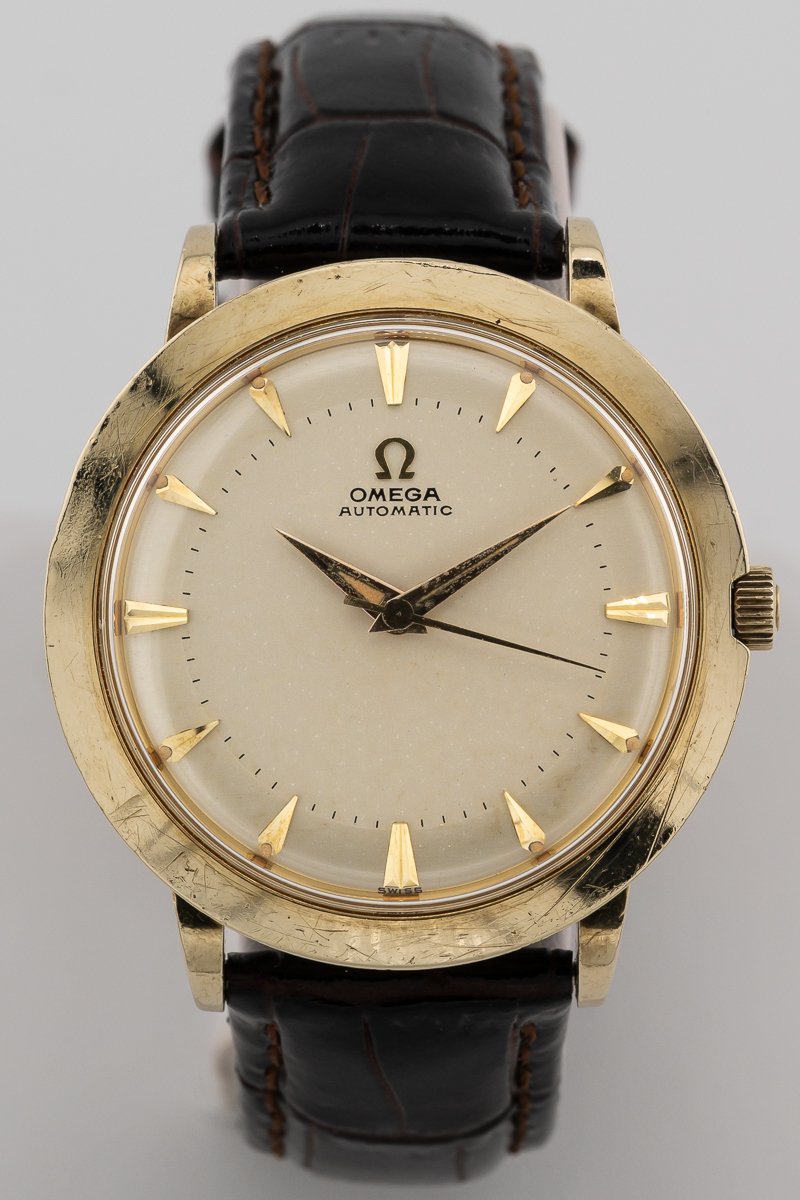
Omega 1958 GX6279 Automatic
This Omega caught my attention when it showed up in a “parts & repair” auction listing due to its dramatic case shape and the bold indices on its dial. I was excited when I opened it up and found that the Omega 500 movement looked completely pristine, with none of the telltale signs of previous servicing. Following a thorough service, it now runs beautifully. Other than replacing the crystal, I left the exterior intact, scratches and all, as I didn’t think a re-plate or overplate on this watch would look right.
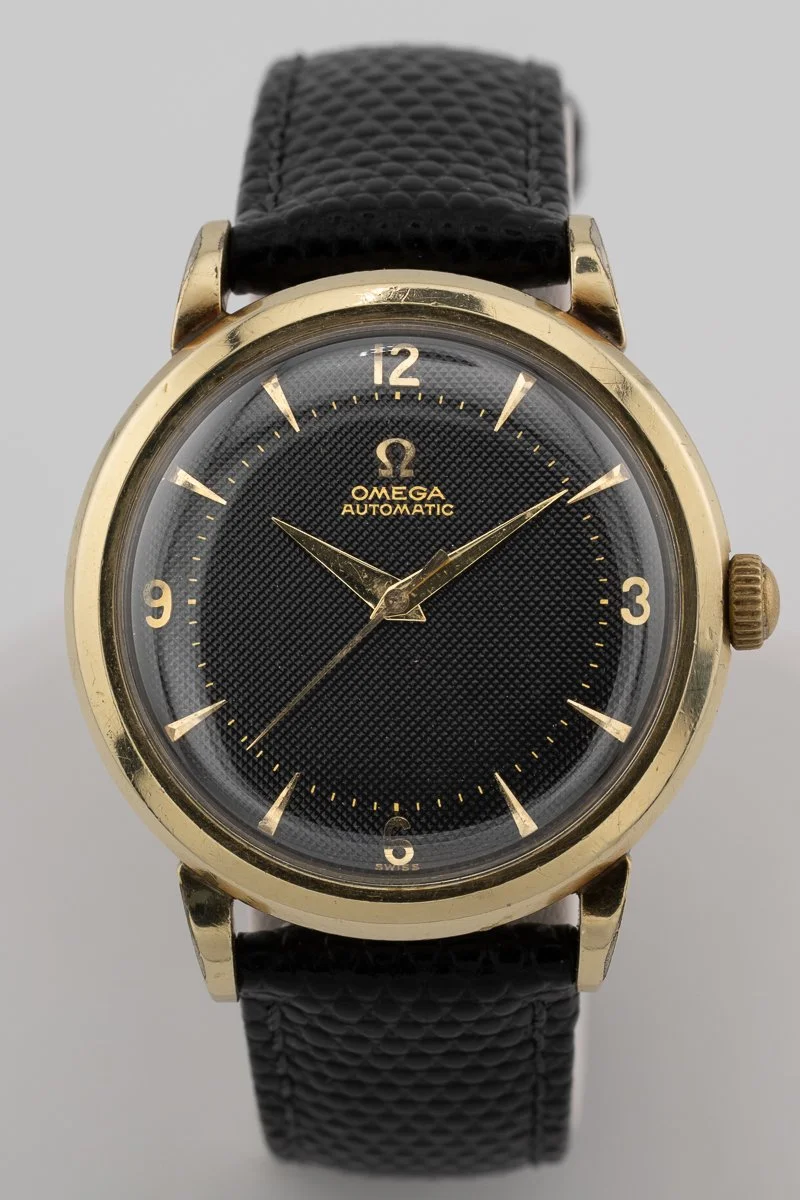
Omega 1954 G 6267 Black Dial Bumper Automatic
An Omega bumper automatic with a cool textured black dial. This watch definitely stands out on the wrist - so much so that you definitely need to think about what else you’re wearing when you strap it on. Like all bumper automatics, the winding action isn’t very efficient, but it makes for a lively companion on your wrist.
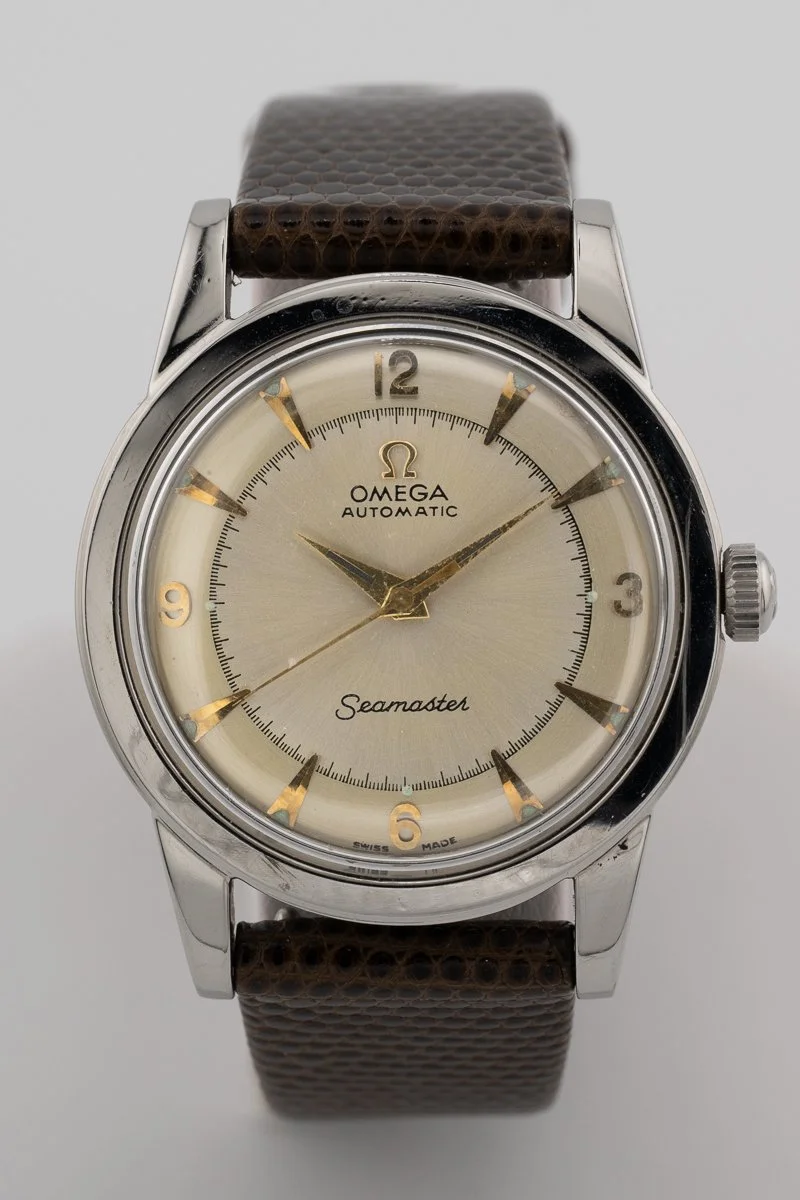
Omega 1952 Seamaster 2577 - 11 SC Bumper Automatic
This Omega is one of my favorites. The polished stainless steel case contrasts really nicely with the subtle golden shade of the dial as well as the gold hands and indices. The case and dial on this one are also in particularly good condition. Inside is a classic bumper automatic movement which, while showing a signficant amount of cosmetic wear, still runs great. I love the way these bumper automatics occasionally squirm a bit on your wrist as if they’re alive.
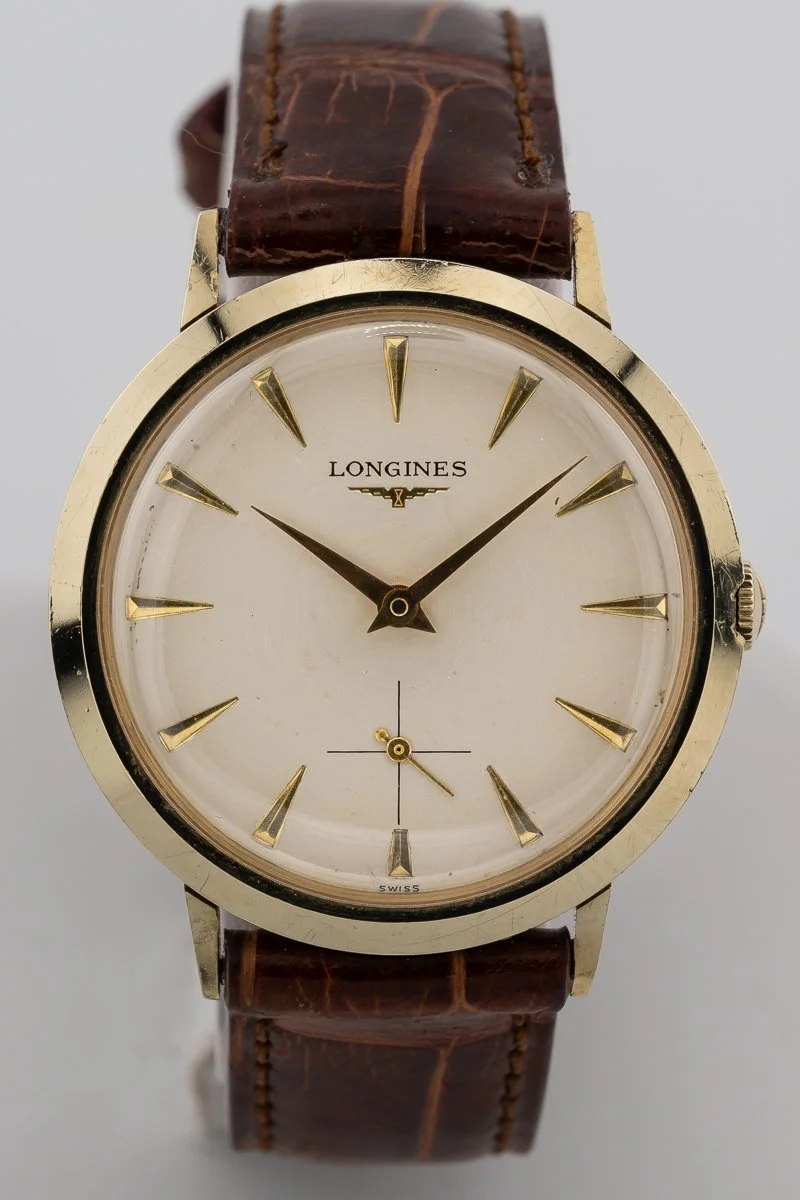
Longines 1959 1048 Sub Second Manual
This is a great example of Longines’ mid-century design mastery - really a great looking watch which manages to look much more modern than it is. The Longines 27M movement inside is beautifully crafted, and also demonstrates Longines’ long devotion to non-shock-protected balances, at least for their dress watches, which extended into the early 1960s.
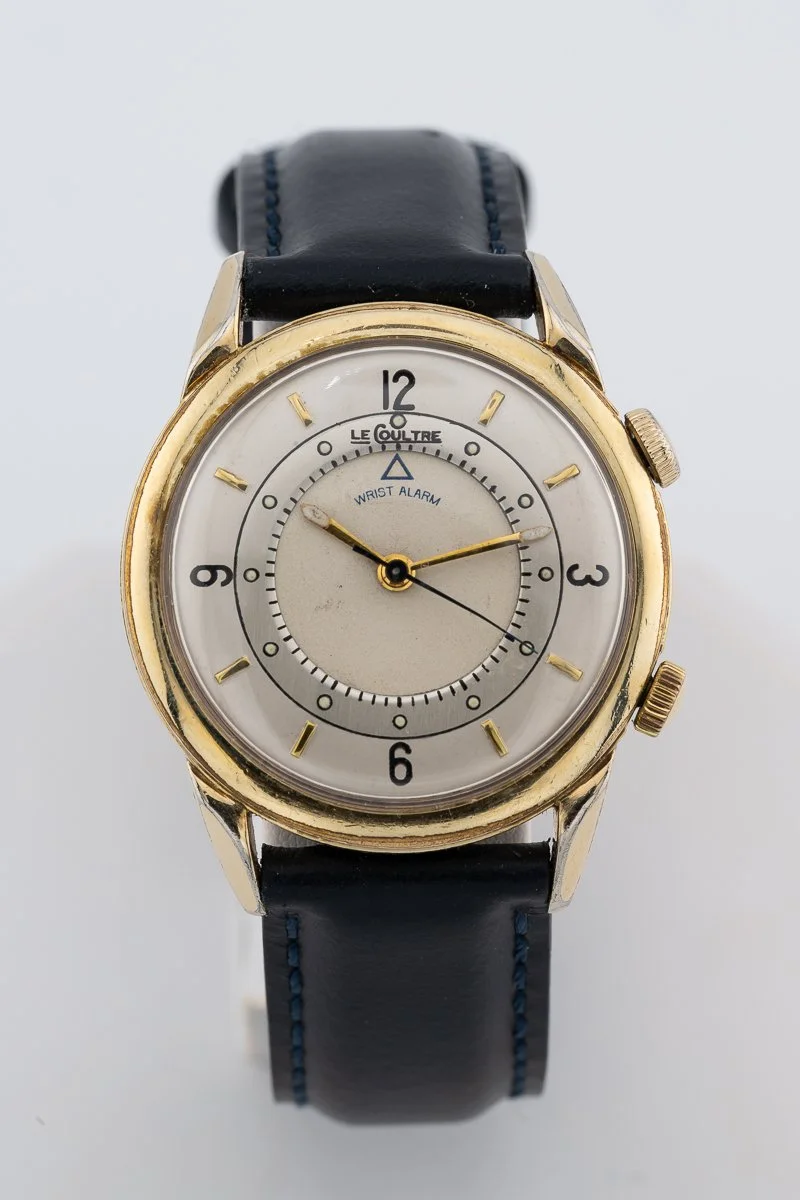
Jaeger LeCoultre Early 1950s Memovox Wrist Alarm
Servicing mechanical alarm watches is a pretty routine task for me at this point in my watchmaking journey, but this was the first alarm watch I took on as a restoration project, and I have to admit that I was quite intimidated by the multiple spring barrels (mainspring and alarm spring), complex setting and alarm trigger mechanisms. I had nothing to guide me, and even figuring out how to coordinate the alarm setting with the hour hand when reassembling the watch was something I had to puzzle through. Eventually I figured it all out, and the result is a great watch with a functional alarm and a really unique and elegant look.
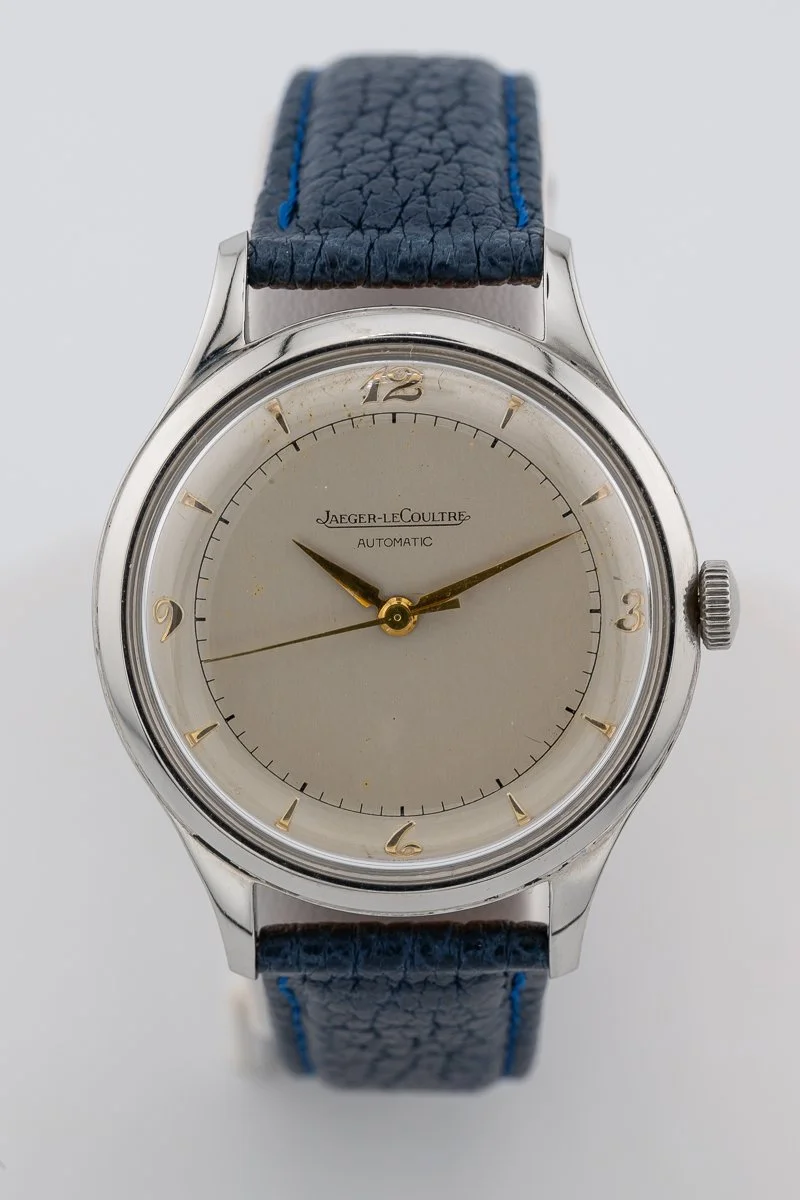
Jaeger LeCoultre c. 1950 Bumper Automatic
If you forced me to pick the best-looking watch in my collection, I’m pretty sure it would be this one. Something about the dial design on this JLC is just perfect - pictures don’t really do it justice. It’s powered by a rather handsome bumper automatic movement, so, like most bumper autos, it occasionally gives a little twitch on your wrist to remind you it’s there. It also has a really unusual shock setting for the balance, where the upper balance jewels are retained by a pivoting brass spring arm.
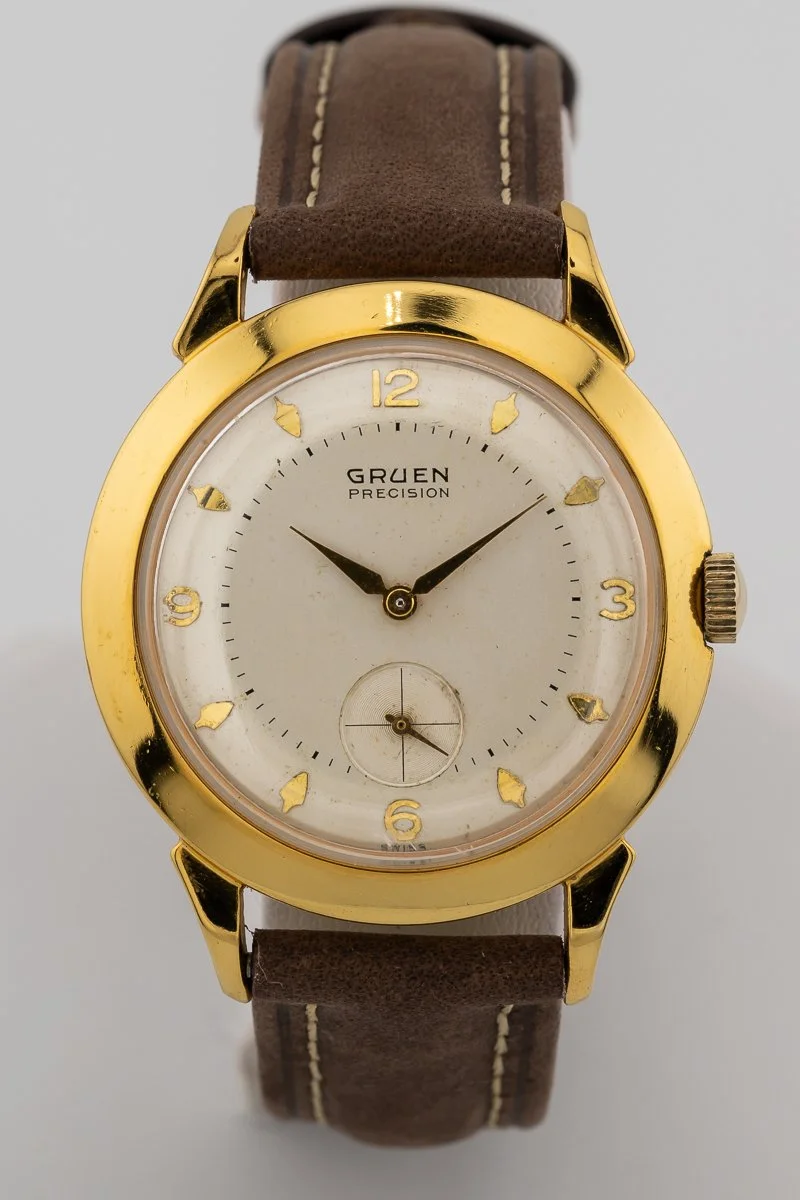
Gruen c. 1956 Precision Pie Pan Sub-second Manual
I have restored a lot of Gruens for sale on my shop, but I’ve only kept a few special examples for my personal collection. This is one of them. In this case I really love the watch’s appearance, with its pie pan style dial, sub-second hand, and wide polished gold bezel which together give the watch a nearly perfect vintage aesthetic. It looks especially good after being over-plated in 18K gold.
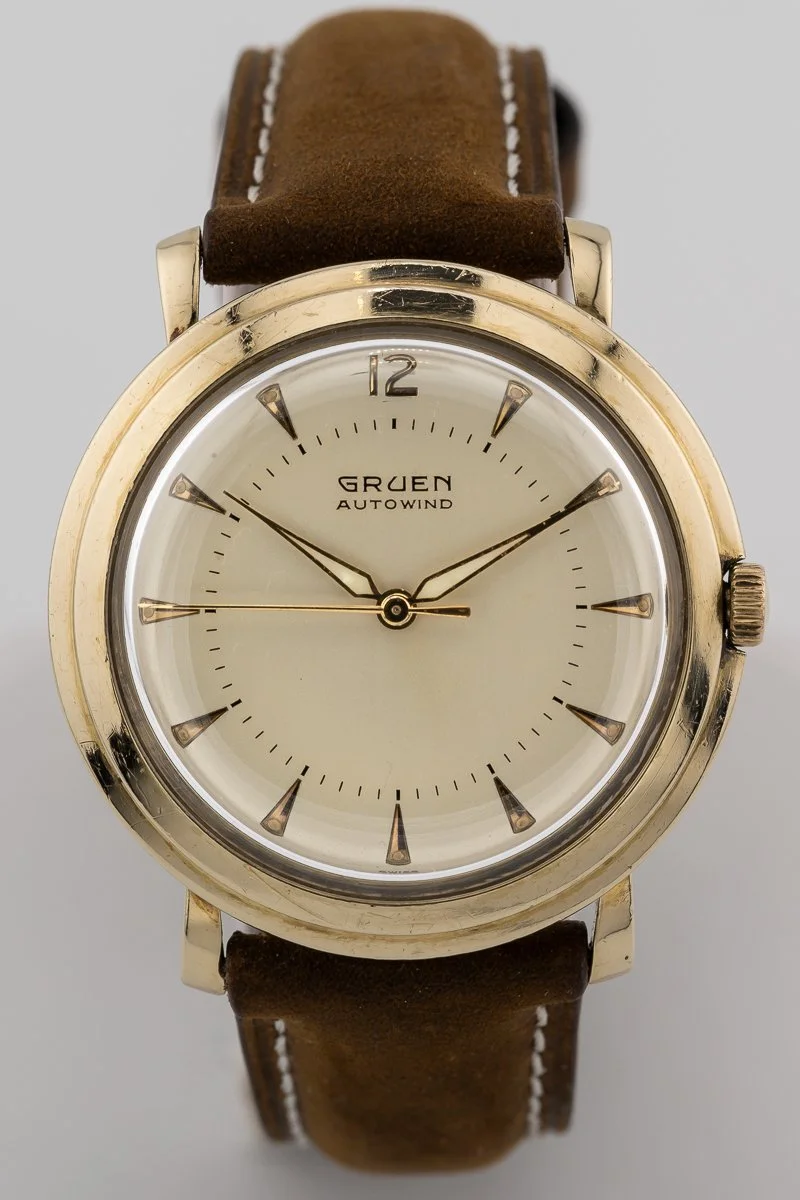
Gruen Mid 1950s 480SS Automatic
This is a fine example of Gruen’s mid-century Autowind series, which introduced full-rotor automatic technology to the American market. I particularly love the overall look of this watch, with its subtly recessed arrowhead dial markers, tiered, sloping bezel, and flared lugs. It’s really a timeless, elegant look.
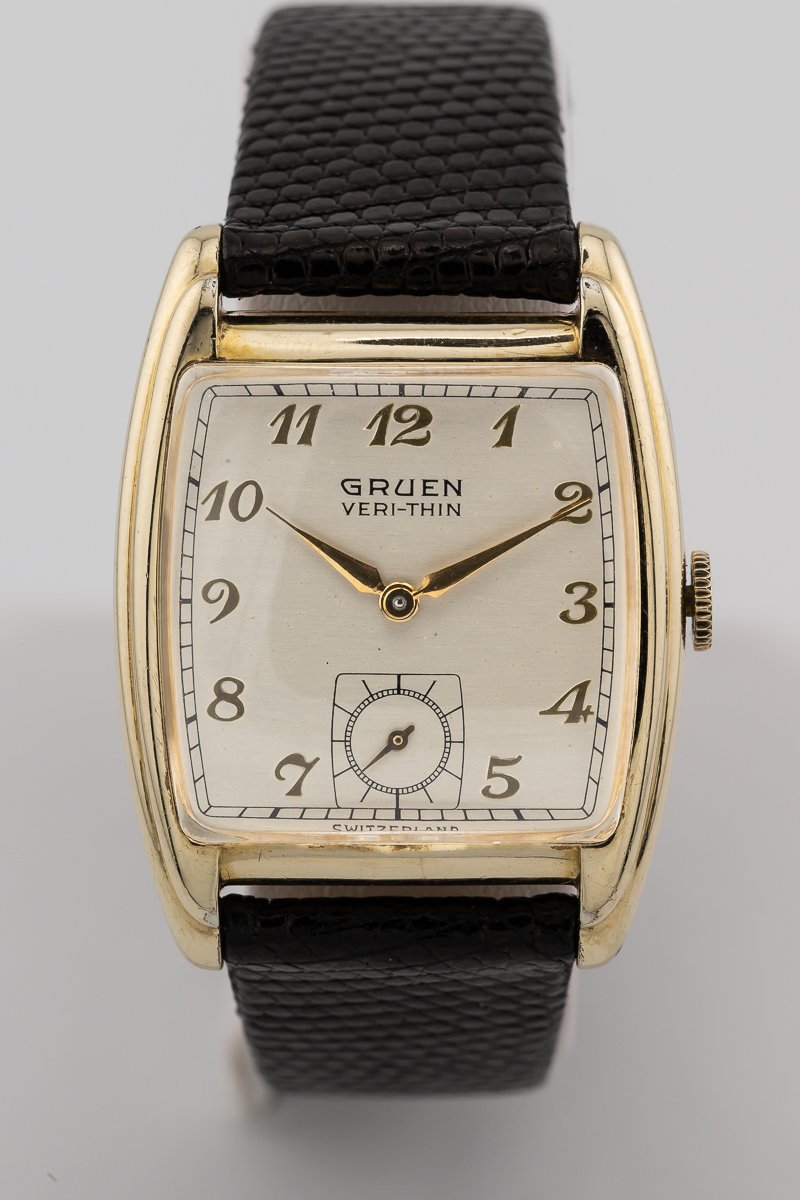
Gruen Early 1950s Veri-Thin 423-664 Tank
This the elegant lines of this mid century Veri-Thin captures everything I love about the Gruen’s post-war design language. Inside, Gruen’s caliber 423 manual movement keeps the profile thin. Gruen movements from this era are simple but beautifully engineered and consistent. With nothing more than a basic service, this one still delivers reliable, accurate timekeeping after 3/4 of a century.
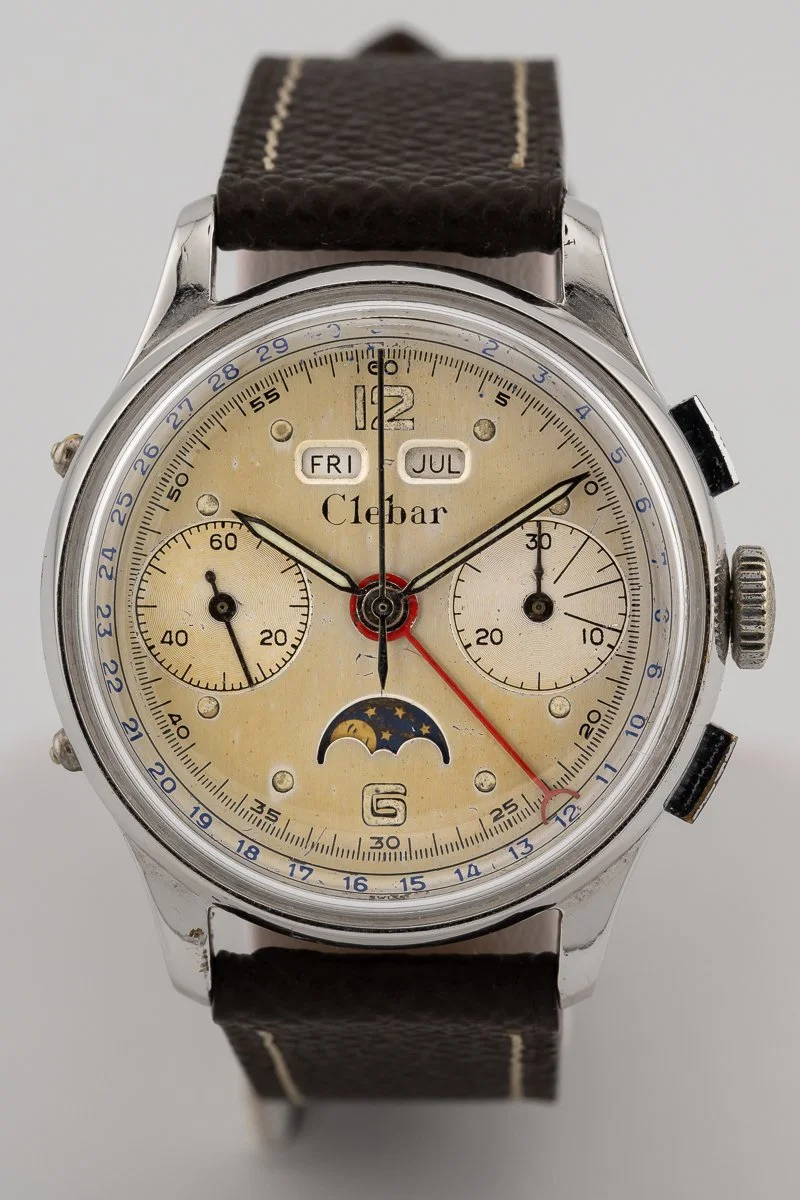
Clebar Early 1950s Triple Calendar Moon Phase Chronograph
Possibly the most complex watch I have ever restored, this Clebar combines a full chronograph with a triple calendar & moon phase. Fortunately, these movements are built in clear layers, so the complexity of the chronograph and the complexity of the calendar mechanism become totally separate problems. It’s interesting to note that the small pushers at the 8 & 10 o’clock positions both do double-duty - the lower pusher advances the moon phase with a light press, and the date with a firmer press, while the upper controls the date and month in a similar fashion. The lever design to accomplish this dual-action behavior is definitely interesting. This watch was originally chrome plated, but the plating was in poor condition, so I stripped it and re-plated the watch in rhodium, which looks great. I probably should have done the pushers and crown while I was at it but I was being a bit lazy - I’ll get back to those eventually…
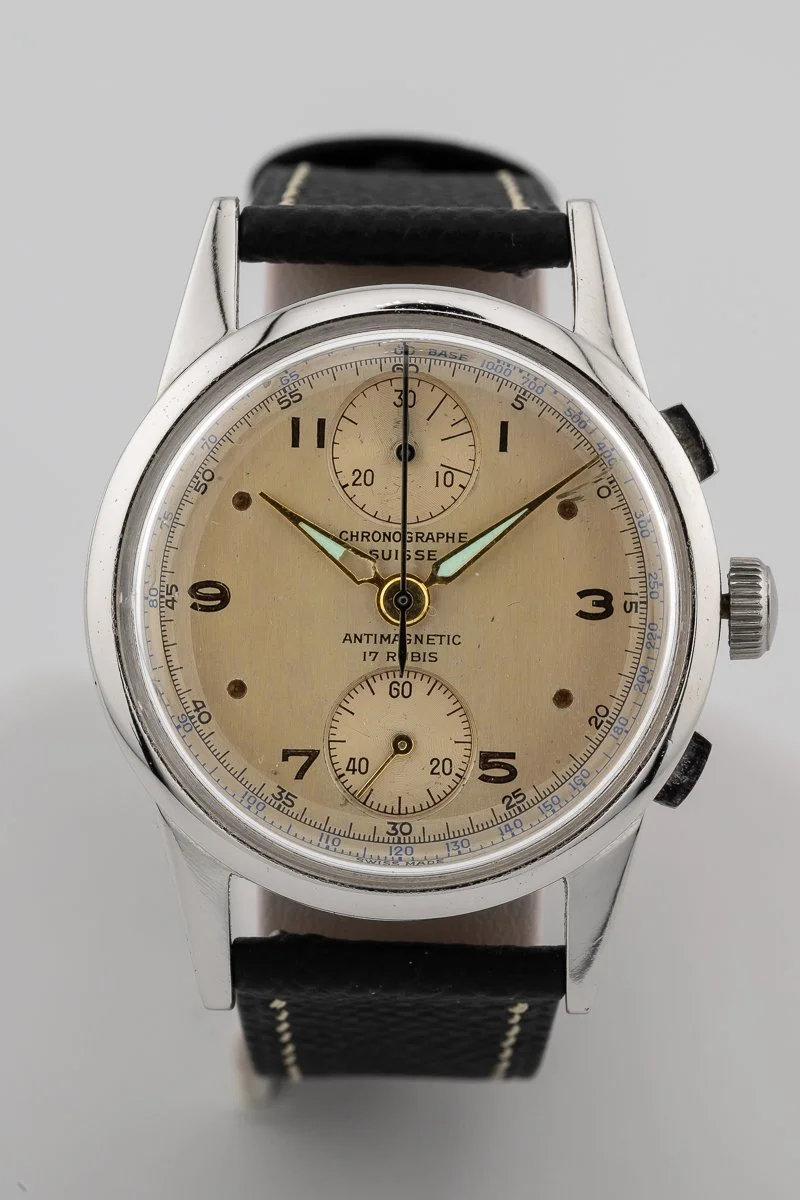
Chronographe Suisse 1950s Gold Dial Venus 170 Chronograph
One of two Venus 170-based Chronographe Suisse watches in my collection, this one has a nice golden dial and was treated to a full case restoration with re-plating in rhodium. The hands also needed to be replaced, and unfortunately, as you can see, some of the lume separated from the brand-new hour hand (grrrr.). Watch hands that fit these old chronograph movements aren’t all that easy to find, and I didn’t think it was worth the trouble of re-luming both hands (so they would match), so I left it as is.
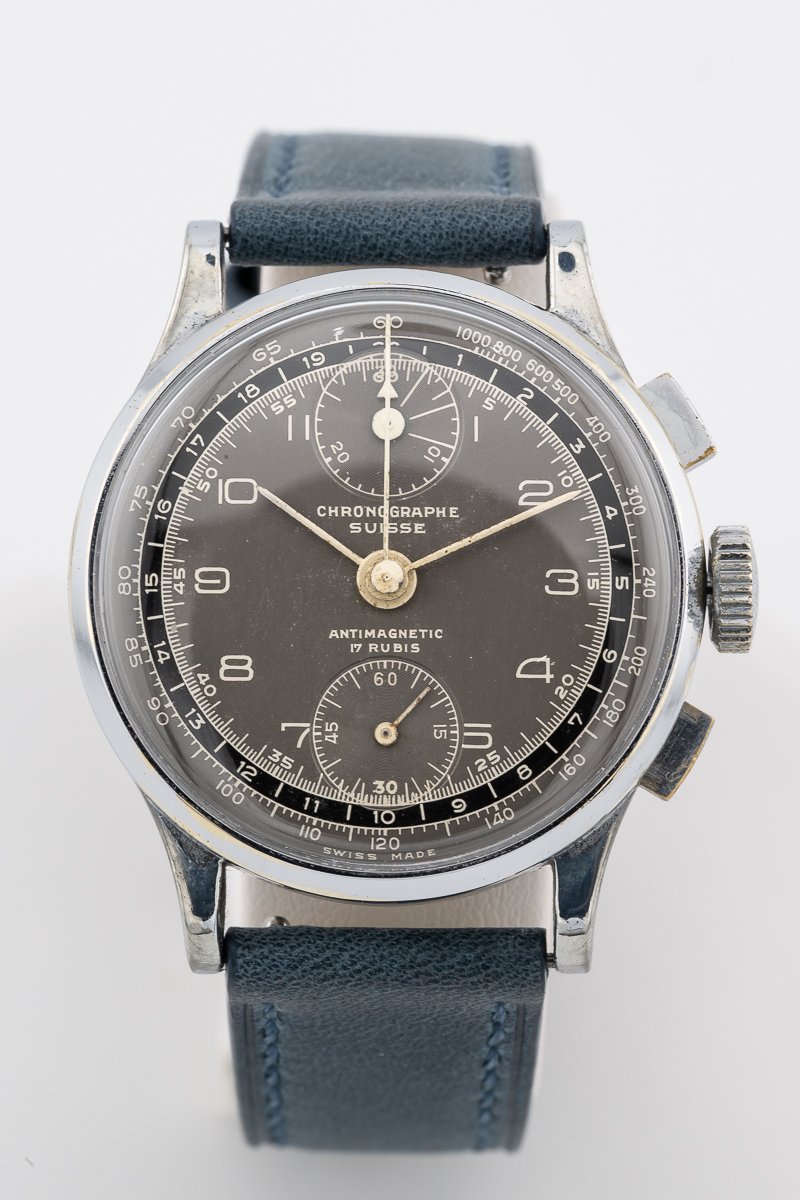
Chronographe Suisse Early 1950s Cal. 1012 Grey Dial Chronograph
This Chronograph Suisse really stands out among its contemporaries with its unusual grey dial. I’m honestly not 100% sure about the provenance of this dial. It shows definite signs of age but is nonetheless in remarkably good condition. If it’s a re-dial, it’s extremely well-done. The movement is a tried and true Venus 170 with its column-wheel-driven top/bottom chronograph layout. I’ve serviced several 170s at this point, and they can be tricky to get operating properly. In particular they rely on tension from a number of rather simple and delicate wire springs that don’t age all that well, and the tip of the main operating level that engages with the column wheel is also subject to wear. With some tweaking however the column wheel mechanism operates smoothly and reliably.