One of the real pleasures of vintage watchmaking is discovering how clever manufacturers could take one solid movement design and turn it into several distinct calibers with different capabilities. When you get the chance to study those variations side by side, the logic and creativity of the engineering becomes much easier to appreciate. That does not happen very often on my bench, since I work on such a wide variety of movements, but this time I happened to have two different versions of Bulova’s mid-century 11AF at once: the 11AFC, a manual-wind variant with indirect center seconds, and the 11AFAC, which builds on the same foundation by adding a full-rotor automatic winding system. Putting these two back together side by side seemed like an especially interesting way to explore how Bulova modified a common base movement to create two quite different expressions of the same design.
Let’s get started by taking a look at the two main plates. The 11AFAC automatic movement is on the left, while the 11AFC manual wind variation is on the right:
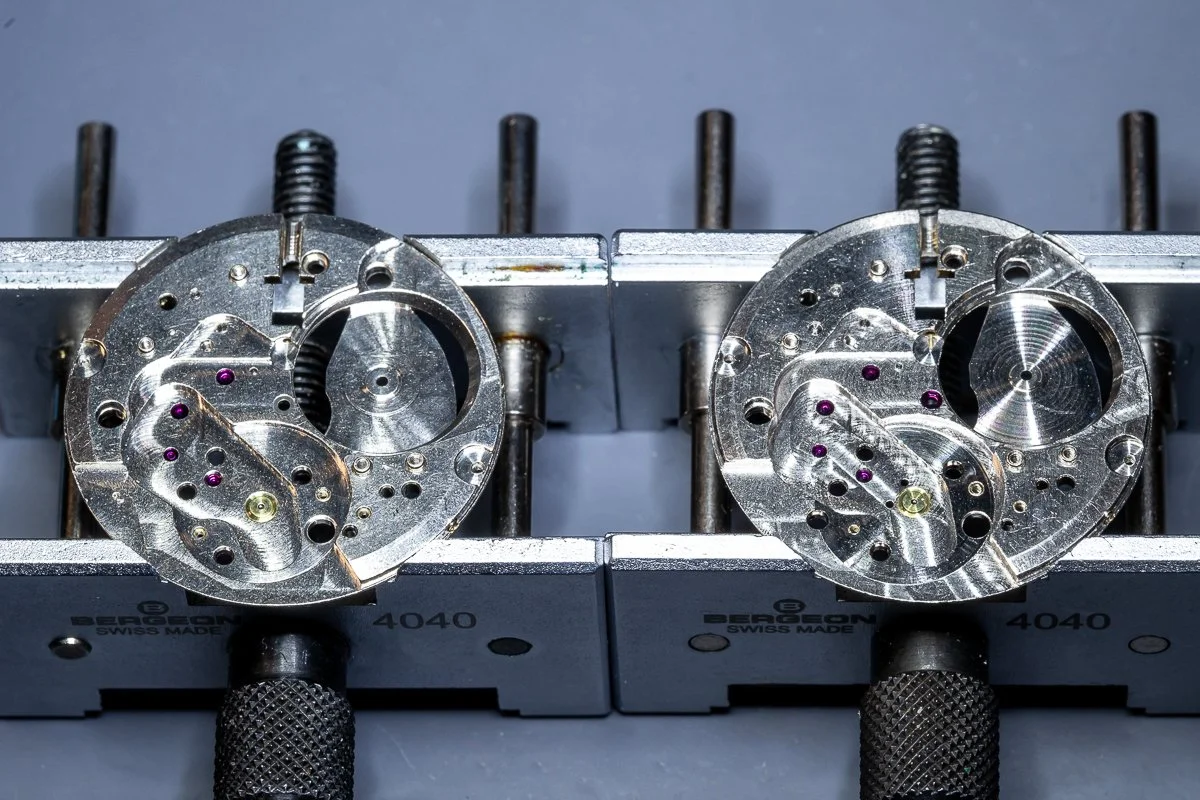
These main plates are nearly identical, with one small but important variation: the main plate for the 11AFC has a jeweled center wheel pivot, while the 11AFAC makes due with a simple bushing. This variation has little to do with performance, and much more to do with hitting the right jewel count. Both of these are 17 jewel movements — commonplace in the era due to the fact that the US import duty schedule at the time had a cutoff at 17 jewels, beyond which duties escalated rather dramatically. However, the 11AFAC employs two of its jewels in the automatic winding works, leaving a 15 jewel base movement underneath, while the manual 11AFC gets a full 17 jewel base movement.
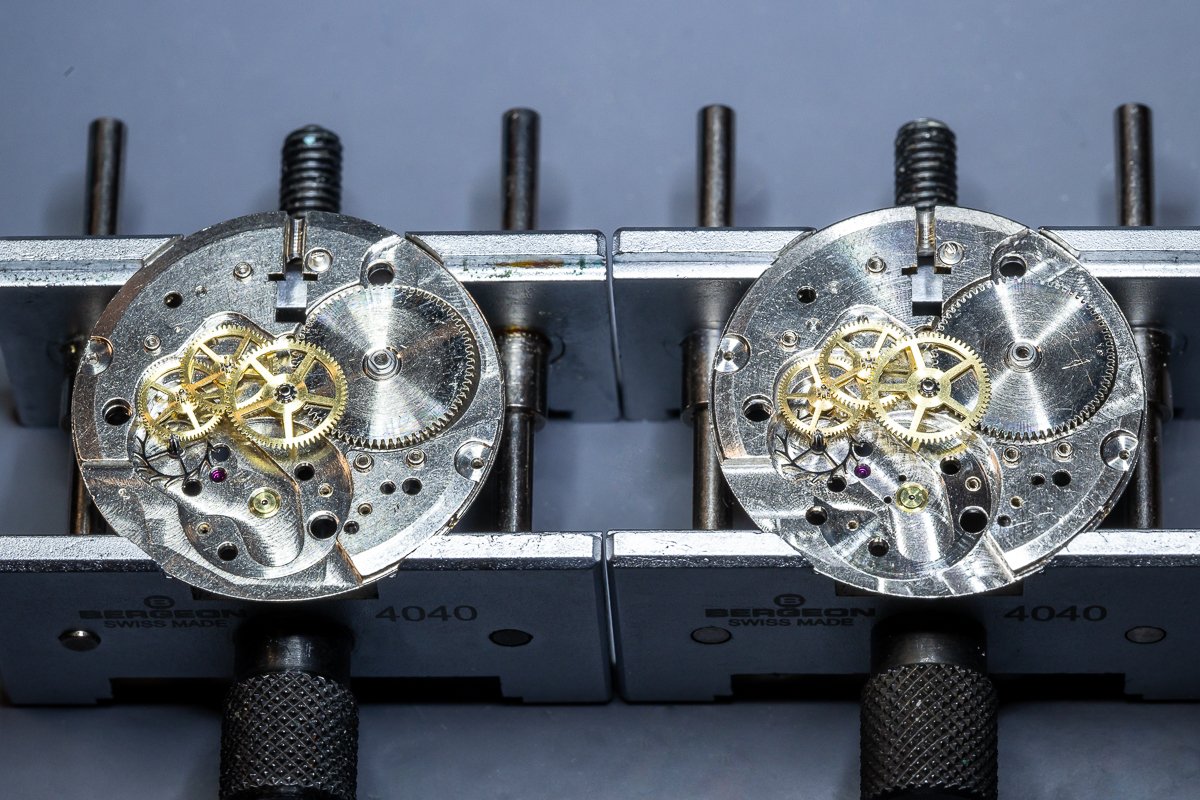
With the mainspring barrels and train wheels in place, things still look pretty much identical, and these parts are all fully interchangeable with the exception of the mainspring barrel itself (as the automatic 11AFAC version has a smooth inner wall that lacks the hook for the tongue of the manual mainspring that’s found in the 11AFC):
After installing the train and barrel bridges, we start to see the first major design variations between these movements:
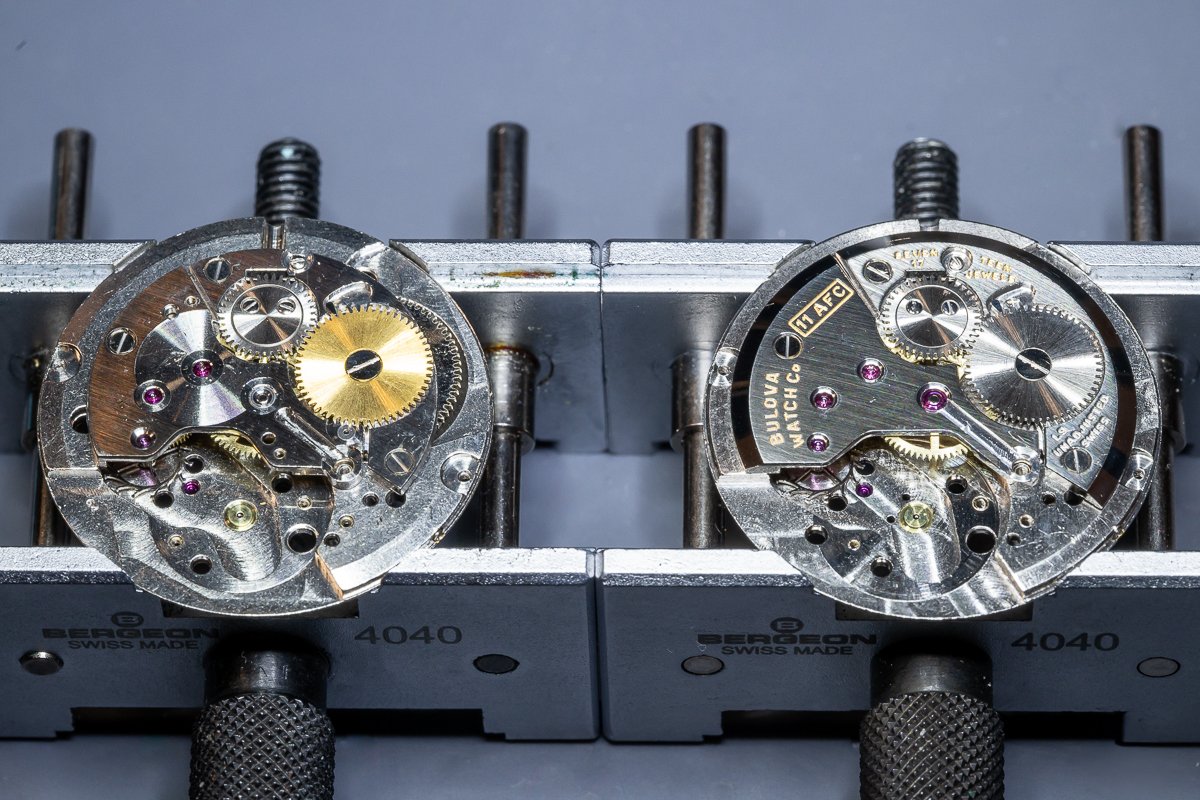
The bridges have the same basic shape, but there are significant differences in how they are finished. The 11AFC has a jeweled upper pivot for the center wheel which, again, is lacking in the 11AFAC. The 11AFAC train wheel bridge has additional threaded mounting points for the automatic winding module as well as a lower pivot bushing for the automatic driving wheel located immediately adjacent to the rachet wheel. The 11AFAC bridges also lack the decorative polished bezel seen on the 11AFC bridges, as the space that would have been taken up by the bevel is needed to create additional clearance for the automatic winding rotor. Finally, the 11AFC bridges are finished with caliber engravings. These are missing on the 11AFAC, since they would be covered up by with automatic mechanism. The 11AFAC puts these caliber markings on the winding rotor instead.
Next, we’ll flip these movements over so we can assemble the keyless and motion works:
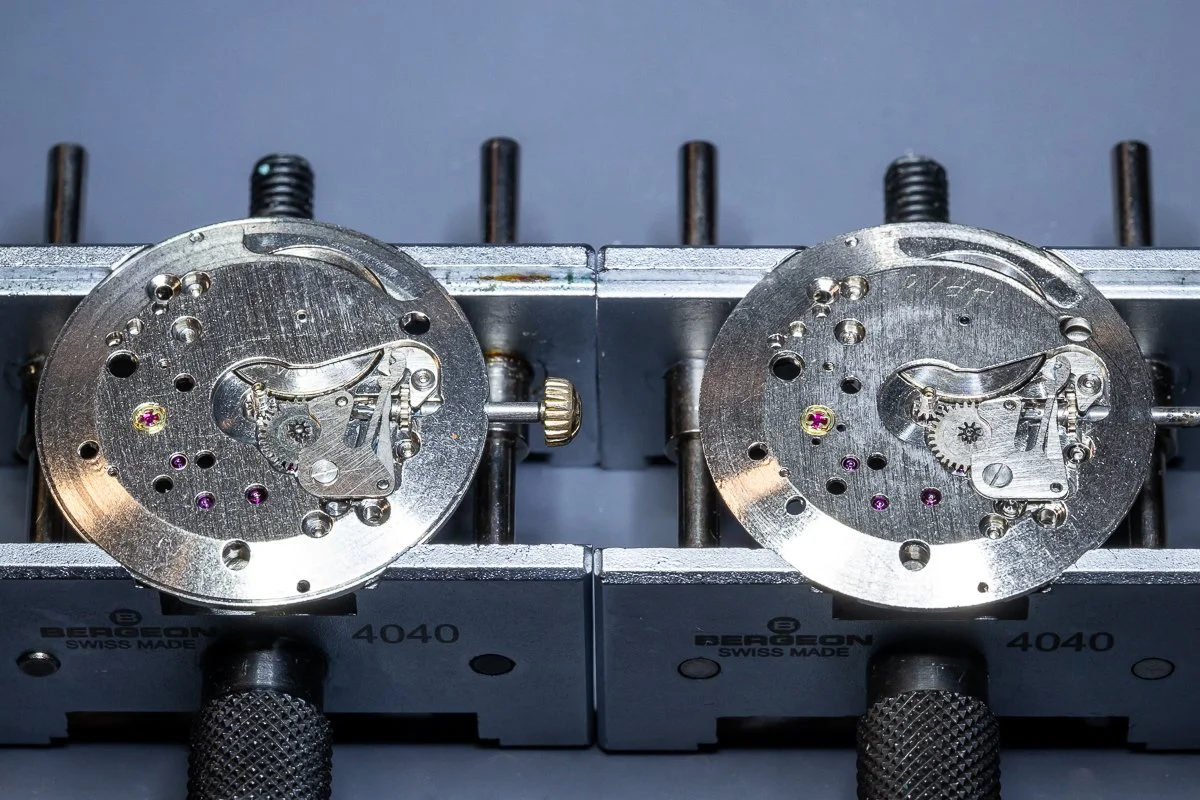
Once again, the designs here are identical, with fully interchangeable parts.
Flipping both movements back over, we can now complete the primary assembly by installing the escapements as well as the indirect drive center seconds components. After a bit of lubrication both movements run happily:
The 11AFC movement is complete at this point, but we still ahve some work to do on the 11AFAC — namely assembling and installing the automatic winding module. The photos below show the automatic winding components and how they are placed, with the lower plate of the automatic module installed above the train wheel bridge:
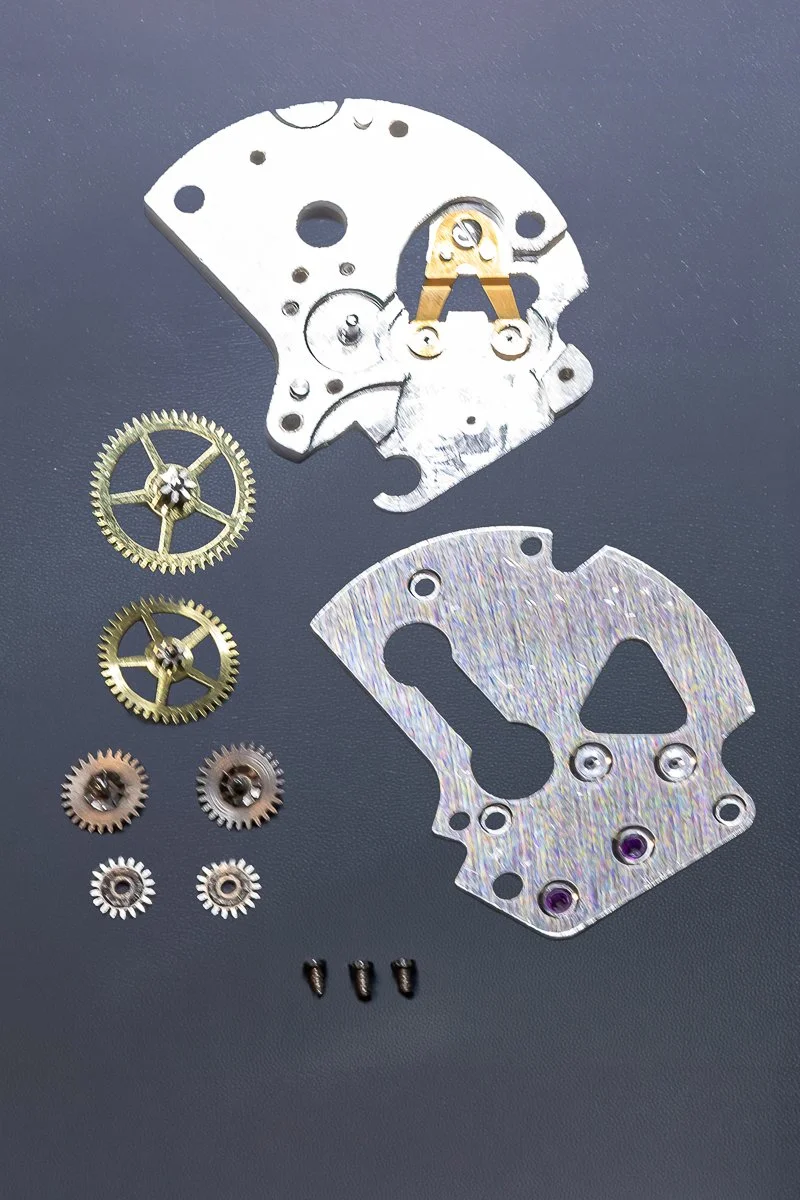
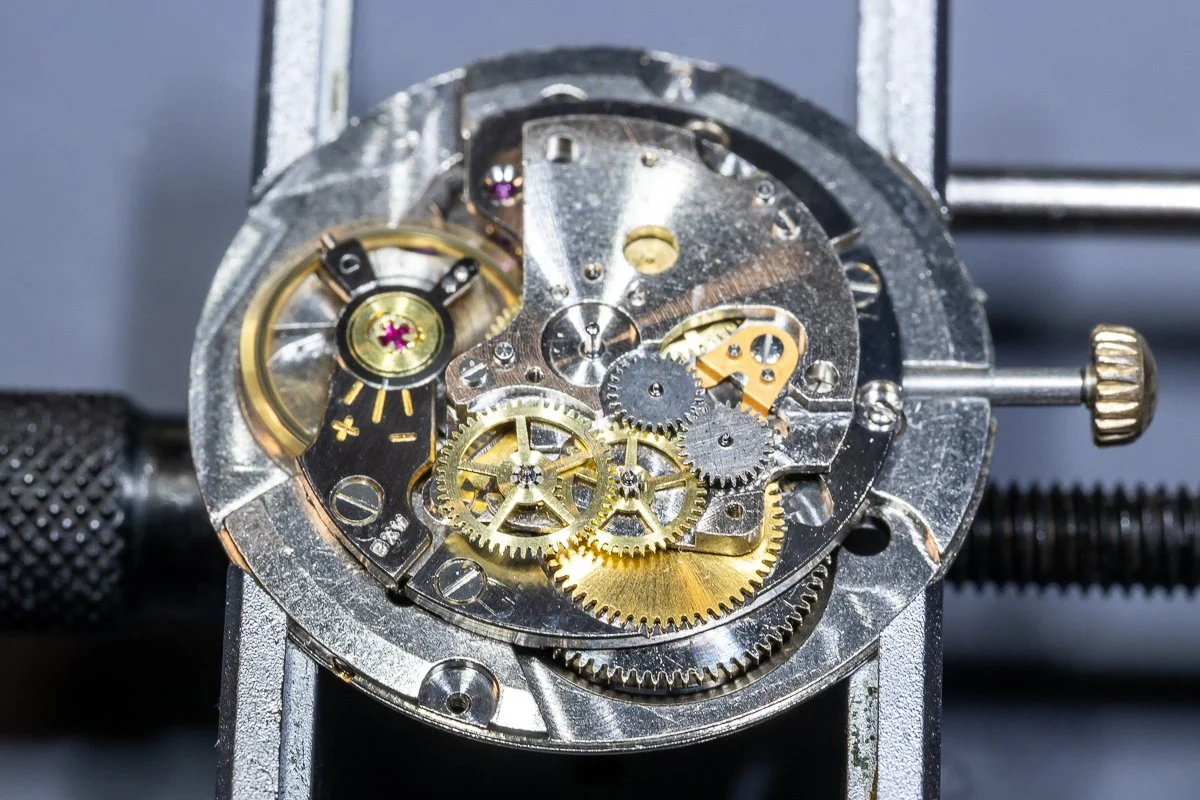
The 11AFAC automatic mechanism uses a pair of reversing wheels, although these are relatively primitive compared to the contemporary ETA/Rolex style reversing wheels. They consist of two separate pieces that engage using ratcheting Breguet teeth. They rest on an external brass spring that facilitates the ratcheting action.
The thin, polished upper plate for the 11AFAC automatic module has two jewels, bringing the total movement count to 17:

Finally, with the 11AFAC winding rotor attached, we can see both complete movements side by side:
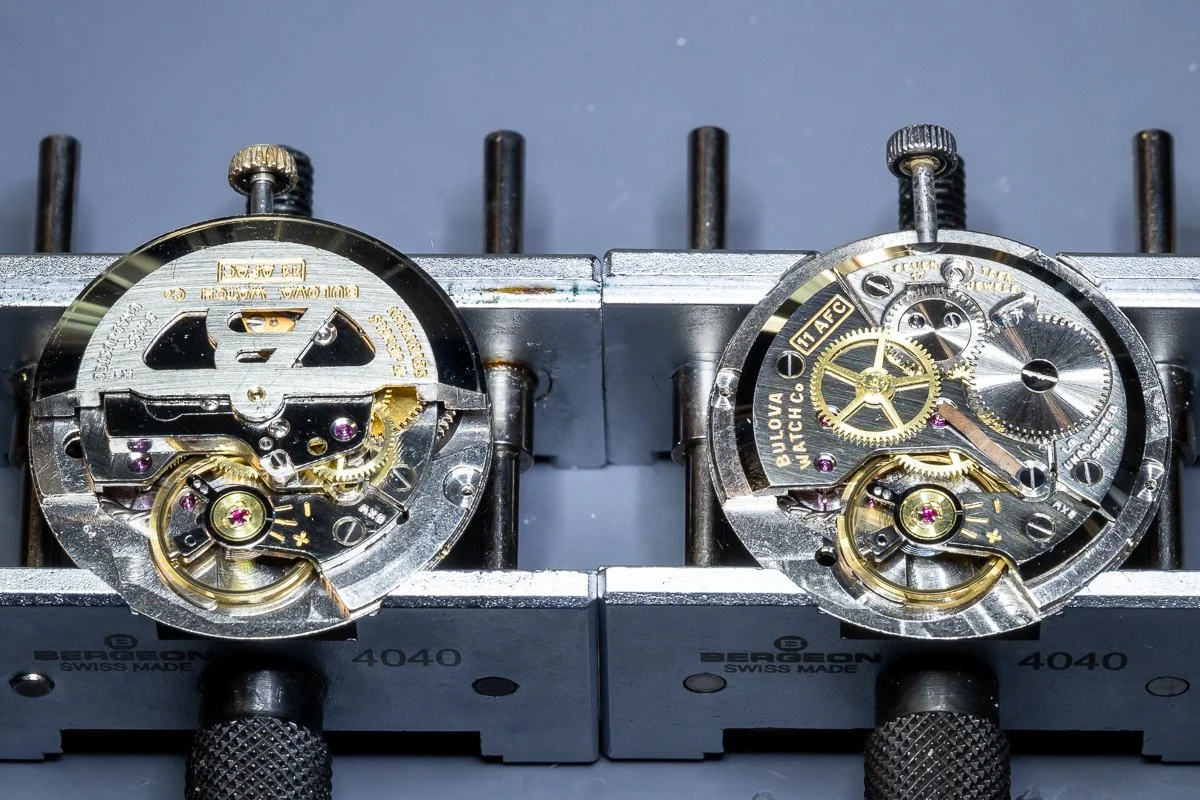
I hope you found this side-by-side comparison as interesting as I did. These movements ultimately found their homes in a pair of lovely Bulova watches which are listed for sale on my shop:
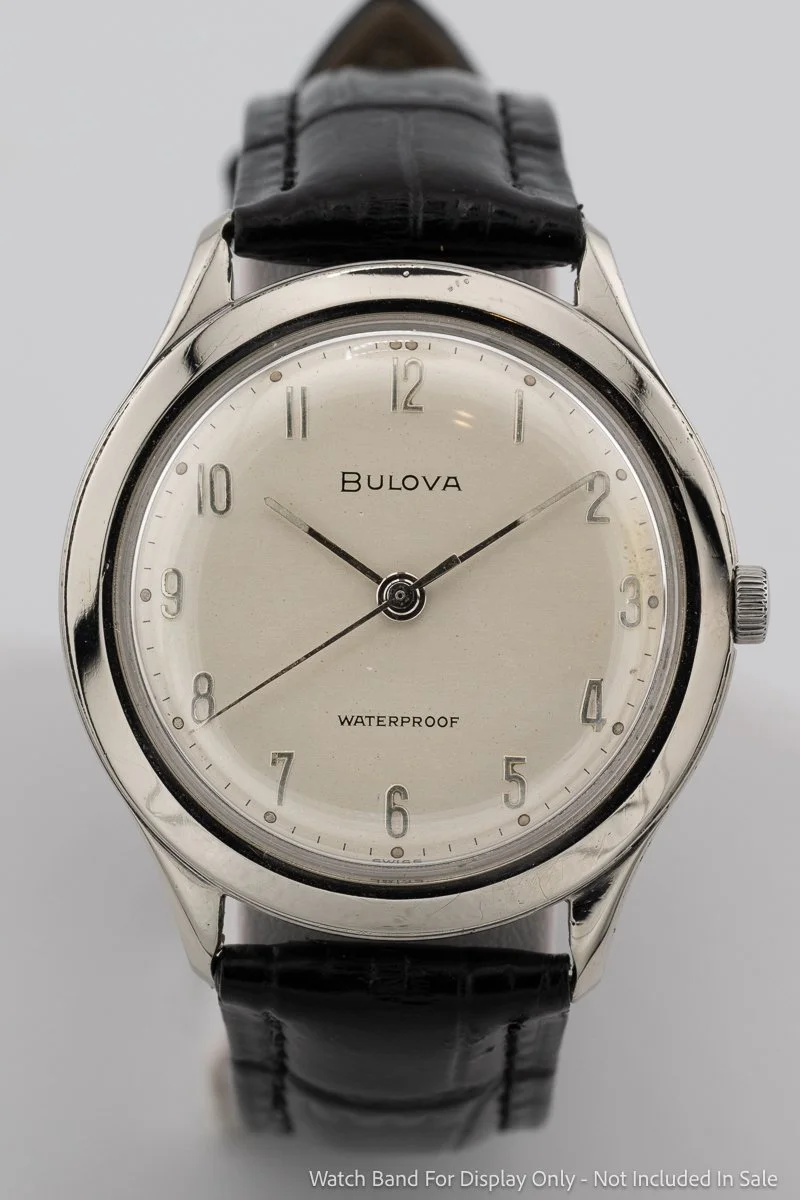
This is a handsome 1959 Bulova dress watch with a very cool mid-century twist: a slim, white-gold-toned look paired with unusual top-lumed hands, freshly serviced and regulated and running well. With its clean, restrained dial and comfortable 35mm proportions, it wears like a classic everyday vintage piece, but the details give it a bit more personality than the average period Bulova.
Case, Dial & Aesthetic
The case is 10K white gold R.G.P. (rolled gold plate) with a stainless steel snapback, delivering that bright, silvery vintage tone that is less common than yellow-gold plating in this era. The dial is a clean silver/ivory tone with applied Arabic numerals and a tidy minute track, showing light, age-consistent speckling that reads as honest vintage character. A new crystal has been installed for clear viewing and a refreshed presentation. The hands are the standout detail: a less-common top-lume style that gives the watch a distinctive mid-century tool-meets-dress vibe.
Movement: Bulova 11AFC Manual
Inside is Bulova's Caliber 11AFC, a Swiss-made 17-jewel manual-wind movement from the late-1950s/early-1960s period. It is a straightforward, serviceable design with a classic 18,000 bph cadence, and this example presents in excellent condition after service.
Winding: Manual Wind
Jewels: 17
Frequency: 18,000 BPH
Origin: Swiss Made
Complications: Sweep Second
Condition & Service
This watch has been fully serviced and regulated and is running well. A new crystal was installed during restoration. The hands were re-lumed to improve visibility while keeping the overall look period-correct. The case shows honest wear consistent with age, and the white gold plate finish gives the watch its distinctive bright, vintage character.
Specs & Details
Year: 1959 (case date code L9)
Case: 10K White Gold R.G.P. / Stainless Steel Snapback
Case Diameter: 35mm
Lug to Lug: 41mm
Thickness: 8.5mm
Lug width: 17.6mm
Recommended Band Size: 17mm
Movement: Bulova 11AFC Manual
Features: New Crystal, Re-lumed Hands
Why This Watch Matters
Late-1950s Bulovas are a sweet spot for collectors because they combine clean mid-century design with durable, serviceable Swiss movements. This example stands out for its white-gold-toned finish and the uncommon top-lumed hand set, and with fresh service already completed it is ready to wear immediately without the usual vintage uncertainty.
Watch band not included with purchase. You will need a 17mm band to pair with this watch. Please see this page for more information.
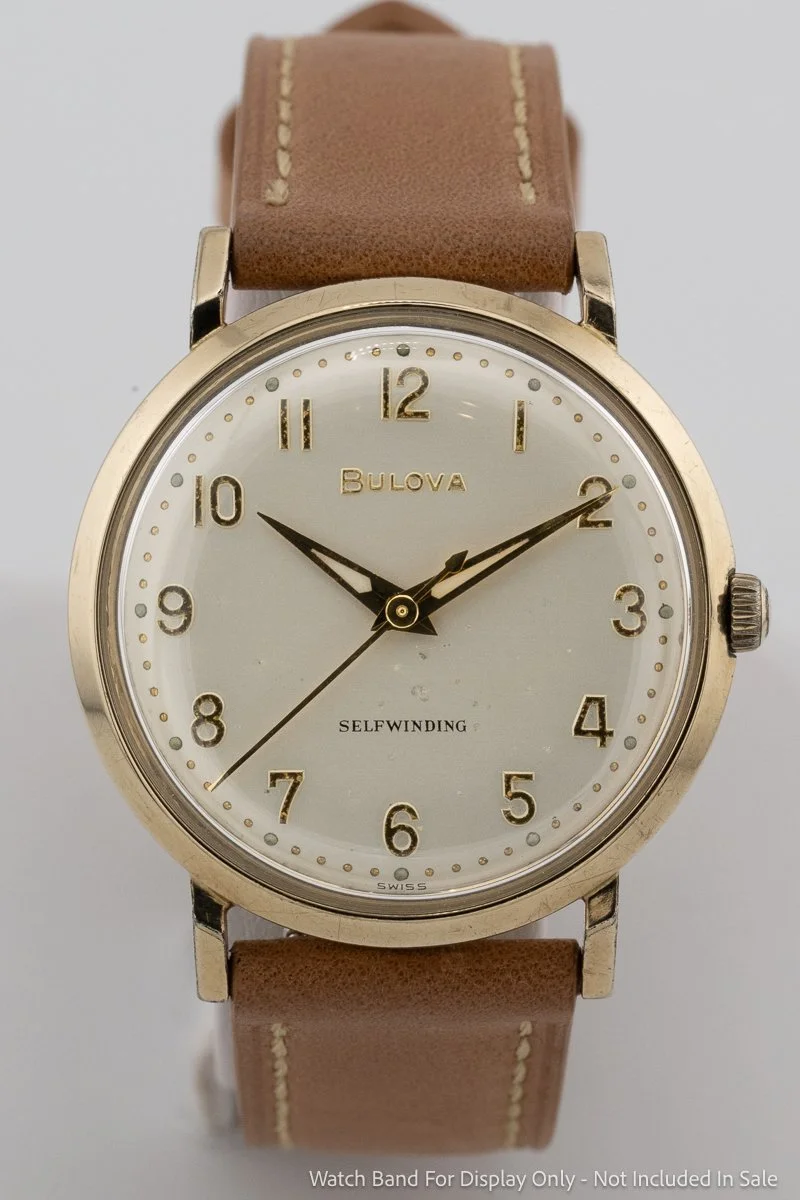
This is a handsome 1962 Bulova Selfwinding dress watch powered by Bulova's Caliber 11AFAC automatic movement, freshly serviced, regulated and running well. It delivers that clean early-1960s look—warm gold tone, crisp applied numerals, and a balanced, easy-to-read dial—in a very wearable 33mm size.
UPDATE: Watch Band Now Included. See Below.
Case, Dial & Aesthetic
The dial is a classic Bulova layout with applied Arabic numerals and a tidy minute track, giving the watch a refined but approachable mid-century character. The case is 10K gold R.G.P. (rolled gold plate) with a stainless steel screwback, combining warm gold presence with the practicality of a steel back. A new crystal has been installed for clear viewing and a fresh presentation. The hands have been re-lumed as part of the restoration, keeping legibility strong while preserving the overall period-correct look.
Movement: Bulova 11AFAC Automatic
Inside is Bulova's Caliber 11AFAC, a Swiss-made 17-jewel automatic used across Bulova's early-1960s selfwinding lineup. It is a durable, serviceable design that delivers the easy daily-wear experience Bulova was known for, and this example is in excellent condition.
Winding: Automatic (Full Rotor)
Jewels: 17
Frequency: 18,000 BPH
Origin: Swiss made
Complications: Sweep Second
Condition & Service
This watch has been fully serviced and regulated and is running well. A new crystal was installed during restoration, and the hands were re-lumed to improve visibility. Overall presentation is strong, with honest, age-consistent wear that suits a daily-wear vintage Bulova.
Specs & Details
Reference: 2451
Year: 1962 (case date code M2)
Case: 10K gold R.G.P. / Stainless Steel Screwback
Case Diameter: 33mm
Lug to Lug: 38mm
Thickness: 11mm
Lug Width: 17.0mm
Recommeded Band Size: 17mm
Movement: Bulova 11AFAC
Features: New Crystal
Why This Watch Matters
Bulova's early-1960s automatics hit a great balance of style and practicality, offering reliable Swiss movements in clean, timeless cases made for everyday wear. With fresh service already completed and a very wearable 33mm profile, this is an easy vintage piece to enjoy immediately—classic mid-century design without the usual mechanical guesswork.
Watch Band
A new leather watch band, as depicted in the photos, is included with your purchase. This has resulted in a small price adjustment to the listing. If you would prefer to supply your own band, please contact me immediately upon purchase (prior to shipping) and I will remove the band and issue a partial $20 refund. If you would instead like me to help you source and install a different band, I am happy to do so if you contact me immediately after purchase.
Once the watch has been packaged and shipped, the sale will be considered final and band deletion or replacement will no longer be an option.