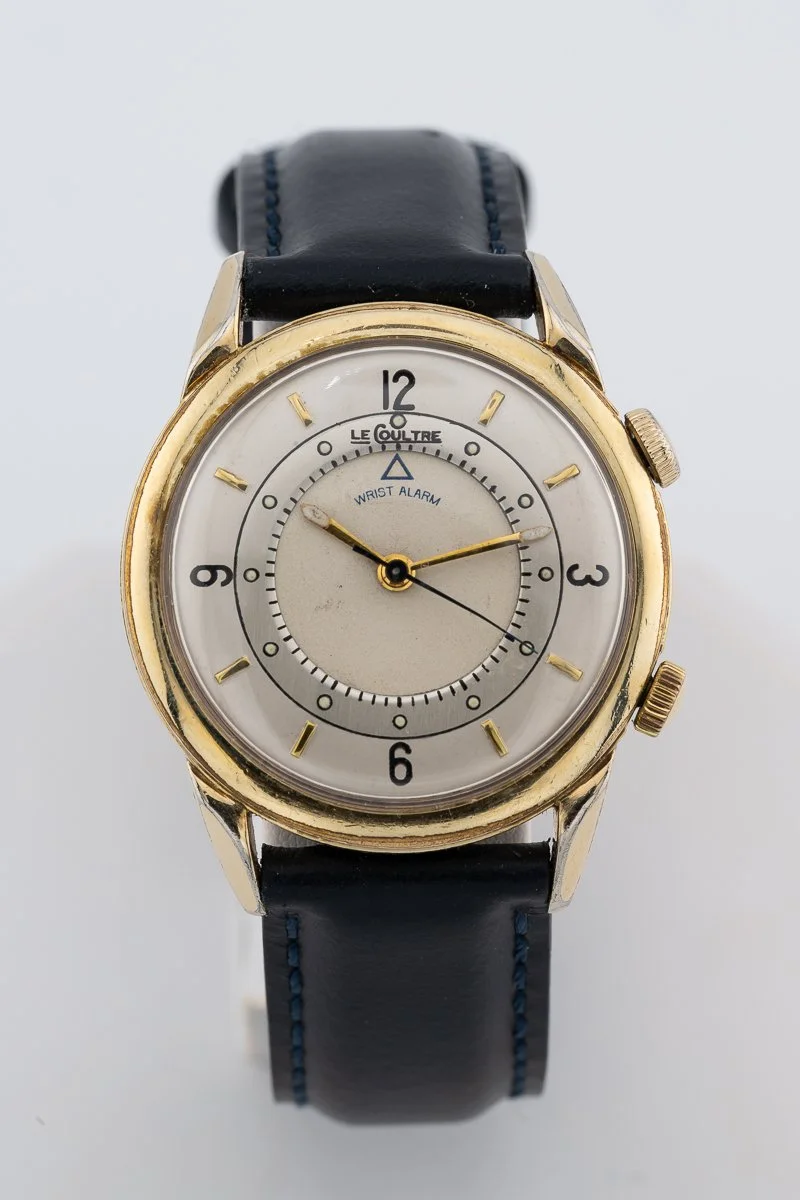
Jaeger LeCoultre Early 1950s Memovox Wrist Alarm
Servicing mechanical alarm watches is a pretty routine task for me at this point in my watchmaking journey, but this was the first alarm watch I took on as a restoration project, and I have to admit that I was quite intimidated by the multiple spring barrels (mainspring and alarm spring), complex setting and alarm trigger mechanisms. I had nothing to guide me, and even figuring out how to coordinate the alarm setting with the hour hand when reassembling the watch was something I had to puzzle through. Eventually I figured it all out, and the result is a great watch with a functional alarm and a really unique and elegant look.
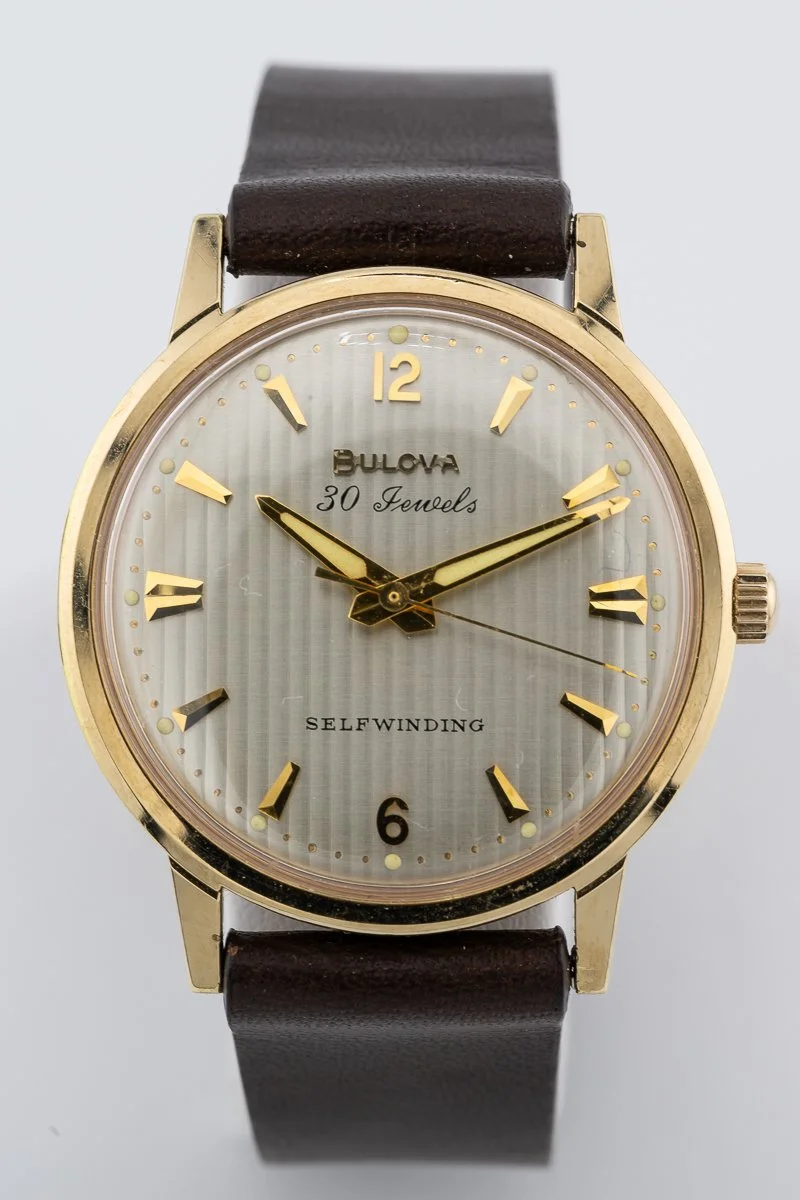
Bulova 1965 Tapestry Dial Automatic
I pretty much fell in love with the silver, tapestry-style dial of this Bulova the moment I say it. Pictures don’t really do it justice, but this is really a great looking watch, and in fantastic condition as well. The USA-manufactured 30 jewel Bulova automatic movement is also in excellent condition.
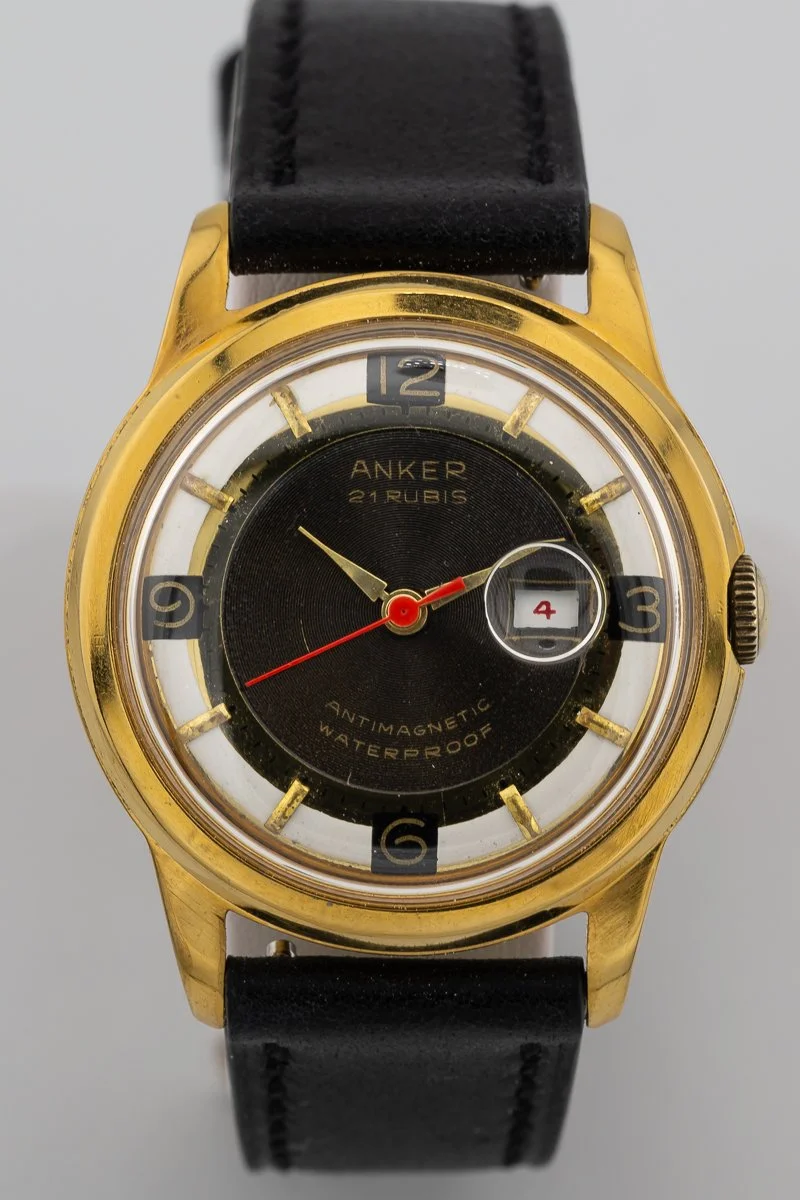
Anker Early 1950s “Patent” Calendar Manual
I love the unique aesthetic of this Anker, which somehow looks much older than it actually is, even with the central second hand and calendar mechanism. It’s difficult to date these watches precisely, but it is likely from the early 1950s. The movement, despite the high jewel count, was inexpensively made, with a single large bridge and a pin palette escapement. Regardless, it still runs well. Anker was clearly very proud of this movement design, because the case back is quite literally covered with patent information, including the Swiss, French, and German patent numbers. I’m not sure about this, but the prominence of the Swiss patent on the back leads me to believe that this was a Swiss-manufactured movement, even though Anker is actually a German company. Restoration of this piece was straightforward, although the case was in pretty rough shape so I elected to re-plate it in 18K gold, which works well with the dial.